

Telecom
USPF, Stakeholders Seek New ICT Growth Paradigm

The Universal Service Provision Fund (USPF) was established with a mandate to ‘achieve universal access, universal coverage and universal service through a public-private partnership framework that stimulates economic and social development, private sector investment and market-based provision of basic affordable and quality ICT infrastructure and services to unserved and underserved areas, communities and populations.’
But sadly, the fund since establishment has struggled to meet its basic tenets. However, at a recent stakeholders’ conference in Lagos to preview its Strategic Management Plan – 2013 – 2017, the general consensus was that time has come for a new approach to streamline the Fund with the realities and demands of the ICT market.
Specifically, it was noted that the Fund would henceforth work in tandem with stakeholders and industry operators to give them greater opportunities.
Maikano Abdullahi, secretary of the USPF, agreed in his own words that the Fund had not met its set out goals. He pleaded with stakeholders to give the Fund the benefits of doubt as it was set for a new season of mutual cooperation.
“In the past, there has been this mutual distrust between the operators (especially the major players), and the Fund. Whereas, the Fund expected them (operators) to take what we give them, the operators see things differently. They first look at projects on basis of returns-on-investment. How beneficial would the project be to them economically? I think we have looked at all these issues and we’re ready to dialogue with every player in the industry to ensure full participation,” said Abdullahi.
And to ensure that the new SMP strategy would not be another ‘white Elephant’, Abdullahi said so much work has been included in the new plan which would see an addition of about 3,000 kilometres of fibre and 1000 Base Stations, deployed across Nigeria every year. Admittedly, noted that the last SMP which expired in 2011 had minimal success.
He noted that the last SMP which ran from 2007 to 2011 had targeted provision of 291 community communications centres across the six geo-political zones (which will provide shared access to telephone and internet services in the rural areas).
Sadly, at the close of the period, it ended up providing 224 which represented 77 percent of the target.
It also targeted deployment of 490 base stations which would subsidize the lot that operators have to deploy in rural Nigeria, but it succeeded in awarding subsidies for only 74 BTS which represented just 12 percent of its target.
Consequently, the Fund would now adopt a holistic approach to project selection by determining specific ICT gaps in regional clusters within the country and tailoring its projects and service delivery models to suit identified needs within the clusters. With this approach, the USPF shall ensure that its projects are relevant and appropriate for its beneficiaries,” said Abdullahi.
The new published SMP strategy also emphasized the need for the USPF to actively involve all stakeholder groups in the planning and execution of its programmes and projects in order to effectively address and close Nigeria’s universal access and service gaps.
The aim is to avoid previous operational model collapse due to its one-size-fits-all approach. It is also aimed at arresting operators’ apathy due to perceive non-economic viability by engaging in frank dialogue before a project is awarded, using the cluster-development group model.
It noted that the “USPF’s experience over the past five years and the lessons gleaned from the review of the USP service delivery models in other jurisdictions have indicated that USP projects implemented in rural areas often difficult to sustain doe to high costs associated with operating these projects. In a number of cases, operational costs have been known to outweigh the initial capital outlay required for implementing USP projects. Consequently, the USPF will ensure its subsidies take into consideration operational costs associated with running USP projects over a defined period.
This is expected to provide service providers with a ‘grace’ period within which they will have built up a stable clientele and established demand for the service being provided. The period over which operational support will be granted will be determined based on assessment of the time required for each project to generate revenues capable of meeting its operational costs.”
It also expects to “develop and implement a robust monitoring and evaluation framework which will define the metrics/indicators that would be used to determine effectiveness of UAS programmes and their impact on beneficiary communities. The defined metrics should measure the relative cost and benefits of each programme and must ties back into the overarching objectives of the USPF. “
Abdullahi said “effective monitoring and evaluation of USP projects will facilitate the early detection of potential projects sustainability issues and help to address and rectify these issues early on in the implementation process.”
In arriving at the new SMP, the USPF also took into consideration factors such as Nigeria’s macroeconomic review and outlook, political landscape and outlook and an overview of the country’s telecommunication industry.
On the Macroeconomic review and outlook, the Fund notes that “Nigeria is a middle income and emerging economy which is predominantly agricultural – agriculture is the single largest contributor to GDP and is estimated to have contributed about 40.24 percent of the GDP in 2011.
However, while agriculture remains the largest employer of labour, petroleum, the leading mineral in Nigeria, is currently the major source of revenue (especially foreign exchange) for the country. Macroeconomic reforms introduced within the country since 2003 have created an environment for strong and sustained economic growth over the past few years and Nigeria is currently ranked 30th in the world in terms of GDP (purchasing power parity) as at 2011.”
Although the sustained civil democratic governance since 1999, (the longest since independence in 1960) has led to unprecedented economic growth, especially the attraction of foreign direct investment (FDI), there are grey areas posing as new strands of challenges to this growth paradigm.
Chiefly, the recent escalation of security in North and the not so comfortable calm in the oil and gas producing Niger Delta belt is seen as a major threat to this political-economic stability.
The Nigeria telecom industry’s exponential growth since its deregulation is in 2001 has seen its rise to become the leading market in the Africa and Middle East (MEA) region.
With active subscribers in excess of 102 million, and teledensity of over 70 percent, Nigeria no doubts is seen as a fertile market. But despite these, there has been a steady decline in year-on-year growth in the past two eyar, declining ARPUs and a decrease in minutes of usage (MoU) indicate that the telephony market is Nigeria is fast approaching maturity.
However, data services have seen an upward growth in the last decade. The landing on the shores of Lagos of four submarine cables has increased bandwidth intake, thereby making broadband availability even at cheaper cost.
The mobile segment of the telecom industry continues to rule with much the growth coming from the GSM sector, while the CDMA operators lay prostrate.
The fixed line sector is non-existent in this market as there are no new infrastructural investments and operators seem to stay off course.
The USPF however believe, it could fasttrack development in the ICT sector through three strategic planks, viz-a-viz facilitation of an enabling environment for ICT (especially promotion of rollout of sustainable ICT service in rural, un-served and underserved areas), promotion of universal access and universal service that facilitate connectivity for development and Institutional development.
While stakeholders applauded the new USPF approach, they also expressed cautious optimism over the Funds’ ability to keep to its terms of engagement.
Ms. Funke Opeke, CEO of MainOne Cable, West Africa’s first open access submarine cable operator noted that the Fund’s implementation module has not transited to new reality of large the volume of bandwidth available in the country. She believes it could do better if it effectively engages every operator and stakeholder as promised in the new SMP.
Engr. John Ayodele, director of Post and Telecommunications in the Ministry of Communications Technology notes that government was addressing all grey areas that stand as cog in the wheel of ICT growth in the economy.
Amongst such impediments, the issue of right of way (RoW) is getting urgent government attention, he noted. While admitting that states have rights to legislate on relevant laws to increase revenue base, Ayodele stated all levels of government was discussing to address the issues of RoW and redress the much maligned multiple tax conundrum.
Titi Omo-Etu, former president of association of telecom operators of Nigeria (ATCON), welcomed the new SMP, but cautioned both operators and the Fund to stay on course to achieve the set goals.
“There appears to be a paradigm shift, because in the past, the USPF has failed to communicate effectively with operators. And this shift also calls for operators to give the Fund the benefit of the doubt so that together, we can all work together to achieve our objective of developing the industry of our dream,” said Omo-Etu.



Google has launched its Search Live feature globally to over 200 countries, including Nigeria, where AI Mode is available, enabling voice-and-camera conversations in users’ preferred languages.

Powered by the new multilingual Gemini 3.1 Flash Live model, it delivers natural, real-time interactions via the Google app on Android or iOS—tap the Live icon under the Search bar.
Ideal for hands-free help, users can speak queries for audio replies, follow-ups, or web links. Camera integration adds visual context, like troubleshooting a shelving unit, or pairs with Google Lens for real-world chats.
From the app or Lens, Nigerians can now explore, learn, or solve tasks instantly, boosting everyday productivity worldwide.

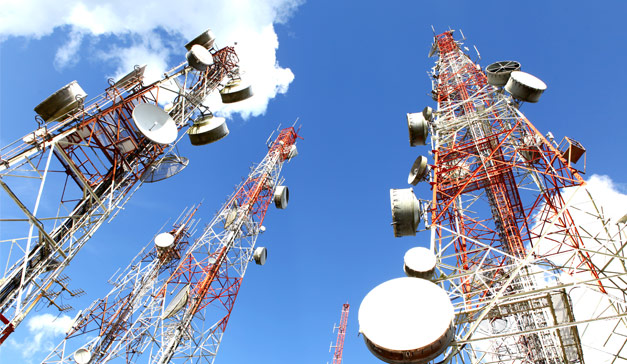
Clean and reliable power for telecom networks in Ethiopia, Liberia, and Sierra Leone will be expanded following a $45 million investment by the International Finance Corporation (IFC) in IPT PowerTech.

The investment targets countries where limited power supply continues to slow digital connectivity and broader economic participation, the institution stated earlier this week.
To enable this expansion, the IFC is providing a $45 million corporate financing package consisting of an A-loan of $27 million and $18 million in blended finance.
The blended portion is sourced from the Canada-IFC Blended Climate Finance Programme and the IDA20 Private Sector Window Blended Finance Facility.
The initiative marks the IFC’s first direct infrastructure engagement in Liberia in a decade and in Sierra Leone in six years.
It will help scale solar- and battery-based power systems that reduce reliance on diesel and support greener, more resilient telecom networks.
By improving the quality and stability of power to telecom towers, the initiative will strengthen mobile coverage and ensure that households, schools, health centres, and small businesses can depend on consistent digital services, said the IFC.
The funding supports the modernisation, operation, and maintenance of 2 235 telecom sites across the three nations. More than 90% of these are located in off-grid or weak-grid locations.
With new solar and battery systems powering these sites, mobile networks will experience fewer outages and improved service quality.
Optimising the energy mix is estimated to reduce power costs for operators by up to 30% in Liberia, 26% in Sierra Leone, and 52% in Ethiopia.
This transition is also expected to cut emissions by more than 10 624 tonnes of carbon dioxide annually. Furthermore, the partnership will promote gender inclusion by expanding opportunities for women in technical, operational, and leadership roles within the sector, says the IFC.
This agreement reflects a shared vision for a greener telecom industry and empowers the company to scale its innovative energy platforms, according to Nabil Haddad, CEO of IPT PowerTech Group.
Reliable and affordable power for telecom networks is a cornerstone of Africa’s digital transformation, said Nathalie Kouassi-Akon, IFC regional director for West Africa and the Gulf of Guinea.
Through this partnership, the institution is supporting a scalable, private sector-led solution that enables mobile operators to reach underserved and fragile communities more sustainably, added Kouassi-Akon.
The project advances the World Bank Group and African Development Bank’s Mission 300 initiative, which aims to provide electricity to 300 million Africans by 2030.

Expedier has unveiled “Expedier for Business,” an online pro-banking platform to simplify global payments, multi-currency transactions, and financial operations for expanding companies.

Kingsley Madu
The tool centralizes payments, invoicing, payroll, and treasury into one secure dashboard, tackling challenges like fragmented systems and poor visibility that hinder international scaling.
Kingsley Madu, Co-Founder and CEO of Expedier, said: “African businesses are increasingly global… Expedier for Business was built to simplify how companies manage money across borders while maintaining visibility, control, and compliance.”
Key features include customizable dashboards for payments, invoices, and workflows; support for USD, CAD, GBP, EUR, and more; virtual cards; automated payroll/invoicing; currency swaps; and real-time tracking.
Security measures cover two-factor authentication, KYC/KYB verification, and team access controls.
As cross-border trade and remote work boom in Africa, the platform aids firms dealing with international suppliers, teams, and customers. It is now available for organizations scaling globally.

Anti Graft Agencies Raise Alarm over Rising Crypto-Linked Financial Crimes

NITDA Takes Over National Digital Architecture System

NDIC Insures 99 Percent of Bank Customers

FG Shifting Focus to “Meaningful Connectivity” to Drive Inclusion – Minister

CBN Bars Chronic Loan Defaulters from Accessing Loans

Kaspersky Discovers New Phishing Campaign Exploiting Google Tasks Notifications to Steal Corporate Credentials

Spotify’s Loud & Clear Report Reveals Over ₦60Bn Revenue for Nigerian Artists in 2025

China Threatens to Shut Nigeria’s Satellite Over $11.44m Unpaid Debt

MTN Nigeria Posts Record N1.70 Trillion Pre‑Tax Profit, Declares N20 Dividend for 2025

Madonna University Taps Tech Guru Adote for Strategic Board Role




 Telecom3 days ago
US Jury Finds Meta, Google Liable in Landmark Social Media Addiction Case

 News3 days ago
EU Pumps €290m into Nigeria’s Digital, Health, Agri Sectors

 E-Business3 days ago
5 Wealth-Building Strategies for Nigerian Women-led Businesses

 News3 days ago
Firm Shares Tips for Updating Your Digital Habits for an AI-driven World

 E-Business3 days ago
Nigeria, Finland Sign Cybersecurity Pact

 Telecom3 days ago
Mobile Money Transactions Accounted for $2 trillion in 2025

 E-Financial3 days ago
MoneyMaster Enhances App, Rewards Users with Data and Airtime Bonuses

 General News2 days ago
NCC to Curb SIM Fraud, Strengthen Digital Security with New Platform