

E-Business
Viber Rolls-Out Secret Messages


Messaging app Viber now lets users send videos and photographs that disappear after the recipient has viewed them.
The new feature, called secret messages, was developed to give users the option of sending content that will not form part of their conversation history. The company gives the example of sharing an embarrassing yearbook photo, which both the sender and recipient may not want saved on their phones.
“Some things are meant to be seen once and then never again. When you send a secret message, it can be viewed exactly one time and, maybe more importantly, it can’t be shown to anyone else afterwards,” the company said in a statement.
Users set a time-limit on how long a picture can be viewed, such as seven seconds, or for the duration of the video, before the content is deleted off both devices. Only the sender will see in his/her conversation history that a secret message was sent, but not what it contained.
The picture is blurred out on the recipient’s device, until s/he clicks on it, when it then becomes clear and ‘self-destructs’ after the allotted time period.
Ephemeral messaging was made popular by Snapchat and is now used in apps like Telegram and other messaging apps specifically designed to leave no trace of conversations.
The feature is differentiated from Snapchat because only selected media disappears; the rest of the conversation remains intact.
Viber has over 700 million users worldwide.
Secret messages are not the only sneaky feature on the app. Viber also features hidden chats, which allow users to hide specific chats from the main screen so no one but the user knows they exist. These chats can only be accessed using a four-digit PIN.
Last year, the app followed WhatsApp’s lead and introduced end-to-end encryption to all messages on its service.
The company said the update included strengthened security in every voice or video call, message, video and photo, in both group messages and one-on-one communication.



National Office for Technology Acquisition and Transfer (NOTAP), has commenced the process of patenting and commercialisation of research works by universities and other research institutions in the country.

Dr. Obiageli Amadiobi, director general of NOTAP
Dr. Obiageli Amadiobi, director general of NOTAP, stated this in Abuja, during an interaction with journalists on her achievements since assuming office.
Speaking on the theme, “Strengthening Indigenous Capacity: NOTAP’s Drive for Technology Transfer, Local Content Development, and Innovative activities,” Amadiobi said the agency had involved both the academia and industry so that researchers can work on topics brought forward for commercialisation purpose.
“My minister is very intentional about this– very intentional about commercialisation of research results, which we have already submitted to him. They are meaningful researches, which we need to commercialise.
“We have established 69 intellectual property technology transfer offices in 69 universities that we are still counting. We have informed the vice chancellors of Nigerian universities to set up such offices and we will come and educate them on intellectual property and technology transfers.
“As we are doing this, we are also taking record of all the researchers of these universities and research centres and documenting them in a compendium.
“So, we have compendiums from the universities to us and we put them in a database. If you will recall, recently, the ministry, our supervising ministry, which is the Federal Ministry of Innovation, Science, and Technology, launched a programme titled Energise Commercialisation. This entirely was for commercialisation of all R&Ds,” she said.
On research Institutions carrying out research on areas of industry needs, she said, “NOTAP is bridging the gap between research and development with industry needs, “it is on our programme called the NITDF, NOTAP Industry Technology Transfer Fellowship. By this programme, we engage the universities and the industries, in what we call the triple helix. We liaise with the universities and the industries to sponsor, the industries will sponsor a Ph.D candidate in a Nigerian university to conduct relevant researches.
“They will provide the topics that they want researches for and such students will research on that with the assistance of the industries, because they wear the shoes, so they know where it pinches them. But usually, there are Ph.D candidates already established. This year alone, we certified about 15 of them to enter into this programme and they have gone into the various universities.
“And we are still looking for people to update some of the projects; the research topics we already have. But we are not getting enough persons to do the researches. So, we are going to do further advertisement to see if other candidates will come up.
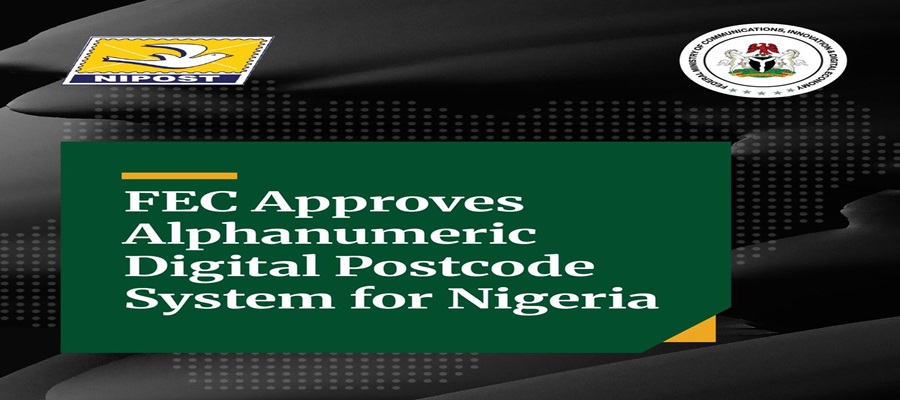
Federal government has launched a drive to standardise operations across all Ministries, Departments, and Agencies (MDAs) through the nationwide adoption of the new National Digital Alphanumeric Postcode System.

Dr Bosun Tijani, minister of Communications, Innovation and Digital Economy, launched the initiative at a high-level stakeholder workshop on Thursday in Abuja.
The conference, themed “Embedding the Nigerian Digital Postcode in Public Service Delivery,” brought together key stakeholders to discuss the adoption of the system across government institutions.
Represented by Nadungu Gagare, permanent secretary of the Ministry, declared that the initiative was a critical pillar for the country’s economic and security framework.
“The Nigerian Digital Postcode represents far more than an improvement to postal services. It is a strategic national asset. Without accurate location intelligence, governments struggle to plan effectively, emergency responders lose valuable time, and financial institutions face verification challenges,” he said.
Tijani said the Alphanumeric digital postcode system was a pathway and a defining moment for Nigeria’s digital transformation under the Renewed Hope Agenda of President Bola Tinubu.
He said an accurate national addressing system would enable government agencies to plan better, improve emergency response, support credible census and elections, expand financial inclusion and ensure citizens were not excluded from essential services because of poor location data.
The Minister commended NIPOST for leading the initiative and urged MDAs and state governments to integrate the system into their operations, stressing that its success would depend on collaboration, interoperability, and nationwide adoption.
Omotola Odeyemi, postmaster general and chief executive officer, Nigerian Postal Service (NIPOST), explained that the digital postcode system creates a “common language of location” for the entire government.
She urged federal and subnational entities to integrate the infrastructure into their daily operations to maximise its value.
“Just as digital identity has helped to establish who a citizen is, this National Digital Postcode helps us to determine where services, opportunities, and interventions should be delivered. Its success will not be measured by the number of postcodes that we generate but by the lives that we improve,” the NIPOST boss explained.
Mrs Didi Esther Walson-Jack, head of the Civil Service of the Federation, represented by Dr Abdul Sule Garba, permanent Secretary of the Service Welfare Office, pledged full administrative backing for the rollout.
She noted that the civil service would be properly equipped to adapt to the data-driven system.
“The operationalisation of the Nigerian digital postcode is a strategic initiative that has the potential to significantly improve public administration, service delivery, and digital governance across the country,” Mrs Walson-Jack added.
The workshop featured live demonstrations and technical panel sessions focused on linking the new digital postcode system directly into national healthcare, social protection, education, and electoral planning.
E-Business
Kaspersky Warns of a Large-scale Campaign using Fake Free Software to Deploy a RAT via ScreenConnect


A remote admin tool ScreenConnect is being distributed through fake websites designed to mimic the official pages of well-known software products.

In total, researchers identified more than 90 domains spanning 10 languages, including English, Arabic, Spanish, Chinese, German, Portuguese, and Russian, enabling the attackers to reach a wide range of victims worldwide. The campaign targets both individual users and organisations using Windows.
After detecting an incident through its Managed Detection and Response, Kaspersky uncovered a large-scale campaign in which attackers used fake websites to spread installer archives disguised as popular software, including OBS Studio, DNS Jumper, DS4Windows, Glary Utilities and Bandicam.
To drive traffic to these pages, the threat actor also used search engine optimisation techniques to place them high in search results.
Across more than 90 identified fraudulent software sites, the same tactic was observed: victims who downloaded what appeared to be legitimate software instead received a hidden ScreenConnect remote administration tool, which gave the attackers persistent access to compromised devices and allowed them to deploy AsyncRAT, an open-source trojan capable of giving them full control over infected systems.
Domain registrations linked to this campaign peaked in February 2026; in 2025, the same attacker had used fake websites to disguise malicious installers as games.
Infection occurs through malicious archives containing a legitimate, signed Microsoft file, install.exe, alongside the install.res.1033.dll library. The DLL is loaded onto the device via a DLL sideloading technique and deploys a ScreenConnect service that awaits further instructions from the attackers.
“The campaign targets both users downloading free utilities from the Internet and corporate networks, where remote access tools are often allowlisted and granted elevated privileges.
“Its danger lies in its potential to facilitate large-scale credential theft and unauthorised access to systems, with the stolen data typically later resold on dark web forums,” says Denis Kulik, lead SOC Analyst at Kaspersky.

Court Declares Keystone Bank Staff Wanted over Alleged N35m Fraud

IMF Raises Concerns over N8.83 Trillion Unreported Spending in Nigeria’s Budgets

NOTAP to Commercialise University Research, Expands Patent Drive

FG Unveils Digital Postcode System for MDAs

BoI, NBCC Sign MoU to Deepen Bilateral Trade, Industrial Growth and Investment

Mobile Internet Gender Gap Widest in Africa – GSMA

London Strengthens Global Investment Ties with Africa @ First Ever London-Africa Business Summit

FG Targets Alleged N3tn Capital Flight, Opens Airtime Credit Market to Nigerian Fintechs

Japan, UNESCO Boost Digital Learning in 15 CoEs with Donation of ICT Equipment

Nigeria Launches FreeTV Nationwide




 News2 days ago
Verve Strengthens Global Acceptance Across Leading Digital Platforms

 News2 days ago
Army Says Terrorists Now Recruiting, Raising Funds Online

 Telecom2 days ago
Lebara Nigeria Becomes Member of GSMA Network

 E-Business2 days ago
Kaspersky Warns of The Gentlemen Ransomware Group Expanding Operations with New Malware

 Telecom2 days ago
Airtel Nigeria Deepens Focus on Data Usage Transparency @ Customer Forum

 Telecom2 days ago
Vitel Wireless Warns Public, Says it Not Running any Investment Scheme

 E-Financial2 days ago
Bank of Industry Appoints Kuramo Capital as Manager of Dice Fund of Funds

 Telecom1 day ago
MTN Foundation, Microsoft Empower Nigerian Educators with AI Integration Skills