

General News
Victory hands Buhari second chance to lead Nigeria

By Lukman Otunuga, FXTM Research Analyst.
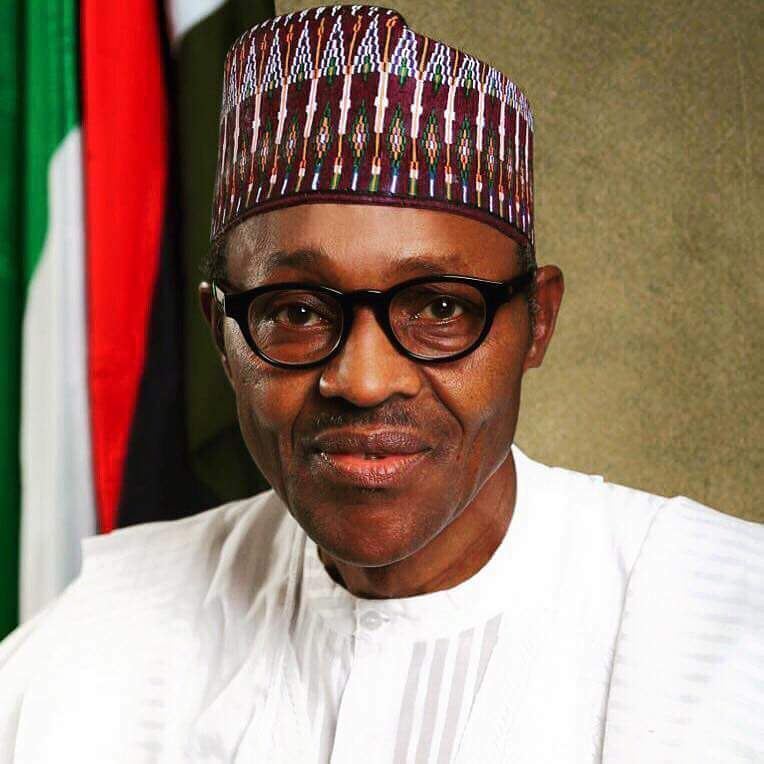
The people of Nigeria have decided to grant President Muhammadu Buhari another chance to restore and stabilize the economy. Although there was a combination of uncertainty, confusion and anxiety following Buhari’s election victory, this is poised to fade as focus returns back to macroeconomic conditions. With the elections done and dusted, the key question on the mind of many investors is what this means for the Nigerian economy in 2019 and beyond.
Buhari’s re-election certainly suggests continuity, something that offers the nation a chance to build on its economic recovery and growth strategy. This fact alone is a welcome development for foreign investors, especially those attracted to stability and consistency in economic policy. The truth of the matter is that the president faces an extensive to-do list within a four-year timeframe, including rekindling economic growth, boosting infrastructure and most importantly, diversification. On top of all of this, there are external risks in the form of trade tensions, slowing global growth and depressed Oil prices, all of which l have the potential to threaten the nation’s recovery.
Digging deeper into Nigeria’s economic conditions, unemployment has risen to over 23% in the last four years while the nation’s stock markets are one of the world’s worst performing. While it’s easy to point fingers and blame Nigeria’s leadership for its woes, external risks in the form of falling Oil prices was a primary culprit behind the recession. Lessons from the past should encourage the administration to invest in infrastructure and step up its efforts in finding growth from other sustainable sources. With Nigeria boasting a youthful population and fertile land, one of the solutions to attaining stability could be found in agriculture.
With the Economic Recovery and Growth Plan (ERGP) already in place, this may result in Nigeria’s economic growth hitting roughly 2% YoY. Nigeria however, like many other Oil export-dependent emerging markets, remains exposed to US-China trade developments, global growth fears and Oil prices. If the two largest economies in the world are unable to find a middle ground on trade, global growth decelerates and Oil prices tumble, it will bring nothing but bad news for Nigeria.
In regards to the foreign exchange, this is another grey area that impacts investor sentiment towards the Nigerian economy. There is a possibility that Buhari’s victory results in the continuity of the current fixed/multiple system by the Central Bank of Nigeria. While this has resulted in Naira stability in recent years, it has come at a heavy cost in the form of foreign exchange reserves. Will the CBN ever allow the natural forces of supply and demand to determine the equilibrium value of the Naira? This remains a question on the mind of many investors.
On the bright side, PricewaterhouseCoopers (PwC) reported that Nigeria remains the largest economy in Africa for the second year in a row. However, much work is needed for the nation to keep this title. The story defining Nigeria’s economy remains one that depends on Oil exports for more than half of its government revenues. This represents a major downside risk, as falling Oil prices will not only cut revenues but also spark foreign exchange instability by sabotaging the Central Bank of Nigeria’s efforts to shield the Naira. The negative knock-on effect from such a development would most likely ripple through all concerns of the economy.
At the end of the day, the quicker Nigeria is able to source sustainable growth from non-Oil sectors, the quicker there will be a positive change in sentiment towards the largest economy in Africa.


PalmPay has opened a new office at 33 Old Yaba Road, Lagos, reinforcing its commitment to innovation, customer service, and operational growth in Nigeria.

The new office represents a continued investment in PalmPay’s people, operations, and infrastructure, supporting the company’s ability to deliver reliable financial services at scale. Designed to accommodate PalmPay’s growing team, the workspace enables closer cross-functional collaboration while strengthening service delivery nationwide. Located in Yaba, one of Lagos’s most established commercial and technology corridors, the office further anchors PalmPay within Nigeria’s innovation and financial ecosystem.
Speaking at the office launch, Managing Director Chika Nwosu highlighted that the new workspace reflects PalmPay’s long-term vision and dedication to excellence. “This new office represents an important step in our growth journey and our commitment to building secure, reliable, and inclusive financial solutions for our users,” he said.
The launch event was attended by PalmPay’s leadership team, employees and customers, who toured the facility and marked the company’s continued growth and progress.
With the opening of its office at 33 Old Yaba Road, PalmPay continues to strengthen its presence in Nigeria and reaffirm its mission to drive financial inclusion through innovative digital solutions.
PalmPay is a leading digital banking platform driving financial inclusion and economic empowerment in underserved emerging markets. Through its secure, user-friendly, and inclusive suite of financial services, PalmPay empowers individuals and businesses with tools to manage and grow their money.
PalmPay offers a comprehensive range of products, including mobile payments, savings, and micro-insurance via its app and mobile money agent network.
Since launching in Nigeria in 2019 under a Mobile Money Operator license, the platform has grown to over 35 million app users and processes up to 15 million transactions daily. PalmPay has operations in Nigeria, Ghana, Tanzania, and Bangladesh.
The Nigerian Aviation Handling Company Plc has announced the signing of a chain of contracts with major airlines for the provision of total handling solutions.

In a statement on Tuesday, the company announced the signing of contract renewals with Air France, KLM and Virgin Atlantic, as well as the African operator, RwandAir.
NAHCO also signed fresh contracts with United Nigeria – Regional, Bellagio and Malaikair.
According to the statement, the contracts with Air France and KLM are for three years and will run till 2028, respectively. The duration of the contract with Virgin Atlantic was also put at three years.
The duration for the RwandAir contract is for three years, effective 1 October 2025.
The statement read, “The new contract with United – Regional would be for a period of five years, effective from 1 August 2025. For Bellagio and Malaikair, the contracts are for three and five years, respectively.
“Bellagio Air, Nigeria’s rising star in aviation, is redefining air travel with a blend of luxury, efficiency, and reliability. Headquartered in the vibrant city of Ikeja, Lagos, Bellagio Air is committed to providing world-class service across key domestic and regional routes.”
The Group Executive Director, Commercial and Business Development, NAHCO Plc, Saheed Lasisi, who expressed his delight with the new contracts, said NAHCO is already ready to exceed customers’ expectations.
According to Lasisi, NAHCO’s more than 46 years of unblemished excellent service delivery puts it heads and shoulders above any other service provider in the industry.
“This is what we have been doing for almost half of a century. We will continue to delight our customers and make our stakeholders happy by exceeding expectations in all aspects of our service offerings. We are always willing and ready to do more,” Lasisi added.
The Group Managing Director/Chief Executive Officer, NAHCO Plc, Olumuyiwa Olumekun, added that with the new fleet of equipment the company is deploying, service delivery will only be better.

Nigerian Communications Commission (NCC) has unveiled a forward-looking strategy that places satellite-enabled mobile connectivity at the heart of the country’s drive to bridge its long-standing coverage gaps.

The draft Spectrum Roadmap for the Communications Sector for 2025 to 2030 lays out how satellite technologies could help deliver reliable voice and data services to millions of Nigerians who live beyond the reach of conventional mobile networks.
The direction is outlined in the Commission’s draft Spectrum Roadmap for the Communications Sector covering the period.
The proposed approach highlights non-terrestrial networks as a complement to existing mobile infrastructure, especially in areas where terrain, insecurity, or high costs limit the deployment of base stations.
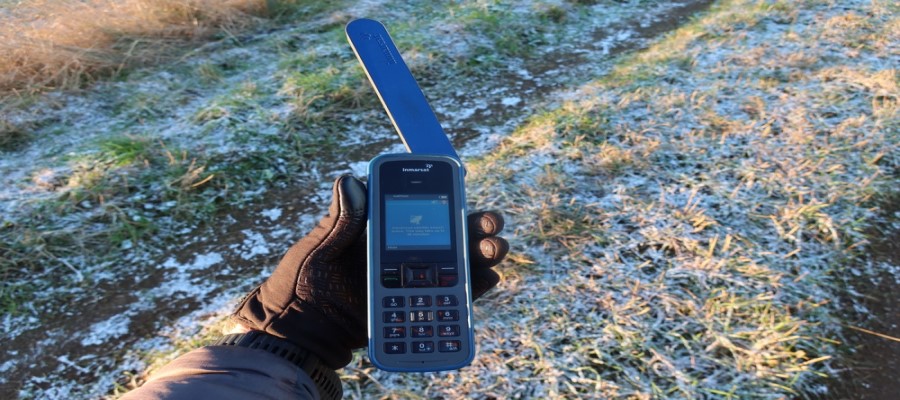
The NCC said D2D satellite technology, which allows standard mobile phones to connect directly to satellites, is gaining traction globally as a means of delivering voice and data services without reliance on ground towers.
According to the regulator, the technology could help close persistent coverage gaps in rural, riverine, and border communities that remain outside the reach of conventional networks.
It also noted that satellite-backed connectivity could improve network reliability by providing alternative links during fibre cuts, power failures, or other disruptions affecting terrestrial systems.
The Commission added that wider adoption of D2D services could support emergency communications, public safety operations, Internet of Things applications, and services such as smart agriculture in underserved regions.
It also pointed to potential investment opportunities through partnerships between mobile network operators and satellite companies, including more efficient use of shared spectrum resources.
Beyond D2D services, the roadmap places emphasis on Low-Earth Orbit satellites to expand broadband access to remote parts of the country.
It also proposes better utilisation of Geostationary Orbit satellites and the exploration of high-altitude platforms, such as stratospheric balloons, to support mobile backhaul and rural connectivity.
The policy signals come shortly after Airtel Africa announced an agreement with SpaceX to introduce Starlink-powered direct-to-cell services in Nigeria.
The NCC’s roadmap is expected to shape future spectrum allocation, licensing decisions, and technology adoption across the telecommunications sector.

PalmPay Deepens Its Long-Term Commitment in Nigeria with New Office @ Yaba

Kaspersky Shares AI Cybersecurity Predictions for 2026

Youth Talent Takes Center Stage as T2 Ignites High-Octane Rap Battles @ Carnival Calabar

Konga launches Jara sales with 25% discount on Starlink kits, free delivery

Kuda Microfinance Bank Releases ‘My Year on Kuda’ 2025 Financial Recap

Banks quietly move to enforce new ₦50 transfer levy from Jan. 1

FIRS says NIN, CAC Numbers to Serve as Tax IDs from 2026

Financial Sector Faced AI, Blockchain and Organised Crime Threats in 2025 – Report

PalmPay Launches N400 Million World Travel Carnival, Rewarding Users with Free Global Trips

Check Point Reveals Nigeria as Second Most Targeted African Country for Cyberattacks in November




 News2 days ago
Court Sends Faleti, Ex-Lagos Director to Jail for Stealing ₦48.9m from Access Bank

 E-Financial2 days ago
Remita Powers over ₦100 Trillion in Payments as Nigeria’s Digital Economy Expands

 E-Financial2 days ago
Why 2026 Must Be the Year Nigeria’s Economy Works for All

 E-Financial2 days ago
Flutterwave Acquires Nigeria’s Mono in $25m-$40m All-Stock Deal

 E-Financial2 days ago
2026: SEC to Review Rules to Incentivise SME Listings

 General News2 days ago
Nigeria Targets Satellite-to-Mobile Services in Draft Spectrum Roadmap

 Telecom2 days ago
Samsung Plans to Double AI Mobile Devices to 800 million Units this Year

 Telecom2 days ago
MENXTT NG to pre-install Bitdefender Antivirus on all laptops from 2026