

News
Visionscape Discloses How Technology Will Redefine Waste ‘Recovery’ In Lagos


Visionscape, a leading environmental utility group providing turnkey solutions in areas of sanitation, energy and wastewater treatment, has reiterated its commitment towards ridding streets of Lagos of wastes, transforming same to other useful items.
Actually, managing waste in the 21st century requires more than just a conventional approach of collection and disposal of waste, however, Visionscape is undeterred by the existing loopholes in waste management in the Lagos State in the recent past.
To this end, Visionscape commissioned by Lagos State Government to handle its waste matters, has partnered with technology leaders and ready to deploy RFID indent systems, UHF transponders and GPRS sensors in the management of wastes in the State.
The intent, Maimuna Malibe, manager, Environmental Product and Service Development at Visionscape, said, is essentially to ‘recover’ wastes, turning them to other useful ventures for the society.
Speaking to Nigeria CommunicationsWeek during a Cleaner Lagos initiative/Visionscape media workshop, on the sidelines of immediate measures in place to rid the streets of Lagos of waste dumps, she said that the company, through its 60-day intervention, is working assiduously on waste containment and will provide bins to residents, wastes collection, transportation, disposal, treatment and resources recovery.
Immediate Interventions
Malibe said, “The immediate intervention is covered in our 60-day programme to create awareness for Visionscape services and make sure there is no service gap in waste collection in Lagos State. Before we rolled out of compactors doo-to-door collection, we procured tippers that will collect wastes from blackspots, immediate environments and highways where wastes are indiscriminately dumped. For 60 days, which commenced on July 1, 2017, we are going to be collecting wastes. So, members of the public who spot any blackspot in their neighbourhood should reach out to Visionscape and we will clear it. That will proceed the commencement of our operations in September. The charges are at Visionscape’s costs.
“We are going to be involved in waste containment providing bins to residents, wastes collection, transportation, disposal, treatment and resources recovery. Basically, we are looking at the entire waste management chain; to create value out of waste. I like to say waste is not a waste until you waste it. It is always something to do with different materials we produce in our homes and in commercial places. Even a day old baby can produce wastes.
“So, at Visionscape, we are looking at different ways of converting the resources that we collect; it goes beyond collecting from the residence and go bury them at the landfill sites. We have the concession facilities that we have taken over the operations like the three transfer loading stations located in Agege, Oshodi and Tappa. They will provide the stop-gap for our operations. Therefore, we are trying to stop our trucks from traveling very far.
“Imagine the truck that has to travel from Badagry to the landfill in Epe; it doesn’t make any operational sense; in terms of our freight management and cost of operations. Thus, we have taken the concession of the three transfer stations in such that all the contractors- tricycles, pick-up trucks that collect wastes from the residents or communities, are going to dump wastes at the transfer-loading stations closest to that particular community”.
How Technological Will Redefine Waste Management in Lagos State
On technological interventions, she emphasized that Visionscape’s waste logistics set-up takes into considerations all relevant parameters including area population structure (densely or sparsely populated), dominant building structure, waste types and volume; and other geographical parameters for sequenced and optimized routing calculation.
Thus, technology enables to be deployed will assist them in real-time respond to existing and new orders via our automated order management platform which is visually supported and route optimized; utilise Modern GPS supported waste collection and monitoring system; manoeuvre through the hectic road traffic situation by selecting the most efficient and economical route for our complete fleet and view single vehicle and overlay of vehicles track.
According to the Manager, Environmental Product and Service Development at Visionscape, “each transfer stations has the capacity of about of between 1500-2000 tons per day. Lagos produces about 11,000 tons of waste per day. If you look at it, each transfer-loading station has the capacity to take off enough wastes to be collected in a particular shift. What is going to happen is, after dumping at the transfer-loading stations, we are going to be compacting the wastes for bulkers to move the wastes to the landfill sites. Our landfill site is going to be an engineered one with an eco-pack with sorting facilities. They shall be sorted into different components. So, there is a whole lot that goes into VisionScape’s processes, not just waste collection and disposal.
“So, our bins are going to be fitted with infrared and tags. There are going to be code attached to each bin; so we know the bin that is supposed to be in Ikeja, for Ikoyi and other places. If the bin that is supposed to be in Ikoyi miraculously finds itself in Epe, we would be able to tell that is a wrong spot for it.
“Our trucks too will have signals that will be able to open up the bin locations as they drive through the communities as well.
Plans for Recycling
For recycling, She said, “we have to start door-to-door collection, and will open recycling collection points in different wards. As we all know, there are 57 LCDAs in Lagos State and under them are 377 wards. So, what we are doing in recycling is we are taking it back to the grassroots, where waste is being produced. We know that some of the wastes are going to end at the transfer-loading stations and landfill sites, but we are trying to recover the wastes from point of collection. Eventually, we are going to end up with 377 collection points; we would encourage the people to swap plastics, papers and other wastes to receive some incentives”.



The House of Representatives Ad hoc Committee investigating deductions of taxes and sundry charges from the earnings of civil and public servants has given commercial banks a four-day deadline to submit all requested documents.

House of Rep
The committee, chaired by Hon. Kelechi Nwogwu, issued the ultimatum at the commencement of its investigation, following a motion earlier moved by the House Chief Whip, Hon. Usman Bello Kumo, on alleged deductions from civil servants’ salaries.
Nwogwu insisted that Chief Executive Officers of affected financial institutions must appear in person before the panel, rejecting representatives sent by GT Bank, Zenith Bank, Access Bank and other banks.
He explained that the panel was mandated to ensure that all deductions of charges by banks on customers’ accounts were fair and properly applied.
The committee disclosed that invitations had also been extended to the Ministry of Finance, the Office of the Accountant-General of the Federation, the Economic and Financial Crimes Commission, and all commercial banks operating in Nigeria.
“You cannot appear here without an identity. We are here on the mandate of the people who elected us into parliament. We have resolved to meet next week on Wednesday.
“You must submit all requested documents by Monday, May 1,” Nwogwu said.
He warned that any bank that failed to comply with the deadline would face sanctions, adding that the committee would put the CEOs on oath during the next sitting.
The investigation continues next week.


Lateef Fagbemi (SAN), the Attorney-General of the Federation and Minister of Justice, has said that Federal Government is intensifying its use of digital-economy initiatives to curb corruption among young Nigerians.

Speaking at the commemoration of the 2025 International Anti-Corruption Day held on Tuesday in Abuja, the AGF said the administration of President Bola Ahmed Tinubu has deliberately positioned technology, innovation training, and digital-skills development at the heart of its anti-corruption strategy for young people.
The event, organized by Technical Unit on Governance and Anti-Corruption Reforms (TUGAR) domiciled at the Nigeria Extractive Industries Transparency Initiative (NEITI) had the theme: “Uniting with Youth Against Corruption: Shaping Tomorrow’s Integrity”.
Fagbemi, who delivered the keynote address, said the government believes that empowered, skilled and economically engaged youths are less vulnerable to corrupt influences.
According to him, programmes such as the 3 Million Technical Talents Programme (3MTT) and the recently launched Nigerian Youth Academy (NiYA) are already equipping millions of young Nigerians with ICT and digital-innovation skills, reducing their dependence on patronage systems that fuel corrupt practices.
“A hopeful youth is harder to corrupt; an engaged youth is harder to mislead; and an empowered youth is a powerful force for national transformation,” Fagbemi said.
He explained that by investing in digital literacy, tech entrepreneurship and innovation-driven training, the Tinubu administration aims to create a generation of young Nigerians who are globally competitive and resistant to corruption.
Beyond digital skills, the AGF pointed at several government efforts to expand educational access through the Nigeria Education Loan Fund (NELFUND), and support youth entrepreneurship via the Nigeria Youth Investment Fund (NYIF) and the iDICE programme, providing funding, training and mentorship for young innovators in tech, entertainment, agriculture and design.
Fagbemi added that the inclusion of young people in governance, through appointments and expanded civic-engagement platforms, was another strategic tool to strengthen integrity and transparency in public life.
He urged stakeholders to deepen efforts to integrate anti-corruption values into school curricula, establish integrity clubs, mentor young leaders, and leverage ICT tools to promote transparency, whistleblowing and public accountability.
Earlier, the Head of TUGAR, Mrs Jane Onwumere said the gathering was especially meaningful because it reflected a shared truth: that tomorrow’s integrity rests significantly in the hands of the youth.
“The theme therefore, is not just a slogan but a call to action and a reminder that young people are not only beneficiaries of good governance, they are co-architects of it.
“Corruption has affected lives and the economy negatively in many ways. One of such is the “japa wave” which has seen young Nigerians leave the country in droves in search of greener pastures. This syndrome has drained the country of resources and human capital. It has in many situations split the family unit, a critical foundation for anti-corruption efforts”, Onwumere, added.
In his speech, the Executive Secretary, NEITI, Hon. Musa Sarkin Adar expressed the agency’s commitment to empowering young Nigerians not only as advocates for accountability but also as active partners in shaping the future of integrity in the extractive industries and beyond.
“At NEITI, we recognize that corruption undermines opportunities for growth, distorts resource governance, and deepens inequality. We also know that a united, informed, and courageous generation can dismantle these barriers.
“This is why NEITI will continue to expand civic education, strengthen our reporting mechanisms, support youth-led innovation, and create more platforms for constructive engagement with young professionals, students, and entrepreneurs”, he added.
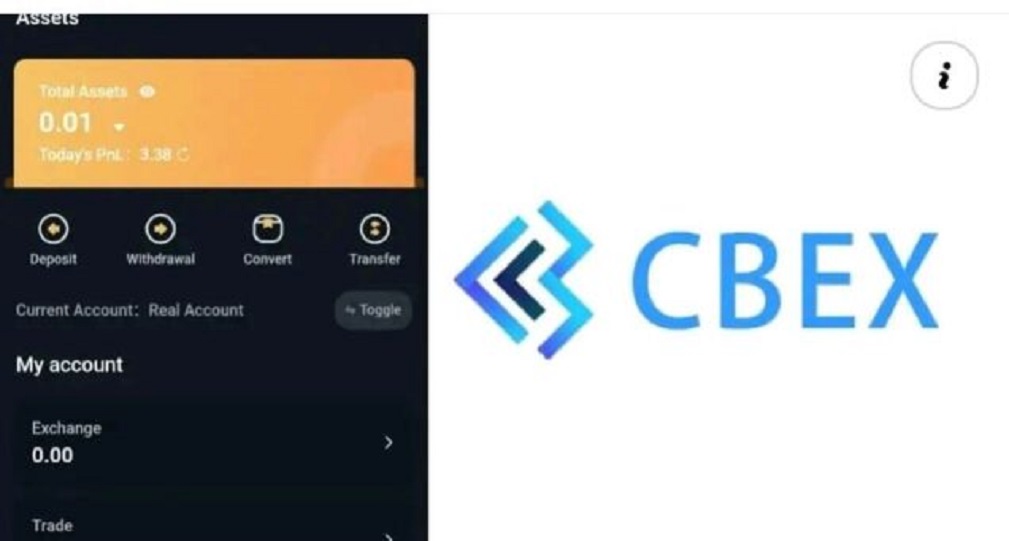
Securities and Exchange Commission (SEC) has asked the Investments and Securities Tribunal to order the freezing of bank accounts belonging to Crypto Bridge Exchange (CBEX) and 25 other defendants accused of defrauding Nigerians of about ₦1.3 trillion through an unlawful digital asset investment scheme.

CBEX
The request was made during the first sitting of the 6th Tribunal in case IST/OA/02/2025 between the SEC and CBEX with 25 others, presided over by tribunal chairman, Hon. Aminu Jinaidu.
The SEC urged the tribunal to compel commercial banks and financial institutions nationwide to freeze all accounts linked to the defendants.
It also sought orders for the seizure of houses and assets allegedly acquired with funds sourced from unsuspecting investors.
According to the commission, CBEX operated illegally by posing as a digital assets platform and capital market operator without registration.
“CBEX is an unregistered platform promising its users 100 percent return on investments within 30 days, which is unlawful and contrary to Section 3(b) of the Investments and Securities Act 2025,” the SEC told the tribunal.
The regulator disclosed that international authorities had previously raised concerns about CBEX.
The Securities and Futures Commission of Hong Kong issued an advisory on April 23, 2024, warning that the platform was a suspicious virtual asset entity.
The tribunal noted that CBEX and the other defendants failed to appear in court and were not represented by legal counsel.
Hon. Jinaidu therefore ordered that hearing notices be served on the defendants through national newspapers.
CBEX reportedly entered the Nigerian market in July 2024, operating via a website and mobile application, while claiming to use advanced Artificial Intelligence to generate unusually high profits from cryptocurrency trading.
Investors were promised returns of up to 100 percent within a 40 to 45 day lock-in period.
The scheme later collapsed, triggering widespread losses. Investigations revealed that CBEX functioned as a Ponzi scheme that siphoned more than ₦1.3 trillion, estimated at about $800 million, before disappearing.
The matter has been adjourned to January 27, 2026.

Ecobank Nigeria to Fully Repay $300 million Eurobond Ahead of Schedule

PalmPay MD Seeks Deeper Financial Inclusion @ CeBIH Annual Conference 2025

Airtel Africa Foundation Opens Undergraduate Scholarship Portal in Nigeria

YouTube Nigeria Unveils 2025’s Top Lists and Launches New YouTube Recap Feature

Reps Give Banks Four-Day Ultimatum on Tax Deductions, Charges

Kaspersky Introduces Cyber Pathways to Support Career Development in Cybersecurity

NITDA DG Tasks Youths to Drive Africa’s Digital Transformation

Firm Urges Organizations to Check Protection of their Websites Amid Search Engine Optimisation Attack Schemes

Hackers Breach Phones of Dangote and Otedola, Demand Ransom

FCCPC Sets Deadline for Digital Lending Regulatory Compliance




 News3 days ago
Lagos Launches Tele-Vet, Nigeria’s First Veterinary Call Centre

 Telecom2 days ago
Nigeria Dominates 2025 TikTok Sub-Saharan Africa Awards with Six Wins

 E-Business2 days ago
Report Reveals Half of 2025’s Compromised Passwords were Already Leaked

 E-Financial2 days ago
FG, SEC, NGX Group Agree on Capital Gains Tax Reform

 Broadcasting2 days ago
EFCC Arik Case: Witness Testifies on Receiver Manager Nominee’s Role in NG Eagle Shareholding

 E-Financial2 days ago
A Nation on Alert: Is FIRS’ Xpress Payments Move Consolidating a Revenue Cartel?

 E-Business2 days ago
UBA Wins Africa’s Bank of the Year for Third Time in Five Years

 Telecom2 days ago
Airtel Africa Foundation Celebrates International Volunteer Day, Honours Employee Volunteers