

General News
Wardchat Opens Operation in Nigeria, Pledges to Strengthen & Empower Electoral Community


Wardchat, a Nigerian non-partisan social network connecting voters from the same polling unit, ward, local government and state across the country has been launched in the country.

L-R: Kunle Lawal- Country lead, Wardchat , Akin Savage- Entrepreneur , Akin Braithwaite- BOT Secretary (ADC)and Uwa Saleh- TV producer/Anchor and other distinguished guests at the official launch of Wardchat held at Four Point Hotel on Friday 8th,2022.
According to Kunle Lawal, Country Lead, Wardchat, during the official launch of the app, Wardchat is the World’s 1st social network purposely built for an electoral community.
“It is an effective and smart social network with custom features built on Nigeria’s electoral structure covering 36 states and the FCT, 774 Local Governments, 8000 wards and over 176,000 polling units across the nation”.
He explained that most of the tech apps coming into the Nigerian market are Fintech, Mobility, Insurtech, EdTech but Wardchat is the only custom-built tech app aimed at digitizing the electoral space for proximal relationships using the smallest Electoral unit as a determinant during registration.
“We will play in the social media space where we have the foreign big techs like Facebook, Twitter, WhatsApp and Opera News hub.
“But what makes us different is the niche market we would be serving, which is Nigeria’s electoral community of over 73 million registered voters and over 120 million above voting age, our features are built for Nigeria’s electoral structure which isn’t an afterthought.
“As of today, only Wardchat creates connections by matching user’s electoral profiles thereby helping to foster engagement among voters that lead to better electoral outcomes, targeted audience conversations and ward-centric conversations”, Lawal stated.
He said the major insight that informed the development of the app was the realization that every polling unit is a community of voters that should connect and interact more as voters, no matter how dispersed they may be.
On whether the app will change the way people would vote or collect PVC for the upcoming election, Wardchat Country Lead said, “Firstly, Wardchat has been created with a long-term vision and not necessarily for the upcoming election.
“We are just happy this is coming at the right time for the 2023 elections for a peek into what the product can potentially become.
“We do not want to change the way people vote. We want to facilitate and create relationships among voters that will enable them to influence each other and collaborate for more informed electoral choices.
“We believe that developing rapport and trust among voters at the ward level is a critical aspect of persuasion to end voter apathy and unfriendly debates in our electoral space.”
Speaking on the company’s growth plan, Lawal stated that Wardchat aims to have 7million voters onboarded on the app in 5 years.
“That is less than 10% of the voting population so we believe it is doable. In the run up to the 2023 elections, our target is to get to 1million sign ups on the platform with over 1.5million content generated.”
He added that Wardchat plans to sign up a sizable number of voters that can use its amazing app features for incidence reporting, election monitoring, voter education, random polling and political campaigns, at no costs to them.
“We also plan to deploy a feature that will allow users report results from their polling units, and these will be collated and reported on a dashboard available for all users of the platform to see.”
In her presentation on the features of the app, Ms. Faith Ariori explained that during the app development process, the company realized the need to address some of the concerns already prevalent in the social media space, especially on data privacy and protection of users from hate speech and any form of harm. “So for example, we made electoral information optional for users to select while signing up. It is best to fill in this information but not mandatory.
We also deployed Usernames and not Full names for signups, so users can remain anonymous if they so wish. Phone numbers are also optional.
“On spread of fake news and hate speech, built within the app is a newsfeed of respected, trusted and reputable online and traditional media from where members can share news across wards, states and local governments on the platform.
“We also have flags and blocking mechanisms for users to flag abusive posts which are then auto removed from your feed and block users they consider toxic.”



Nigeria Centre for Disease Control and Prevention (NCDC) has warned of an imminent cholera outbreak in 10 states following forecasts of heavy rainfall and possible flooding across parts of the country.

The agency said flood predictions issued by the Federal Ministry of Environment and the Nigerian Meteorological Agency (NiMet) indicated that parts of Adamawa, Enugu, Kaduna, Kogi, Niger, Osun, Oyo, Plateau, Taraba and Kwara states may experience heavy rainfall and flooding between April 13 and 17, 2026.
In a public health advisory signed by Dr Jide Idris, director-general, the NCDC noted that the alert was coming at a critical time as Nigeria enters the seasonal period when cholera cases typically begin to rise.
The agency explained that recent national surveillance data already showed increasing cholera activity in multiple states, warning that flooding could rapidly worsen the situation through contamination of drinking water sources and disruption of sanitation systems.
According to the NCDC, flooding during this period may increase the risk of cholera and other diarrhoeal diseases, malaria and other mosquito-borne infections, as well as illnesses linked to contact with contaminated floodwater.
It also warned of possible injuries, including drowning and snakebites, as well as disruption of access to healthcare services in affected areas.
The agency stressed that the risks were preventable with early action, urging residents in at-risk communities to use only safe water for drinking and cooking by boiling, chlorinating or using bottled water.
It also advised regular handwashing with soap and clean water, avoiding contact with floodwater, and maintaining proper sanitation including safe disposal of waste and avoiding open defecation.
The NCDC further urged Nigerians to store and handle food safely to prevent contamination, sleep under insecticide-treated nets to reduce mosquito bites, and seek immediate medical attention if they experience diarrhoea, vomiting, fever or any symptoms of illness.
The agency said community leaders and local authorities must support sanitation activities and drainage clearance, promote hygiene practices and access to safe water, encourage early reporting of suspected illness, and ensure accurate public health information is widely shared.
On its part, the NCDC said it was working closely with State Ministries of Health and relevant partners to strengthen surveillance, enhance preparedness and support rapid response efforts in affected states.
It added that state governments were being supported to activate multisectoral response mechanisms, especially in water, sanitation and emergency management.
The agency maintained that early action, community vigilance and prompt care-seeking could prevent outbreaks and save lives.

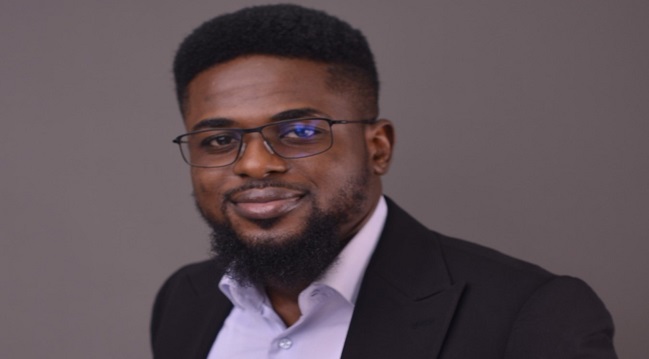
By Bidemi Oke
There is a quiet misconception in many growing companies that vision alone is enough to sustain momentum. Founders are often the engine because they are decisive, driven and deeply involved. But what happens when the engine steps back?

That question is where real companies are separated from fragile ones. Building something that outlives a founder is not about removing their influence; rather, it is about translating that influence into systems, repeatable, observable and transferable structures that do not rely on constant presence. Without this, growth becomes personality-dependent, and scale becomes inconsistent.
At the early stage, founder-led execution works. Decisions are faster, direction is clearer, and there is less friction. But as the company grows, that same model becomes a bottleneck. Every approval, every escalation, every strategic shift begins to orbit one person. The business does not slow down because of external pressure; it slows down because its internal architecture cannot carry its own weight.
Usually, “system” is often misunderstood. It is not just about tools, dashboards or policies. It is about designing how decisions are made, how information flows and how accountability is structured. It is about making sure that the logic behind actions is visible, not assumed.
For example, a strong system answers questions before they become problems. What triggers a decision? Who owns it? What data informs it? What happens if it goes wrong?
When these are unclear, teams default to escalation. When they are clear, teams operate with autonomy.
This is where many founders hesitate. System-building feels like losing control. In reality, it is the only way to extend control without being physically present. It shifts leadership from being reactive to being embedded.
One of the most overlooked aspects of building enduring systems is Documentation.
Now, not as a formality but as a strategic asset. Decisions that are not documented become opinions. Processes that are not documented become inconsistent.
Over time, this creates invisible friction. Teams solve the same problems repeatedly but differently each time.
Documentation, when done well, becomes institutional memory. It ensures that the company remembers even when individuals move on.
Another critical layer is Feedback Loops. Systems should not be static; they must evolve with the business. This requires structured ways to capture what is working, what is failing and what needs refinement. Without feedback loops, systems become outdated. With them, systems become adaptive.
There is also a cultural dimension to it. Systems do not operate in isolation; people execute them. If the culture rewards speed over clarity, systems will be bypassed. If the culture values accountability, systems will be strengthened. The goal is alignment where systems reinforce behaviour and behaviour reinforces systems.
In fast-moving industries, this becomes even more important, take fintech, for instance. The pace of regulatory change, market volatility and user expectations demands consistency under pressure.
Companies that rely solely on founder instinct struggle to keep up, while those that invest in structured decision-making, risk management frameworks, and operational clarity are better positioned to adapt.
This is something we are increasingly seeing in companies like FlashChange, where the focus is not just on growth, but on building operational resilience. The emphasis is shifting from “who is making the decision” to “how decisions are made.” That shift, while subtle, is very powerful. It creates a foundation that can support scale without losing direction.
Ultimately, building systems that outlive founders is about redefining leadership. It is not measured by how many decisions a founder makes, but by how many decisions the organisation can make without them.
The strongest companies are not those where the founder is always present. They are the ones where the founder’s thinking is quietly embedded, shaping actions, guiding priorities and influencing outcomes, even in their absence. That is how legacies are built.
Not through constant control, but through systems that carry intent forward.
Bidemi Oke is the Chief Executive Officer of FlashChange, a fintech platform focused on secure digital asset exchange. He is an entrepreneur and vibrant leader, recognised for driving innovation and redefining access in the financial technology industry.
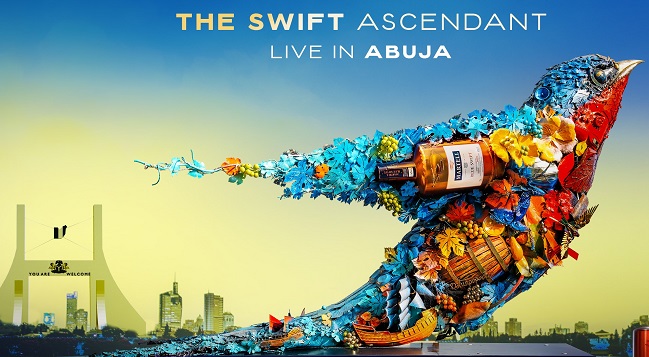
After kicking off in Lagos, Martell’s nationwide campaign, Martell On The Move, has officially arrived in Abuja. The road trip features The Swift Ascendant, a monumental 14 foot art installation that is traveling across the country to connect with people through local art and nightlife.

The installation is a physical tribute to the Swift, Martell’s iconic sigil and a symbol of freedom and constant motion. This bird represents a spirit that never stands still, much like the “Standout Swift”. A Standout Swift is anyone who embodies that same drive, rising above the ordinary to redefine their own path.
The Swift Ascendant is the result of a collaboration with celebrated Nigerian artist Dotun Popoola. What makes this piece truly stand out is its soul: it was built entirely from discarded and scrap metal.
By giving new life to old materials, Popoola and Martell have created a physical reminder that reinvention is a choice. It is a nod to a more conscious kind of luxury, one that finds beauty in what has been left behind and proves that great things can be built sustainably.
The Abuja leg of the journey hit a major milestone on March 21st at Fuego Lifestyle. It wasn’t just another event on the calendar; it was a full immersion into the Martell world. Guests at Fuego experienced the brand’s energy through curated music, signature cocktails, and a vibe that matched the industrial, edgy aesthetic of the sculpture itself.
The event served as the perfect introduction for Abuja’s social scene to see exactly how Martell is blending heritage with a modern, gritty edge. “We brought The Swift Ascendant to Abuja because the city understands ambition, audacity, and what it means to push boundaries,” said Evane Chenuet, Marketing Director at Pernod Ricard Nigeria.
“Working with Dotun Popoola allowed us to create something that feels raw and real, reflecting the House of Martell’s three hundred year legacy of challenging the status quo. Seeing it at Fuego Lifestyle showed that when art and atmosphere align, the experience isn’t just visual, it becomes something people truly feel”.
The campaign is far from over. Martell is now challenging Abuja residents to keep their eyes peeled as the installation moves through the city. If you happen to come across the 14 foot metal swift during your commute or a night out, the brand wants you to be part of the story.

Lagos Targets Vulnerable Residents in Expanded Social Register

CBN Proposes 30-Member Mediation Panel for Loan Disputes

CAC Urges Users to Secure Accounts after Cyberattack Scare

NCDC Predicts Cholera Outbreak in 10 States as Heavy Rains Loom

NDIC Seeks Court Nods to Liquidate 89 Failed Banks

Kuda MFB Increases Kuda for Her Business Grants to ₦10 Million

Canal+ to Cut Jobs as Part Sweeping Restructuring

Nigeria tops global rankings for USDT, USDC ownership

NBC Boss Urges Content Ceators to Participate in DSO

NITDA Takes Over National Digital Architecture System




 E-Financial2 days ago
Fidelity Surges Ahead in Recapitalisation Drive with ₦564bn Capital

 General News1 day ago
Guinness Nigeria Surpasses ₦1Trillion Market Capitalisation, Signalling Strong Investor Confidence and Sustained Value Creation

 Telecom2 days ago
Qualcomm Unveils Startup Selection for Qualcomm Make in Africa 2026

 Telecom2 days ago
AfDB Grants Project BRIDGE $200m Facility for Nationwide Internet Access

 E-Financial2 days ago
Digital “Pickpockets” Compromise Over a Million Banking Accounts – Kaspersky

 Telecom2 days ago
Nigeria Seeks Stronger Digital Sovereignty, National Software Infrastructure

 E-Financial2 days ago
EFCC Warns Banks against Loans without Credible Collateral

 E-Business2 days ago
Nigeria Needs Some 480,000 Local DPOs for Data Protection