

General News
We Need Llegal Framework for e-Payments- Onajite

Regha Onajite is the executive secretary of E-Payment Providers Association of Nigeria (E-PPAN). She started her career in Aula Marina, an Oil and Gas Servicing firm, and proceeded to Citibank where she spent over three years in the operations department. Specifically she managed the customer service point of the bank’s e-purse product. Onajite later joined Intermarc Consulting Limited where she served in various capacities as a Partner. She was the conference director of Card Expo West Africa, an annual conference for cards and payments in West Africa. She was the pioneering Editor-in-Chief of Card Technology Africa Magazine, and the brain behind Card East Africa an annual conference introduced in her time for the collective representation of the East Africa region. driven by a bigger vision, Onajite left Intermarc to established Nexsmart Technology Limited, a training and consulting firm. She spoke to funmi ilesanmi.
Scope and Operations of e-PPAN
E-PPAN is the e-Payment Providers Association of Nigeria. Our vision is to become the most authoritative and respected industry forum for promoting e-payment and self service businesses in Nigeria. E-PPAN is a not-for-profit organization, established with the objective of providing a platform for all the stakeholders of the e-payment industry to interact and reach common agreement on various industry issues. The Association seeks to promote the development of appropriate standards; development of appropriate policies and legislation; dissemination of credible information; and capacity building for industry players. The e-payments industry is critical to the development of the Nigerian economy in general and the financial service industry in particular. It is therefore in the interest of all stakeholders that the industry should have a central body that would provide guidance during this crucial period. It is against this premise that a number of key industry players have come together to start up the Association.
The Coming of Mobile Money
All countries with ATM or credit card schemes have the challenge of fraud and Nigeria is not an exception. With every new payment technology comes new security implications and threats. As more transactions are done on the payment platform, there will certainly be an increase in the number of fraud to be experienced. It becomes the responsibilities of operators and regulators to ensure that this is kept at a minimal level. I will like to assure you that the operators are aware of this and they are putting everything in place to ensure the safety of the consumers. The regulators of the financial industry , I mean the Central Bank of Nigeria have already issued guidelines for mobile payments ahead of the growth of mobile banking. If these guidelines are adhered to and if consumers try to understand the risk involved and take precautions then everyone will be fine.
Tackling e-Payment Fraud
Let me first define fraud as an amalgam of actions and inactions designed purposely to dispossess the rightful owner(s) of the gains and benefits of his wealth, money or position. The Association is working hard to ensure that e-payment fraud is limited to the barest minimum. The truth is as long as fraudsters exist they will continuously devise new ways to perpetuate their acts. We cannot totally eliminate them. But what we are doing is equipping our members to be alive to their responsibilities. We organize trainings, conferences, fora and so on where operators learn about latest and possible trends in fraud. They also learn about available methods and skills to combat fraud. And when these are put in place then the cases of fraud will reduce. In a few months, we have scheduled an interactive forum for our stakeholders to meet and interact on the issue of fraud. This will happen during one of flagship event, The E-PPAN Techno-Interactive Forum. It is the most significant payment industry event which holds quarterly in Nigeria with focus on addressing specific issues that affects the e-payment system landscape. The forum attracts decision makers and leaders from within and outside Nigeria. This series is dedicated to exploring the strategies for preventing fraud and tackling the menace of fraud. This will be holding in Lagos on the 28th of October, 2010. Typical of our programmes, we get the best in the industry within Nigeria and invite experts from outside Nigeria to share experiences.
Rejection of Nigerian Issued Credit Cards by Merchants outside Nigeria
In a short while this will soon be history. It has to do with our overall image, not just our payment system. The card companies are strengthening their standards and we are tending towards international best practices. This will help us a lot. The nation itself has embarked on re-branding campaign it will rub off on us too. Meanwhile, E-PPAN is building relationships with other nations and their payment associations. Payment is a global phenomenal, we can’t be an island. In a matter of time they will begin to see the good in us. You see, we have over 140million people and the world market needs us. We only need to assure them that the average Nigerian is not a fraudster. With relationship like we are building, the wrong image they have about us will gradually give way.
Can the National Central Switch (NCS) Adequately Tackle Interoperatability Challenges?
The National Central Switch will adequately tackle interoperability. The switch is only a technology. Once we have the buy in and goodwill of stakeholders, then we can make it work the way it suits Nigeria. As I always say, technology is the easy part.
Challenges Facing Deployment of PoS Terminals and Addressing It
The challenges facing PoS deployment are very numerous. We had to organize a Techno-Interactive Forum in April, where experts of local and international experience gathered together and x-rayed the issues. At the event we agreed that the issues will not be resolved talking. So, E-PPAN set up a committee to look into these challenges. The issues could be overwhelming but stakeholders are determined to break through these challenges and make PoS work. The Committee had about 16 members and we came up with a white paper which we have submitted to the Central Bank Management through the Deputy Governor Operations, Mr. Tunde Lemo. You see, the CBN has a very great interest in seeing PoS being used as a channel for payment and they have declared their desire to work with us in our drive for PoS. So we have a very strong team pushing this dream.
We have recommended quite a number of solutions to the CBN and they have gracefully accepted to work with us. What we have realized is that in Nigeria, we tend to say the Government has not done this or that, but the truth is that we are the government. If you think there are things that need to be done. Then do it. Play your part. We need to chart the course. Another major challenge for PoS is the issue of Data Communication. E-PPAN has set up another 10 man committee on this and we are working with the CBN to bring all stakeholders to the table and find lasting solutions to the problem. This cannot be done without the NCC, so they will be involved. We are also working with some Telecommunications companies on this.
Igniting a Revolution in the Nigerian e-Payment Space
Firstly, we need to put frameworks in place. We need to know the processes. We need to know the rules. There should be legal framework which will give a backing to e-payments. The Central Bank is already pursuing a bill on the National Payment System which should take care of that. Next, the level of infrastructure needs to be improved upon. The Association is already taking steps to tackle the challenge of data communication. Then generally there should be a shift in culture towards e-payment, this will come about through massive campaign targeted at awareness creation. E-PPAN is working on the expertise development of man-power in this field. There is a huge gap in this regards.
Future of e-payment in Nigeria
The future for e-payment in Nigeria is huge. E-Payment is the future for payment here. It cannot be anything less.
How has E-PPAN, a non- profit organization being able to fund its programmes and conferences?
We depend on the generosity of our benefactors for funding. Sometimes we also get sponsors for some of our major programmes.



Justice Yellim Bogoro of the Federal High Court in Lagos has declared the N60 billion fine imposed by the Advertising Regulatory Council of Nigeria (ARCON) on Facebook Nigeria Operations Limited Illegal.

Justice Bogoro stated that ARCON regulator exceeded its legal authority and breached the company’s constitutional right to a fair hearing.
He, who made the declaration while delivering judgment in Suit marked, FHC/L/CS/2205/2024, declared ARCON’s Notice of Violation/Demand for Compliance dated 21 October 2024, unconstitutional, unlawful, null, and void, and barred the agency from taking further steps to enforce it.
The judge also held that ARCON lacked the statutory power to impose fines for alleged criminal violations under the Advertising Regulatory Council of Nigeria Act, 2022, without first obtaining a conviction from a court or other competent tribunal.
The dispute arose from ARCON’s claim that Facebook Nigeria displayed advertisements on Facebook and Instagram to Nigerian audiences without prior approval from the Advertising Standards Panel, contrary to provisions of the ARCON Act and the Nigerian Code of Advertising.
Following these alleged breaches, the regulator ordered the company to cease displaying the advertisements and imposed an N60 billion penalty.
Apparently dissatisfied with the development, Facebook Nigeria, through Mofesomo Tayo-Oyetibo (SAN), its lawyer, challenged the action, arguing that ARCON lacked the legal authority to determine criminal liability or impose punitive sanctions via an administrative notice without allowing the company to defend itself.
The company also argued that it does not own or operate Facebook or Instagram, claiming both platforms are owned and controlled by Meta Platforms Inc., a separate foreign entity.
But ARCON, represented by Akinlolu Kehinde (SAN), contended that Facebook Nigeria acts as Meta’s operation in Nigeria and should therefore be held responsible for regulatory violations related to advertisements on the platforms.
The regulator further argued that the notice was simply a compliance directive, allowing the company the option to comply, pay the specified violation fee, or face prosecution.
However, Justice Bogoro dismissed the regulator’s arguments.
The judge stated that Facebook Nigeria is a distinct legal entity from Meta Platforms Inc. and that ARCON failed to present credible evidence showing that the Nigerian company owns, operates, or controls Facebook or Instagram.
The court maintained that the argument that Facebook Nigeria represents Meta’s interests in Nigeria was insufficient to establish liability for the alleged advertising infractions.
Regarding fair hearing, the court ruled that ARCON violated Section 36 of the Constitution by accusing the company of misconduct and imposing a N60 billion fine without first hearing its defence.
Justice Bogoro also held that Section 57(4) of the ARCON Act explicitly requires the regulator to provide a fair hearing before imposing any penalty.
The court further found that the alleged violations were criminal because Section 34 of the ARCON Act designates the unlawful exposure of advertisements as an offence.
The judge also held that, since the Act stated that punishment can only be imposed “upon conviction,” ARCON had no authority to impose the N60 billion fine through an administrative process.
He insisted that, regardless of what ARCON called it, the demand was a fine that could only be imposed by a court following proper judicial procedures.
As a result, the court invalidated the Notice of Violation/Demand for Compliance.
It declared ARCON lacked authority to impose fines for breaches of Sections 34(3), 54, or other criminal provisions of the ARCON Act.
Justice Bogoro also issued a perpetual injunction preventing ARCON, its officers, agents, and associates from enforcing the October 21, 2024 notice against Facebook Nigeria.
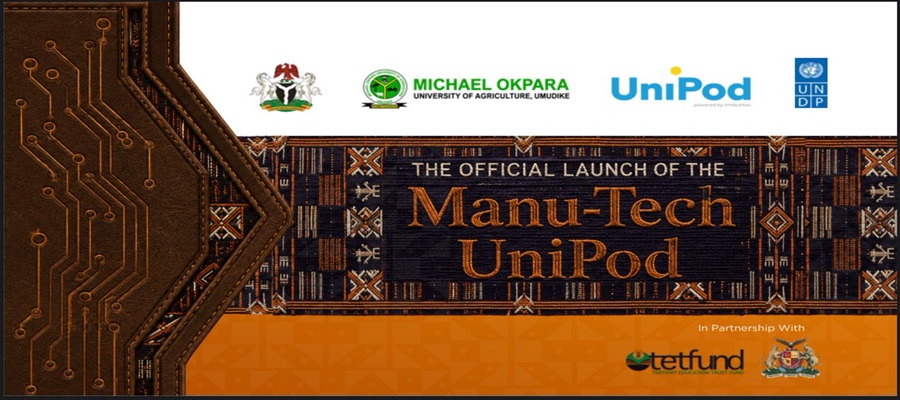
Abia State has inaugurated of the country’s first Manufacturing Technology University Innovation Pod (Manu-Tech UniPod) at the Michael Okpara University of Agriculture, Umudike (MOUAU).

Dr. Maruf Olatunji Alausa, minister of Education and Governor Alex Chioma Otti at the event
The inauguration marks a significant milestone in efforts to promote innovation, research commercialisation, and industrial development.
The landmark facility, established through a partnership between the federal government of Nigeria, the United Nations Development Programme (UNDP), the Tertiary Education Trust Fund (TETFund) and the Abia State Government under the National Innovation and Digital Transformation Partnership Programme (NIDTPP), is designed to transform academic research into commercially viable products, foster entrepreneurship, promote industrial competitiveness and create sustainable jobs.
Representing Senator Kashim Shettima, Vice President, Dr. Maruf Olatunji Alausa, minister of Education, described the project as a strategic investment in Nigeria’s future, saying it reinforces the Federal Government’s commitment to repositioning higher education as a catalyst for innovation, research commercialisation, entrepreneurship and job creation.
He stressed that Nigerian universities must evolve beyond conventional teaching and research to become centres for enterprise development, technology transfer and industrial competitiveness.
Speaking at the inauguration, Governor Alex Chioma Otti, declared that Abia is entering a new era where science, innovation and enterprise will power economic prosperity and position the state as Nigeria’s leading hub for manufacturing and technological advancement.
Delivering his keynote address titled “Science Meets Enterprise,” Governor Otti described the UniPod as a transformational investment that bridges the gap between academia and industry, noting that development flourishes through purposeful partnerships.
He said the decision of the Federal Government and the UNDP to site Nigeria’s first Manu-Tech UniPod in Abia reflects the confidence they have in the state’s enormous economic potential.
“The siting of the Manu-Tech UniPod in Abia speaks eloquently to the institutional faith the UNDP and the Federal Government of Nigeria have reposed in our dear State and the potential it holds as an engine of growth and economic prosperity in the region,” the Governor stated.
Governor Otti explained that the innovation facility will accelerate product development, industrial-scale manufacturing, renewable energy integration and entrepreneurship while equipping more than 500,000 students and researchers with technological and innovation skills over the coming years.
He expressed optimism that the project would unlock unprecedented opportunities for Aba’s renowned manufacturing ecosystem by improving product quality, branding, competitiveness and access to regional and global markets.
According to him, the UniPod will redirect research in tertiary institutions from theoretical publications to practical solutions capable of addressing everyday challenges in agriculture, healthcare, manufacturing and other productive sectors.
“The expectation is that research efforts henceforth will be directed at answering questions with practical, everyday applications,”
Governor Otti said, adding that improved research outcomes would reduce the mortality rate of Micro, Small and Medium Enterprises (MSMEs), strengthen investor confidence and stimulate sustainable economic growth across Abia and the South-East.
The Governor reaffirmed his administration’s commitment to innovation-driven development, stating that government fully supported the project because it aligns perfectly with its economic transformation agenda built on quality infrastructure, security, skilled manpower and strategic partnerships.
He also announced that the operationalisation of the UniPod would accelerate the implementation of other joint initiatives with the UNDP, including the expansion of the Jubilee Fellows Programme, the Aba Export Growth Lab, energy investment initiatives, industrial competitiveness programmes and the establishment of community innovation centres across the state.
Highlighting the opportunities presented by the African Continental Free Trade Area (AfCFTA), Governor Otti noted that businesses in Abia now have access to a market of over 1.4 billion consumers across Africa.
“The hour of big dreams and great ambitions has arrived. If we fully harness the potential of this Manu-Tech University Innovation Pod, our challenge will no longer be finding markets but building the capacity to serve customers across Africa and the world,” he declared.
In her remarks, Ms. Ahunna Eziakonwa, United Nations assistant secretary-general and UNDP regional director for Africa, commenced her official mission to Nigeria with the inauguration of the facility, underscoring the importance of strategic partnerships in driving inclusive and sustainable development.
Also speaking, Ms. Elsie Attafuah, UNDP resident representative in Nigeria, described the UniPod as part of a broader national innovation ecosystem designed to connect education, research, enterprise and manufacturing while enabling universities to become drivers of economic growth and global competitiveness.
She commended President Bola Ahmed Tinubu, Vice President Kashim Shettima, the Federal Ministry of Education, TETFund and the Abia State Government for their commitment to innovation-led development, while particularly praising Governor Otti for his vision of transforming Abia into Nigeria’s foremost manufacturing and industrial innovation hub.
Earlier, Professor Ursula Ngozi Akanwa, vice-chancellor of Michael Okpara University of Agriculture, Umudike, described the inauguration as a defining moment in the institution’s history, saying the project fulfils the University’s mandate of deploying science, technology and innovation to advance agriculture, manufacturing and enterprise.
She expressed appreciation to the Federal Government, the Federal Ministry of Education, UNDP, TETFund and the Abia State Government for selecting MOUAU to host Nigeria’s first Manufacturing Technology University Innovation Pod.
The inauguration attracted top government officials, development partners, academia and industry stakeholders, including: Dr. Emmanuel Meribeole, secretary to the State Government; Pastor Caleb Ajagba, chief of Staff to the Governor, members of the State Executive Council, traditional rulers and other dignitaries.
The Manu-Tech UniPod is expected to provide students, researchers and entrepreneurs with access to advanced manufacturing technologies, prototyping facilities, business incubation support and industry mentorship, enabling innovative ideas to be transformed into market-ready products and positioning Abia at the forefront of Nigeria’s industrial revolution.
General News
KPMG Urges Africa’s Most Innovative Tech Entrepreneurs to Enter the Global Tech Innovator 2026 Competition


KPMG Private Enterprise is inviting Africa’s most promising technology companies to apply for the KPMG Private Enterprise Global Tech Innovator 2026 competition. This competition offers innovators the opportunity to represent the continent on the global stage in Lisbon, Portugal.

Now in its sixth year, the competition brings together some of the brightest minds in technology innovation. If you are ready to demonstrate how your technology can make a difference in the world, this could be your moment to challenge the status quo, introduce transformative solutions through your unique lens, and help shape the future.
Eligible businesses from the 13 One Africa member firm countries across Southern Africa, East Africa, and West Africa are encouraged to submit their applications before Sunday, 2 August 2026.
Participants will compete through national and regional rounds, with winners advancing to the global stage where they will pitch alongside some of the world’s most innovative technology companies. Applications will be assessed on innovation, entrepreneurial spirit, growth potential, customer focus, and risk awareness by a panel of industry experts from within and outside KPMG.
Sandeep Main, Partner, Tax & Regulatory Services and Africa Head of Private Enterprise, said, “Africa continues to produce remarkable entrepreneurs who are solving complex challenges through innovation and technology.
“The Global Tech Innovator competition provides these businesses with a unique opportunity to showcase their solutions, build valuable connections, and gain exposure to investors, industry leaders, and potential partners on a global stage.
“We encourage eligible startups and scaleups from across Africa to enter and demonstrate the incredible innovation emerging from our continent.”
Beyond the competition itself, finalists will gain valuable exposure to business leaders, investors, industry experts, and fellow innovators from around the world. The overall winner will earn the title of KPMG Private Enterprise Global Tech Innovator 2026.
Applications are now open and close on 2 August 2026. To learn more about the competition, eligibility requirements, and how to apply, visit the KPMG Private Enterprise Global Tech Innovator competition webpage.

Court Declares ARCON’s N60Bn Fine against Facebook Nigeria Illegal

NIN Enrollment Hits over 136m as New ID Law Takes Effect

NRC, Ponzi Scheme Collapses Resulting Loss of Billions of Naira

Plateau PCC Collects Nigerians’ Data without Privacy Policy – FIJ

FG Suspends New Internet Regulations to Prevent Overlapping Rules

Mobile Internet Gender Gap Widest in Africa – GSMA

NASENI Moves to Digitize CCB’s 5m Assets Declaration and Operations

Nigeria Launches FreeTV Nationwide

CANAL+ Partners Samsung to Pre-Load DStv Stream on New Samsung TVs In Nigeria, Other African Countries

UK, Nigeria Launch £15m Growth Programme to Accelerate Economic Transformation




 E-Financial2 days ago
Tokenization, Blockchain Technology will Transform Financial Institutions – IMF

 General News2 days ago
NIS Deploys Advanced Surveillance Masts, other Critical Infrastructure to Boost Border Security

 Broadcasting2 days ago
Obi, NDC Presidential Candidate Faces N50Bn Defamation Claim over Alleged Podcast Remark

 E-Business2 days ago
Weebly Websites to Shut Down for Nigeria, 66 Other Countries from September

 General News1 day ago
IHS Nigeria, FCT-HSES Concludes Clean Cooking Energy Campaign “Project Breathe Clean Air” in Abuja

 E-Financial2 days ago
FG Denies N8 Trillion ‘Shadow Budget’, Says IMF Quoted out of Context

 Telecom2 days ago
No Plans for Fresh Tariff Hike – MTN

 News2 days ago
World Bank Sounds Alarm: Low Revenue, Not Debt, Is Nigeria’s Biggest Fiscal Threat