

Telecom
When Will Enough be Enough for MTN Nigeria? — By Olayiwola Luqman, FCA

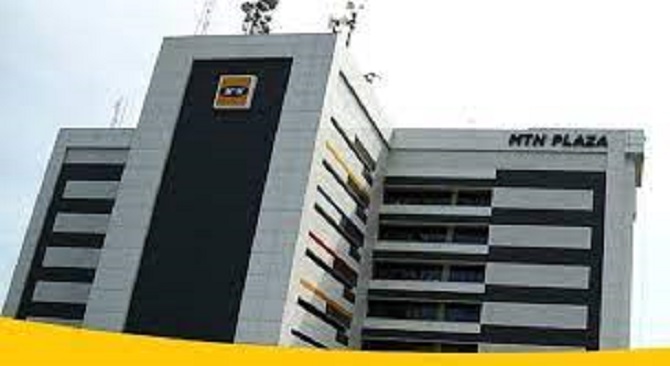
The history of MTN Nigeria Communications Plc (MTN Nigeria) is replete with controversies and litigation unlike other players in the telecom sector. Some might argue MTN’s size naturally attracts its issues. This would, however, be too easy a way out of truly analyzing its issues.

Others would argue upon review, that it is more about its attitude to Nigeria and Nigerians, in other words, the Big Man syndrome, that is the catalyst for its issues. Since inception, MTN has hobbled from issue to issue. It has won some, lost others and settled some.
The company seems to relish in courting what many refer to as ‘needless controversies’, the outcome of which is the toga of arrogance that it adorns in seeking positions only beneficial to itself and seemingly disregarding government and regulatory positions, the impact of its actions on Nigeria and Nigerians as well as other non-altruistic positions.
One may strive to seek to understand a start-up company’s choice of courting controversies as a means of creating awareness and corporate presence but for a company like MTN Nigeria that is about to celebrate its silver jubilee, one would have thought that it should be weary of unnecessary controversies. This is, however, not the story of MTN Nigeria, unfortunately.
Currently, the company is in a court battle instituted against it, its business partner, ATC Nigeria Wireless Infrastructure Limited (ATC Nigeria), and three other bodies, by the Incorporated Trustees of HEDA Resources Centre (HEDA) over the construction of 2,500 base trans-receiver stations across Nigeria for MTN’s operations. HEDA a civil society group, has gone to court to stop MTN Nigeria and ATC Nigeria from siting new base stations where there are already existing base stations citing health and environmental concerns. The case with suit No: FHC/L/CS/2359/2023, was filed in the Federal High Court, Ikoyi, on 20 November 2023 and is still pending before the court.
In October 2015, MTN Nigeria’s arrogance and disregard of the country’s laws got it enmeshed in a regulatory quagmire resulting to a fine of N1.04 trillion (about $5.2 billion) against it, for the failure to disconnect 5.1 million unregistered subscribers from its network. Its imprudence did not end there but extended to the point where it was alleged to have bribed a senior government official so the fine could be reduced.
In yet another instance, MTN Nigeria shunned Nigerians’ calls for the adoption of per-second billing as its sister subsidiaries in other climes deployed and kept insisting, for many years, that such deployment was impracticable in Nigeria. The fleecing of Nigerians by MTN Nigeria continued until Glo Mobile debunked MTN Nigeria’s denials in 2003 and debuted with per-second billing. Even when the industry regulator, NCC insisted that it deploy per-second billing, MTN Nigeria was reluctant in its compliance and went so far as to illegally charge subscribers who wanted to migrate to that platform the sum of N100 each.
A look at MTN Nigeria’s over two-decade operations in Nigeria also reveals a series of corporate governance issues, including tax defaults, illegal repatriations of profits and other corporate vices. In 2018, the Federal Government, following a ten-year “revenue assets investigation” conducted between 2007 and 2017, accused MTN Nigeria of having some liabilities which included alleged unpaid/underpaid import duties of about N242.25 billion as well as withholding and value-added taxes of about $1.3 billion. Last year, a tax appeal tribunal sitting in Lagos ordered MTN Nigeria to pay $72,551,059 in tax default to the Federal Inland Revenue Services (FIRS).
What beats most people’s imaginations is that while other subsidiaries in the MTN Group operating in other markets have had issues (Iran and Afghanistan come to mind with the very serious allegations against them), they largely seem to be responsible corporate citizens in their countries of operation. MTN Nigeria, on the other hand, tends to be roguish and more hawkish in its operations. Its services are poor, yet they appear the most expensive in Nigeria.
These issues could only be as a result of arrogance believing that, by appointing eminent Nigerians who have headed regulatory bodies with oversight over its activities to the Board of Directors of the company, it would always be able to bulldoze its path by way of influence peddling through any regulatory issue. It is worthy of note that some notable civil society groups in the country have petitioned the relevant regulatory agencies to investigate these Board appointments, citing corporate governance as well as conflict of interest issues.
The company needs to reevaluate its operations in the country with a view to respecting the law and regulatory authorities as well as having more regard for Nigerians, whose patronage earns it the position of the largest revenue earner in the MTN Group. Nigerians deserve a better deal with MTN Nigeria and the Nigerian government is supposed to stand up and ensure that this happens by insisting on good corporate governance, without being swayed or intimidated by the company or the people that sit on its board.
– Olayiwola Luqman, FCA. Business analyst, writes from Lagos*



With the introduction of Travel Saga, a premium, fast-paced gaming experience that is currently live and accessible to customers on its network, Globacom has lifted the bar for mobile entertainment in the country.

Travel Saga is a story-driven, intricately connected role-playing game designed to provide the thrill, complexity, and competitive intensity of some of the most well-known action games in the world.
The game, which has been painstakingly optimized for mobile devices, redefines mobile gaming as a full-fledged digital battlefield by translating a console-grade experience onto data-enabled handsets.
Fundamentally, Travel Saga takes users on quick virtual journeys against recognizable international landscapes. In a dynamic, ever-evolving gaming environment, players are thrown into furious missions, fierce fights, and ever-expanding tales where talent, strategy, and endurance determine who rises through the ranks to become a true war hero.
In addition to the excitement of fighting, users are encouraged to go to various locations, take part in thrilling challenges, and participate in intense competition for in-app rewards like points and victory badges. With each encounter and accomplishment, the immersion increases with each level, maintaining momentum and excitement.
Flexible subscription plans with one-time or auto-renewal choices are available to subscribers for the service, which costs ₦100 per day and ₦250 per week. By dialing *70021#, customers can quickly subscribe and gain instant access to the action.
With Travel Saga, Glo reaffirms its dedication to innovation and high-end digital experiences, making top-notch gaming easily accessible to its customers. The game offers uninterrupted action, adventure, and competition, all smoothly supported by the Glo network.
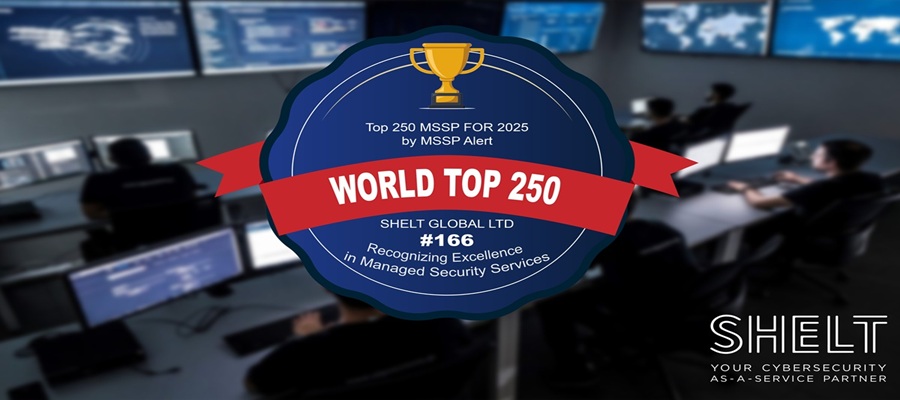
SHELT, a leading cybersecurity-as-a-service provider, has earned inclusion in the 2025 MSSP 250, the annual ranking of the world’s top 250 Managed Security Service Providers (MSSPs) by MSSP Alert, a CyberRisk Alliance publication.

SHELT
The list evaluates firms on business performance, service breadth, and industry impact, spotlighting those excelling in growth, operational excellence, and advanced managed security amid rising cyber threats. Selection criteria include annual recurring revenue, profitability, workforce expansion, business growth, and the depth of managed security offerings.
SHELT’s recognition underscores its investments in scalable security operations, threat intelligence, and tailored managed services across multiple regions, enabling clients to navigate complex risk landscapes effectively.
“Being recognised in the MSSP 250 is a meaningful milestone for our team,” stated Youssef Abillama, CEO of SHELT. “It validates our focus on building practical, resilient security services that help organisations manage risk and respond effectively to today’s evolving cyber threats.”
The company hailed the honour as testament to its teams’ dedication and expertise worldwide, reaffirming commitment to enhancing capabilities and delivering trusted cybersecurity solutions.

Meta Platforms, owner of Facebook, has appointed Dina Powell McCormick, a former adviser to President Donald Trump, as its new president and vice chairman, bolstering its leadership amid aggressive AI and infrastructure expansion.

Dina Powell McCormick
The announcement, made on Monday, positions Powell McCormick – who recently stepped down from Meta’s board after eight months – to guide overall strategy, including multi-billion-dollar investments in data centres and global partnerships.
A Goldman Sachs veteran with 16 years in senior roles and prior stints as deputy national security adviser under Trump and in the Bush administration, she brings deep finance and international ties to the role.
Meta CEO Mark Zuckerberg hailed her as “uniquely qualified” for the company’s next growth phase, while President Trump praised the move on Truth Social as a “fantastic choice”.
The hire signals Meta’s efforts to strengthen White House relations, following recent dinners with Trump and U.S. investment pledges worth hundreds of billions

Angst as FG Demands 7.5 Percent VAT on Mobile Bank Transfers, USSD

Glo Unveils Immersive Gaming Experience, Travel Saga

Half of Global Companies Build SOCs to Enhance Cybersecurity, with a Focus on Human Expertise

Moniepoint Launches Second Cohort of DreamDevs Initiative to Double Down on Africa’s Tech Talent Pipeline

NITDA DG Reaffirms Nigeria–U.S. Partnership on Data Privacy, AI and Cybersecurity

Banks quietly move to enforce new ₦50 transfer levy from Jan. 1

FIRS says NIN, CAC Numbers to Serve as Tax IDs from 2026

Nigeria Takes the Lead in the Global WSIS+20 Digital Agenda

Nigeria Police Arrest Okitipi, Nigerian Allegedly Linked to Microsoft 365 Hack

PalmPay Launches N400 Million World Travel Carnival, Rewarding Users with Free Global Trips




 E-Financial3 days ago
Wema Bank Upgrades ALAT Banking App

 General News3 days ago
Firm Launches AI-powered Platform to Simplify New Tax Laws

 Telecom3 days ago
X Suspends Twitter Account for Rules Violation

 General News2 days ago
PalmPay, Premier Cool to Reward 10,000 Nigerians with ₦100m in “10k for 10k Campaign”

 E-Business3 days ago
Study Reveals 88.5% of Phishing Attacks Focus on Stealing Account Credentials

 News2 days ago
Nigeria, Others Lag Behind as Egypt Tops Africa in AI Readiness

 E-Financial2 days ago
Ecobank Joins Trillion-naira Club for the First Time in 20 Years

 E-Business2 days ago
Kaspersky Warns Telecom Threats from 2025 will Carry into 2026 as New Technology Adds New Risk