

E-Financial
Why 2026 Must Be the Year Nigeria’s Economy Works for All


By Blaise Udunze
As the new economic year begins in Nigeria, statements and policies emanating from government officials’ corridors project cautious optimism. One of the official narratives that expresses renewal of hope and confidence is the projection from the Central Bank of Nigeria (CBN) that the economy is expected to continue expanding, with GDP growth at 4.49 percent, and headline inflation is projected to moderate to 12.9 percent. Despite grappling with shrinking oil revenues, rising public debt, and widening fiscal deficits as a nation, it is further projected that the foreign reserves are anticipated to exceed $50 billion. Policymakers presented these figures as evidence that the economy is stabilising and consolidating, irrespective of the clear evidence of years of turbulence.

Yet the concern for experts is that beyond the polished macroeconomic indicators lies a widening disconnect between statistical recovery and lived reality. While increasingly warning that stability is necessary, the views across academia, civil society, labour groups, and the private sector, experts clearly stated that it is not synonymous with sustainable growth, nor does it automatically improve living standards for millions of Nigerians grappling with unemployment, rising prices, and fragile livelihoods.
This development signals the economic debate entering 2026, as evident in the previous years, the argument that the year must not become another chapter in which rhetoric outpaces results. To them, it must place productivity, inclusion, and welfare at the heart of reform as all this must be informed via a decisive shift toward holistic, people-centered economic renewal.
The Numbers and the Narrative
There is no denying that certain macroeconomic indicators have improved. Tighter monetary policy in 2025, foreign exchange market unification, and efforts to rein in deficit financing have contributed to relative stability in inflation dynamics and exchange rate volatility.
However, economists interviewed by major national dailies argue that many of these gains remain largely “on paper.” They clearly stated that growth figures have not translated into broad-based job creation, rising real incomes, or improved business conditions for small enterprises. It is regrettable that households whose spending is dominated by food, transport, and energy, whilst inflation. However, easing remains painfully high relative to income, and this disconnect underscores a deeper flaw in economic communication and design, showing that headline indicators often mask structural weaknesses. GDP growth does not automatically reflect productivity expansion, employment quality, or resilience. Foreign reserves alone do not guarantee the affordability of necessities. When policy emphasis centres on aggregates rather than outcomes, reform risks losing social legitimacy.
When Stability Isn’t Enough
The inflation debate illustrates this dilemma clearly, and projections suggest moderation in 2026, yet prices of essential goods remain high. Low-income households, especially those outside formal wage employment, bear a disproportionate burden. For them, “disinflation” offers little relief when purchasing power has already been eroded. In like manner, exchange rate unification, though economically rational, imposed short-term shocks on import-dependent businesses and consumers. The fact remains that without a simultaneous and aggressive push to strengthen domestic production, the nation’s currency reforms risk transferring adjustment costs to households rather than building long-term competitiveness. These debates reveal two competing visions of economic management:
– One that prioritises macroeconomic order and investor confidence
– Another that insists stability must be matched by visible improvements in welfare, productivity, and opportunity.
The fact is that a holistic renewal agenda must reconcile both.
Macroeconomic Stability as Foundation, Not Destination
To be clear, stability matters, and it must be treated as a foundation, not the finish line. One will conclude that this is what it is meant to be because economic planning becomes impossible without disciplined fiscal management, credible monetary policy, and sustainable debt dynamics. Experts caution against celebrating stabilisation while growth remains modest.
The International Monetary Fund projects Nigeria’s growth to slow toward three per cent, with further moderation in 2026 due largely to weaker global demand and declining oil prices. Crude oil’s fall below Nigeria’s budget benchmark reinforces the urgency of diversification. Moderate growth, without deep structural reform, cannot absorb Nigeria’s rapidly expanding labour force. This is because as a young, fast-growing population requires productivity-led growth, not cyclical rebounds tied to commodity prices.
Infrastructure as the Productivity Multiplier
Infrastructure remains one of Nigeria’s most binding constraints, commonly associated with the lingering erratic power supply, congested transport corridors, inefficient ports, and weak digital connectivity, which impose high costs on businesses and households alike.
Consistently, it is argued by experts that fragmented projects are insufficient by objectively looking at the trend of things; what is required is integrated infrastructure planning that links energy reform with transport logistics, industrial clusters, rural access roads, and digital platforms. Some of the key grey areas that the electricity reform must address are not just generation but transmission losses, distribution inefficiencies, and tariff credibility. Without much ado, transport investments should prioritise economic corridors and channels that connect farms to markets and factories to ports. Digital infrastructure, broadband access, data systems, and digital public services must be recognised as essential economic infrastructure, not optional upgrades.
Human Capital and the Missing Engine of Growth
No economy can sustainably outgrow the quality of its people. Yet education and healthcare often remain peripheral in reform discourse.
Today, we noticed that Nigeria’s education system struggles with skill mismatches, while healthcare costs push millions into poverty.
Economic growth, no matter how well-measured, will remain shallow, as experts have maintained in their arguments that this will remain a constant factor without human capital reform. In the same manner, education, which is a key instrument for building human capital, must be in alignment with labour-market needs, while reflecting technical skills, digital literacy, and adaptability, knowing quite well that vocational and technical are critical and should be elevated as engines of productivity, not treated as second-tier options. Human capital is not social expenditure; it is economic investment, so for this reason, healthcare investment, like others, must prioritise preventive care, insurance coverage, and workforce retention.
Private Sector and MSMEs, From Constraint to Catalyst
Small and medium-sized enterprises are already struggling to survive in Nigeria’s high-cost economy, despite being the nation’s largest employer of labour, as informed by high interest rates, limited credit access, regulatory uncertainty, and infrastructure bottlenecks.
Access to affordable finance, regulatory simplicity, predictable tax policy, and contract enforcement are critical since experts repeatedly stress that reform must shift from controlling enterprise to enabling it.
Without deliberate support for small businesses, growth remains concentrated, informal employment persists, and inequality deepens. For these reasons, MSMEs require not just credit, but stable operating environments.
Industrialisation, Local Production, and Value Addition
One of the strongest expert warnings ahead of 2026 concerns Nigeria’s continued reliance on imports and raw commodity exports. This structure leaves the economy exposed to external shocks and foreign exchange volatility. For this reason, we have continued to witness economists and industry leaders advocating aggressive support for local production, agro-processing, and manufacturing value chains. Strengthening domestic capacity reduces import dependence, stabilises foreign exchange demand, and creates jobs.
Industrial policy must practically focus on sectors where Nigeria has a comparative advantage, supported by infrastructure, skills, and finance. This is to say that import substitution without competitiveness risks inefficiency, and value addition with productivity creates resilience.
Fiscal Reform and Social Justice
Fiscal reform is very important, and experts have argued that to make sure that fiscal reform is done in a fair way, it must be equitable. The tax officials must ensure that extending the tax base, it does not translate into overburdening small businesses or low-income earners. Also, one would have noticed that the removal of fuel subsidies freed fiscal space, but without strong social safety nets, it also made life very tough for a lot of people because they did not have any help when they needed it. Critics argue that reform savings must be visibly social investments like education, healthcare, transport, and targeted welfare. Social protection is not charity; it is economic stabilisation, preventing reform shocks from eroding social cohesion.
Governance, Institutions, and Policy Credibility
Unique to the Nigerian system, we have witnessed economic reforms fail where institutions are weak. This is because trust and investment have been undermined due to Policy reversals, regulatory inconsistency, and the lack of transparent decision-making.
Beyond rhetoric to enforcement, experts emphasise the need for policy coherence, institutional professionalism, and transparent communication. Anti-corruption efforts must extend. Prolonged Judicial judgement, particularly in commercial dispute resolution, has adversely impeded the smooth running of society as it questions the credibility of the system. Good governance is not abstract morality, rather it is a growth multiplier.
Agriculture, Food Security, and Rural Stability
Food inflation remains a major driver of hardship and has been one of Nigeria’s most stubborn. Though trade liberalisation has occasionally eased prices, experts argue that without boosting domestic agricultural productivity, food security will remain fragile.
Mechanisation, storage infrastructure, rural roads, insurance, and access to finance are essential. Equally critical is addressing rural insecurity, which disrupts production and inflates food prices.
Agriculture links economic growth directly to poverty reduction and social stability.
Digital Economy and Innovation
Technology is no longer a sector; it is a layer across all sectors. One can argue that Nigeria’s fintech success demonstrates what is possible, but looking at it intently, a broader digital transformation requires investment in connectivity, data protection, and cybersecurity. Regulation must be enabling, must be able to change when necessary, and forward-looking to achieve a thriving digital economy that can generate jobs, improve service delivery, and connect local firms to global markets.
The Productivity Challenge in Decline
Across expert critiques, one theme recurs: stability without productivity is stagnation.
An economy can be stable yet unproductive, grow slowly, create little or no jobs, and remain vulnerable to shocks. Productivity growth transforms stability into prosperity. It requires investment in people, infrastructure, innovation, and institutions.
Without productivity, growth becomes cyclical, driven by oil prices, not by domestic capacity.
From Rhetoric to Resonance: Closing the Credibility Gap
As Nigeria enters 2026, it has to choose to either settle for modest stability and make progress or pursue bold, people-centred strategies that generate shared prosperity.
The signs of stabilisation are real. But so is the urgency for deeper reforms that trickles down to the daily lives of those at the lower rung. Growth must be measured not only in GDP figures, inflation rates, or reserves, but in the number of jobs that are being created, the people who are earning money, and the businesses that are still running, with hope restored. It is expected that a true economic renewal in 2026 will not be announced; it will be felt.
Blaise, a journalist and PR professional, writes from Lagos and can be reached via: [email protected]



GCR Ratings (GCR) has affirmed African Export-Import Bank (Afreximbank) international scale long and short-term issuer ratings of A and A2 respectively. The outlook was revised to “Stable” from “Rating Watch Evolving”.

GCR has also affirmed the international scale long term programme rating on the $5 billion Global Medium Term Note (GMTN) Programme of A.
The improved rating reflects GCR’s assessment of a “robust counter-cyclical mandate, underpinned by a strong track record and ongoing preferential creditor treatment (PCT) from shareholders.”
South Africa became the latest country to affirm the Bank’s Establishment Treaty and Preferred Creditor Status when it recently signed the Instrument of Accession to become a full sovereign member of the Bank.
The report continued: “The Bank’s solid capitalisation and diversified funding profile provide significant buffers against emerging credit risks.” The report also acknowledged the Bank’s diverse shareholding base.
The outlook change from “Rating Watch Evolving” to “Stable”, according to GCR, indicates that there is immaterial downside risk related to sovereign debt restructurings.
Commenting on the Rating action, Chandi Mwenebungu, Managing Director and Group Treasurer, Treasury and Markets at Afreximbank said: “We are delighted that GCR has affirmed its credit rating on the Bank and resolved the outlook to ‘stable’, particularly in the light of recent positive credit developments.
“We continue to assert that the Bank’s preferred creditor treatment is enshrined in the Bank’s Establishment Agreement, ratified by all member states. It is not a matter of opinion or convention; it is fact”.
Mwenebungu continued, “It is also pleasing to note that GCR acknowledges the Afreximbank’s strong liquidity and capitalisation, and resilient risk profile. This is testament to the Bank’s financial and operational strength and that it has been able to demonstrate firm resolve in the face of continued macro-economic pressures and a challenging environment.”
Smartcash Payment Service Bank (PSB), the Airtel-owned digital financial services platform, has unveiled a nationwide marketing campaign titled “No Be Cho Cho Cho”, signalling a strategic shift toward proof-led messaging in Nigeria’s fast-evolving fintech sector.

Launched at a media event in Lagos, the campaign represents a new chapter for Smartcash, following its earlier “Money Matter Na Sense” positioning, reflecting the company’s rapid growth and increasing role in Nigeria’s digital financial ecosystem. The platform now serves nearly three million active wallets, with users spanning students, traders, households and small businesses across the country.
The phrase “Cho Cho Cho,” a popular expression in Nigerian street parlance meaning “talking without action,” is used deliberately by the company to challenge the hype-driven marketing culture that has often characterised the fintech sector. Instead, Smartcash says the campaign will focus on demonstrable performance and measurable value for customers, which means “Smartcash dey show workings”.
The initiative centres on the three pillars of reliability, transparency and demonstrable service delivery and addresses what the company describes as a widening trust gap in Nigeria’s digital payments market.
Speaking at the launch, Ayotunde Kuponiyi, Managing Director and Chief Executive Officer of Smartcash PSB, outlined the strategic philosophy behind the campaign, linking the company’s mission to broader global and national economic priorities.
“Financial inclusion is a critical pillar of the United Nations Sustainable Development Goals, and with the launch of ‘No Be Cho Cho Cho’, we are proving our commitment to this vision,” Kuponiyi said.
“We have built an accessible banking service that breaks barriers for everyone, from corporate executives to the previously unbanked, pulling them from the sidelines to centre stage. Through our flagship zero-charge service, we promise no fees on P2P transfers or bill payments. Furthermore, our savings account offers 15 percent per annum compounded interest, paid daily without penalties. Unlike conventional banks, we charge you nothing, ensuring your money truly works for you.”
Smartcash’s zero-charge model, which eliminates fees on transfers and bill payments, has become one of the platform’s defining features., alongside instant transfers and everyday payments for utilities, airtime, data and cable TV.
Kuponiyi noted that the campaign reflects a broader philosophy of accountability in digital finance.
“Nigerians have experienced inconsistency and unclear charges across various platforms in the past,” he said. “With No Be Cho Cho Cho, we are saying clearly: don’t just listen to what we say; experience the proof.”
Smartcash operates as a Payment Service Bank licensed by the Central Bank of Nigeria and is wholly owned by Airtel Nigeria, a part of the Airtel Africa Group, which operates across 14 countries. This backbone allows the platform to serve customers through both smartphone applications and USSD channels, enabling access for users without smartphones or traditional bank accounts.
Beyond consumer banking, the platform is also expanding its footprint through a nationwide network of agents that facilitate transactions and financial services in underserved communities.
Providing further insight into the bank’s financial architecture and long-term roadmap, Kuponiyi, emphasised that the campaign reflects the strength of the institution’s operational foundation.
“At Smartcash, we have matched our ambitious growth targets with disciplined investment in secure, high-volume processing capabilities. The No Be Cho Cho Cho initiative is a testament to our financial health and our unwavering focus on driving financial inclusion through sustainable incentives that provide real value to the Nigerian economy,” he said.
As part of the rollout, the No Be Cho Cho Cho” campaign will run nationwide across television, radio, outdoor advertising and digital platforms, targeting young, mobile-first consumers while also reaching traders and small businesses through agent networks and USSD channels.
For Smartcash, the campaign marks more than a marketing refresh; it signals an attempt to redefine how financial technology companies communicate with Nigerian consumers in an increasingly competitive sector.
As Kuponiyi concluded at the launch: “The evidence is plenty. Nigerians can see it for themselves.”
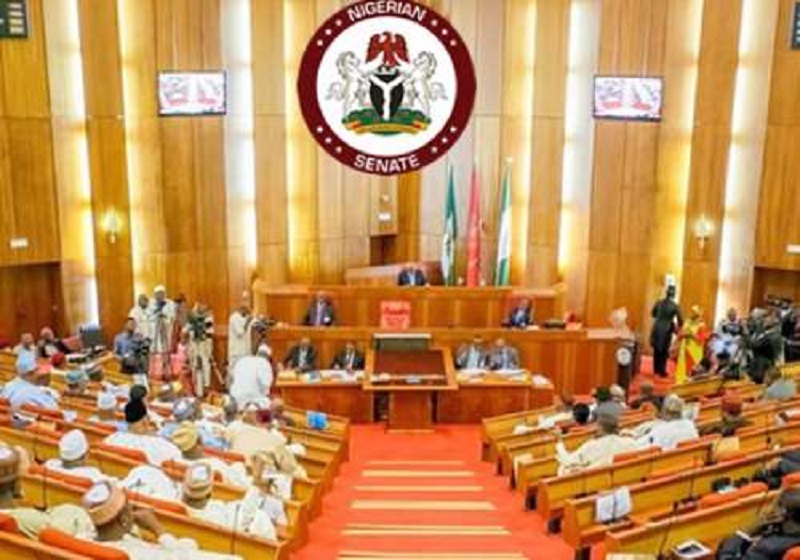
Nigerian Senate has launched a public hearing to amend the Banks and Other Financial Institutions Act (BOFIA) 2020 while investigating rampant ponzi schemes, spotlighting the Crypto Bridge Exchange (CBEX) collapse that defrauded 1,200 victims of ₦1.3 trillion.

Senate President Godswill Akpabio, represented by Senate Leader Opeyemi Bamidele, opened Tuesday’s session jointly organised by committees on Banking, ICT/Cybersecurity, Capital Market, and Anti-Corruption. The bill (SB959) aims to bolster Central Bank of Nigeria (CBN) oversight of fintechs and systemically important digital institutions without creating a duplicate regulator.
Akpabio stressed: “Enhanced supervision is not a constraint on growth; it is a safeguard for sustainable growth,” rejecting a standalone fintech commission to avoid fragmented oversight. Crypto licensing falls under SEC, but transaction stability remains CBN’s domain.
Senate Banking Committee Chairman Mukhail Abiru highlighted a national registry for transparency and risk-based fintech supervision, backed by CBN Deputy Governor Philip Ikeazor, who noted some fintechs rival mid-sized banks in volume.
The probe targets regulatory gaps exposed by CBEX’s unrealistic returns amid economic hardship. EFCC’s Dein Whyte reported asset seizures from operators, with forfeiture proceedings underway.
CBN’s Orekia Opemi-Yusuf warned separate regulators could stunt Nigeria’s expanding fintech sector, while FCCPC’s Ondaje Ijagwu urged clear lines between prudential rules and consumer protection. The reforms seek to restore trust in a digital economy battered by fraud.

MultiChoice to Discontinue Showmax Streaming Platform

GCR Affirms Afreximbank’s International Scale Ratings of A, A2

SmartCash Launches ‘No Be Cho Cho Cho’ Campaign to Boost Digital Banking in Nigeria

MTN Nigeria Non-Executive Director Mazen Mroue Quits to Focus on Group Role

Google Adds Yorùbá, Hausa to AI Search, Boosting Access for Millions of Nigerians

Dr. Cairo Ojougboh Foundation Bolsters Nigeria’s Education Drive with ₦2.7m Student Support

Kaspersky Brings more Transparency to Threat Detection with New Hunt Hub

NDPC Commits to Balancing Data Privacy, Protection Information

PwC Reveals AI Scaling Gap Slows Africa’s Digital Transformation

Firm Reviews the Evolution of Phishing Threats in 2025




 E-Financial2 days ago
NRS Targets N40trillion in Tax, Royalty Revenue in 2026

 E-Financial2 days ago
SEC Revokes Registration of Kensington Agro Trading Limited

 General News2 days ago
Purple Woman 3.0 Is Back, to Empower Women in Tech this IWD 2026

 News2 days ago
EFCC Arraigns Two FSDH Bank Officials Over $307k, €50k Fraud

 Telecom2 days ago
Konga Launches ‘Berekete Sales’ with Up to 50% Discounts Across Major Categories
 E-Business2 days ago
NDPC, 60 DPAs Collaborate on Enforcing Privacy Rights in the Use of Al

 General News2 days ago
NCDC Raises Alarm over Lassa Fever Ravaging 18 States in Nigeria

 E-Financial2 days ago
Nigeria’s Net Reserves Surge 50% to $34.8bn in 2025 – CBN Governor