

General News
Why Nigeria’s Banks Still on Shaky Ground with Big Profits, Weak Capital


By Blaise Udunze
Despite the fragile 2024 economy grappling with inflation, currency volatility, and weak growth, Nigeria’s banking industry was widely portrayed as successful and strong amid triumphal headlines. The figures appeared to signal strength, resilience, and superior management as the Tier-1 banks such as Access Bank, Zenith Bank, GTBank, UBA, and First Bank of Nigeria, collectively reported profits approaching, and in some cases exceeding, N1 trillion. Surprisingly, a year later, these same banks touted as sound and solid are locked in a frenetic race to the capital markets, issuing rights offers and public placements back-to-back to meet the Central Bank of Nigeria’s N500 billion recapitalisation thresholds.

The contradiction is glaring. If Nigeria’s biggest banks are so profitable, why are they unable to internally fund their new capital requirements? Why have no fewer than 27 banks tapped the capital market in quick succession despite repeated assurances of balance-sheet robustness? And more fundamentally, what do these record profits actually say about the real health of the banking system?
The recapitalisation directive announced by the CBN in 2024 was ambitious by design. Banks with international licences were required to raise minimum capital to N500 billion by March 2026, while national and regional banks faced lower but still substantial thresholds ranging from N200 billion to N50 billion, respectively. Looking at the policy, it was sold as a modern reform meant to make banks stronger, more resilient in tough times, and better able to support major long-term economic development. In theory, strong banks should welcome such reforms. In practice, the scramble that followed has exposed uncomfortable truths about the structure of bank profitability in Nigeria.
At the heart of the inconsistency is a fundamental misunderstanding often encouraged by the banks themselves between profits and capital. Unknown to many, profitability, no matter how impressive, does not automatically translate into regulatory capital. Primarily, the CBN’s recapitalisation framework actually focuses on money paid in by shareholders when buying shares, fresh equity injected by investors over retained earnings or profits that exist mainly on paper.

This distinction matters because much of the profit surge recorded in 2024 and early 2025 was neither cash-generative nor sustainably repeatable. A significant portion of those headline banks’ profits reported actually came from foreign exchange revaluation gains following the sharp fall of the naira after exchange-rate unification. The industry witnessed that banks’ holding dollar-denominated assets their books showed bigger numbers as their balance sheets swell in naira terms, creating enormous paper profits without a corresponding improvement in underlying operational strength. These gains inflated income statements but did little to strengthen core capital, especially after the CBN barred banks from using FX revaluation gains for dividends or routine operations. In effect, banks looked richer without becoming stronger.
Beyond FX effects, Nigerian banks have increasingly relied on non-interest income fees, charges, and transaction levies to drive profitability. While this model is lucrative, it does not necessarily deepen financial intermediation or expand productive lending. High profits built on customer charges rather than loan growth offer limited support for long-term balance-sheet expansion. They also leave banks vulnerable when macroeconomic conditions shift, as is now happening.
Indeed, the recapitalisation exercise coincides with a turning point in the monetary cycle. The extraordinary conditions that supported bank earnings in 2024 and 2025 are beginning to unwind. Analysts now warn that Nigerian banks are approaching earnings reset, as net interest margins the backbone of traditional banking profitability, come under sustained pressure.
Renaissance Capital, in a January note, projects that major banks including Zenith, GTCO, Access Holdings, and UBA will struggle to deliver earnings growth in 2026 comparable to recent performance.
In a real sense, the CBN is expected to lower interest rates by 400 to 500 basis points because inflation is slowing down, and this means that banks will earn less on loans and government bonds, but they may not be able to quickly lower the interest they pay on deposits or other debts. The cash reserve requirements are still elevated, which does not earn interest; banks can’t easily increase or expand lending investments to make up for lower returns. The implications are significant. Net interest margin, the difference between what banks earn on loans and investments and what they pay on deposits, is poised to contract. Deposit competition is intensifying as lenders fight to shore up liquidity ahead of recapitalisation deadlines, pushing up funding costs. At the same time, yields on treasury bills and bonds, long a safe and lucrative haven for banks are expected to soften in a lower-rate environment. The result is a narrowing profit cushion just as banks are being asked to carry far larger equity bases.
Compounding this challenge is the fading of FX revaluation windfalls. With the naira relatively more stable in early 2026, the non-cash gains that once flattered bank earnings have largely evaporated. What remains is the less glamorous reality of core banking operations: credit risk management, cost efficiency, and genuine loan growth in a sluggish economy. In this new environment, maintaining headline profits will be far harder, even before accounting for the dilutive impact of recapitalisation.
That dilution is another underappreciated consequence of the capital rush. Massive share issuances mean that even if banks manage to sustain absolute profit levels, earnings per share and return on equity are likely to decline. Zenith, Access, UBA, and others are dramatically increasing their share counts. The same earnings pie is now being divided among many more shareholders, making individual returns leaner than during the pre-recapitalisation boom. For investors, the optics of strong profits may soon give way to the reality of weaker per-share performance.
Yet banks have pressed ahead, not only out of regulatory necessity but also strategic calculation.
During this period of recapitalization, investors are interested in the stock market with optimism, especially about bank shares, as banks are raising fresh capital, and this makes it easier to attract investments. This has become a season for the management teams to seize the moment to raise funds at relatively attractive valuations, strengthen ownership positions, and position themselves for post-recapitalisation dominance. In several cases, major shareholders and insiders have increased their stakes, as projected in the media, signalling confidence in long-term prospects even as near-term returns face pressure.
There is also a broader structural ambition at play. Well-capitalised banks can take on larger single obligor exposures, finance infrastructure projects, expand regionally, and compete more credibly with pan-African and global peers. From this perspective, recapitalisation is not merely about compliance but about reshaping the competitive hierarchy of Nigerian banking. What will be witnessed in the industry is that those who succeed will emerge larger, fewer, and more powerful. Those that fail will be forced into consolidation, retreat, or irrelevance.
For the wider economy, the outcome is ambiguous. Stronger banks with deeper capital buffers could improve systemic stability and enhance Nigeria’s ability to fund long-term development. The point is that while merging or consolidating banks may make them safer, it can also harm the market and the economy because it will reduce competition, let a few banks dominate, and encourage them to earn easy money from bonds and fees instead of funding real businesses. The truth be told, injecting more capital into the banks without complementary reforms in credit infrastructure, risk-sharing mechanisms, and fiscal discipline, isn’t enough as the aforementioned reforms are also needed.
The rush as exposed in this period, is that the moment Nigerian banks started raising new capital, the glaring reality behind their reported profits became clearer, that profits weren’t purely from good management, while the financial industry is not as sound and strong as its headline figures. The fact that trillion-naira profit banks must return repeatedly to shareholders for fresh capital is not a sign of excess strength, but of structural imbalance.
With the deadline for banks to raise new capital coming soon, by 31 March 2026, the focus has shifted from just raising N500 billion. N200 billion or N50 billion to think about the future shape and quality of Nigeria’s financial industry, or what it will actually look like afterward. Will recapitalisation mark a turning point toward deeper intermediation, lower dependence on speculative gains, and stronger support for economic growth? Or will it simply reset the numbers while leaving underlying incentives unchanged?
The answer will define the next chapter of Nigerian banking long after the capital market roadshows have ended and the profit headlines have faded.
Blaise, a journalist and PR professional, writes from Lagos and can be reached via: [email protected]


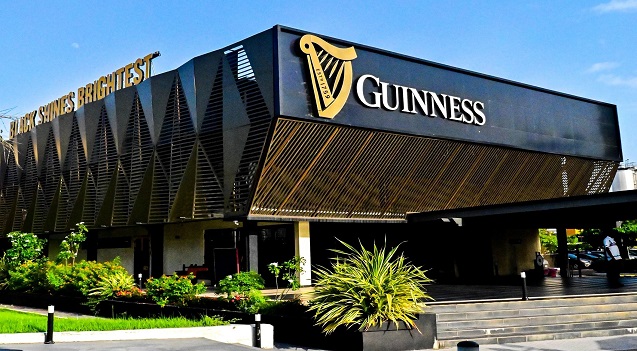
Guinness Nigeria has officially begun rewarding consumers under its nationwide ‘Open For More’ National Consumer Promotion (NCP), with an impressive ₦17 million in rewards to 107 winners during the campaign’s first live draw held on July 31, 2026.

The inaugural draw instantly transformed the fortunes of consumers across the country, producing seven new millionaires, who each received ₦1 million, alongside 100 additional winners, who each walked away with ₦100,000. The milestone marks the beginning of a series of weekly live draws that will see hundreds more Nigerians rewarded throughout the promotion.
The seven ₦1 million winners are Marcus Barieepie, Ani Valentine Ogochukwu, Okafor Sochima, Taiwo Adebola, Zubair Rukayat, Oluwatobi Femi, and Ebubechukwu Okolo.
The live draw was conducted under the supervision of the Federal Competition and Consumer Protection Commission (FCCPC) to ensure transparency and fairness. Representatives of the commission present included Dr. Olubunmi Otti, Zonal Coordinator, FCCPC Southwest, and Mrs. Abosede Ogundeji, Surveillance and Investigation Officer.
Speaking during the draw, Ramanathan S, representing Guinness, said the promotion reflects the brand’s enduring commitment to celebrating and rewarding the consumers who have supported Guinness over the years.
“For decades, Nigerians have made Guinness a part of their milestones and celebrations. Today, we are proud to give back by putting ₦17 million directly into the hands of 107 consumers in our very first draw. This is only the beginning. Over the coming weeks, many more Nigerians will experience life-changing rewards as we continue to celebrate the loyalty of the people who have made Guinness part of their stories.”
He added that all weekly draws will continue to be streamed live across Guinness Nigeria’s official platforms, enabling consumers to witness the winner-selection process in real time and reinforcing the transparency and credibility of the promotion. He also encouraged eligible consumers nationwide to participate, noting that every valid entry presents another opportunity to win.
The ‘Open For More’ National Consumer Promotion offers consumers the chance to win ₦1 million every day, ₦100,000 cash prizes for 1,000 winners, and a Toyota Land Cruiser Prado as the grand prize. Altogether, the promotion will reward consumers with more than ₦400 million in cash and prizes.
To participate, consumers simply need to purchase specially marked bottles of Guinness Foreign Extra Stout or Guinness Smooth, locate the unique code beneath the crown cork or can lid, and enter the code via the designated campaign platform.
With ₦17 million already won in its opening draw, the campaign is off to a remarkable start, reinforcing Guinness Nigeria’s commitment to rewarding consumer loyalty through transparent processes and unforgettable experiences that go beyond the product. Consumers are encouraged to look out for specially marked promotional packs and follow Guinness Nigeria’s official communication channels for updates, winner announcements, and details of upcoming draws.
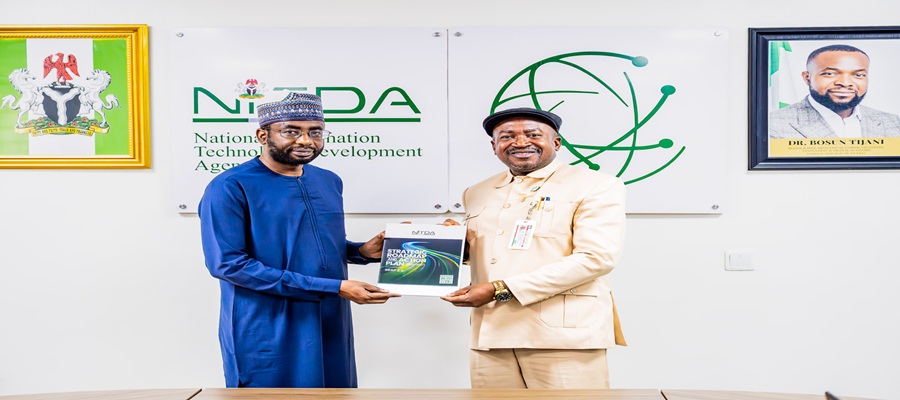
National Information Technology Development Agency (NITDA) has expressed readiness to deepen collaboration with Nigerian universities to promote research, innovation and technology-driven solutions to local challenges.

NITDA, UniAbuja
NITDA’s Director-General, Kashifu Inuwa Abdullahi, stated this when the management of Yakubu Gowon University, formerly the University of Abuja (UniAbuja), led by its Vice-Chancellor, Prof. Hakeem Fawehinmi, paid a familiarisation visit to the agency’s headquarters in Abuja.
Abdullahi said stronger collaboration between NITDA and tertiary institutions was essential to building a robust innovation ecosystem, developing practical skills and positioning Nigeria for technology-driven economic growth.
He stressed the need for increased investment in research, particularly in emerging technologies such as Artificial Intelligence (AI), Internet of Things (IoT), blockchain, cybersecurity and cloud computing.
“We need to invest more in in-depth research with universities to build a robust research ecosystem that will help us develop solutions.
“Research will focus on harnessing AI, IoT, blockchain, cybersecurity and cloud technology, among other emerging technologies, to improve our lives and grow our digital economy,” he said.
The DG described universities as critical talent factories required to achieve Nigeria’s digital transformation aspirations.
“NITDA has a vision to make Nigeria a digitally empowered nation. You (UniAbuja) are the talent factory, and we cannot achieve our vision without talented Nigerians.
“The only way to achieve that is by working with institutions like yours. So, we need to build talent,” he said.
Abdullahi also advocated the integration of AI education across disciplines in tertiary institutions, saying students needed practical digital skills to remain relevant in the evolving world of work.
“We can work together to explore ways of introducing AI across the board as a general study course in tertiary institutions.
“Elements of AI should be included in every field of study to equip our students with the hands-on skills for navigating the real world,” he said.
According to him, NITDA is already collaborating with key education sector stakeholders, including the Federal Ministry of Education, National Universities Commission (NUC), National Board for Technical Education (NBTE) and National Commission for Colleges of Education.
He said the agency was also working to promote digital literacy programmes across all levels of education to ensure that graduates acquire skills relevant to industry requirements.
Earlier, Fawehinmi said the university’s visit was aimed at seeking NITDA’s partnership and support in strengthening digital infrastructure and technology-based training at the institution.
He expressed appreciation for NITDA’s contributions to the Digital Geoscience Centre at the university.
The Vice-Chancellor said the university was willing to collaborate with NITDA on joint research, capacity-building initiatives and innovation programmes capable of contributing to Nigeria’s socio-economic development.
“We could go into partnership with you to provide data, collaborative engagements, staff exchanges and joint research hubs, so that we can produce high-level human resources.
“The university is committed to serving as a strategic academic partner to NITDA by providing academic expertise required to advance your national digital transformation initiatives,” he said.
The proposed collaboration is expected to strengthen the link between academic research and industry needs while creating opportunities for technology innovation, skills development and practical solutions to Nigeria’s socio-economic challenges.

A New Mexico court has ordered Meta, the parent company of Facebook and Instagram, to pay $567 million to address the alleged harms caused to young people by its social media platforms.

Meta
The ruling by Judge Bryan Biedscheid came in the second phase of a landmark trial concerning the impact of Meta’s platforms on children and teenagers.
The judge said $420 million of the amount would be dedicated to treatment services for young people, while the remaining funds would support awareness and prevention programmes, screening services and other related costs over the next five years.
The latest financial order comes on top of $375 million in civil penalties awarded against Meta in March after a jury found that the company knowingly harmed children’s mental health and concealed information about child sexual exploitation on its platforms.
During the second phase of the trial, prosecutors asked the court to order fundamental changes to Meta’s platforms, including measures to reduce addictive features, improve age verification and prevent child sexual exploitation through stronger privacy settings and increased oversight.
The court subsequently ordered Facebook and Instagram to introduce banner notifications and informational screens explaining their safety features, recommended practices and tools for addressing inappropriate comments.
The platforms must also regularly display the information, while an educational campaign in New Mexico will be subject to review by the state.
New Mexico Attorney General Raúl Torrez said the ruling sent a clear message that technology companies could be held accountable when their product designs knowingly exposed children to risks.
“Today’s decision is a victory for every parent who has worried about what social media is doing to their child and every child who deserves to grow up safer online,” Torrez said in a statement.
Meta said it would appeal the ruling.
“We work hard to keep people safe on our platforms and have been transparent about the challenges of identifying and removing bad actors and harmful content,” the company said.
The company said it remained confident in its record of protecting teenagers online and would continue to defend itself against what it described as claims that misrepresented the facts.
On age verification, the court said federal children’s privacy laws restricted Meta’s ability to apply certain verification tools to children under 13.
The court cited the Children’s Online Privacy Protection Act (COPPA), which limits the collection of personal information from children under 13.
Rather than imposing a blanket age-verification requirement exclusively on Meta, the judge ordered the company to continue improving its age-assurance tools in New Mexico.
The tools include the use of artificial intelligence to estimate users’ ages based on signals such as their social connections and the type of content they post and consume.
Meta was also ordered to attempt to develop a dedicated model for predicting whether users are under 13 within the next two years.
Additionally, the company must request proof of age from Facebook and Instagram users in New Mexico whom it estimates to be under 13.
Where Meta determines that a user is under 13, or under 18 but cannot determine a specific age, it must treat the user as being under the applicable age threshold until the user verifies their age.
The court further ordered Meta to partner with schools or a child-safety organisation to establish a reporting portal through which school officials can flag users suspected to be under 13.
Meta must also delete personal information it has collected from users under 13 and submit progress reports twice a year detailing its compliance with the court-ordered measures.
The ruling comes as Meta faces thousands of lawsuits from families alleging that children have been harmed by social media use.
The company is also preparing for another trial in California amid the growing litigation over the impact of social media platforms on young people.

World Bank Debars United Aviation Services, Owner over Fraudulent Activities

NITDA Introduces Cloud Certification Boost Data Localisation Compliance

Enugu State Approves Land for ITF’s Digital Fabrication Centre

BOI Opens N250Bn Bond Offer to Fund Businesses

Guinness Rewards Consumers with ₦17 Million in First Week of ‘Open for More’ Promo Draw

From Scarcity to Scale: What Africa Can Learn from India’s Agricultural Transformation

EFCC Busts NIS Visa Overstay Racket, Uncovers N700m in an Account

Fact-Check: Elon Musk’s “Tesla Pi Phone” is Internet Rumor

NBC Tasks Broadcasting Stations over 2028 DSO Global Deadline

Police Busts Syndicate Who Allegedly Stole N3Bn from Financial Institution



 General News2 days ago
Guinness Rewards Consumers with ₦17 Million in First Week of ‘Open for More’ Promo Draw

 News2 days ago
Glovo Pioneers AI Quick-Commerce

 News3 days ago
Fleeing Southeast Asia Scam Syndicates Find New Homes in Nigeria, Kenya- Report

 Telecom3 days ago
MTN Paid 600Bn in Taxes in H1 2026 – Kadri, MTN CFO
 News2 days ago
World Bank Debars United Aviation Services, Owner over Fraudulent Activities

 Telecom2 days ago
NCC, Enugu Sign Deal to Operate Digital Industrial Park, Learning Centre

 Telecom3 days ago
NCC Asks Telcos to Make Budgetary Provisions for Cybersecurity
 E-Business2 days ago
NITDA Introduces Cloud Certification Boost Data Localisation Compliance