

General News
Why Nigeria’s New Tax Regime Will Fail Without Public Trust

By Blaise Udunze
Millions of Nigerian citizens are watching with cautious anticipation as the federal government begins implementing its far-reaching 2026 tax reforms. This is to say that the official assurances that the new tax regime will be fairer, simpler, and more humane, as relished by the proponents of the reforms, are being listened to by both low-income workers, small business owners, professionals, and informal sector participants.

Tax
Still, behind the optimism is a familiar worry shaped by past experience that reminds us that taxation without accountability undermines both governance credibility and the legitimacy of the tax system, thereby making it hard to believe in.
For many Nigerians, the question is not whether taxes should be paid, but whether the state has earned the moral authority to demand them, judging by the lack of accountability over the years.
The Nigerian Tax Act and the Nigerian Tax Administration Act, two of the four pillars of the 2026 reforms, came into force on January 1, reshaping how individuals and businesses are taxed. According to proponents of the reforms, particularly the Chairman of the Presidential Committee on Fiscal Policy and Tax Reforms, Dr. Taiwo Oyedele, the changes are deliberately pro-poor and pro-growth. Workers earning below N800,000 annually are exempted from personal income tax. Basic food items, healthcare, education, and public transportation have been removed from the VAT net. Small companies with turnovers of N100 million or less are exempt from corporate income tax, capital gains tax, and the new development levy. Multiple tax laws have been consolidated into a unified code to reduce duplication, confusion, and harassment.
On paper, these reforms acknowledge Nigeria’s economic distress and signal a genuine attempt to lighten the burden on the majority of citizens. However, Nigeria’s tax crisis has never been about tax rates alone.

Nigerians have lived through decades of taxation that did not translate into visible development, social welfare, or improved quality of life, as this has succinctly shown that it is fundamentally about trust. No matter how progressive, for this singular reason, Nigerians see the announcement of the reforms via a long memory of disappointment and failure, while Nigerians have increasingly become vocal in demanding accountability from government at all levels, and social media has played a powerful role in amplifying public scrutiny in recent years.
Images and videos of the alleged lavish lifestyles of public office holders and their families are alarming and circulate widely, reinforcing the perception that public funds are misused or siphoned for private gain. While not all such claims are verified, the damage lies in the perception itself since governance credibility suffers when citizens believe that those entrusted with public resources live far above the realities of the people they govern.
The Nigerian Constitution, while not explicitly mandating accountability in narrow terms, establishes in Section 14 that the security and welfare of the people shall be the primary purpose of government. The state is expected to manage the economy in a manner that ensures maximum welfare, freedom, and happiness of citizens on the basis of social justice and equality. The provisions made in Section 22 further empower the media and arm it to the teeth to hold the government accountable to the people and beyond constitutional provisions, Nigeria voluntarily signed up to global transparency initiatives such as the Extractive Industries Transparency Initiative, domesticated through the NEITI Act of 2007. Over the period, NEITI has helped improve disclosure in the extractive sector, as its mandate does not extend to tracking how revenues are spent, leaving a critical accountability gap.
This gap is most evident in the lived experience of Nigerian taxpayers. Intrinsically, the average Nigerian does not experience taxation as a collective investment in shared prosperity. Instead, taxation feels like an added burden layered on top of already crushing personal responsibilities. Nigerians generate their own electricity through generators, source water privately, pay for security, indirectly fund road maintenance through vehicle repairs, and bear healthcare and education costs out of pocket. When citizens pay taxes and still bear the full cost of survival, taxation begins to resemble organized extraction rather than civic contribution.
For instance, the stories of Mr. George and Mr. Kunle reflect this reality. Mr. George, is an earned salary worker who has personal income tax deducted monthly through PAYE. Meanwhile, George also pays for electricity, security, water, road repairs, and private schooling. What about Mr. Kunle, who is a small business owner and chooses not to pay taxes voluntarily with the belief that the government has failed to meet its obligations and other rights? Their frustration is widely shared. According to the IMF, only about 10 million Nigerians out of a labour force of 77 million are registered taxpayers. This low compliance is not a product of ignorance alone, but of a deeply broken social contract.
Over the years, successive governments have attempted to address low compliance through amnesty schemes such as the Voluntary Asset and Income Declaration Scheme. Though these initiatives temporarily expanded the tax base, their long-term impact remains questionable because compliance driven by fear of penalties or temporary incentives does not endure where trust is absent. In Nigeria, tax compliance is often compelled rather than voluntary, just as we are about to experience in this new regime, enforcement tends to replace persuasion. This approach may generate short-term revenue, but it weakens legitimacy and fuels resistance.
Academic studies on taxation and accountability in Nigeria reinforce this conclusion. While global literature suggests a strong relationship between government accountability and voluntary tax compliance, Nigeria’s experience has been distorted by weak institutions and limited political legitimacy. This should be noted by the policymakers that where citizens perceive government as unaccountable, coercion increases, collection costs rise, and evasion becomes normalized. Hence while, the result is a vicious cycle in which low trust breeds low compliance, prompting harsher enforcement that further erodes trust.
Other jurisdictions offer valuable lessons. For instance, today, a country like Sweden has one of the highest tax-to-GDP ratios in the world with remarkably high compliance rates, and this has been the norm despite imposing steep personal income taxes. The reason is simple, in the sense that transparency and visible benefits are not far-fetched. Citizens know how their taxes are spent and experience the returns through quality education, healthcare, social security, and public services. Taxation is viewed not as punishment but as a shared investment. In China, targeted tax deductions for healthcare and education similarly align taxation with social needs, reinforcing compliance through perceived fairness.
Nigeria’s challenge is not to replicate these systems mechanically, but to internalize their core principle that enables the people to comply willingly when they believe the system works and that everyone is treated fairly.
This principle is being tested anew by the recent controversy surrounding the Federal Inland Revenue Service’s (now branded as Nigeria Revenue Service) appointment of Xpress Payments Solutions Limited as a Treasury Single Account collecting agent. Though framed as a technical step toward modernizing digital tax infrastructure, the quiet nature of the appointment, coupled with limited public disclosure, has reignited fears of revenue capture and cartelization. Critics have drawn parallels with past private-sector dominance over state revenue systems, warning against concentrating sensitive national revenue functions in private hands without clear safeguards.
Former Vice President Atiku Abubakar’s reaction captured the broader public unease. He raised an alarm while warning against what he described as the nationalization of a revenue collection model that had previously raised serious transparency concerns and the Nigeria Revenue Service (NRS) has insisted that Xpress Payments is merely an additional option and not an exclusive gatekeeper, the controversy highlights a deeper issue, which authenticates the fact that in a climate of low trust, silence, and lack of clarity, suspicion. Even well-intentioned reforms can falter if citizens feel excluded from the process.
With broader concerns about governance, accountability, and democratic integrity in society, this moment coincides with it. Even the recent calls by leaders such as Rotimi Amaechi and civil society organizations like ActionAid Nigeria underscore the growing demand for responsible, transparent and people-oriented leadership as being raised from different quarters. Governance indices consistently rank Nigeria poorly on accountability, while poverty, unemployment and insecurity remain widespread. That is what, in such a context, asking citizens to trust the tax system without first restoring confidence in governance is unrealistic and unattainable.
At the core of the debate lies a fundamental moral question: when does a government have the right to tax its citizens? Taxation is not charity and it is not magic. It is a contract. Citizens surrender a portion of their income so the state can provide security, infrastructure, justice, and essential services that individuals cannot efficiently provide on their own. When this exchange functions, taxation feels legitimate. When it fails, taxation feels coercive.
No doubt, legally, the Nigerian state retains the power to tax, but morally, legitimacy depends on performance. Security is foundational. Infrastructure enables productivity. The government must understand that healthcare and education protect human capital, while transparency ensures fairness. And, when these pillars are weak, taxation loses its ethical grounding. All that Nigerians demand is not perfection; they demand evidence that their sacrifices matter.
As the implementation of the new tax reforms takes root, Nigeria stands at a defining moment. The reforms offer an opportunity to reset the social contract around taxation, broaden the tax base, and reduce dependence on dwindling oil revenues. But the point being flagged is that reform without accountability will only reproduce old failures in new forms. To buttress this further, taxation without accountability, as being practiced in the past, will invariably undermine governance credibility and erode the legitimacy of the tax system.
And, as the scripture says, you cannot put “old wine in a new wineskin.” Failure to adhere to this instruction will lead to combustion. Yesterday’s methods or mindsets on taxation will rupture new strategies, which cannot thrive or survive because of a lack of accountability.
If the government is serious about improving voluntary compliance, it must go beyond policy announcements. Hence, must demonstrate transparent use of tax revenues, strengthen oversight institutions, limit monopolistic control over revenue collection, and communicate clearly and consistently with citizens. Most importantly, it must deliver tangible improvements in the daily lives of all Nigerians.
When citizens see roads fixed, hospitals working, schools improving, and security strengthened, compliance will follow. Voluntary tax compliance is not an act of generosity; it is a rational response to trust. Fix the system, restore confidence, and Nigerians will pay, not because they are forced, but because the contract finally makes sense.
Blaise, a journalist and PR professional, writes from Lagos and can be reached via: [email protected]


Nigerian Upstream Petroleum Regulatory Commission (NUPRC) has cautioned the public against fake recruitment offers and fraudulent employment letters circulating in the agency’s name.

Eniola Akinkuotu, head of Media and Corporate Communications of the Commission, stated that NUPRC has received reports of counterfeit and AI-generated appointment letters bearing names not known to the regulator.
The Commission also said fraudsters have been extorting money from jobseekers by promising placement within the agency.
NUPRC has reported the incidents to law enforcement and said investigations are underway.
The regulator reiterated that there is no ongoing recruitment exercise and warned members of the public not to make any payments for supposed job offers.
“Whenever the Commission decides to recruit, the process will be conducted strictly in accordance with extant laws and government regulations,” the statement said.
The Commission urged jobseekers to verify any purported offer and to rely only on official NUPRC communications for recruitment information.
The warning follows growing concerns about the misuse of digital tools, including artificial intelligence, to fabricate apparently authentic documents that can deceive the public.
General News
Africa50 Secures Fresh Capital, Strategic Partnerships to Accelerate African Infrastructure


Africa50, the pan-African infrastructure investment platform, has secured new investment commitments and strategic partnerships with international investors and Tanzanian institutions aimed at mobilising capital for infrastructure development across Africa.

The agreements, announced at the 2026 Infra for Africa Forum in Dar es Salaam, include a US$20 million commitment from British International Investment (BII) to Africa50’s Infrastructure Acceleration Fund (IAF), as well as partnerships covering natural gas, electricity transmission and healthcare infrastructure in Tanzania.
The latest commitments bring the IAF’s total capital commitments to approximately US$330 million.
Under one of the major agreements, Africa50, Tanzania Petroleum Development Corporation (TPDC) and TAQA Arabia will develop the first phase of a small-scale liquefied natural gas (LNG) project designed to distribute domestic natural gas to industrial and transportation customers across Tanzania.
Africa50 is partnering with TAQA Arabia and TPDC on the project, providing project development, investment and financial structuring expertise to develop a bankable model that could be replicated in Tanzania and other markets.
Mussa M. Makame, Managing Director of TPDC, said the partnership demonstrated Tanzania’s commitment to leveraging its natural gas resources to support national development.
“As a gas supplier to this project, TPDC will work with the project partners to broaden domestic access to cleaner, reliable energy and create greater value for the Tanzanian economy,” he said.
Pakinam Kafafi, CEO of TAQA Arabia subsidiary Rosetta Energy Solutions, said the LNG project would convert Tanzania’s gas resources into reliable energy for industry, communities and transportation.
“This project will turn Tanzania’s abundant gas resources into reliable energy for industry, communities and transport, strengthening energy security and accelerating industrialization,” she said.
Africa50 also signed a Memorandum of Understanding (MoU) with Tanzania Electricity Supply Company (TANESCO) to collaborate on electricity transmission Public-Private Partnerships (PPPs).
The partnership is expected to facilitate Tanzania’s first Independent Power Transmission (IPT) project, drawing on Africa50’s experience with its IPT project in Kenya.
Engineer Timoth Mgaya, Acting Managing Director of TANESCO, said the partnership would help Tanzania attract private capital and strengthen its transmission infrastructure.
“Partnering with Africa50 provides Tanzania with strategic project-development and financing expertise as we unlock private capital for Africa’s transmission infrastructure,” he said.
The agreement, he added, would contribute to the development of East Africa’s power market while supporting industrialisation, economic integration and inclusive growth.
In the healthcare sector, Africa50 and Tanzania’s Ministry of Health signed an MoU to expand access to renal care and dialysis services for patients suffering from kidney diseases.
The partnership is expected to provide healthcare infrastructure, reliable medical equipment, experienced operators and long-term investment to strengthen the country’s capacity to deliver life-saving renal services.
Meanwhile, BII’s US$20 million investment in the IAF makes the UK development finance institution the latest Limited Partner in the fund.
BII and Africa50 also signed an MoU to deepen cooperation and identify opportunities for co-investment and further mobilisation of capital into African infrastructure.
The IAF invests in equity and quasi-equity opportunities across power, transport and logistics, water and sanitation, digital infrastructure and social infrastructure.
The fund leverages Africa50’s relationships with African governments, corporates and project developers to deploy capital into infrastructure projects with strong commercial and development potential.
Leslie Maasdorp, Chief Executive Officer of BII, said the partnership would help mobilise additional capital into sustainable infrastructure across Africa.
“Africa’s infrastructure needs are significant, but so are the opportunities,” Maasdorp said. “By combining our expertise, networks and capital, we can help unlock investment that drives growth, creates jobs and improves lives.”
Alain Ebobissé, Group CEO of Africa50, said the new partnerships reflected the organisation’s evolution from a project development institution into a major infrastructure investment platform.
“Africa50 was created to develop bankable projects, mobilize finance for investments in Africa’s infrastructure and accelerate delivery,” he said.
According to Ebobissé, the organisation is now positioned to scale up infrastructure investment by translating the vision of African leaders into commercially viable projects capable of attracting capital from both African and international investors.
The agreements were announced as Africa50 marked its 10th anniversary under the theme, “A Decade of Economic Impact: From Vision to Delivery.”
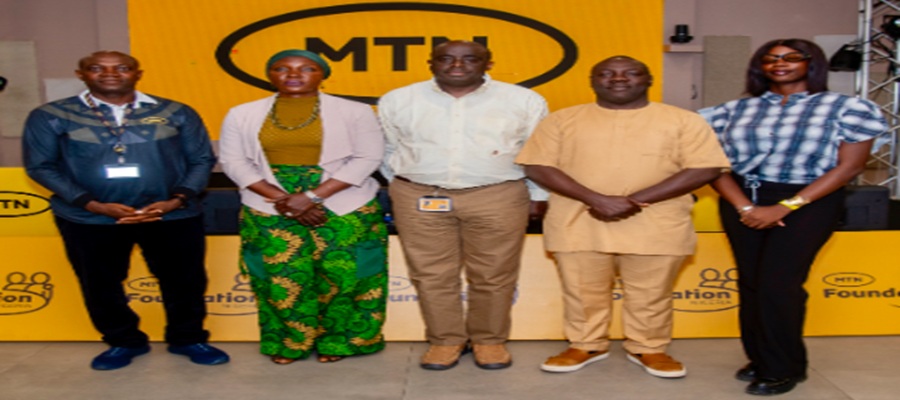
MTN Nigeria, leading technology company, recently hosted undergraduates from the University of Lagos (UNILAG) and Yaba College of Technology (YABATECH) for an immersive career engagement session, at the MTN Rooftop Plaza, Ikoyi, Lagos.

MTN
The event exposed students to career opportunities across cybersecurity, finance, internal audit and forensic investigations while providing practical insights into the skills required to succeed in today’s workplace.
The session was designed to bridge the gap between academia and industry by helping students better understand the diverse career paths available within the telecommunications and technology sector.
The engagement brought together students studying Economics, Banking and Finance, Cybersecurity and Accounting, providing an opportunity to interact directly with professionals from various business functions.
Through presentations and discussions, participants gained a deeper understanding of the competencies, experiences and continuous learning required to build successful careers in a rapidly evolving business environment.
The engagement comes at a time when technology-related roles, including cybersecurity specialists, are among the world’s fastest-growing occupations, according to the World Economic Forum’s Future of Jobs Report 2025.
During the visit, the students met with senior cybersecurity and forensic professionals who shared insights into their respective fields and discussed emerging trends shaping the future of work.
The sessions also highlighted the wide range of career opportunities available across different fields, demonstrating that success in the industry is not limited to any particular course of study.
Undergraduates were also introduced to the evolving nature of the audit profession, as data analytics, artificial intelligence and cybersecurity are becoming increasingly important areas of focus for internal auditors.
During a session on building a meaningful career in Internal Auditing, undergraduates were encouraged to approach their professional journeys with purpose, continuous learning and a commitment to personal growth.
The session emphasised that career success extends beyond securing employment and involves developing relevant skills, understanding one’s strengths and intentionally pursuing opportunities that align with personal values and long-term goals.
Speaking during the engagement, Chief Internal Audit and Forensic Services Officer, Ibe Kalu Etea, represented by the General Manager, Internal Audit and Forensics, Wasiu Ibrahim, encouraged the undergraduates to remain open to opportunities beyond their academic backgrounds and focus on developing transferable skills. “Students can take any career path they want to. You can upskill and transition into a different career, even if it is not what you studied in school.
“Do not let your course of study determine your career path. Focus on building relevant skills, staying curious and continuously learning because opportunities exist across many fields,” he said.
The Undergraduates also participated in an interactive question-and-answer session, where they sought guidance on career development, workplace expectations and professional growth.
The initiative reflects MTN Nigeria’s commitment to nurturing future talent by connecting young people with industry leaders and equipping them with the knowledge, exposure and confidence needed to navigate their career journeys.

NUPRC Warns of Counterfeit, AI-Generated Appointment Letters

KudiWave Asks for Clarification over N750m Transfer from PalmPay Account

NCC Reports over 5,000 Fibre Cuts in 6 Months

PalmPay Reinforces Commitment to Youth Empowerment on International Youth Day

ipNX Joins Calls for Innovation-Friendly Ecosystem and Stronger Local Opportunities at Regenesys AI Summit

EFCC Busts NIS Visa Overstay Racket, Uncovers N700m in an Account

Fact-Check: Elon Musk’s “Tesla Pi Phone” is Internet Rumor

NBC Tasks Broadcasting Stations over 2028 DSO Global Deadline

NBC Scraps Annual Digital Access Fee on DSO

Glo Sponsored African Voices to Feature Netflix’s “The Polygamist” Stars




 E-Business3 days ago
X Replaces Revenue Sharing wit New Creator Rewards Programme

 Telecom3 days ago
MTN Alerts Subscribers over Fake 25GB Anniversary MTN Data Giveaway

 E-Financial3 days ago
Interswitch, Temenos Commit to Advancing Nigeria’s Digital Banking Technology

 E-Financial3 days ago
FG Spent N3.1 Trillion on Domestic Debt Servicing in Q1- DMO

 General News3 days ago
Fake Agency: ICPC Indicts NITDA, Others over Inadequate Due Diligence

 General News3 days ago
UNESCO Taps Oguamanam,Nigerian Scholar to Advisory Body on Science, Tech Ethics

 General News3 days ago
Tax Reform Built on Taxing Prosperity, Not Poverty– Adedeji

 News2 days ago
Moove Achieves Unicorn Status With $250m Funding