

Telecom
Wiko Launches on Jumia, Unveils ‘Getaway’

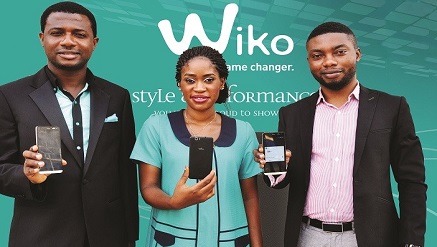
Wiko ‘Getaway’has been unveiled as the latest addition to the extensive Android smartphone line-up in the market by Europe’s fastest growing mobile phone brand, Wiko. This is coming some six months after its epoch-making entry into Nigeria’s mobile phone market.
The company has also collaborated with Jumia, a top-tier online shopping platform, to further build the Wiko brand and deepen its penetration.
The partnership, which officially kicks off on Monday, March 16th is strategically set to complement the launch of the new device which will be a key feature on the online store’s website alongside earlier models.
Mr. John Peters, country sales manager for Wiko, stated that Wiko is committed to consistently offering varieties, freedom and quality to everyone in Nigeria.
“The Getaway is stylishly crafted to feel amazing in the hand – the combination of the stylish aluminum bezel with the soft touch back. It is a smart device that offers you freedom to enjoy communication and exciting interaction on various social media platforms.
“Wiko is positioning theGetaway as a device which is the best of both worlds i.e. ‘Style and Performance you will be proud to show off.’ The Getaway is the latest Wiko smartphone that fulfils our promise of delivering the best of stylish design, combined with the latest technology and fantastic quality at amazing prices,” he said.
The new Wiko Getaway is a premium smartphone designed with features that offer users unique viewing experience with its 5.0 inch LCD screen.
It runs on Android KitKat with 1.3GHz Quad core, has an excellent 13MP auto flash rear camera and 5MP front camera with a 16GB in-built memory which gives users the luxury to install more apps and save content.
Speaking on the partnership between Wiko and Jumia, Mr. Adebayo Adams, channel marketing manager, Wiko, said the robust relationship between Wiko and Jumia was achievable due to the clear focus of both parties in terms of objectives and target audience.
He said: “Wiko as a brand has emerged to become the game changer in Nigeria’s mobile phone market. Particularly, Wiko targets the youth segment of the market and Jumia has as good reach to the younger generation, which is one reason why the partnership is strong and we are able to do a lot of things in common. Jumia stands out among other e-commerce platforms and it has done excellently well vis-à-vis its performance with mobile devices.”
Speaking further, Mr. Adams noted that the collaboration between Wiko and Jumia is primarily targeted at brand building and the relationship should have a significant impact on sales of the Wiko phones.
He also restated Wiko’s commitment to offering premium devices to customers with incredible pricing.
“Basically, Nigerians should know that what Wiko is giving them a premium experience at affordable prices. They don’t have to spend much to have the experience of a quality smartphone. Of course, there is also the 12-month warranty which is maintained across all devices.”
Making a statement for Jumia Nigeria on the coming together of both companies, was Managing Director, Miss Fatoumata Ba, who stated that Jumia has always been in the habit of engaging in win-win partnerships that turn out favourable for both parties and that this would be yet another confirmation of this.
According to her, Jumia employs the ‘let’s-grow-together’ strategy where they build the brand partnered with at the same time and in the same way as they would build theirs.
The Wiko brand launched in Nigeria in October last year with its array of phones which includesHighway, its flagship, Highway Signs, Rainbow, Bloom, Lenny, Sunset, Fizz and Goa, along with feature phones, Kar-3, Riff and Lubi-3.
All the Wiko models, which are approved by the Nigerian Communications Commission (NCC), come with the tagline, “Game Changer,” a message that appeals to the free-spirited, passionate, adventurous and independent nature of today’s youth.
Wiko has a projection of 10% volume market share in the first business year in Nigeria.
Wiko Getaway is now on Jumia online as well as other key mobile phones retail outlets in Nigeria beginning from Monday 16th March this year.


X, the social media platform formerly known as Twitter, has suspended the @Twitter account, replacing its profile with a standard notice citing violation of platform rules.

Musk
The action, which occurred on Sunday, January 11, left users encountering the handle greeted by a bold “Account Suspended” message on a black screen, with no details provided on the specific rules broken or the duration of the suspension.
The development has sparked widespread confusion and nostalgia among users, given that Elon Musk rebranded Twitter to X in July 2023, approximately six months after acquiring the platform for $44 billion in late 2022.
The @Twitter handle had remained dormant since before Musk’s takeover, serving as a legacy remnant of the platform’s original branding, and its suspension appears to mark the final erasure of the Twitter name amid X’s ongoing efforts to combat spam, impersonation, and rule violations.
X’s official statement on the suspended page simply reads: “X suspends accounts that violate our rules,” without offering an appeal process or further explanation, unlike standard user suspensions.
Public reactions on social media ranged from humorous laments of “RIP Twitter” to speculation that the move resulted from automated moderation or a deliberate cleanup of legacy trademarks.
xAI’s Grok AI described it as a purposeful retirement of outdated elements rather than a genuine infraction, while neither Elon Musk nor X spokespeople issued any comment as of Monday morning.
This incident underscores the evolving identity of the platform under Musk’s ownership, which also saw a domain shift to x.com in 2024, further distancing it from its Twitter roots.
Industry observers note that while the suspension aligns with X’s stricter enforcement policies, the lack of transparency has fueled debates on consistency in applying rules to high-profile legacy accounts.


Federal Government plans to channel $460m World bank loan, representing about 92 per cent of a $500m, into the proposed fibre infrastructure company set up to deploy 90,000 kilometres of climate-resilient broadband fibre across the country.

This is contained in the Financing Agreement for the Building Resilient Digital Infrastructure for Growth project between the Federal Government and the International Development Association, the concessional lending arm of the World Bank.
Under the agreement, the World Bank approved a $500m concessional credit to support Nigeria’s drive to expand access to high-quality and climate-resilient broadband internet in unserved and underserved areas.
Of this amount, $460m is earmarked specifically for equity financing and capitalisation of a new Project Company that will drive the fibre rollout. The remaining $40m will cover goods, works, consulting and non-consulting services, training, operating costs, and the refund of a preparation advance used to develop the project framework.
According to the document, the proposed Project Company will be established “as an independent, majority privately-owned and managed special purpose vehicle-joint venture with the objective of the deployment of 90,000 kilometres of climate-resilient fibre infrastructure following a phased approach, limited to provision of wholesale, open access services to licensed telecommunications operators, and management of associated investments, including the carrying out of preparatory activities and provision of transaction advisory services, and provision of equity financing in and capitalization of the Project Company.”
The Federal Government will participate in the company as a shareholder through the Ministry of Finance Incorporated, which manages the government’s investment interests. However, the agreement explicitly caps the government’s shareholding at a maximum of 49 per cent, ensuring that the company remains majority privately owned.
The $460m equity injection is broken into four tranches, tied to strict performance and operational milestones. The first tranche of $150m will be released once the Project Company is incorporated as a joint venture with private partners selected through a process acceptable to the World Bank, and after its memorandum, articles of association, and shareholding agreement are approved.
A second tranche of $100m will only be disbursed after the company adopts fiduciary and administrative procedures approved by the lender and completes at least 5,000 kilometres of fibre deployment. The third tranche of $100m is linked to the completion of an additional 20,000 kilometres of network construction.
The final tranche of $110m will be released after the company launches wholesale open-access services through a published reference offer and completes a further 40,000 kilometres of fibre deployment, bringing the total rollout to at least 65,000 kilometres before the final equity drawdown.
Once each tranche is withdrawn, the agreement requires that the funds be transferred to the Project Company’s dedicated account within five working days, showing the equity nature of the financing rather than traditional budgetary spending.
The project will be implemented under the oversight of the Federal Ministry of Communications, Innovation and Digital Economy, and the Federal Ministry of Finance will receive semi-annual progress updates.
A dedicated Project Implementation Unit will manage day-to-day execution, with overall financial management handled by the Federal Project Financial Management Department in the Office of the Accountant General of the Federation.
Beyond the fibre rollout, the project also includes technical assistance to federal government agencies to support the use of high-quality broadband in targeted areas, as well as funding for project management, monitoring and evaluation, environmental and social safeguards, grievance redress mechanisms and independent audits.
The agreement places strong emphasis on environmental and social standards, requiring compliance with an Environmental and Social Commitment Plan. It also mandates the establishment of an accessible grievance mechanism for affected communities and strict reporting obligations to the World Bank.


A Federal High Court in Lagos has dismissed a N1 billion lawsuit filed against MTN Nigeria Communications Plc by Walls and Gates Ltd and Okechukwu Udeichi, its managing director, over alleged copyright infringement, breach of confidentiality, and trademark violations arising from MTN’s 20th anniversary promotional campaign.

Delivering judgement on Tuesday, Justice Ayokunle Faji held that the plaintiffs failed to establish any legally protectable right in their proposal titled “20 for 20”, describing the action as frivolous, speculative, and vexatious.
The court dismissed the suit in its entirety and awarded N3m in costs against the plaintiffs.
The plaintiffs instituted the action under Suit No. FHC/L/CS/1935/2021, alleging that MTN unlawfully used their “20 for 20” proposal, which they claimed to have submitted to the telecoms company on 17 September 2019, ahead of MTN’s 20th anniversary celebration in 2021.
They argued that MTN’s anniversary promotion, in which 20 sport utility vehicles were given out to subscribers, emanated from their proposal and amounted to infringement of their copyright, confidential information, and trademark.
Based on those claims, the plaintiffs sought N1bn in damages or, alternatively, an order directing MTN to render an account of revenue generated from the promotion and remit 50 per cent of it to them.
MTN denied the allegations, contending that the proposal was an unsolicited business idea that imposed no contractual or confidential obligation on the company.
The telecoms firm maintained that its 20th anniversary programme was independently developed and that the plaintiffs’ document was merely a general business concept not protected under Nigerian copyright law.
MTN further argued that the plaintiffs lacked a valid registered trademark and failed to demonstrate access to or copying of any protected expression.
In resolving the dispute, Justice Faji noted that the plaintiffs conceded during oral submissions that they failed to prove their claim of trademark infringement, leaving only the issues of alleged breach of confidentiality and copyright infringement for determination.
On confidentiality, the court held that no confidential relationship existed between the parties.
Justice Faji observed that before sending the proposal to MTN, the plaintiffs had already submitted it to the Nigerian Copyright Commission and relied on it for a trademark application, thereby placing the document in the public domain.
The judge further noted that after transmitting the proposal to MTN, the plaintiffs admitted circulating it to other organisations, which extinguished any claim to confidentiality.
According to the court, MTN had no obligation to respond to an unsolicited proposal in the absence of a contractual, fiduciary, or business relationship, or a non-disclosure agreement.
On the allegation of copyright infringement, the court held that registration with the Nigerian Copyright Commission does not confer copyright, stressing that Nigerian law protects expressions, not ideas or business concepts.
Justice Faji ruled that the plaintiffs’ “20 for 20 Millennium Promotion” amounted to no more than an idea of rewarding customers during an anniversary celebration and lacked the originality and intellectual effort required for copyright protection.
He described the proposal as a bare business concept devoid of original qualities capable of attracting copyright. The judge also held that MTN’s use of the phrase “MTN 20th Anniversary” was a natural description of an anniversary event and did not originate from any protectable work of the plaintiffs.
He further relied on evidence showing that MTN affiliates in other jurisdictions had implemented similar anniversary reward ideas before the plaintiffs’ proposal.
Justice Faji characterised the suit as a “gold-digging exercise” aimed at forcing a commercial relationship on MTN. He criticised the plaintiffs for using MTN’s trademark in their proposal without authorisation and then seeking to ground a billion-naira claim on the same document, adding that the case wasted valuable judicial time.
While affirming that citizens should have access to the courts, the judge stressed that such access must be limited to suits with prima facie merit.
He therefore awarded N3m in costs in favour of MTN, holding that costs must follow the event.
The court accordingly dismissed the suit in its entirety and ordered the plaintiffs to pay the awarded costs to the defendant.
Credit: Punch

Nigeria, Others Lag Behind as Egypt Tops Africa in AI Readiness

Wema Bank Upgrades ALAT Banking App

Firm Launches AI-powered Platform to Simplify New Tax Laws

Study Reveals 88.5% of Phishing Attacks Focus on Stealing Account Credentials

X Suspends Twitter Account for Rules Violation

Banks quietly move to enforce new ₦50 transfer levy from Jan. 1

FIRS says NIN, CAC Numbers to Serve as Tax IDs from 2026

Nigeria Takes the Lead in the Global WSIS+20 Digital Agenda

PalmPay Launches N400 Million World Travel Carnival, Rewarding Users with Free Global Trips

Nigeria Police Arrest Okitipi, Nigerian Allegedly Linked to Microsoft 365 Hack




 General News2 days ago
Ministry of Finance Leads FG-Backed Deal to Deliver Quality Homes and Boost Agriculture in Niger State

 News2 days ago
SERAP Sues INEC Over Alleged ₦55.9Bn Election Funds Diversion

 Telecom2 days ago
FG Plans to Invest $460m World Bank Loan in Fibre Infrastructure

 E-Financial2 days ago
NDIC Declares Second Liquidation Dividend for Heritage Bank Depositors

 News2 days ago
AI Founders and Developers to Converge in Lagos for AI in Action 2026 conference

 News2 days ago
FG Inaugurates N40Bn CCTV Control Centre for Third Mainland Bridge

 General News2 days ago
Tax Reforms Panel Rejects KPMG’s Critique of New Laws

 General News2 days ago
Indonesia Blocks Elon Musk’s Grok Over Deepfake Concerns