

Telecom
With 20% Share Infinix Mobility Treasures Nigeria Market- Camille


Since the launch of Infinix Mobility in Nigeria about three years ago, the brand said it has treasured the market due to obvious acceptability of the products.
In a chat with Nigeria CommunicationsWeek, Mr. Marotta Camille, public relations manager for Infinix Mobility (Nigeria), identified Nigeria an open market and the competition is high.
He said at the very beginning, Infinix Mobility was like every other brand, and has always been thoughtful about how to bring devices that would be accepted by the market.
He said “Nigeria is in the top 10 biggest market in the world, if we followed the business model of other brands, today Infinix Mobility will not be here. Nigeria is a key market for us so we had to find a unique business model to fit users.
“From our latest statistics, Infinix Mobility market share is between 15-20 percent in terms of smartphone sales.
“Nigeria records one million smartphone sell out per month. Our segmentation is between N17, 000 – N50, 000. In this segment, we still have growth opportunities. We are expecting 2016 to be a better year.
The Unique Target Markets (Audience) For Infinix Mobility
“Infinix Mobility have different product ranges which enable us to reach a large audience. We have three different product lines to fit Nigeria needs in terms of technology and telecommunication equipment
“First with have HOT series which is the perfect match for people who want to switch from feature phone to smart phone and enjoy a new experience at an affordable price, usually between N14, 000-N22, 000. There is an important demand for this product line. One year ago, we launched Infinix HOT which has been the fastest selling device here in Nigeria, according to Gesellschaft für Konsumforschung (GFK) surpassing other international brands.
“With the NOTE series, Infinix provides smartphones with huge battery life to last for 2 days. Beside, our R&D department developed a fast charging solution that let you enjoy 20 mins charge for 7 hours usage, which was highly appreciated by our Infinix HOT NOTE users, the device is still the most sold. This series is made for heavy users, people who are connected and may use their smartphone as productive tool. I remember a ‘one on one’ interaction with a user saying “I do not need a computer to work on my project, with my Infinix HOT NOTE it is possible and the battery is impressive”.
“Then we have the ZERO series which is a higher product line with high-ends specs, people with technology knowledge are really attracted by this series. Infinix ZERO smart phones are dedicated to middle classes who want to own premium phones with specifications such high megapixel camera, premium material – Kevlar for Zero2 – and powerful chipset.
Infinix Partnership with Android One and Google and Impact on Product Acceptability
“When you offer a device less than 20,000 naira for the 2GB RAM, 8 megapixel, 5 inch screen and the latest Android operating system such as Infinix HOT 2, you have chances that people will accept the product, Infinix HOT 2 device is an entry level with more specifications that users expect.
“The Android One OS is the purest version of Android. The OS receives automatic updates to the latest version of Android for a period of two years. Infinix HOT2 is running Android Lollipop 5.1 and before the end of this year, the device will receive an updated version of Marshmallow 6.0. It means that our customers can get the best service and experience from Google that is why we choose Android One. Today, we can say that Infinix HOT 2 has reached over 300,000 hands.
Nigerians Attitude Toward e-Retails
“Well, Nigerians are ultra-connected they like to surf the Internet and look for information. According to our online retail partners such as Jumia and Konga, most of the traffic comes from search result for smart phones. The online market is moving fast here in Nigeria.
“I think that Nigerians still need time to change their buying behavior and move from offline to online, even if online prices are lower for electronic products. There are still some barriers that affect the online business. For instance, payment methods which most E-commerce have solved by offering Payment On Delivery (POD). People need to find trust in new services provided by IT companies and to be educated how to do it.
“With the traditional channels, people have confidence they can experience the product, ask advices from sellers and have a concrete idea about product. For now, I will say that the economic model is Online to Offline; people get information’s online and prefer to buy offline. However, I still believe that there is bright future for online businesses and it will change.
Expectations for 2015 Christmas
“If you are following Infinix Mobility, you should know that a new device is coming later this month on the 27th. It is a successor over HOT NOTE which has been warmly welcome by the market because of the new technology that it brings to satisfy a specific need of power – 4000mAh battery and fast charge –.
“Infinix NOTE 2 will be Infinix first 6 inch smart phone with our own OS called XUI and fast charging technology: 15 minutes charge for 8 hours use which is 20% improvement compared to the previous model (Infinix HOT NOTE). We are confident that Infinix NOTE 2 will be part of the bestselling and must have device for the festive season. From November 27th, we still have something new before Christmas and our users should expect a last Infinix flagship before the end of year.
After Sales Service
“Today we have over 1,000 service centers across Africa, here in Nigeria a total of 20 centers and repair supports from some of our dealers, also we have customer service hot line 09099922417 which direct customers to our nearest service centers.
“If you have software or hardware issues, our engineers will fix your problem immediately and maximum of 14 days according the kind of problem you are facing. In addition all Infinix products have one Year warranty.
Impact of Naira-Dollar Situation on Phone Prices
“These days, the Dollar-Naira exchange rate is not so favorable but we are ensuring that our prices are not increasing too much and are not affecting final consumers. Recently users may have found one thousand naira increase in price.
Any Other Promises You Will Like To Tell Your Customers?
“I would like to say thanks to all Infinix users for the trust in Infinix Mobility, our business partners and media that supported us for this year. What I can say, is that 2016 will be a year of changes in terms of services, contents and products for Infinix users”.


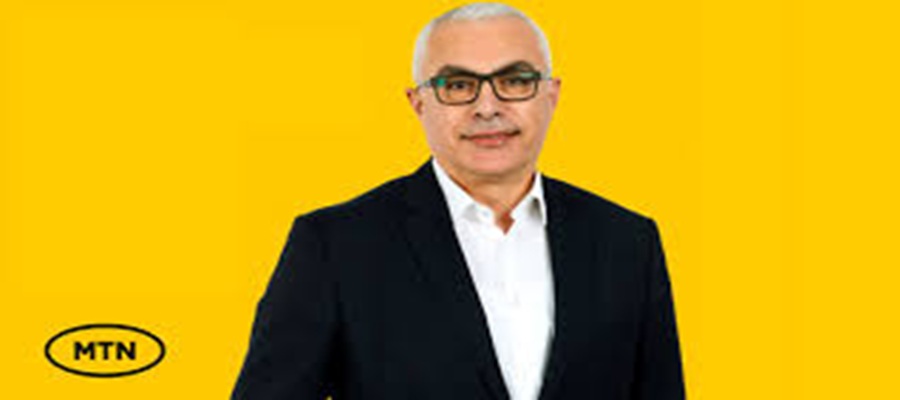
Mazen Mroue, a non-executive director at MTN Nigeria Communications Plc, has resigned effective February 27, 2026, to prioritise other responsibilities within the MTN Group, the company announced in a Nigerian Exchange Limited (NGX) filing.

MTN Nigeria
The notice, signed by company secretary Uto Ukpanah, stated: “This is to enable Mr. Mroue to focus on other priorities within MTN Group Limited. The Board wishes to express its appreciation to Mr. Mroue for his immense service to MTN Nigeria and wishes him success in his future endeavours.”
Mroue joined MTN Nigeria’s board on June 1, 2022, bringing over 28 years of telecom experience. A veteran MTN executive, he previously served as CEO of MTN Uganda and MTN Liberia, non-executive director at MTN Cyprus, and held leadership roles at MTN Ghana.
Since February 2022, he has been MTN Group’s Chief Technology and Information Officer, overseeing technology strategy and governance. Earlier, as MTN Nigeria’s COO from August 2018 to January 2022, he also sat on the MTN Nigeria Foundation board.
The exit follows MTN Nigeria’s stellar 2025 results, posting a ₦1.70 trillion profit before tax—reversing a ₦550.3 billion loss in 2024 driven by forex woes—marking one of the telco’s strongest rebounds.

Google has rolled out support for Yorùbá and Hausa languages in its AI-powered Search features—AI Overviews and AI Mode—enabling millions of Nigerians to get quick answers, summaries, and conversational web exploration in their mother tongues.

The update forms part of Google’s push to cover 13 African languages, including Afrikaans, Akan, Amharic, Kinyarwanda, Afaan Oromoo, Somali, Sesotho, Kiswahili, Setswana, Wolof, and isiZulu, selected based on high search activity across the continent.
Now, a Kano student can ask complex questions in Hausa, while an Ibadan trader seeks business tips in Yorùbá—both receiving culturally nuanced AI responses via text or voice on Android, iOS, or web.
Taiwo Kola-Ogunlade, Google’s West Africa Communications Manager, said: “Building truly global Search requires nuanced local understanding. With Gemini-powered AI, we’ve made advanced capabilities relevant in Yorùbá and Hausa, so Nigerians converse naturally with Search in their mother tongues.”
To use: Open the Google app, tap AI Mode, and query in Hausa or Yorùbá for personalised guidance—breaking language barriers and making technology reflect Nigeria’s diverse identity.
MultiChoice is closing its continental streaming platform Showmax after 11 years, notifying subscribers Thursday of the board’s decision to discontinue the service in the near future to refocus on sustainable digital offerings.

MultiChoice
The email assured no immediate disruption: “You can continue streaming as usual, and no action is required from you at this time.” Showmax, launched in South Africa in 2015 and expanded across Africa, offered movies, series, documentaries, and sports to rival Netflix and others amid rising online entertainment demand.
The shutdown follows Canal+’s approved takeover of MultiChoice last year, with the French giant offering ZAR 125 per share for remaining stakes.
The deal mandates HDP ownership boosts, local content investment, and splitting MultiChoice’s SA broadcasting arm into an independent entity to meet regulations.
MultiChoice prioritised subscribers during the transition, promising advance notice on timelines.
Showmax’s exit signals consolidation pressures in Africa’s cut-throat streaming market, where global players dominate despite local content strengths.

MultiChoice to Discontinue Showmax Streaming Platform

GCR Affirms Afreximbank’s International Scale Ratings of A, A2

SmartCash Launches ‘No Be Cho Cho Cho’ Campaign to Boost Digital Banking in Nigeria

MTN Nigeria Non-Executive Director Mazen Mroue Quits to Focus on Group Role

Google Adds Yorùbá, Hausa to AI Search, Boosting Access for Millions of Nigerians

Dr. Cairo Ojougboh Foundation Bolsters Nigeria’s Education Drive with ₦2.7m Student Support

Kaspersky Brings more Transparency to Threat Detection with New Hunt Hub

NDPC Commits to Balancing Data Privacy, Protection Information

PwC Reveals AI Scaling Gap Slows Africa’s Digital Transformation

Firm Reviews the Evolution of Phishing Threats in 2025




 E-Financial2 days ago
NRS Targets N40trillion in Tax, Royalty Revenue in 2026

 E-Financial2 days ago
SEC Revokes Registration of Kensington Agro Trading Limited

 General News2 days ago
Purple Woman 3.0 Is Back, to Empower Women in Tech this IWD 2026

 News2 days ago
EFCC Arraigns Two FSDH Bank Officials Over $307k, €50k Fraud

 Telecom2 days ago
Konga Launches ‘Berekete Sales’ with Up to 50% Discounts Across Major Categories
 E-Business2 days ago
NDPC, 60 DPAs Collaborate on Enforcing Privacy Rights in the Use of Al

 General News2 days ago
NCDC Raises Alarm over Lassa Fever Ravaging 18 States in Nigeria

 E-Financial1 day ago
Binance Cuts Illicit Activity Exposure by 96%, Leads Global Crypto Compliance Push