

News
Women to Lead Corporate Nigeria from 2026 As Predicted By Ekeh, Zinox Boss

By Hilary Audu,
In a world that is predominantly patriarchal in nature, it is refreshing to see the women-folk doing great things and giving the men-folk a good run for their money.

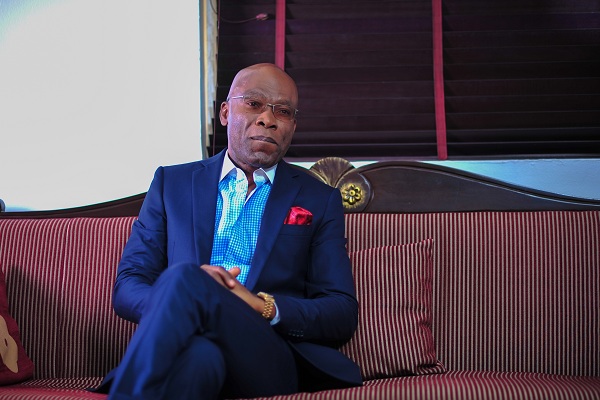
Leo Stan Ekeh, Chairman, Zinox Group
From the likes of outgoing German Chancellor, Angela Merkel, former President of Liberia, Ellen Johnson-Sirleaf, President of the European Central Bank, Christine Lagarde, American talk show host, television producer, actress, author, and philanthropist, Oprah Winfrey and even our own Director-General of the World Trade Organization (WTO), Dr. NgoziOkonjo-Iweala, women have displayed ample evidence that they have the capacity, the brain-power, and the determination to hold their own in the leadership sphere.
It is also instructive to note that the rise of this gender and the need to empower them is one that has been consistently predicted, preached, put in practice by one man – Chairman of the Zinox Group, Leo Stan Ekeh, whom I have followed his public talks and other teachings over the years.
I must confess that the unerring stance of the tech guru on the place of women in contemporary society had inspired me in altering my life course.
Well over 15 years ago, Ekeh had declared that women would play a greater role in the global scheme of things by the turn of the 21st Century, with the Zinox boss disclosing that the impact of women would be felt even keener in leadership roles from the year 2026. Simply put, the Zinox boss had predicted that women would take over and that a time would come when corporate organizations that had no females as CEOs or in their Executive Management cadre would be considered old-fashioned.
Even more importantly, he had affirmed that in judging or rating the success of a man, one should assess the quality of woman he married. Inadvertently, he had aligned the success of a man to his choice of a partner.
At this point, I was a little bit discomfited by these bold assertions by the Zinox boss who was a like a lone voice in the wilderness of women empowerment then, especially in Nigeria. Back then, the sense of male domination was a foregone conclusion. Women were hardly represented in leadership positions, be it in corporate or political circles. Indeed, it was a rarity to see a man go against the grain in predicting female domination or gender empowerment in those days.
But those were not the reasons for my discomfort.
I was less than adequately educated back then, having come from a conservative background where women are hardly given the same consideration as their male counterparts when it comes to education. Therefore, hearing Mr. Ekeh utter these words at a public event organized by Technology Distributions Ltd. in Ikeja many years ago had not only opened my eyes to the need to better my lot; it had also made me decide to seek higher education.
If Mr. Ekeh were a preacher or owned a church, I would have been one of his most loyal church members.
Ekeh has consistently submitted that women are more financially prudent, humble, less prone to fraud, spiritually sound, better counsellors and possibly even smarter than their male counterparts of the same age – factors which he has identified as traits which make them more naturally suited for leadership.
At the inaugural edition of the Africa Fintech Disrupt Conference sponsored by Access Bank in 2018, Ekeh had returned, after delivering a rousing speech to standing ovation, to encourage women to prepare to take charge, even as he specifically declared that the world should adjust to this coming reality which he reiterated would begin to take shape from 2026.
Today, his prediction about women domination is beginning to emerge, just in the same way his many other projections – such as the rise of e-commerce as a global game-changer and the position of technology in altering the nature of business, among many others – have come to pass with glaring accuracy.
If the example of Lagarde (a former head of the International Monetary Fund) and Okonjo-Iweala (a Harvard-trained two-time former Minister of Finance in Nigeria), both of whom currently oversee affairs at two of the most respected global institutions is not enough proof, what of the instances of women who have aspired to and secured the number one jobs in their countries?
The list is long.
Estonia has a female Prime Minister in KajaKallas,Moldova’s female President, Maia Sandu, has been in office since December 4, 2020 and Lithuania’s President, a woman, Ingrida Simonyte has occupied that office since December 25, 2020. Also, Greece’s President Katerina Sakellaropoulou has been in office since March 13, 2020, Denmark has a female Prime Minister, Mette Frederiksen who took office on June 27, 2019; Slovakia’s President Zuzana Caputova has thrived after assuming the role on June 15, 2019, among many others.
Even in tech which is widely regarded as a male-dominated sector, women are also gradually taking over.
Susan Wojcickiis CEO of YouTube. She contributed to the development of Google Images and AdSense as she rose up the ranks before eventually suggesting the acquisition of YouTube, and becoming its CEO in 2014. Sheryl Sandberg, billionaire business executive and philanthropist, is Chief Operating Officer of Facebook. Also, Meg Whitman is CEO of Hewlett Packard Enterprise and chairman of HP Inc. while IBM also has a female CEO in Ginni Rometty.
Here in Nigeria, the women are also gradually rising above the age-long patriarchal culture and shattering the proverbial glass ceilings that have long held them back, just as Ekeh had predicted.
While we are yet to achieve the level of political maturity that would see a woman become President of Nigeria – a development that may not be that far off – women have broken into and are dominating many other sectors.
Today, Nigeria has seven female bank CEOs, a development that many would have declared as impossible many years ago but which a man like Ekeh foresaw. The list of female bank MD/CEOs include YemisiEdun, acting MD/CEO, First City Monument Bank (FCMB); OluwatomiSomefun, MD/CEO, Unit Bank Plc; Miriam Olusanya, MD/CEO, Guaranty Trust Bank (GTB); Halima Buba, MD/CEO, SunTrust Bank Plc; NnekaOnyeali-Ikpe, MD/CEO, Fidelity Bank Plc; KafilatAraoye, MD/CEO, Lotus Bank and Ireti Samuel-Ogbu, MD/CEO, City Bank.
And in the much-vaunted tech sector, we have the likes of OlufunkeOpeke of MainOne who is effortlessly rubbing shoulders with other men in this field. There is also Ify Afe, former MD, Central Africa at HP Inc. and who is now Chief of Staff and Board Member, HP Diversity,Equity and Inclusion (DE&I); in addition to Google Country Manager, Nigeria, Juliet Ehimuan-Chiazor, among others.
But in closing this piece, it would be out of place to talk about the growing role of women in tech and as leaders, especially in Corporate Nigeria without returning to the pivotal role played by Ekeh in putting into practice something he has preached for years.
My interest in the Zinox Group in the wake of Mr. Ekeh’s inspiring clamour for gender empowerment and belief in the rise of the women-folk received further impetus when I learnt of the pivotal roles played by women in his companies.
Perhaps, there is no other globally renowned entrepreneur in the world today who has placed as many women in leadership positions, solely on merit, in his organization as Mr. Ekeh. In the Zinox Group, there are about five female Managing Directors, arguably a first in today’s business world.
In TD Africa, Sub-Saharan Africa’s leading technology distributor, you can find four of these female MDs. They are led by Mrs. Chioma Ekeh, wife of Mr. Ekeh, a cerebral mathematician, Chartered Accountant and globally recognised woman tech leader who has led the company in consistently breaking new grounds over the years. There is also Mrs. Shade Oyebode who heads the company’s Operations Unit, Mrs. Chioma Chimere, a Coordinating Managing Director (CMD) who manages the company’s business development drive and yet another MD in Mrs. GozyIjogun who oversees Sales.
Then you move over to Zinox Technologies Ltd. and there you find Mrs. Kelechi Eze-Okonta, another outstanding performer, who has been MD of the tech giant for the past three years. The Human Resources Unit of the Zinox Group is also headed by a female Executive Director in the person of Mrs. Chioma Nwoke.
Certainly, there is no stopping the rise of the women-folk and with notable male champions of gender empowerment such as Ekeh and others in our corner, it is only a matter of time before the world aligns.
Hilary Audu, a female gender empowerment expert, writes from Abuja


Microsoft has rolled out a new set of features for its Microsoft 365 Copilot platform, including tools for complex, multi-step work and deeper research tasks, as competition in workplace artificial intelligence (AI) intensifies.

The update introduces Copilot Cowork, a capability aimed at handling long-running tasks across Microsoft 365 applications.
The feature is being made available through the company’s Frontier programme, which typically gives early access to experimental tools.
Microsoft is also integrating technology linked to Claude – an AI model developed by Anthropic –into Copilot, signalling a broader shift toward using multiple AI systems within a single product rather than relying on a single model.
Jared Spataro, chief marketing officer for AI at Work at Microsoft, says the company is positioning Copilot as a system embedded directly into workplace software, rather than a standalone tool.
“Microsoft 365 Copilot is your AI for work,” he says, adding that it draws on multiple AI models and is integrated into existing workflows.
Alongside this, Microsoft has upgraded its Researcher feature, which is designed to analyse information from multiple sources and generate structured reports.
A new “Critique” function separates the drafting and review process between different AI models – one generates an initial response, while another evaluates and refines it.
The company says this approach improves output quality, with Researcher showing gains on its internal benchmark for accuracy, completeness and objectivity.
Another addition, called Model Council, allows users to compare outputs from different AI models side-by-side, highlighting differences in responses and reasoning.
The updates form part of what Microsoft calls “Wave 3” of Copilot, as it pushes to embed generative AI deeper into enterprise software. The move reflects a wider industry trend towards combining models from multiple providers, including OpenAI and Anthropic, to improve performance and reliability.

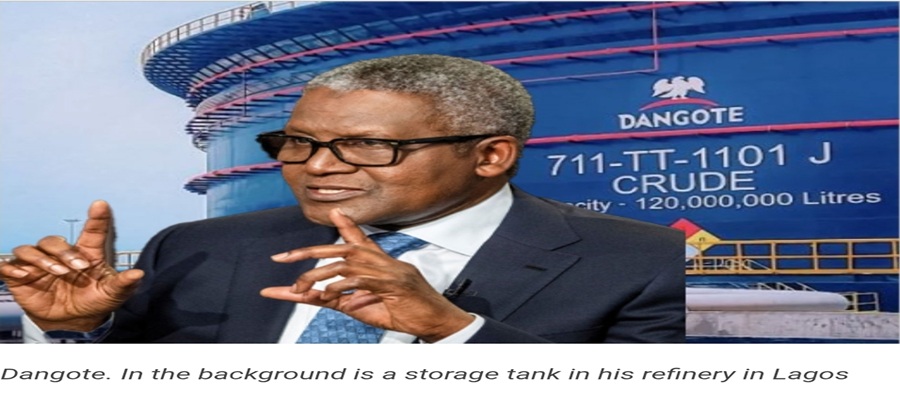
Dangote Petroleum Refinery and Petrochemicals (DPRP) has debunked recent circulation of unauthorised information regarding a potential Initial Public Offering (IPO).

In a statement, DPRP noted that several online platforms and unofficial sources have published unverified, and in some instances inaccurate, information relating to a potential offering.
“Such reports do not originate from DPRP and should be treated with caution. All official updates regarding any potential transaction will be communicated strictly through DPRP’s formal public disclosures and announcements issued by its appointed advisers, in line with applicable laws and regulatory requirements.
“Accordingly, the public, investors, and all market participants are strongly advised to disregard speculative commentary and rely solely on verified information formally issued by DPRP or its authorised representatives,” the statement said.
The firm assured stakeholders that, when appropriate, comprehensive, and accurate details regarding any proposed transaction will be made available through official channels, including regulatory filings, authorised press releases, and coordinated communications by the Enterprise and its appointed advisers.
News
Descasio Launches “Give to Gain” Leadership Insights Report, Hosts Executive Brunch for Women in Leadership

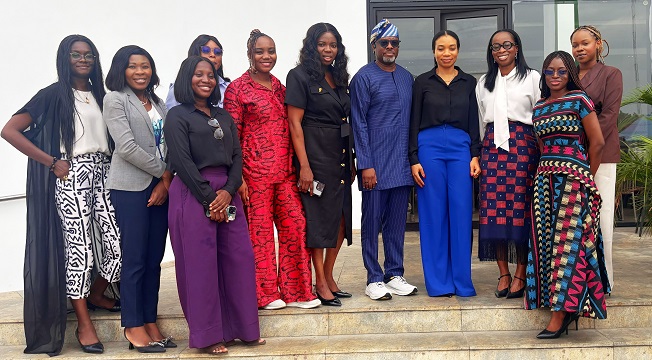
In celebration of International Women’s Day, Descasio hosted an intimate executive brunch bringing together distinguished women leaders from its customer community for a thoughtful conversation on leadership, partnership, and shared growth.

Centered around the 2026 International Women’s Day theme, “Give to Gain,” the gathering created space for accomplished women in enterprise leadership to reflect on mentorship, collaboration, and investing in people as key drivers of sustainable growth.
Held in Lagos, the event convened leaders from organizations including Honeywell Group Limited, Finchglow Travels, NGCOM, and Eroton Exploration & Production Company.
Guests were personally welcomed at the start of the gathering by Mr. Dele Nedd, CEO of Descasio; who greeted each of the women leaders and expressed his appreciation for their presence before leaving the session to allow the women lead the conversation among themselves.
The gesture reflected Descasio’s leadership culture; one where women are not only recognized, but actively supported and empowered. It also underscored the company’s belief that meaningful progress in leadership requires partnership and allyship across the organization.
Rather than a traditional panel discussion, the brunch was designed as a candid and reflective exchange among peers navigating leadership in complex industries. Throughout the conversation, participants shared perspectives shaped by experience, responsibility, and the realities of leading teams and organizations.
A recurring theme in the discussion was the role of execution and accountability in leadership. For many organizations, strategy alone is not enough; consistent delivery is what ultimately builds credibility and trust.
Reflecting on this, Josephine Adebola, Data Compliance & Process Automation Manager at Finchglow Travels, emphasized the importance of reliability in leadership and the discipline required to translate vision into results. “Get it done on time and in full.”
The conversation also explored the role of curiosity and continuous learning in shaping effective leaders. In rapidly evolving industries, the ability to ask questions, remain open to new perspectives, and keep learning is often what enables leaders to grow alongside their organizations.
Sharing her perspective, Tomi Otudeko, Chief Operating Officer at Honeywell Group Limited, reflected on how curiosity has shaped her leadership journey.
“Asking questions and continuously learning have always stood me in good stead as a leader.”
She also spoke about the importance of leading with empathy and understanding the people behind the roles within organizations.
“Everyone has multiple dimensions to who they are. Leadership has taught me to see people in their totality. That awareness doesn’t make a leader weak; it makes them more effective.”
Another important theme that emerged from the conversation was authenticity in leadership. In an environment where leaders often face pressure to conform to traditional expectations, remaining true to one’s identity while continuing to evolve is essential.
For Helen James-Eziashi, General Manager at NGCOM, authenticity and curiosity remain key guiding principles. “Be yourself, keep learning, and stay curious.”
The discussion also highlighted the role of self-awareness in sustaining leadership journeys, particularly in complex and high-responsibility environments. Understanding one’s values, motivations, and support systems often becomes the anchor that allows leaders to navigate uncertainty with confidence.
Reflecting on this, Ifeanyi Onyejekwe, IT Manager at Eroton, emphasized the importance of knowing what grounds a leader.
“Know who you are and understand what supports and sustains your leadership journey.”
According to Descasio, the event reflects its broader commitment to building strong partnerships and fostering meaningful leadership conversations across its enterprise customer community.
“For us, this was about more than marking International Women’s Day,” said Umama David-Ogebe, The HR Manager at Descasio. “It was about creating a space where leaders could learn from one another and reflect on the kind of leadership that builds strong organizations. The most meaningful partnerships grow from conversations like these.”
To extend the impact of the discussion, Descasio has published “The Give to Gain Leadership Report: Insights from Women Leading Enterprise Organizations,” a curated publication capturing key reflections and leadership lessons shared during the session.
The report highlights themes including:
- The role of curiosity and continuous learning in leadership
• Building stronger teams through empathy and accountability
• The importance of authenticity and self-awareness in navigating leadership journeys
• How investing in people drives stronger partnerships and resilient organizations
The Give to Gain Leadership Report is now available for download Here.

UBA Beefs Up Mobile App Security to Stop Fraudulent Debits, Withdrawals

Bharti Airtel Crosses 650m Users

FG Orders Installation of 5000 CCTV Cameras for Surveillance in Plateau

CBN Plans New Payment Systems Vision

Ghana Makes History as First African Country to Integrate Payment National Identity Card

Spotify’s Loud & Clear Report Reveals Over ₦60Bn Revenue for Nigerian Artists in 2025

Madonna University Taps Tech Guru Adote for Strategic Board Role

China Threatens to Shut Nigeria’s Satellite Over $11.44m Unpaid Debt

FCCPC Bans Lagos ‘No Refund’ Policy, Vows Fines and Shutdowns for Traders

Healthcare Under Attack: Why Cybersecurity is Now Critical Care




 News3 days ago
Microsoft Revamps Copilot in Workplace AI Push

 E-Business3 days ago
Kaspersky Warns of a New Phishing Technique Leveraging Bubble, a no-code AI Platform

 Telecom3 days ago
How Recycled SIM Card Linked to N50m Kidnapping Nearly Landed me in Jail – Businesswoman

 E-Financial3 days ago
CBN Directs Banks, Fintechs to Complete Cybersecurity Audit Tool

 Telecom3 days ago
Ouranos Technologies Strengthens Board with Key Leadership Appointments

 General News3 days ago
Senate Gives Tinubu Nod to Borrow Fresh $6Bn

 E-Financial2 days ago
CBN Says 33 Banks Raise Fresh N4.65 Trillion in Recapitalisation Exercise

 Telecom2 days ago
NCC Insists Telcos Must Compensate Subscribers for Poor Quality of Service