

E-Business
Yahoo: Massive Breaches as 1Bn Accounts Are Hacked


It is not just raining for Yahoo, but pouring as the company said Wednesday that it was hit by yet another hacking attack.
This time, the hacking activity affects more than 1 billion user accounts, doubling the number affected by a hack revealed in September.
The hack occurred in August 2013. Stolen data included users’ names, email addresses, telephone numbers, dates of birth, and encrypted passwords.
Those passwords are scrambled up with an encryption tool called MD5, which experts say is possible to crack with some patience. The data also included some security questions and answers, some of which weren’t encrypted.
“Yahoo is notifying potentially affected users and has taken steps to secure their accounts, including requiring users to change their passwords,” the company said in a statement. “Yahoo has also invalidated unencrypted security questions and answers so that they cannot be used to access an account.”

Among the victims are more than 150,000 US government and military employees, presenting a threat to national security, according to a Bloomberg report. The accounts belong to current and former White House staff, congressmen and their aides, FBI agents, officials at the National Security Agency, the Central Intelligence Agency, the Office of the Director of National Intelligence, and each branch of the US military.
The breach is another black eye for Chief Executive Marissa Mayer, who joined Yahoo in 2012 amid great fanfare. The former Google executive was charged with turning Yahoo around and tried to bring the lumbering company into the smartphone era. She made big bets on mobile, refreshing all of the company’s mobile apps, but Yahoo hasn’t been able to make much money off her projects.
The announcement caps off a rough few months for the troubled tech giant and leaves another blemish on a company seeking to sell itself to Verizon. When Yahoo announced a separate data breach in September, in which hackers in 2014 swiped user information from half a billion accounts, it was said to be the biggest cybersecurity breach ever.
Two weeks later, the company again came under fire after a report said Yahoo built tools to surveil customers’ emails for US intelligence officials.
All the while, Yahoo has been awaiting its fate with Verizon, which agreed to buy the company for $4.8 billion in July. The deal is set to close in the first quarter of next year, but Yahoo’s disclosure of the previous hack had given Verizon executives pause about the deal.
“We are confident in Yahoo’s value and we continue to work toward integration with Verizon,” a Yahoo spokeswoman said Wednesday.
Verizon issued a statement that didn’t say whether the news of the hack would have an impact on the acquisition. “As we’ve said all along, we will evaluate the situation as Yahoo continues its investigation,” Verizon’s statement read. “We will review the impact of this new development before reaching any final conclusions.”
Sumit Argawal, co-founder and vice president of product at cybersecurity company Shape Security, said the increasingly damaging hacks that Yahoo has announced fit a clear pattern in companies that don’t have their security locked down. Often, he said, companies and organizations start by describing their cybersecurity woes in small terms but keep adding new casualties to the list.
“When entities have mediocre security hygiene, they inevitably end up having lost the keys to a much larger kingdom than we originally thought,” Argawal said.
The personal information hackers stole could be used in combination with other hacked data, he added. If a criminal already has a credit card number, he might be able to use the stolen Yahoo data to find the answers to security questions that go along with it, for example.
Yahoo said in its statement that it believes the hacking may be related to the same state-sponsored hacking group it suspects is responsible for the 2014 hack. To Dmitri Sirota, CEO of data protection company BigID, that’s a sign that high profile individuals with Yahoo accounts might have been the real target of the hack.
“The reality is within that billion users, there’s probably a couple politicians, a few celebrities, a few people in key industries,” Sirota told CNET.



Ignatius Kaigama, Catholic Archbishop of Abuja, has warned that the misuse of artificial intelligence (AI) could pose serious risks if technological innovations are not guided by strong ethical principles.

Artificial intelligence is a branch of computer science focused on creating machines or software capable of simulating human cognitive processes.
Kaigama gave the warning on Sunday during his homily at St. Anthony Mary Claret Pastoral Area, Zuba, in the Federal Capital Territory,
He said that while artificial intelligence has enormous potential to improve lives, its irresponsible use could have harmful consequences.
Citing the teachings of Pope Leo XIV, the Archbishop said scientific and technological advances should serve humanity, uphold human dignity and promote the common good.
“We witness the misuse of human freedom, the unethical application of science and medicine, and now, in Artificial Intelligence,” he said.
The Catholic prelate also warned against what he described as an increasing pursuit of material wealth at the expense of moral values, saying greed and the love of money continue to contribute to many of society’s problems.
According to him, the excessive pursuit of wealth has diverted many people from the values of truth, justice and service, weakening the moral fabric of society.

TeKnowledge and Equinix announced a partnership to accelerate secure hybrid and multi-cloud adoption and enable AI-ready digital infrastructure across the region.

Nigeria’s digital transformation is accelerating rapidly, with the digital economy being a significant contributor to the country’s gross domestic product (GDP).
As demand for cloud services, AI adoption, digital payments and data-driven innovation continues to accelerate across West Africa, the partnership is positioned to advance the region’s digital transformation.
By combining Equinix’s in-country and global data centre infrastructure and secure interconnection capabilities with TeKnowledge’s expertise in designing, deploying and managing AI, data, customer experience and cybersecurity solutions, organisations can accelerate innovation while maintaining data residency and sovereignty requirements.
Together, the organisations empower enterprises and government institutions to bridge the gap between digital ambition and execution through secure, high-performance digital environments built on local infrastructure and delivered by local talent.
Speaking, CEO and President, TeKnowledge, Aileen Allkins, said: “Organisations across Africa are increasingly looking to modernise their infrastructure while maintaining the performance, security, and compliance required to support growth.
Through our partnership with Equinix, we are combining world-class digital infrastructure with deep local expertise to help customers accelerate cloud adoption, strengthen resilience, and unlock new opportunities through AI and emerging technologies.”
Managing Director of Equinix West Africa, Wole Abu, expressed delight at partnering with TeKnowledge to bring together Equinix’s globally interconnected platform, spanning over 280 data centres and 10,000 customers worldwide.
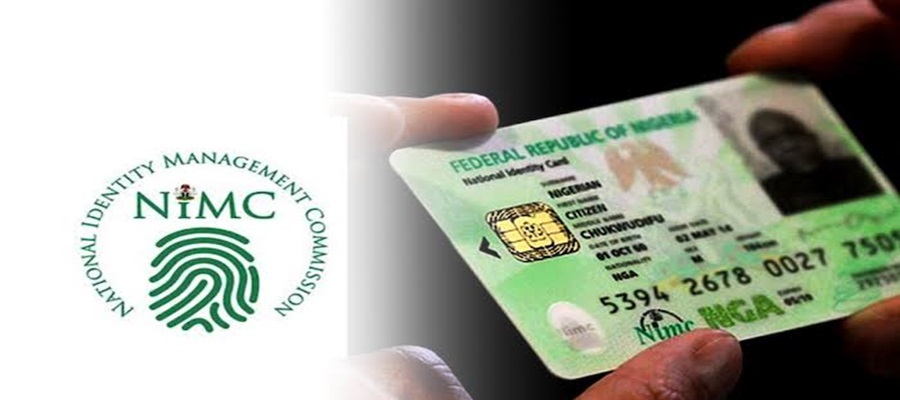
Uche Chigbo, coordinating director of Operations, National Identity Management Commission, (NIMC), has said the newly enacted NIMC Act strengthens data protection and privacy, expands identity coverage to include everyone in Nigeria and Nigerians in the diaspora, and provides the legal framework for a secure and trusted digital identity ecosystem.

She said the new law replaces the 2007 NIMC Act, which had become outdated due to rapid technological advancements, evolving cybersecurity threats, the growth of the digital economy, and the enactment of the Nigeria Data Protection Act.
According to her, the updated legislation better positions the Commission to deliver Nigeria’s digital identity agenda and improve access to government and private sector services.
“The Act itself has taken in a whole lot of things to make sure that NIMC is well-positioned to be able to deliver on the identity agenda and program of Nigeria. The area of universal coverage was expanded within the Act so that NIMC can enroll everybody that is within the soil of Nigeria—male, female, children, whether they are IDPs or orphans or whatever it is, and even Nigerians in diaspora.
“There is quite a lot within the Act that over the few days and weeks, even with my Director-General’s courtesy visit, we are trying to sensitize and educate the general public, and also bring awareness to this new Act so that people will know what are the rights that exist within it, what are the obligations, what are the stronger enforcement and penalties that has also been expanded within the Act, and then what are also the regulatory autonomy that has been given to NIMC to make sure that they drive the digital identity ecosystem in Nigeria,” she explained.
“There’s a lot of provisions and changes with the new Act. Um, the NIMC 2007 Act has been operating for close to 19 years now. So, we can see that, um, you can actually say it’s almost obsolete. And then with a lot of technological advancements in the world now, with the enactment of the Nigeria Data Protection Act, and then with also a lot of evolving security challenges, cybersecurity challenges, as well as the ever-growing digital economy, it became very necessary that a comprehensive review of the NIMC Act should be done.
So, that 2007 Act has been repealed and a new NIMC 2026 Act is in place,” she explained.
Chigbo clarified that the National Identification Number (NIN) is Nigeria’s unique identifier and the only valid means of identification for accessing government services.
She added that it enables secure identity verification and improves access to services.
“NIN has been designated as the unique identifier in Nigeria and then by the government of Nigeria establishing it as the only valid means of identification for assessing government services. So, NIN, it’s positioned to be a valuable tool for empowering citizens and legal residents to facilitate access to service delivery in Nigeria. And it’s also a tool for people to be able to prove their identity as they go about their daily businesses,” she said.
Speaking on identity harmonisation across government agencies, Chigbo said NIMC is integrating identity databases to enable Nigerians to access services seamlessly using the National Identification Number (NIN), while other agencies continue to issue functional identities for specific purposes.
“There’s a distinction between a foundational identity and a functional identity. NIMC provides the foundational identity, which answers the question, ‘Who are you?’ Are you a Nigerian or a legal resident? Who are you? That’s what NIMC is providing. All these other agencies that you have mentioned, they provide functional ID, which is an ID that relies on the foundational ID, where they have established who you are and then they are now trying to answer the question, ‘Are you now eligible to have these services? Are you now eligible to benefit from this transaction or scheme?’ So, those are two different distinctions.”
However, Chigbo said NIMC’s mandate is to harmonise and integrate identity systems across government, with the amended Act designating the Commission as the sole repository for biometric data.
“However, NIMC mandate is to make sure that we harmonize and integrate with all these agencies so that you’re one and the same person in any of the databases or registries that you have. The Act that has been expanded and amended also positions NIMC as the only repository for biometric data capture so that we can have effective identity management and coordination in Nigeria.
“So, that harmonization is already happening, the integration is already happening,” she stated.
She also disclosed that NIMC has introduced an online modification portal that allows Nigerians to begin the process of correcting or updating their personal information from the comfort of their homes or offices.
“But also, NIMC we have a modification portal that enables you to sit in the comfort of your home or office to be able to start the process of correction or updates of your data. We already have a self-service modification portal that allows you to make corrections,” she disclosed.
On the cost of obtaining a NIN, Chigbo clarified that enrolment and issuance of the National Identification Number are free.
She, however, noted that some other identity-related services attract approved fees, which are published on the NIMC website and paid electronically through the government Remita platform.
“Enrollment for the issuance of the National Identification Number, NIN, is free. There are other services, identity services that NIMC provide. Those ones have their charges, and those fees and charges are publicized on the NIMC website so that people can see what those charges are. And NIMC does not collect cash. Our transactions and the charges are paid electronically through the government Remita platform,” she said.

Xora Finance, Fintech Firm Refuses to Hire Nigerians over Alleged Dishonesty

FG Secures Fresh $208.3m World Bank Loan for Cash Transfer

How Ponzi Scheme Victims can Seek Legal Remedies — Lawyers

SERAP Sues INEC over Alleged N800Bn 2027 Tinubu Campaign Fund

Kaigama,Catholic Archbishop of Abuja Warns against Misuse of AI

Nigeria Launches FreeTV Nationwide

NASENI Moves to Digitize CCB’s 5m Assets Declaration and Operations
NRC, Ponzi Scheme Collapses Resulting Loss of Billions of Naira

Lebara Nigeria Launches Lebara Play, Africa’s First Telecom-Owned Micro-Drama Platform

CANAL+ Partners Samsung to Pre-Load DStv Stream on New Samsung TVs In Nigeria, Other African Countries




 Telecom2 days ago
DStv, GOtv Owner MultiChoice Officially Joins Canal+ Group

 News2 days ago
Police Busts Syndicate Who Allegedly Stole N3Bn from Financial Institution

 Telecom2 days ago
MTN Accelerates Network Expansion to Meet Surging Telecom Demand

 E-Financial2 days ago
SEC Unveils Plans to Enforce Mandatory ESG Reporting for Large Firms Next Year

 Telecom2 days ago
Airtel Africa to Connect 5,000 Schools to Free Internet by 2027

 Broadcasting2 days ago
From Scarcity to Scale: What Africa Can Learn from India’s Agricultural Transformation

 E-Business2 days ago
TeKnowledge, Equinix Partner to Advance Nigerian Digital Infrastructure

 General News2 days ago
NSIB Faults Runway Identification, Reveals Cockpit Disagreement in Asaba Jet Incident