

General News
Yamaha Motors Corporation Partners MAX to Finance 50,000 Vehicles


Moto Business Service Nigeria (MBSN), a subsidiary of Japan’s Yamaha Motor Corporation has announced a strategic partnership with Metro Africa Xpress Inc. (MAX) – Africa’s first mobility technology platform to finance and maintain over 50,000 vehicles over the next 2 years.

The partnership will expand Max’s operations in Nigeria, Ghana and Cameroon and fast track their goal to serve 100,000 independent commercial drivers by the end of 2023.
MBSN provides services for tech startup companies that focus on the shared mobility space in Africa. MBSN will provide financing options to enable independent commercial drivers who are on MAX’s platform to access a range of vehicles for commercial use.
The deal will also provide the drivers with the opportunity to access two, three and four-wheeler vehicles (including Electric Vehicles), as well as a suite of additional services, all through a single affordable subscription.
MBSN’s mission is to increase the usage of vehicles on shared/rental platforms, create employment opportunities and contribute towards improving people’s quality of life across Africa, with a keen focus on maintaining a cleaner and greener environment in the country.

The agreement was announced during a corporate meeting between Yamaha Motor Corporation’s leadership team at the MAX office in Eleyele, Ibadan in Oyo State, Nigeria.
Adetayo Bamiduro, Co-Founder and Chief Executive Officer at MAX, said: “We are extremely thrilled to partner with MBSN and the Yamaha Motor Corporation. It demonstrates our shared commitment to democratizing access to vehicle subscriptions, and enabling entrepreneurs across Africa to unleash development by moving people and goods safely and reliably from point A to point B. This collaboration will enable MAX to significantly accelerate our goal of serving 100,000 independent commercial drivers across Africa by the end of 2023.”
Mr. Shoji Shiraishi, Fellow at Yamaha Global said, “We are extremely excited to officially launch MBSN in Africa by kick starting our operations with MAX.
“We will onboard vehicles across multiple cities and generate employment avenues for the youth of the African subcontinent. We plan to work with more mobility companies in the future and to transform the overall shared mobility space in Nigeria and Africa, by bringing our financial and strategic experience from our stakeholders.”
Founded in 2015 by Adetayo Bamiduro and Chinedu Azodoh, MAX’s mission is to disrupt Africa’s transportation sector via smart technologies. Its core product consists of a subscription service that enables independent commercial drivers to access a low-to-zero emission vehicle, as well as an array of value-added services, including vehicle and health insurance, licensing support and service plans.
Through MBSN, Japan’s Yamaha Motor Corporation brings to market a broad range of quality vehicles and genuine parts, as well as best-in-class maintenance facilities and workshops. Yamaha’s MBS model is currently deployed in 6 countries around the world.



Federal government has launched Credit for Laptops, Internet, Connectivity and Knowledge Digital Devices (C.L.I.C.K.D.), a new consumer credit initiative, to provide affordable financing for locally assembled laptops and other digital devices.

L-R: Mr Uzoma Nwagba, managing director and chief executive officer, CREDICORP, and Dr Bosun Tijani, minister of Communications, Innovation and Digital Economy, at the launch
The initiative by the Nigerian Consumer Credit Corporation (CREDICORP) and the Federal Ministry of Communications, Innovation and Digital Economy, is aimed at equipping Nigerians with the tools needed to participate in the country’s growing digital economy.
During the launch, Dr Bosun Tijani, minister of Communications, Innovation and Digital Economy, described access to credit as critical to improving productivity and driving economic growth.
Dr Tijani said no nation could achieve sustainable development without a strong credit system that enables individuals and businesses to access resources needed to become more productive.
He noted that in today’s digital age, technology has become indispensable for education, innovation and wealth creation.
The minister explained that many talented young Nigerians possess the skills required to succeed in the digital economy but remain constrained by their inability to own computers and other digital tools.
Drawing from his personal experience, Dr Tijani recalled how his first laptop as a student in the university opened doors to international opportunities and eventually inspired him to establish one of Nigeria’s pioneering technology hubs.
He said the new programme would ensure that more young Nigerians are not denied similar opportunities because of financial barriers.
According to him, the initiative aligns with President Bola Tinubu’s vision of building a one-trillion-dollar economy by expanding access to technology, boosting productivity and supporting local manufacturing.
Mr Uzoma Nwagba, managing director and chief executive officer, CREDICORP, described the programme as a strategic investment in Nigeria’s future workforce and digital transformation.
Mr Nwagba said that while improvements in internet connectivity and digital skills training have positioned Nigeria for the Fourth Industrial Revolution, access to devices remains a major challenge preventing many young people from fully participating in the digital economy.
He explained that C.L.I.C.K.D. would bridge that gap by providing affordable consumer credit that enables beneficiaries to acquire laptops and other internet-enabled devices while they develop in-demand digital skills

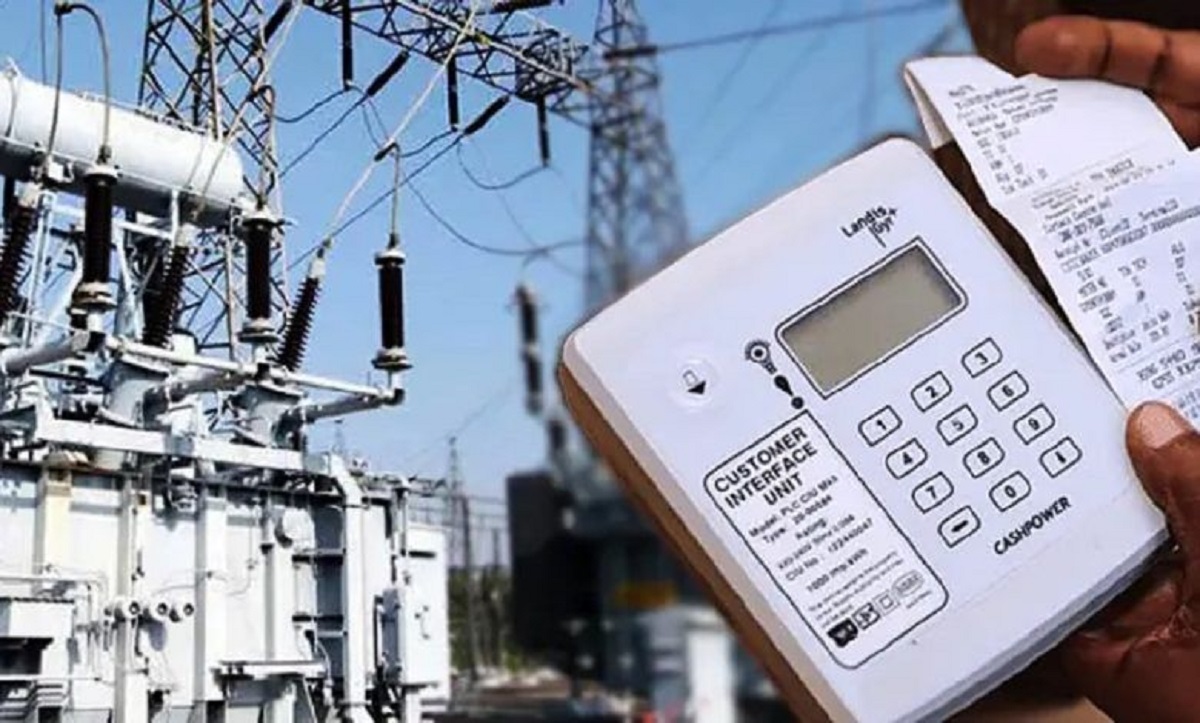
Federal Government has announced the disbursement of about N333 billion to eight electricity generation companies (GenCos) as part of measures to resolve outstanding debts in the power sector.

The government also disclosed the issuance of a second bond valued at N729 billion to settle verified legacy obligations and improve liquidity within the Nigerian Electricity Supply Industry (NESI).
The disclosures were made on Tuesday at an investors’ forum organised by the Nigerian Bulk Electricity Trading (NBET) Plc in Abuja.
Government representatives said the latest bond issuance marked the completion of the initial phase of the Presidential Power Sector Debt Reduction Programme, which was designed to address verified liabilities and attract private sector investment across the electricity value chain.
The Special Adviser to the President on Energy, Mrs Olu Verheijen, said the implementation of the first series of the programme demonstrated the administration’s commitment to meeting its financial obligations and improving investor confidence.
Verheijen disclosed that the Federal Government in February 2026 allocated about N501 billion under the first tranche of the programme, comprising N300 billion in cash and N201 billion in non-cash bond instruments to offset verified debts owed to power producers.
She said N333 billion had so far been disbursed to eight participating GenCos operating 17 power plants.
According to her, the government also paid the first coupon of about N63.5 billion on the seven-year bond in full on July 14, 2026.
She explained that the payments had enabled generation companies to meet critical obligations to gas suppliers, lenders and operations and maintenance contractors, thereby improving their operational capacity.
“Markets do not reward promises; they reward performance. Capital follows credibility,” Verheijen said.
She added that the second bond series would further strengthen liquidity in the electricity market and create a more stable financial environment capable of attracting long-term private investment.
The Presidential Power Sector Debt Reduction Programme is part of broader Federal Government efforts to address challenges affecting electricity generation, distribution and investment in Nigeria’s power sector.
Federal government has launched a N482.4 million investment fund to support 12 tech-enabled Nigerian startups.

The initiative under the federal government of Nigeria’s Investment in Digital and Creative Enterprises (iDICE) Programme was implemented by the Bank of Industry (BoI).
The initiative in a statement said applications have been opened for Growth Lab, a 12-week acceleration programme that will select the 12 tech-enabled Nigerian startups, from the six geopolitical zones, for intensive growth support, investment readiness training, and access to up to $350,000 in funding.
According to Ife Adebayo, national coordinator of the Programme, growth lab was designed to support startups that have achieved early traction and are seeking the expertise, networks, and investment required to scale following the implementation of Founders Lab.
“Growth Lab is the Startup Bridge accelerator programme, designed for startups that have developed an MVP and require structured support to scale. The programme focuses on strengthening venture fundamentals and preparing companies for external investment.
“The programme targets startup founders who are seeking the support, networks, expertise, and investment readiness required to accelerate growth and strengthen their position within the Nigerian innovation ecosystem,” he said.
He added that selected founders will gain access to structured growth support, investment readiness preparation, access to industry experts, market expansion pathways, a $100,000 cash investment (or Naira equivalent) for 7.5% equity upon entering the programme (terms and conditions apply), and up to $250,000 in potential follow-on investment should certain growth conditions be met.
“Eligible startups must be at the post-MVP stage, demonstrate evidence of market validation through users, customers, pilots, partnerships, waitlists or any other demand signals, and be willing to participate fully in the hybrid programme,” he said.
The programme will run as an intensive 12-week hybrid experience, including virtual engagements and two physical weeks in Lagos focused on collaboration, learning, and business growth.
The statement said applications opened on July 15, 2026, and will close on August 19, 2026.
According to him, female founders are strongly encouraged to apply. Selection will be conducted through a clearly defined, merit-based evaluation process aligned with published criteria.
iDICE is a $618 million federal government initiative backed by international lenders to boost the technology and creative sectors.
It provides young entrepreneurs with business skills training, mentorship, and access to capital through funds and accelerator programs like the iDICE Startup Bridge.

NPC Opens Nationwide Digital Birth, Death Registration Platform

FG Launches C.L.I.C.K.D., Consumer Credit Scheme for Tech Devices

Airtel Nigeria Expands Retail Footprint to Strengthen Customer Access Nationwide

Ovaloop Technologies Unveils Digital Tools to Formalize SMEs Operations Across Africa

Kaspersky Survey Highlights the Need for Smartphone Security

NRC, Ponzi Scheme Collapses Resulting Loss of Billions of Naira

NASENI Moves to Digitize CCB’s 5m Assets Declaration and Operations

Lebara Nigeria Launches Lebara Play, Africa’s First Telecom-Owned Micro-Drama Platform

CANAL+ Partners Samsung to Pre-Load DStv Stream on New Samsung TVs In Nigeria, Other African Countries

Tokenization, Blockchain Technology will Transform Financial Institutions – IMF




 E-Financial3 days ago
Access Holdings Sells 7.44% Stake in Ghana Unit

 News3 days ago
Adebutu, PDP Chieftain Accuses Nigerian Governors of Embezzling LG Allocations

 E-Financial3 days ago
NDIC Urges Youths to Shun Ponzi Schemes, Embrace Savings

 E-Business3 days ago
SERAP to Sue NASS over Bill Empowering NDPC to Regulate Social Media

 News3 days ago
NIMASA Unveils Accelerator Scheme to Drive Innovation, Sustainable Growth

 E-Financial3 days ago
NRS Issues July 31 Deadline for e-Invoicing Compliance

 News3 days ago
ICPC Secures Final Forfeiture of N941m Linked to IPPIS Fraud

 News3 days ago
eBusinessLife Advocates Greater Support for Girls in ICT as Students Showcase AI Innovations