

News
“Youths are Africa’s future” says UBA CEO

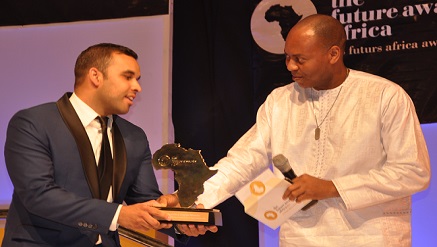
Phillips Oduoza, group managing director and CEO of United Bank for Africa (UBA) Plc has said that the future progress of Africa, as a continent, is in the hands of its youthful population.
He said this during the Future Awards and Summit also popularly known as The Future Awards where hundreds of youths gathered at the prestigious Intercontinental Hotel, Lagos to celebrate youths excelling in different aspects of life.
UBA was a lead sponsor of the awards and summit as part of its commitment to the development of the next generation of future leaders in Africa.
Explaining why UBA was sponsoring ‘The Future Awards Africa’ Oduoza, represented by Dr. Yinka Adedeji, divisional, head, e-Banking UBA Plc, said “Over 50 percent of Africans are youths. As a pan-African bank with operations in 19 African countries, UBA aligns its vision to the aspirations of the continent’s youthful population by developing tailor made products that aligns with the aspirations and ambitions of the African youth. For example, our Next Generation account also known as “NextGen” is specifically targeted at youths and is about building the next generation of educated and enlightened professionals, employees, entrepreneurs, self employed persons, from all walks of life, early in their financial life cycle.”
The Next Gen account, he said, allows account holders to have access to 24 hour online banking services on UBA’s highly acclaimed internet banking platform besides other privileges like free web portals, specially branded Mastercard, interest bearing savings accounts, career advisory, scholarships, work place experience schemes with the UBA Group, entrepreneurial skills development workshops and social media engagements.
He spoke during the presentation of the prize for “the Future Africa Award in Agriculture,” won by Samir Ibrahim and Charles Nichols, founders of SunCulture, Kenya; a solar-powered irrigation kit which makes it simpler and cheaper for farmers to grow food. The kit replaces expensive diesel and petrol pumps.
UBA also endowed The Future Africa Awards “Young Person of the year,” which was won by Sangu Delle, Co-Founder, Cleanacwa, Ghana; a 27 year old entrepreneur from Ghana who built a Clean Water organisation that has impacted tens of thousands of people in rural Liberia and Ghana. The prize was presented by the representative of President Goodluck Jonathan, Bonni Haruna, Minister of Youth Development and two time governor of Adamawa state.
Rotimi Amaechi, governor of Rivers State; Obiageli Ezekwesili, former Minister of Solid Minerals, young entrepreneurs, students from different secondary and tertiary institutions, captains of industry, attended the awards ceremony.
One of the major highlights of the evening was the final phase of The Future Awards Africa’s #STOPEBOLA campaign, which was held via an auction on a custom piece by A-List haute couture designer, Lanre Da Silva Ajayi with a winning bid of N1Million on the dress. The proceeds will go to the UN Ebola Response Fund.
The awards which was hosted by Iyanya, Osas Ighodaro, Ice Prince and Flavia from Uganda, saw 10 outstanding individuals rewarded for their excellent work across different fields: business, entertainment, politics, science and technology and education.
The Future Awards, are a set of awards given by The Future Project (TFP), a social enterprise set up with a strong, practical commitment to human and capital development, especially in Africa.
The Future Project is the largest home-grown network of policy-makers, business people, and other stakeholders in Young Africa.
It is also committed to finding effective and innovative ways of addressing social issues. It has become one of the most respected private sector-driven development platforms with a history of verifiable impact, including in under-privileged and grassroots communities.


Google and UpSkill Universe, Sub-Saharan Africa’s leading AI and business skills training partner, have announced a major redesign of the Google Hustle Academy programme.

For the first time, the free training initiative is open to everyone, not just business owners. The new curriculum is focused on equipping individuals and entrepreneurs with practical AI skills.
Small businesses are the engine of Africa’s economy, creating over 80% of jobs on the continent. To help them grow, the Hustle Academy was launched in 2022, providing bootcamp-style training on business strategy, digital skills, AI, and leadership. The program has since trained over 18,000 SMEs, with many reporting increased revenue and job creation.
Now, as AI reshapes the job market, the program is evolving. The 2026 edition is built for anyone in Sub-Saharan Africa, including employees, students, and jobseekers, who wants to use AI to advance their career.
To meet the needs of a diverse audience, the new format includes short, 60-minute webinars and more immersive, high-impact bootcamps. These sessions are laser-focused on putting AI to work immediately in areas like digital commerce, marketing, and growth strategy.
Speaking about the academy, Gori Yahaya, Founder & CEO UpSkill Universe said “The 2026 Hustle Academy is designed to close the AI Skills gap with hands-on training that is short, focused, and immediately useful. AI is reshaping how businesses win and how careers are built, right across this continent.
“We’re excited to renew our partnership, now in its fifth year with Google, combining their global AI leadership with our deep regional AI expertise. The next wave of AI leaders will come from this continent. We are making sure they are ready.”
The Hustle Academy initiative has strengthened digital competitiveness across emerging African economies by enabling SMEs to move beyond AI awareness to practical implementation, positioning them for sustained growth in an increasingly AI-driven business environment.
“We believe that the future of Africa’s digital economy lies in the hands of individuals and entrepreneurs alike. Our new strategy focuses on scaling reach by training individuals in the latest AI-centered tools and techniques,” said a Google representative.

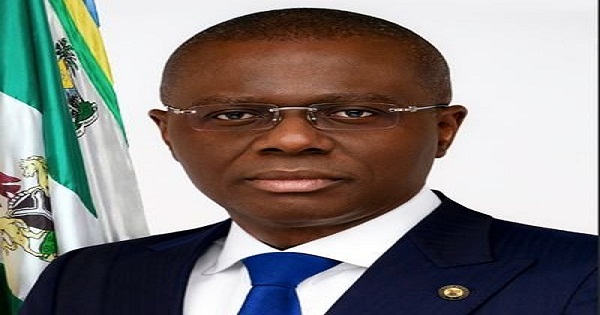
Lagos State has dragged 45 individuals and firms, including Bi-Courtney Aviation, DAAR Communications and Leaders & Company, to revenue court for tax debts running into billions of naira.

Lagos Govt
Bi-Courtney, operators of Murtala Muhammed Airport Terminal Two, faces N38.7 million claim; DAAR, behind Africa Independent Television, owes N22.4 million; ThisDay publishers Leaders & Company allegedly skip N67.1 million.
GMT Energy Resources tops corporates at N145.8 million, followed by Sheriff Deputies at N132.1 million; others like Heyden Petroleum, AA Rescue, BRT operator Primero also listed.
Individuals owe N13.5 million to N35 million each.
Attorney-General Lawal Pedro said suits followed ignored notices, aiming to enforce laws and fund infrastructure.
More defendants: IENG Nigeria, James Fisher, V Care Diagnostics, Venture Garden, Saro Africa, Barry Callebaut, Native Media, First Consulting, Eyowo Payments.
Compliant taxpayers post-notice escaped prosecution; defaulters risk penalties, interest, jail.
Pedro urged prompt filings and payments.


National Agency for Food and Drug Administration and Control (NAFDAC) has alerted Nigerians on counterfeit and unregistered Cerelac Mixed Fruits and Wheat products being sold in Lagos.

NAFDAC said Nestle Nigeria, the genuine Marketing Authorisation Holder of the product, received a complaint of suspected counterfeit purportedly manufactured by Nestlé Spain, bearing Batch Code 308002910.
It said that Nestle Nigeria reported that the complainant described that the counterfeit product emitted an odour suggestive of possible contact with fuel.
NAFDAC said that preliminary review of the product by Nestle Nigeria indicated that it had expired, in spite of the container displaying an expiry date of 10-2026, which suggested that the date coding had been tampered with (revalidated).
Nestle Cerelac Mixed Fruits and Wheat is a nutritious infant cereal, designed to be a delicious first food for infants.
NAFDAC said that its post-marketing surveillance’s directorate officers in Lagos conducted a surveillance visit to Maxland Shopping Centre, 193 Ago Palace, Okota, where the product was purchased by the complainant.
It added that the suspected counterfeit and unregistered Cerelac were found on sale at the premises and subsequently mopped up, while Nestle assisted in identifying the distinguishing features between registered and unregistered product.
According to the regulatory agency, Nestle revealed that the unregistered product used a hyphen (-) to separate the day from the year, while the registered product used a slash (/) to separate the day from the year.
“It is important to note that Nestle Nigeria is not aware of the channels through which the products are supplied into the country.
“Healthcare professionals and consumers are advised to report any suspicion of the sale of substandard and falsified regulated products to the nearest NAFDAC office, call 0800-162-3322, or send an email to [email protected],” NAFDAC said.
The agency warned that counterfeit formula often lacked essential nutrients, vitamins and minerals, leading to stunted growth or developmental issues.
It said that such formula might also contain contaminants that might lead to severe health consequences to infants or even death.
NAFDAC reiterated its commitment to safeguarding public health adding that it would continue surveillance activities to ensure the quality, safety, and efficacy of all NAFDAC-regulated products circulating in Nigeria.
It said that all zonal directors of the agency and state coordinators had been directed to carry out surveillance and mop up the revalidated product, if found within the zones and states.
The agency urged distributors, retailers, healthcare professionals, and caregivers to exercise caution and vigilance within the supply chain, to avoid the distribution, sale, and use of fake products.

Nigeria Demands Cloud Sovereignty to Anchor Africa’s Digital Independence

Digital Encode Sponsors PAFON 3.0 as CVO Prof. Adewale Set to Deliver Keynote on Cybersecurity and Trust

Polaris Bank Targets Youth with Financial Literacy Drive

As Nigerians Struggle to Save, Mutual Benefits Highlights Power of Structured Financial Planning

NITDA Boss Warns of AI Threat Shift @ GITEX Africa

Spotify’s Loud & Clear Report Reveals Over ₦60Bn Revenue for Nigerian Artists in 2025

Why JustMarkets Is a Strong Choice for Gold Trading

Kuda MFB Increases Kuda for Her Business Grants to ₦10 Million

Canal+ to Cut Jobs as Part Sweeping Restructuring

Nigeria tops global rankings for USDT, USDC ownership




 Telecom3 days ago
From Import Dependency to Local Capacity: Nigeria’s Tech Manufacturing Journey

 E-Financial2 days ago
How Unethical Deals Triggered CBN Takeover of Union Bank -Forensic Report

 E-Financial1 day ago
How Sterling Bank Is Empowering 1m Women with ₦500Bn

 E-Financial2 days ago
BVN Database hits 68.6m – NIBSS

 E-Business2 days ago
Kaspersky Warns of Digital Medicine Risks on the Occasion of World Health Day

 Broadcasting2 days ago
Multichoice Bleeds Customers in South Africa, Loses 580,000 Subscribers

 E-Financial1 day ago
See Key Changes in BVN Rule from May 1 by CBN

 Broadcasting2 days ago
Broadcast Station Owners Reject IBAN’s Threat to Boycott Wike’s Media Engagements