

Broadcasting
Zambia’s Lukando Wins Face of Africa 2010

On Saturday February 6, in a stylish haute couture showcase 22-year-old Lukando Nalungwe from Zambia joined an exclusive group of winners when she was named the eighth and newest M-Net Face of Africa.
The striking model scooped USD 50 000 from M-Net along with a modeling contract from O Model Africa and skincare products for 12 months from Iman Cosmetics.
Re-invention and innovation are hot buzzwords for the global fashion community and in a two-hour show, screened live from Lagos to 47 countries across Africa, M-Net presented a bold new vision for the Face of Africa Final opting for an edgier version of a traditional runway show and presenting the models on a black, floor-based runway in a contemporary warehouse.
Themed to resemble the loading warehouse of an art museum where precious gallery pieces are prepared for display, the staging included massive cargo boxes stamped with African destinations with extra-ordinary sized gold frames that showcased the fashion and the finalists, and packaging tape demarcating the runway from the show’s seated guests. It was a uniquely fresh approach to showcasing Afro-chic expression.
Hosted by Studio 53’s Fareed Khimani (Kenya) and former Face of Africa Kaone Kario (Botswana) with a guest appearance by last season’s Face of Africa Kate Menson (Ghana), the finale included entertainment from Nigerian superstar D’banj belting out his hits Suddenly and Fall in Love. Meanwhile soulful South African songstress Lira, shimmering in green silk, showed why she’s one of Africa’s rising stars with two brilliant performances of her hits Feel Good and Believer!
But the night belonged to the Top 10 – and from the minute that Nigeria’s Marvis kicked off the show, followed in rapid success by Tholakele (Zimbabwe), Lilian (Tanzania), Esperanca (Angola), Thembi (South Africa), Blessing (Nigeria), Rosanna (Zimbabwe), Diana (Kenya), Ernania (Mozambique) and Lukando (Zambia), it was very clear just who the stars of the show really were.
Showing how much they’ve learnt during the Face of Africa search, which DStv audiences have been following for 15 weeks, the Face of Africa Top 10 hit the catwalk with confidence, graceful as they strode down the catwalk resplendent in garments designed by the best of African designers.
Among the record 26 designers sending their creations down the runway were a Nigerian contingent that included – Zizi Cardow, Frank Osodi, Odio Mimonet, Fati Asibelua, Folake Folarin-Coker, Ituen Basi, Adebayo Jones, Lanre Da Silva-Ajayi, Lisa Folawiyo and Yemi Osunkoya.
Joining them were their counterparts from across the continent led by featured designers John Kaveke (Kenya) and David Tlale (South Africa) and including Anna Getaneh (Ethiopia), Kofi Ansah (Ghana), Anisa Mpungwe (Tanzania), Gloria WavaMunno (Uganda), Chakirra Claasen (Namibia), Cathy Kathunzi (Malawi), Koketso Chiepe (Botswana), Liz Ogumbo (Kenya), Taibo Bacar (Mozambique) and Angela Mulenga (Zambia).
And in living up to its reputation for merging African design with the latest in international trends, the Face of Africa Finale included the unmistakable style of Christian Lacroix, Versace and Emmanuel Ungaro while jewelery maestro Chris Aire brought his signature style to the fashion accessories utilized.
Then with all the fashion over, it was time for the big moment, the announcement of the M-Net Face of Africa 2010. Returning to the platform that made her a star a decade ago, the always elegant Oluchi was on hand to reveal the winner and she soon revealed Lukando’s success.
Commenting on the event, Biola Alabi, M-Net MD congratulated Lukando on her win saying,
“It’s an incredible thing to watch someone’s life literally change in front of your eyes and when it happens live in front of a continent, it is remarkable and a very special moment. We are very proud of Lukando and all of the Top 10 for their determination and focus and want to thank them for sharing this journey so openly.”



National Broadcasting Commission (NBC) is set to launch so-called FreeTV, with over 100 channels for news, sports, education, entertainment and children’s programming in multiple Nigerian languages.

The launch is scheduled for May 15.
Charles Ebuebu, director-general, NBC, who disclosed this, said the new platform will offer free-to-air access with no carriage fees, leveraging hybrid satellite and internet delivery via NigComSat-1R.
The new plan is not an upgrade, the NBC stressed. This is a rebuild, according to Ebuebu .
FreeTV will be true free-to-air – no encryption, no set-top box barrier.
Any DVB-T2/S2 television will work. A mobile app will extend reach to phones and tablets.
The platform will launch with over 100 national, regional and state channels across sports, news, children’s programming, education, entertainment and cultural content in Hausa, Yoruba, Igbo, Tiv, Ijaw, Edo, Fulfulde, Ibibio, Efik and Nupe – all in HD.
Crucially, the NBC has partnered with a Bulgarian firm, GARB (operating since 2006 and recognised by the European Broadcast Union), to deliver a 94 per cent-accurate audience measurement system using return-path data, app analytics, demographic panels, and Artificial Intelligence (AI).
To qualify broadcasters, must commit their channels, produce a minimum of 60 per cent local content, and promote FreeTV until January 2029.
After that, a regulated tiered rate card takes effect.
According to NBC, the strategic rationale is simple: build viewers first, monetise later.
The document further revealed that six regional production hubs in Lagos, Abuja, Port Harcourt, Enugu, Kano and Benin would function as local content factories, expected to generate 500 to 1,000 jobs per zone within two years.

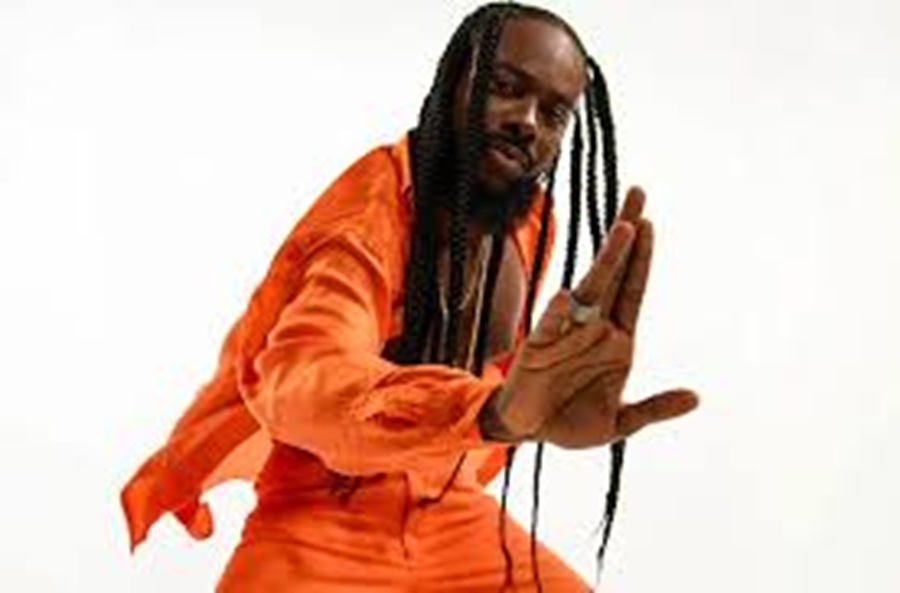
Popular Nigerian artist Adekunle Gold has lent his support to the growing youth-driven movement behind The Gathering on 100, further amplifying conversations around what is fast becoming one of the most talked-about upcoming experiences among young Nigerians.

Adekunle Gold
Known for his music and his strong connection with youth culture and evolving creative expression, Adekunle Gold’s involvement signals a deeper alignment between the event and the kind of audience it is attracting, a generation that is bold, expressive, and constantly redefining what community looks like.
While details of his involvement remain understated, his visible support adds a new layer of support and cultural relevance to the movement. In a landscape where attention is currency, endorsements from artists of his stature often act as a signal, drawing more eyes, more curiosity, and ultimately, more participation, but beyond visibility, the significance lies in what it represents.
The new father has, over the years, built a reputation for embracing creativity in its many forms, from music to visual storytelling, fashion, and digital engagement. His brand has consistently resonated with young Nigerians navigating similar spaces of self-expression and identity.
From interactive experiences like live music sessions and open performance moments to fashion runways and content creation spaces, the event is designed to blur the lines between audience and participant. It invites attendees to move beyond observation and become part of the moment.
This is a concept that closely mirrors the kind of cultural shift Adekunle Gold has been part of, one where boundaries between creator and consumer continue to dissolve.
His support also reflects a broader trend within Nigeria’s entertainment industry, where artists are increasingly engaging with youth-led initiatives that go beyond traditional performances. Rather than simply appearing on stage, they are aligning with movements that foster community, creativity, and shared experience.
For fans and attendees, this adds another dimension to what The Gathering on 100 represents.
As registrations increase and conversations expand across social platforms, the movement is gradually taking shape through the collective interest of those drawn to it.
Head to gathering.com to register.

Prof. Joash Amupitan, chairman, Independent National Electoral Commission (INEC), has urged broadcast organisations in Nigeria to exercise greater responsibility in the dissemination of information as the country prepares for the 2027 general elections.

Amupitan made the call on Wednesday, while addressing participants at the 81st General Assembly of the Broadcasting Organisations of Nigeria (BON), where he highlighted the growing influence of the media in shaping electoral processes.
He noted that the information environment has become increasingly significant in modern elections, warning that the spread of false or misleading information through broadcast channels could undermine public confidence in the electoral system.
According to the INEC chairman, media organisations must ensure strict compliance with the provisions of the Electoral Act 2026, particularly those relating to political broadcasting. Politics
He explained that the law requires equitable access to broadcast platforms for all registered political parties, stressing that fairness in media coverage is essential to maintaining a level playing field during elections.
“With 22 registered political parties, fairness in airtime allocation and coverage is a legal obligation,” Amupitan said.
The INEC chairman also cautioned broadcasters against airing content that contains abusive, inflammatory, or divisive language capable of inciting ethnic, religious, or sectional tensions.
Such broadcasts, he said, could threaten national unity and disrupt the electoral process if not properly managed.
Amupitan further reminded media organisations about the 24-hour cooling-off period mandated by law before election day, during which all political campaigns and advertisements must cease.
He explained that the measure is intended to provide voters with time to reflect on their choices without being influenced by last-minute campaign messaging.
While acknowledging the constitutional guarantee of freedom of expression, Amupitan emphasised that the right must be exercised within the limits of the law.
He noted that the airwaves are a public resource and must therefore be used responsibly to ensure fairness, balance, and equal access for all political actors.
The INEC chairman also pointed to the collaborative roles of INEC and the National Broadcasting Commission (NBC) in regulating political broadcasting, although he acknowledged that certain challenges persist.
These challenges, he said, include regulatory overlaps, gaps in enforcement, and the increasing convergence of traditional broadcast media with digital platforms, which has made monitoring political communication more complex.
Amupitan also expressed concern over perceived incumbency advantages in state-owned broadcast stations and the growing commercialisation of political airtime, warning that these practices could disadvantage smaller political parties. Politics
To address these concerns, he called for stronger collaboration between regulatory agencies, clearer guidelines on equal access to media platforms, and improved systems for fact-checking and verification.
He also advocated increased transparency in political advertising, including the disclosure of sponsorship and pricing structures.
Amupitan urged broadcasters to prioritise accuracy and professionalism in their operations, encouraging them to verify information before dissemination and play an active role in combating fake news.
He also called on the media to contribute to voter education and civic mobilisation, noting that public participation is vital to strengthening Nigeria’s democratic process.
Reaffirming the commission’s commitment to transparency, the INEC chairman advised media organisations to rely on official INEC communication channels for verified electoral information.
He added that the credibility of the 2027 general elections would depend not only on electoral logistics and technology but also on the integrity of the country’s information environment.

FG to Gift Nigerians over 100 Free TV Channels from May 15

FG New Approves Biometric Passenger Verification System for Airports Security

STBMAN, NBC Bicker over Alleged Due Process Breaches

CBN Dismisses Polaris Bank Liquidation Claim

AfDB Okays $200m for Nigeria’s Digital Backbone, Others

Spotify’s Loud & Clear Report Reveals Over ₦60Bn Revenue for Nigerian Artists in 2025

Kuda MFB Increases Kuda for Her Business Grants to ₦10 Million

Why JustMarkets Is a Strong Choice for Gold Trading

Canal+ to Cut Jobs as Part Sweeping Restructuring

Nigeria tops global rankings for USDT, USDC ownership




 E-Financial3 days ago
How Sterling Bank Is Empowering 1m Women with ₦500Bn

 E-Financial3 days ago
See Key Changes in BVN Rule from May 1 by CBN

 E-Financial3 days ago
Paga Group Rejigs Leadership as Oviosu, Founder Becomes Group CEO

 Broadcasting3 days ago
INEC Warns Broadcasters against Misinformation ahead of 2027 Polls

 E-Financial3 days ago
Reputation: The Real Currency Powering Fintechs

 News3 days ago
Google, UpSkill Universe Relaunch Hustle Academy to Bring Free AI Skills to Africans

 E-Business3 days ago
Jumia Expands Nationwide Footprint, Deepens Reach Across Underserved Nigerian Cities

 Telecom3 days ago
Meta Unveils Muse Spark: MSL’s Groundbreaking People-First AI Model