

Telecom
Zinox Group’s Vision for Empowering 10,000 Women in Tech

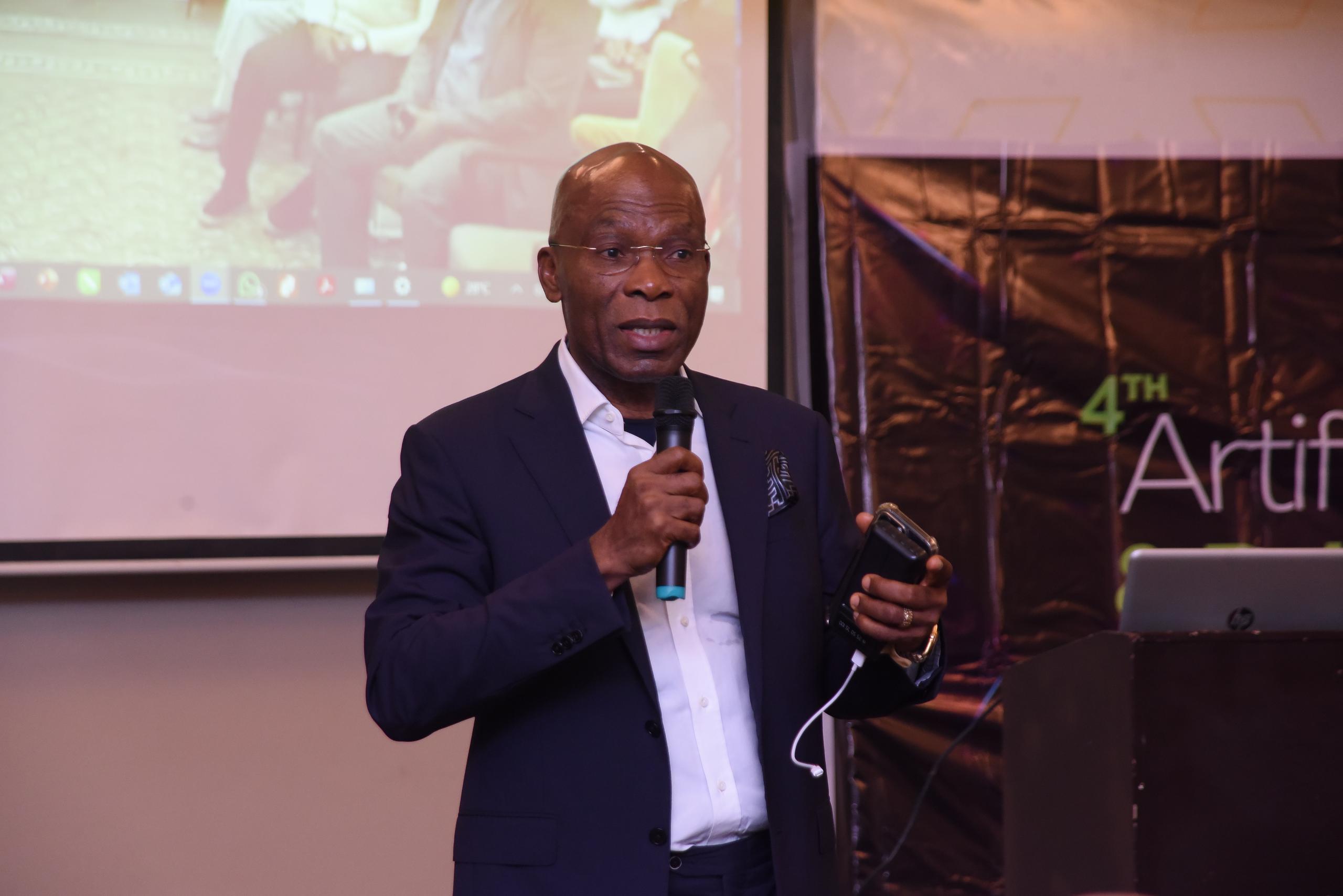
Visionaries who recognize untapped potential can fundamentally reshape entire economies in the rapidly evolving global technology landscape. Dr. Leo Stan Ekeh, Chairman of Zinox Group and a pioneer in Africa’s tech ecosystem, stands as a testament to this transformative power. For over three decades, Dr. Ekeh has not merely participated in Nigeria’s tech evolution; he has consistently been several steps ahead, anticipating shifts that few could even envision.

Dr. Ekeh’s latest ambitious vision focuses on producing over 10,000 female tech professionals within the next five years, positioning Zinox Group to nurture one of Africa’s largest pools of tech talent. This isn’t merely aspirational rhetoric.
The Group has demonstrated remarkable progress through its subsidiary TD Africa, which has systematically developed more certified tech professionals in sub-Saharan Africa than any other organization, primarily through strategic partnerships with globally recognized Original Equipment Manufacturers (OEMs), such as HP, IBM, Dell, and Cisco.
TD Africa is led by Mrs. Chioma Ekeh, the wife of Dr. Ekeh and an accomplished business leader in her own right. Under her leadership, TD Africa has become a powerhouse in Africa’s tech distribution and training space. Her strategic direction has been instrumental in scaling the company’s impact, proving that when women lead, industries evolve and thrive.
The recent graduation of approximately 400 female ‘techsters’ through TD Africa’s TecHerdermy program represents a significant milestone in this mission. This achievement reflects Dr. Ekeh’s long-standing belief, articulated over 15 years ago, that women would eventually dominate leadership positions across various sectors, particularly technology.
As he predicted, many thriving organisations now have women at the helm of affairs. Recent global statistics strongly support Dr. Ekeh’s vision. According to McKinsey’s 2023 Women in the Workplace report, companies with gender-diverse executive teams are 25% more likely to experience above-average profitability. Furthermore, the World Economic Forum’s research indicates that economies with higher female labour force participation experience an average of 3.4% higher GDP growth compared to less gender-balanced counterparts.
In the technology sector specifically, Deloitte’s 2023 Global Technology Leadership Study revealed that companies with above-average diversity in their technology teams report 30% higher innovation revenue than companies with below-average diversity. These figures are not merely correlational, they reflect fundamental advantages that women bring to leadership.
The Zinox Group itself demonstrates this philosophy in action, with over five female CEOs leading various business units within the conglomerate. These women are not just occupying positions but driving results.
As the company’s motto suggests, Zinox is truly ‘anticipating the future’. These leaders embody the qualities that research consistently shows make women effective business leaders: fostering positive work culture, maintaining focused execution, demonstrating high emotional intelligence, and bringing emotional and spiritual resilience to Africa’s challenging tech landscape.
Perhaps most impressively, Zinox Group’s commitment to talent development has created a remarkable ripple effect throughout Africa’s tech ecosystem. Former employees now lead multinational corporations, bringing with them the values and vision instilled during their time within Dr. Ekeh’s organizations.
Speaking at a recent AI and Robotics Summit organised by the NCS, Dr. Ekeh urged stakeholders to “compete through exceptional content” to realize the Nigeria of their dreams, a battle he has personally waged for over thirty years. Despite setbacks, including a significant $28 million loss on investments in AI and robotics in Nigeria years ago, his commitment to technology as a transformative force remains unshaken.
Dr. Ekeh consistently emphasizes that technology represents an unparalleled opportunity for scale and impact. While acknowledging technology’s potential for misuse, he remains focused on its positive applications — creating solutions that are “good, useful, profitable, and enduring”.
His advice to entrepreneurs and tech enthusiasts emphasizes three key investments: research, human capital development, and spiritual content. This holistic approach reflects Dr. Ekeh’s understanding that technical knowledge alone is insufficient; true innovation requires character, vision, and purpose.
The Zinox chairman’s ambitions extend beyond Nigeria to the entire African continent. By building what he envisions as “the biggest tech solution company in Africa,” Dr. Ekeh aims to transform the narrative around African technology from consumption to creation.
With the African tech market projected to reach $712 billion this year according to the International Finance Corporation, and women-led startups demonstrating 35% higher returns on investment according to a 2023 analysis, Dr. Ekeh’s focus on female tech professionals appears both visionary and strategically sound.
As Africa positions itself in the global digital economy, leaders like Dr. Leo Stan Ekeh demonstrate that the continent’s technological future may well be female, and that future is here.


Sunil Mittal led Bharti Airtel has crossed the 650-million customer mark globally, fortifying its position as the world’s second-largest telecom operator by mobile subscriber base, as per a regulatory filing by the telecom operator.

“According to GSMA Intelligence, Bharti Airtel is ranked second globally by mobile customer base, with operations spread across India and Africa,” the filing said.
Commenting on this milestone, Gopal Vittal, executive vice chairman, Bharti Airtel, said: “Achieving the milestone of 650 million customers to be the second largest operator globally is a great responsibility for us to serve our customers better every day,”
He added that the telco strives to raise the bar on innovation, reliability, and experience so that every customer interaction is an opportunity to earn trust and deliver value connection.
Currently, Airtel India serves around 368 million mobile customers, meanwhile over 179 million users have been plugged into its subsidiary Airtel Africa spread across 14 countries.
Its mobile money platform, Airtel Money reached more than 52 million customers.
Additionally, the telco serves around 13 million homes with high-speed internet services and over 15 million through its Digital TV offering.
With operations spanning 15 countries and network coverage reaching over two billion people, analysts say that the latest milestone is a testimony to the natural curve of evolving from a telecom operator into a broader digital services provider.


Dr. Aminu Maida, executive vice chairman, Nigerian Communications Commission (NCC), has insisted that telecommunications operators must compensate subscriber for poor quality of service after a facility tour of major telecommunications operators in Lagos yesterday.

The team comprises of Chief Idris Olorunnimbe the Chairman of the Governing Board of the Nigerian Communications Commission (NCC), EVC, Engr. Gbenga Adebayo, chairman, Association of Licensed Telecommunications Operators of Nigeria (ALTON) and other stakeholders visited MTN Nigeria, Globacom and Airtel Nigeria.
Earlier this week, the commission directed Mobile Network Operators (MNOs) to provide compensation to subscribers whose network quality of service experience is below specified targets within certain locations.
In a statement signed by Nnenna Ukoha, head, Public Affairs Department, NCC, the commission noted that its position is that subscribers should not be made to bear the full burden of service disruptions where operators fail to meet prescribed standards of service delivery.
Speaking after the facility tour the EVC, said: “We are in a situation where Nigerians are yearning for better service, but better service requires infrastructure. We are not where we want to be or where we need to be, but from what I’ve seen today, I am reassured that the operators are continuing to invest. I urge Nigerians to be a little bit patient while these investments are made, so that we can address the infrastructure deficit that is required to improve service for Nigerians.
“I wasn’t expecting that a tour like this would change that directive. We looked at it and we said the fairest thing to do was for subscribers to be compensated. This is not to say that the operators have not tried. Service has improved. The data shows that our demand is also increasing at a rate faster than the infrastructure is being built. So Nigerians have to be a little bit patient. From what I’ve seen today and all the work that has been done, I’m confident that gap will be close shortly”.
Chief Idris Olorunnimbe, chairman of the Governing Board of the Nigerian Communications Commission (NCC), added: “From what we have seen, and what has been done. We have been told in detail what is to come. And I mean, just like the EVC said, all we need is a bit more patience, better service, deeper penetration is assured based on everything that we’ve seen, and everything we have heard.
“It’s also important to commend our operators. The infrastructure that we’ve seen is comparable with any infrastructure from any telecom operator anywhere in the world, and Nigeria is not behind, and based on what we’ve also seen in terms of their plans for expansion, Nigeria will always be able to compete with any other country in the world.
” More so, drop calls are not deliberate. They are caused by a few things. One of it is fiber cut and attacks or vandalization of towers and other infrastructure. But now, it has reduced. We have seen they’ve shown us data today that shows a significant reduction. It will continue to reduce. As the critical national infrastructure program deepens and we’re also about to introduce an accountability framework of “when fiber is damaged, you must fix it”. That way we think that people will be more responsible with their constructions that breach telecom infrastructure. Then we can keep those incidents to the barest minimum, drop calls would also reduce.
“However, when calls drop, the networks also lose so it’s not in their interest for your calls to drop or for you to experience frustration when you use the service, because the more reliable it is, the longer you spend on it, the longer you spend on it, the more money they’re able to make. So, they are also doing their best in terms of ensuring that these incidents are reduced to the barest minimum”.
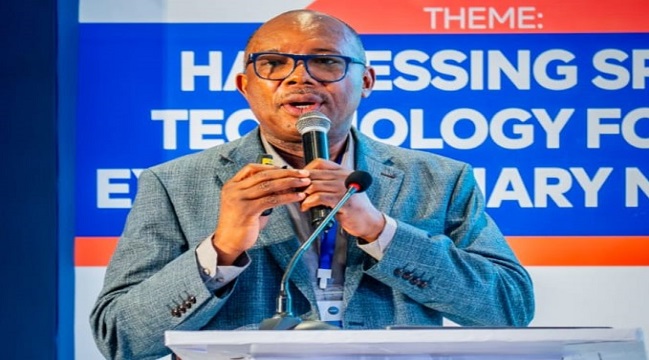
Kashifu Inuwa, the Director General of the National Information Technology Development Agency (NITDA), has underscored the importance of collaboration between government institutions and emerging startups as a catalyst for Nigeria’s digital transformation and national development.

Speaking at the Nigerian Satellite Week 2026 in Abuja, themed “Harnessing Space Technology for an Extraordinary Nigeria,” Inuwa urged stakeholders to embrace partnerships as a pathway to innovation and impact.
“Take a good step, and you can make a difference,” he said, emphasizing the need to translate ideas into tangible outcomes through collective effort.
The NITDA boss, represented by the Director of Stakeholder Management and Partnerships, Aristotle Onumo, during his presentation on “Enhancing collaboration between government agencies and emerging start-ups”, outlined four guiding principles for driving transformation: enabling the ecosystem rather than controlling it; prioritising networks over institutions; developing talent while supporting innovation and adopting practical solutions; and focusing on platforms rather than isolated projects.
To illustrate the power of digital innovation, Inuwa shared the story of a rural farmer whose productivity challenges ranging from unstable rents to failed loans were overcome through access to digital tools and networks. He explained that such incremental interventions can scale into broader economic gains, ultimately contributing to national infrastructure like satellite systems.
“This is the power of space technology, and it shows why events like this are so important,” he noted.
Highlighting the evolving role of space technology, Inuwa observed that startups are increasingly driving innovation across telecommunications, navigation, security, and cloud services. Once dominated by global superpowers, the sector is now emerging as a key economic driver, with Nigeria’s “Sunrise Packet” projected to contribute over $1.5 billion to the economy by 2030.
“Innovation without adoption is wasted,” he added, stressing the critical role of government in enabling start-ups to scale through supportive policies, infrastructure, and incentives.
According to him, developmental regulation should focus on creating markets, orchestrating ecosystems, and delivering public value rather than stifling innovation. He pointed to several initiatives supporting the growth of Nigeria’s innovation ecosystem, including the Digital Start-Up Act, Idea Hatch, and the National Digital Leadership Programme, all designed to empower young innovators and connect them to global opportunities.
He further highlighted platforms such as GITEX Africa, GITEX Nigeria, and Digital Nigeria, which provide visibility for start-ups and attract investment, partnerships, and mentorship.
Inuwa concluded with a strong call for collaboration among government, start-ups, non-governmental organisations, and investors, describing Nigeria’s youth as the country’s greatest asset.
“If we are going to create a digital Nigeria, we must collaborate,” he said.
Also speaking at the event, the Minister of Communications, Innovation and Digital Economy, Tijani, described Nigeria’s satellite infrastructure as central to the nation’s digital future.
“Nigeria is the only West African country with its own satellite. NigComSat provides critical connectivity and resilience, benefiting not just Nigeria but the entire region,” he said.
Tijani disclosed that President Bola Ahmed Tinubu has approved the acquisition of NigComSat-2A and NigComSat-2B, a move expected to significantly enhance the country’s space capabilities.
He stressed, however, that infrastructure alone is not sufficient.
“What truly matters is how we leverage this technology to improve agriculture, education, security, and business operations,” he said.
The Minister also highlighted key government investments, including a ₦12 billion digital economy research cluster fund under Project Bridge, which will support academics and researchers nationwide. He added that Nigeria is expanding its digital backbone through 90,000 kilometres of fibre optic cables, nearly 4,000 telecom towers in underserved communities, and new satellite deployments to strengthen regional connectivity across countries such as Cameroon, Niger, Chad, Burkina Faso, and the Republic of Benin.
“The talent, ideas, and energy are all here in Nigeria. It is up to us to turn them into real outcomes for our people and the economy,” Tijani added.
The Nigerian Satellite Week continues to provide a strategic platform for collaboration among government, start-ups, academia, and the private sector, fostering innovation and reinforcing Nigeria’s leadership in Africa’s digital and space economy.
Welcoming participants, the Managing Director of Nigerian Communications Satellite Limited (NIGCOMSAT), Jane Nkechi Egerton-Ideyen, said Nigeria’s space programme is entering a new phase marked by deliberate and focused growth.
She pointed to strengthened institutional capacity, expanding partnerships, and clear economic gains, noting that the agency’s revenue grew from less than $650 million in 2023 to over $2 billion in 2025. She attributed this surge to key reforms, new commercial deals, and increasing demand for satellite broadband services across the African continent.
Egerton-Ideyen also disclosed that Nigeria has launched seven space assets in just over two decades, adding that the country is shifting its focus from prestige-driven initiatives to practical outcomes—enhancing connectivity, improving livelihoods, and promoting inclusive development.
She further revealed that more than 500 young Nigerians received training in satellite technology within the past year, while over 50 startups have benefited from NIGCOMSAT’s accelerator programme.

N4.65 Trillion in the Vault, but is the Real Economy Locked Out?

FG, Others Say Nigeria Wastes 38m Tonnes of Food Annually

Ecobank Assures of Seamless Easter Banking Services

Anchor Gets Nigerian, Canadian Licences as Transactions Crosses $2.5Bn

CycleFlow, IFC Launch Supply Chain Finance Platform in Nigeria

Spotify’s Loud & Clear Report Reveals Over ₦60Bn Revenue for Nigerian Artists in 2025

Madonna University Taps Tech Guru Adote for Strategic Board Role

China Threatens to Shut Nigeria’s Satellite Over $11.44m Unpaid Debt

FCCPC Bans Lagos ‘No Refund’ Policy, Vows Fines and Shutdowns for Traders

Healthcare Under Attack: Why Cybersecurity is Now Critical Care




 E-Financial3 days ago
CBN Says 33 Banks Raise Fresh N4.65 Trillion in Recapitalisation Exercise

 Telecom3 days ago
NITDA Urges Joint Action to Drive Nigeria’s Digital Innovation

 Telecom3 days ago
NCC Insists Telcos Must Compensate Subscribers for Poor Quality of Service

 E-Business3 days ago
Cybersecurity Firm Uncovers CrystalX RAT which Steals Data, Mocks its Victims

 E-Business3 days ago
Oracle Sacks 12,000 in India, Begins Shift to AI

 Telecom3 days ago
Oracle Corporation Axes 30,000 Workers in Brutal AI Shake-Up

 E-Financial3 days ago
Nigeria, Others Lose $88bn Yearly to Illicit Flows —Edun

 E-Financial2 days ago
UBA Beefs Up Mobile App Security to Stop Fraudulent Debits, Withdrawals