

Broadcasting
Zipline’s Instant Delivery, A Game-Changer in Medical Supply Chain

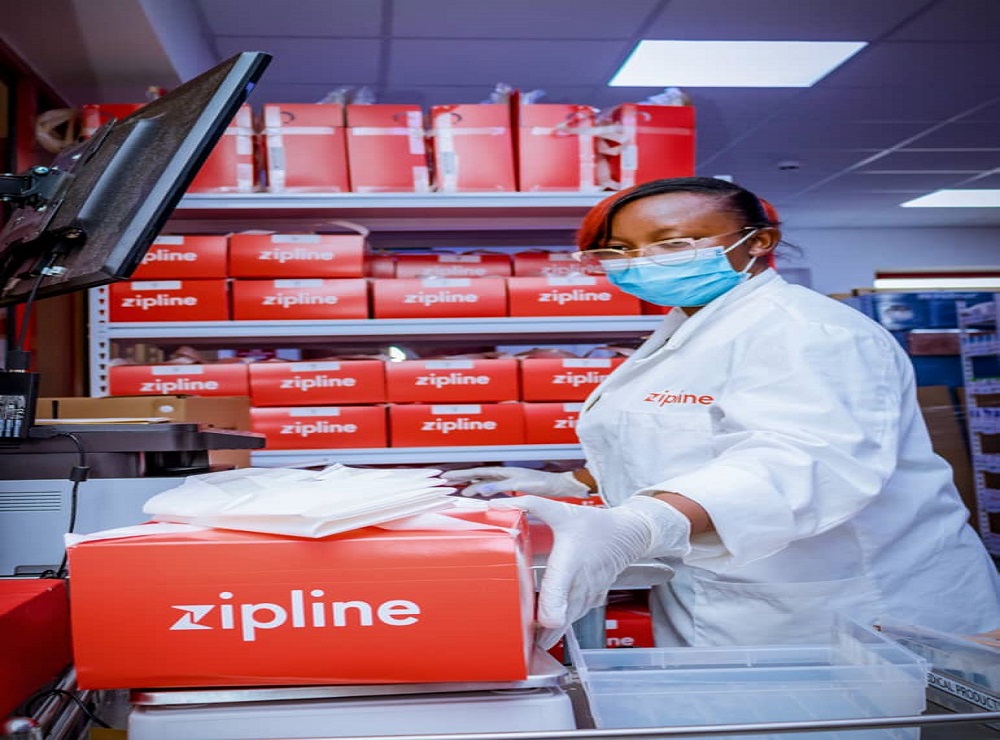
According to the World Health Organisation (WHO), nearly two billion people across the world lack reliable access to quality essential medical products such as blood and vaccines due to gaps in supply chains and poor infrastructure.

A functioning supply chain complete with procurement, appropriate warehousing, and end-to-end transportation, is critical to making sure that people have access to essential, quality medicine. Increasingly, drones or “unmanned aerial vehicles” (UAV) are being used to fill in key supply chain gaps, providing much-needed access to access to to medicine, medical supplies and vaccines.
By storing medicine, blood and other critical medical supplies and delivering them directly to health facilities, Zipline is helping the government of Ghana reduce wasted medication resulting from overstocking and expiration. Because health facilities can order on-demand, as needed, they no longer have to request large quantities of medicine from their national medical stores to make sure they have them in stock, ultimately resulting in over-ordering and expiration.
A District Director of Health in Ghana, Charles Kofi Azagba, recently said that “before the introduction of Zipline, [they] have been going through a lot of difficulties in getting medical and non-medical supplies to the various health facilities. However, with the coming of Zipline, [they] rarely run out of stock or even when [they] do, Zipline swiftly responds to them in less than 30-minutes”.
Recently Nigeria became the third African country to use Zipline’s drone delivery system, following national-scale operations in Ghana and Rwanda, with operations in Kenya and Cote d’Ivoire set to be launched later this year. Kaduna State, Nigeria has begun to procure medical commodities – vaccines, medicines, and blood – through the government supply chain and distribute them via the newly established Zipline distribution centre located at Pambegua. With Zipline’s autonomous drone delivery service, health facilities can receive products within 45 minutes or less, rather than several days when using traditional, complex procurement systems.
Nigeria and other developing countries often lack adequate supply, correct doses and affordable medication at their health centres. In some cases, health ministries set up semi-autonomous entities such as a National Level Medical Store and Regional Medical Stores, to purchase, store and distribute medicine and medical supplies to health centres, hospitals and dispensaries across the country.
Within the rural settings already burdened with poverty, high disease, and lack of adequate resources to deliver quality healthcare to the population, drug shortages and an inadequate number and skill-mix of healthcare providers are very common in rural health facilities.
Zipline’s technology has proved to be a valuable tool in assisting governments in achieving access to universal healthcare and will help the government of Kaduna in achieving this goal. A Zipline hub can send medical supplies to more than 500 health facilities within an 80km radius flying at about 110km/hour. Within the first week of operation in Kaduna state, the company delivered over a thousand medical items to several health facilities.
Kaduna is just the beginning of the government’s’ partnership with Zipline. They have already announced partnerships with the Cross River and Bayelsa states, with an aim to begin operations before the end of 2022, serving thousands of health facilities across Nigeria.



Spotify marked five years in Nigeria since its February 2021 launch with dramatic year-on-year listening growth averaging 163.5% through 2025, featuring triple-digit surges early on and sustained momentum, propelled by Afrobeats streams rocketing +5,022% alongside booming genres like Amapiano (+10,330%), Gospel/Praise (+5,499%), Hip-hop/Rap (+3,020%), and R&B (+2,602%).

Spotify
Indigenous language music listening surged +554% in Nigeria in 2024 and +87% in 2025, with global growth at +141% and +41% respectively, underscoring rising demand for local storytelling sounds.
The platform’s Nigerian artist roster expanded +158%, fueling a discovery boom where average listeners (aged 26) streamed 150 different artists recently; users created over 25 million playlists, logged 1.4 million play hours in 2025 alone, and streamed 59 billion podcast hours total.
Top Artists (2021-2025): Asake, Wizkid, Seyi Vibez, Burna Boy, Davido.
Top Songs: “Remember” (Asake), “Dealer” (Ayo Maff & Fireboy DML), “Awolowo” (Fido), “Kese (Dance)” (Wizkid), “Lonely At The Top” (Asake), “Joy is Coming” (Fido), “With You” (Davido feat. Omah Lay), “Terminator” (Asake), “MMS” (Asake feat. Wizkid), “Doha” (Seyi Vibez).
Nigeria’s debut stream was Shiga Lin’s Cantopop epitomizing borderless discovery from day one.


Nigerian singer, songwriter and producer Pheelz (Phillips Kayode Moses) is set to feature this weekend on African Voices Changemakers, the flagship magazine programme on CNN International.

The 30-minute episode, sponsored by digital solutions company Globacom, premieres on Saturday, February 21, 2026. In a candid sit-down with host Larry Madowo, Pheelz opens up about his journey from church musician to global hitmaker, reflecting on the intersections of faith, fame and the expanding influence of Afrobeats on the world stage.
Now 31, Pheelz began his musical path as a multi-instrumentalist in church before earning widespread acclaim in 2012 as the producer behind the hit tracks “First of All” and “Fucking with the Devil” on Olamide’s YBNL album. His rapid rise saw him named among NotJustOk’s Top 10 Hottest Producers in Nigeria in 2013.
He further solidified his reputation by producing nearly every track on Olamide’s Baddest Guy Ever Liveth, earning nominations at The Headies 2013 and in the Producer of the Year category at both The Headies 2014 and the Nigeria Entertainment Awards. In 2020, he clinched The Headies Producer of the Year award, and in 2021 secured the Soundcity MVP Award for Best Collaboration for “Finesse,” his smash hit with Bnxn (formerly Buju).
On the programme, Pheelz reflects on the experiences that shaped his sound and creative philosophy, discusses landmark collaborations, shares his perspective on artificial intelligence and artistry, and explains why sound, storytelling and culture remain central to African music’s global resonance.
The show airs on DSTV Channel 401 at 8:30 a.m. (WAT) on Saturday, with repeat broadcasts at 12:00 noon the same day; Sunday at 4:30 a.m. and 7:00 p.m.; Monday at 4:00 a.m. and 6:45 p.m.; and Tuesday at 6:45 p.m. The broadcast schedule continues through Monday of the following week.
Broadcasting
Dr. Cairo Ojougboh Foundation Bolsters Nigeria’s Education Drive with ₦2.7m Student Support
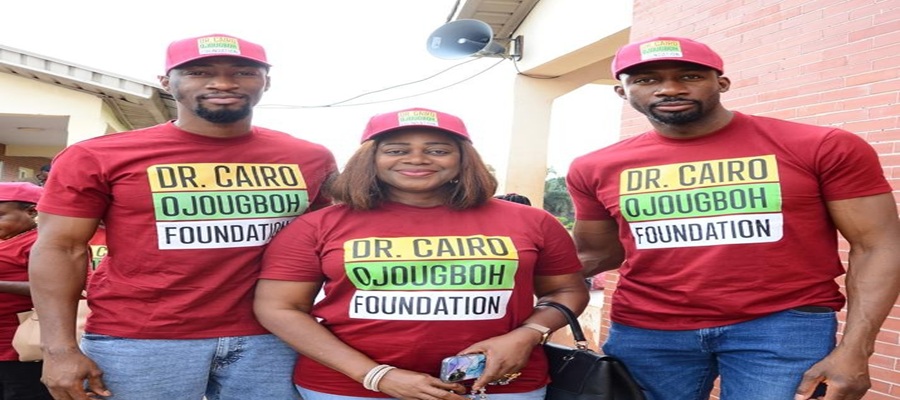
Dr. Cairo Ojougboh Foundation has reinforced government’s educational development efforts in Nigeria through a targeted initiative honouring the late medical doctor and House of Representatives member, Dr. Cairo Ojougboh.

L-R: Son of the late Dr, Cairo Ojougboh, Mr. Nkem Ojougboh; Chairperson, Dr. Cairo Ojougboh Foundation, Mrs. Bose Ojougboh and another son, Mr. Orieka Ojougboh, during the event in Agbor, Delta State recently.
The foundation recently hosted a programme themed “Your Future, Your Choice” at St. Columba’s Grammar School in Agbor, headquarters of Ika South Local Government Area, Delta State.
It presented a cheque of ₦2,700,000 to cover examination fees for students preparing for West African Examinations Council (WAEC), National Examinations Council (NECO), and Junior Secondary School (JSS) 3 exams.
Academic excellence received further boosts with cash rewards for top students across the school’s nine academic arms, alongside distributions of notebooks and writing materials to enhance learning.
Chairperson Mrs. Bose Ojougboh, joined by her sons Mr. Nkem and Mr. Orieka Ojougboh, urged students to view challenges as stepping stones, embrace discipline, consistency, and focus, and make intentional choices shaping their futures.
“The school that moulded Dr. Cairo’s values deserves our support,” she said, highlighting the foundation’s commitment to inspiring hard work and personal growth.
Old Boys of St. Columba’s Grammar School, led by Elder Ndudi Agholor, attended in force, sharing nostalgic reflections and praising the school’s sustained high standards under current leadership.
School Principal Rev. Fr. Joseph Ugboh and Ika South LGA Chairman Engr. Jerry Ehiwarior lauded the initiative as “commendable and impactful,” calling for its continuation to preserve Dr. Ojougboh’s legacy of discipline, excellence, and service.
They noted the support had motivated students to pursue their goals with renewed determination, ending the event on a hopeful note.

Retiree Slams N50m Suit against over Alleged Privacy Breach, Unauthorized Accounts

Court Fines Lafarge Africa N2m for Using Ex-Employee’s Name, Details Online after Dismissal

GSMA Launches Innovation Fund to Accelerate Green Transition Through Mobile Technology

NITDA Urges Stronger State Partnerships as Key to Digital Economy Goals @ South-South Stakeholders Forum

TAJBank Secures A1 Ratings from Agusto, Datapro
Nigeria’s 9 Top FinTech Firms Valued at $10.6Bn in January 2026

CBN Upgrades Licences of Opay, Moniepoint, Kuda, Palmpay, Paga to National Status

Kaspersky Launches OT Calculator to Align Cybersecurity Investments with Business Goals

NITDA, NBC Explore Strategic Collaboration on Digital Transformation, Media Regulation

Accidental Billionaire Opts for Jail Instead of Returning Money Credited Him by Mistake




 News2 days ago
ABoICT Lecture 2026 to Focus on Impact of AI, IoT on Business Operational Efficiency

 General News2 days ago
Leo Stan @ 70: Blessed and Bruised by Country, Eyes Next Disruption

 General News2 days ago
Zinox Technologies and TD Africa Forge Strategic Partnership to Revolutionize African Tech Ecosystem

 Telecom2 days ago
Uwaje Pays Tribute to Leo Stan Ekeh @70

 E-Financial1 day ago
$214Bn Missing, Institutions Silent: Is Accountability Dead in Nigeria?

 General News1 day ago
NITDA, Abia Partner on Enterprise Architecture Reform

 Telecom1 day ago
Cyber Immunity Emerges as Shield for Nigerians Amid Rising Scams

 E-Business1 day ago
Interswitch Partners Abia to Digitise Public Hospitals