

E-Financial
Letshego Acquires 100% Stake in FBN Microfinance Bank


Letshego Holdings Limited, a Gabarone-based financial inclusion focused group with consumer, micro lending and deposit-taking subsidiaries across Southern and East Africa, has acquired a 100% shareholding in FBN Microfinance Bank (FBN MFB).
The acquisition is from FBN MFB’s parent, FBN Holdings plc.
FBN Holdings plc is the oldest banking group in Nigeria, having been established in 1894, and is listed on the Nigeria Stock Exchange.
The acquisition of FBN MFB marks Letshego’s entry into West Africa, having successfully built a footprint in East and Southern Africa with 265,000 customers across nine countries.
This development brings Letshego’s footprint to ten countries, with a customer base of over 385,000; Nigeria, in particular, has been a key target market in Letshego’s diversification plans.
Speaking during to the press during official announcement of the acquisition, Chris Low, group managing director of Letshego, said that FBN MFB will rebrand to Letshego MFB in due course.
“As the leading indigenous BSE-company by market capitalisation and profitability, it is an exciting time for us at Letshego.
“This opportunity to enter the Nigerian market coincides with the expansion of our range of financially inclusive products and services. We believe Nigeria’s growth prospects in our targeted low-and-middle income, and MSE, customer segments have significant upside potential, and that, by bringing our skills to this market, we can further financial inclusion and improve lives across Nigeria. We look forward to being able to further improve lives across the continent through this development.”
He said that with over 80,000 depositors and over 10,000 MSE borrowing customers, the bank’s operations are directly aligned to Letshego’s financial inclusion agenda.
For its part, Letshego wants to bring expertise in payroll deduction lending in the public and private sector, as well as lending to micro and small enterprises, with a focus on agriculture, education and health sectors.
Letshego Holdings Limited is a Botswana International Financial Services Centre-accredited holding company with lending and deposit-taking subsidiaries across ten countries in Southern, East and West Africa.
FBN MFB was established in 2009 and is one of only six microfinance banks in Nigeria to have been awarded a national microfinance banking licence.
Currently, FBN MFB has 28 branches and over 300 team members. Its core business is lending, savings and transactional financial services to micro and small enterprises (MSEs).
According to Low, the Company is ready to drive financial inclusion in Nigeria as the Group is known for offering broad based financial inclusive, innovative and competitively priced solutions that include loans between $500 and $600, appropriate to its customers’ every day needs, mainly through the dedication at source payroll model.
Over the last decade and half, the Group has expanded across Africa from its origins in Botswana. At June 2015, advances increased 16% to $580million from $501million in the previous interim, with profit before tax for the same period closing at $52million, up 8% on the prior period.
Low said that Lesthego’s strategic intent is to build a leading African financial service group.
He added that the Group is poised to assis governments with their financial deepening and inclusion agendas.
“The Group continues to seek deposit-taking licences to help facilitate its financial inclusion approach. This includes providing financial services access via third party agents and mobile telephony, that is underway in Kenya, Mozambique, Rwanda and Tanzania,” he explained.
On social responsibility and sustainability plans, he said, these have become integral parts of Letshego’s business model that seeks to address social, environmental, ethical and consumer concerns in close co-operation with all Letshego stakeholders.


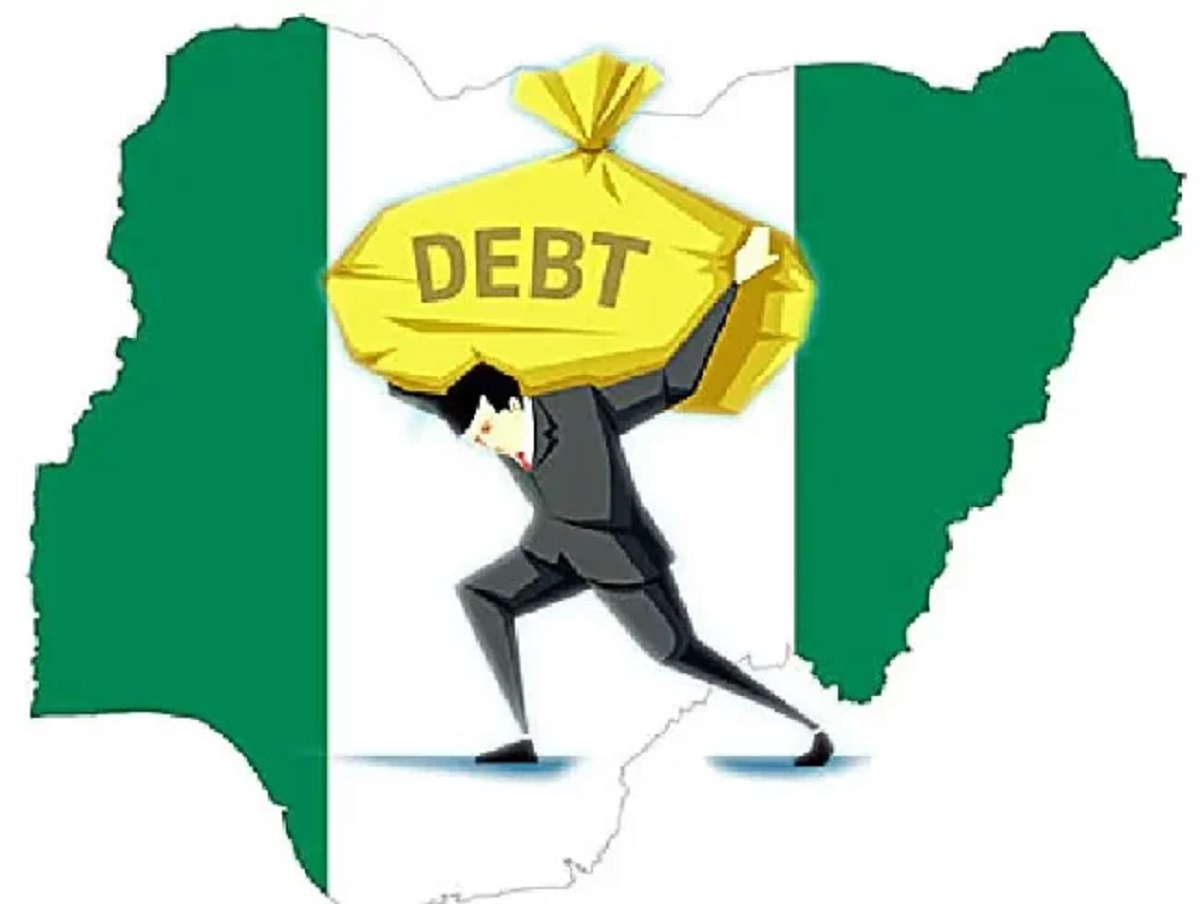
Banks in Nigeria increased their lending to the federal government significantly over the past year, according to data from the Central Bank of Nigeria (CBN).

The figures show that credit given to the government rose from N23.93 trillion in April 2025 to N39.60 trillion in April 2026.
This represents an increase of N15.66 trillion, which is a very large jump of about 65.44% within just one year.
During the same period, the total amount of credit in the economy also increased, rising from N102.00 trillion to N120.18 trillion.
However, most of this growth did not go to private businesses or households.
Instead, the government accounted for the largest share of the increase in borrowing from the banking system. Out of the total N18.18 trillion rise in domestic credit, about N15.66 trillion went to the government, while only N2.52 trillion went to the private sector.
This means roughly 86% of new credit created in the period was directed toward government borrowing.
This trend suggests that banks are increasingly preferring to lend to the government rather than to private companies.
At the same time, lending to the private sector has remained relatively weak and uneven.
Private sector credit rose only slightly from N78.07 trillion to N80.59 trillion over the one-year period, which is a very small increase compared to government borrowing.
In fact, there were also signs of decline in private sector credit in some months, showing that businesses may be facing tighter access to bank loans.
In contrast, government borrowing continued to grow steadily.
By April 2026, credit to the government had also increased when compared with earlier months in the year, showing a consistent upward trend.
This growing reliance on bank financing by the government has also increased its share of total domestic credit in the banking system.
Government credit accounted for 32.95% of total domestic credit in April 2026, up from 23.46% in April 2025, which shows a significant shift in lending patterns.
The broader financial environment also showed some changes during this period.
Nigeria’s total money supply increased to N124.99 trillion in April 2026, supported mainly by growth in domestic assets.
The Central Bank of Nigeria also reduced the Monetary Policy Rate slightly to 26.5%, in an attempt to manage inflation and stimulate economic activity.
However, despite this policy change, lending patterns still showed a stronger preference for government securities and borrowing compared to private sector loans.
Overall, the data reflects a financial system where banks are increasingly channeling credit toward government needs, while private sector borrowing remains limited.
This situation may have wider implications for economic growth, as reduced access to credit for businesses can slow down investment, expansion, and job creation in the long run.


Non-performing loans (NPLs) in Nigeria’s banking sector rose to 8.03 per cent in January 2026, exceeding the Central Bank of Nigeria’s (CBN) prudential threshold of five per cent, following the withdrawal of regulatory forbearance granted to banks on certain credit exposures.

CBN
The latest figure, contained in the CBN’s January 2026 Economic Report, represents an increase of 0.52 percentage points from the 7.51 per cent recorded in December 2025.
According to the report, the rise in bad loans followed the reclassification of credit facilities after the apex bank terminated regulatory reliefs that had previously allowed banks to restructure troubled loans without classifying them as non-performing.
“Following the bank’s loan reclassification after the withdrawal of forbearance, the non-performing loans ratio rose by 0.52 percentage point to 8.03 per cent compared with the level in the preceding period and was above the 5.00 per cent prudential threshold,” the report stated.
The development comes seven months after the CBN directed banks benefiting from regulatory forbearance on credit exposures and single obligor limit breaches to suspend dividend payments, defer bonuses for directors and senior management, and halt new investments in foreign subsidiaries and offshore ventures.
The measures were introduced to strengthen capital buffers, improve balance-sheet resilience and ensure affected institutions retained earnings while exiting temporary regulatory support.
The withdrawal of COVID-19-related forbearance and waivers on single obligor limits, which took effect on June 30, 2025, has resulted in several previously restructured loans being reclassified as non-performing, contributing to the increase in industry-wide bad loans.
Analysts say the latest figures indicate that weaker loan assets previously cushioned by regulatory relief are now being fully recognised on banks’ balance sheets.
In its macroeconomic outlook report, the CBN warned that a significant increase in bad loans could weaken asset quality and pose risks to financial system stability.
The apex bank also advocated deeper integration of the Global Standing Instruction (GSI) framework across financial institutions to improve loan recovery and strengthen credit discipline.
As part of broader reforms, the CBN had earlier directed bank directors with non-performing insider-related loans to resign from their positions and mandated banks to recover such debts through collateral enforcement, including the seizure of pledged shareholdings.
More recently, the regulator introduced restrictions on large borrowers with non-performing loans, barring them from accessing additional credit facilities and certain banking services.
Under the directive, financial institutions are prohibited from granting new loans, letters of credit, performance bonds and other contingent liabilities to large-ticket obligors whose non-performing facilities are recorded in the Credit Risk Management System (CRMS) or licensed private credit bureaus.
Despite the deterioration in asset quality, the CBN maintained that the banking sector remained resilient.
The report showed that the industry’s liquidity ratio improved to 63.38 per cent in January from 57.22 per cent in December, remaining well above the regulatory minimum of 30 per cent.
Similarly, the capital adequacy ratio stood at 12.05 per cent, slightly lower than the 12.35 per cent recorded in December but above the minimum requirement of 10 per cent.
“The Nigerian banking industry remained resilient, with most financial soundness indicators staying within prudential regulatory thresholds, affirming financial stability and institutional soundness,” the report stated.
However, members of the CBN’s Monetary Policy Committee (MPC) have expressed concern over the rising level of bad loans.
The CBN Deputy Governor for Economic Policy, Muhammad Abdullahi, warned that increasing NPLs could undermine financial stability and weaken the transmission of monetary policy.
He noted that the challenge was occurring alongside persistent excess liquidity in the banking system, potentially affecting the flow of credit to productive sectors.
Also speaking, MPC member Aku Odinkemelu called for stronger regulatory oversight, saying the rise in non-performing loans underscored the need for heightened supervisory vigilance to protect asset quality and ensure effective credit transmission.
Industry observers say the latest data present a mixed outlook for the banking sector, with strong liquidity and capital positions offset by growing concerns over asset quality as banks adjust to stricter prudential standards following the end of regulatory forbearance.

Association of Point of Sale Service Providers (POS) has threatened to suspend Verve card transaction services nationwide if the Central Bank of Nigeria (CBN) and the Federal Competition and Consumer Protection Commission (FCCPC) fail to intervene in an alleged exclusivity arrangement involving Verve International and Interswitch Limited.

PoS
The association made the disclosure in a statement signed by Yomi Idowu. its communications consultant.
According to Idowu, the association had formally protested what it described as persistent unlawful practices by the two companies, alleging that their actions violate existing CBN regulations and provisions of the Federal Competition and Consumer Protection Act (FCCPC) 2018.
The association stated that, as representatives of a coalition of CBN-licensed payment acceptors, acquirers, processors and switches, its members may be compelled to suspend the acceptance, acquiring, processing and switching of Verve card transactions if urgent action is not taken by regulators.
It said the decision had become unavoidable due to what it described as escalating unlawful conduct that undermines the integrity of Nigeria’s payment ecosystem, erodes the capital base of participating institutions and breaches regulatory requirements.
The association alleged that the companies maintain an exclusive monopoly over Verve transaction processing and abuse a dominant position in the domestic card scheme market in contravention of relevant competition and payment regulations.
It further accused the firms of imposing scheme fees above the regulated Merchant Service Commission (MSC) share attributable to acquirers and carrying out unauthorised debits on the settlement accounts of acquirers, processors and switches.
According to the association, its members played a significant role in expanding the acceptance and growth of Verve cards across Nigeria at substantial cost and in compliance with regulatory requirements, without receiving subsidies from Verve or Interswitch.
The group noted that other card scheme operators had already eliminated exclusivity arrangements in line with CBN regulations and urged the CBN and FCCPC to investigate the allegations and ensure fair competition within the payment services industry.
It warned that failure to resolve the dispute could disrupt electronic payment services relied upon by millions of consumers, merchants and small businesses across the country.

Banks Lending to FG Hit N15.66 Trillion in One Year– CBN

AfDB Says 70 Percent of Nigerian Firms Depend on Generators

Amuchie, ED Fidelity Bank Named “Outstanding Banker of the Year” @ ABoICT 2026

Lagos Airport Reviews Ebola Emergency Response, Tightens Passenger Monitoring

NCC Retains Rudman as Chair of Newly Inaugurated IPv6 Council Board, Urges Advancement of Nigeria’s Digital Migration

MTN, VDT, Zoracom, Digital Realty Back 2026 Girls in ICT Campaign

Vitel Wireless Partners Fintechs to Expand Access to Services

CPN Begins Crackdown on Quack IT Professionals, Vows Tougher Action against Cybercrime

Nigeria Hit by 24.1m Data Breaches – Surfshark

Kaspersky Identifies Ongoing Supply Chain Attack on Official Daemon Tools Website Distributing Backdoor Malware




 E-Financial3 days ago
Nigerian Capital Market to Transition to T+1 Settlement Cycle on Monday

 E-Financial2 days ago
CBN Extends PoS Geo-Fencing Enforcement Deadline to August 2026

 Telecom3 days ago
NCC Expands IPv6 Board with the Appointment of Olusola Teniola, Funke Opeke Others

 E-Business3 days ago
Report Shows Start-ups Fuel Innovations in Africa

 E-Business3 days ago
NDPC Raises Alarm: Fake News, Data Abuse Could Destroy Nigeria’s 2027 Elections

 Telecom3 days ago
QNET, Manchester City Host Football Clinic for Young Talents in Ghana

 E-Financial3 days ago
FidBank UK Broadens Investment Pathways for Nigerians into the UK Market
 Telecom14 hours ago
NCC Retains Rudman as Chair of Newly Inaugurated IPv6 Council Board, Urges Advancement of Nigeria’s Digital Migration