

E-Financial
Letshego Acquires 100% Stake in FBN Microfinance Bank

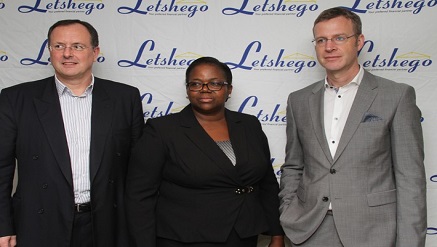
Letshego Holdings Limited, a Gabarone-based financial inclusion focused group with consumer, micro lending and deposit-taking subsidiaries across Southern and East Africa, has acquired a 100% shareholding in FBN Microfinance Bank (FBN MFB).
The acquisition is from FBN MFB’s parent, FBN Holdings plc.
FBN Holdings plc is the oldest banking group in Nigeria, having been established in 1894, and is listed on the Nigeria Stock Exchange.
The acquisition of FBN MFB marks Letshego’s entry into West Africa, having successfully built a footprint in East and Southern Africa with 265,000 customers across nine countries.
This development brings Letshego’s footprint to ten countries, with a customer base of over 385,000; Nigeria, in particular, has been a key target market in Letshego’s diversification plans.

Speaking during to the press during official announcement of the acquisition, Chris Low, group managing director of Letshego, said that FBN MFB will rebrand to Letshego MFB in due course.
“As the leading indigenous BSE-company by market capitalisation and profitability, it is an exciting time for us at Letshego.
“This opportunity to enter the Nigerian market coincides with the expansion of our range of financially inclusive products and services. We believe Nigeria’s growth prospects in our targeted low-and-middle income, and MSE, customer segments have significant upside potential, and that, by bringing our skills to this market, we can further financial inclusion and improve lives across Nigeria. We look forward to being able to further improve lives across the continent through this development.”
He said that with over 80,000 depositors and over 10,000 MSE borrowing customers, the bank’s operations are directly aligned to Letshego’s financial inclusion agenda.
For its part, Letshego wants to bring expertise in payroll deduction lending in the public and private sector, as well as lending to micro and small enterprises, with a focus on agriculture, education and health sectors.
Letshego Holdings Limited is a Botswana International Financial Services Centre-accredited holding company with lending and deposit-taking subsidiaries across ten countries in Southern, East and West Africa.
FBN MFB was established in 2009 and is one of only six microfinance banks in Nigeria to have been awarded a national microfinance banking licence.
Currently, FBN MFB has 28 branches and over 300 team members. Its core business is lending, savings and transactional financial services to micro and small enterprises (MSEs).
According to Low, the Company is ready to drive financial inclusion in Nigeria as the Group is known for offering broad based financial inclusive, innovative and competitively priced solutions that include loans between $500 and $600, appropriate to its customers’ every day needs, mainly through the dedication at source payroll model.
Over the last decade and half, the Group has expanded across Africa from its origins in Botswana. At June 2015, advances increased 16% to $580million from $501million in the previous interim, with profit before tax for the same period closing at $52million, up 8% on the prior period.
Low said that Lesthego’s strategic intent is to build a leading African financial service group.
He added that the Group is poised to assis governments with their financial deepening and inclusion agendas.
“The Group continues to seek deposit-taking licences to help facilitate its financial inclusion approach. This includes providing financial services access via third party agents and mobile telephony, that is underway in Kenya, Mozambique, Rwanda and Tanzania,” he explained.
On social responsibility and sustainability plans, he said, these have become integral parts of Letshego’s business model that seeks to address social, environmental, ethical and consumer concerns in close co-operation with all Letshego stakeholders.



World Bank has said that despite nearly three years of economic reforms by the federal government, about 79 per cent of Nigerians remain poor or vulnerable to falling into poverty.

The bank stated this in its newly approved Country Partnership Framework for Nigeria, covering 2026 to 2032, and its accompanying Streamlined Country Diagnostic.
The report which highlighted the country’s deepening social and economic challenges, indicated that while recent macroeconomic reforms have helped stabilise the economy and restore investor confidence, the benefits have yet to translate into meaningful improvements in living standards for most Nigerians.
The World Bank noted that the seven-year strategy seeks to support Nigeria’s ambition to create more and better jobs through private-sector-led growth while accelerating poverty reduction.
According to the Streamlined Country Diagnostic document, “Thirty-three per cent of its population is ultra-poor (food insecure by age-weighted caloric intake), 61 per cent is below the poverty line, and 79 per cent is near poor (below the poverty line or vulnerable to falling back into poverty).”
The World Bank pointed out that Nigeria’s economic performance over the past decade had been constrained by structural rigidities, policy missteps, dependence on crude oil, and repeated external shocks, leaving millions trapped in poverty.
It stated that about 139 million Nigerians currently live below the national poverty line, with poverty concentrated largely in the northern part of the country.
The report also noted that more than 86 million Nigerians remain without electricity, while three to four million young people enter the labour market every year with limited employment opportunities.
It added that sustaining macro-fiscal and structural reforms would be critical to reducing inflation, expanding fiscal space and ensuring that recent economic stabilisation translates into improved living standards.
According to the report, the reforms have begun to improve macroeconomic indicators.
Economic growth increased from 3.5 per cent in the first half of 2024 to 3.9 per cent during the corresponding period of 2025, foreign reserves exceeded $42bn, fiscal deficits narrowed, and investor confidence strengthened.
However, it warned that high inflation continues to undermine household incomes. The report stated, “High inflation, though declining, continues to erode real incomes, particularly for the poor. Social protection efforts to support the most vulnerable have been slow and uneven in their rollout.”
The World Bank added that although the reforms helped Nigeria avoid a more severe economic crisis, institutional weaknesses, weak policy coordination, and inadequate budget transparency continue to pose significant risks.
It warned that sustained reform implementation, backed by deeper structural measures, would be required to improve Nigeria’s medium-term economic outlook.
Under the new Country Partnership Framework, the World Bank said job creation would serve as the primary pathway for reducing poverty.
The report explained that international experience from countries such as India, Indonesia, and China shows that moving people into productive employment remains the most effective tool for reducing poverty.
To achieve this, the framework will prioritise labour-intensive sectors, particularly agriculture and micro, small and medium enterprises, while addressing structural deficiencies in electricity, digital infrastructure, education and healthcare.

Securities and Exchange Commission (SEC) has commenced a nationwide enlightenment campaign to help Nigerians recover unclaimed dividends and other monies arising from capital market transactions.

The campaign, which began with a town hall meeting in Lagos on Thursday, is aimed at sensitising investors on the existence of unclaimed monies, the role of the National Investor Protection Fund (NIPF) and the procedures for verifying and recovering legitimate claims.
Emomotimi Agama, director-general of SEC, who was represented at the event by Hafsat Rufai, director, Registration and Exchanges, Market Infrastructure Department, said the initiative was necessary to ensure that funds belonging to investors were returned to their rightful owners.
Agama said unclaimed monies administered by the NIPF included return monies from public offers, scheme consideration from mergers, acquisitions and corporate restructuring transactions, as well as other funds belonging to investors that had remained unclaimed.
He noted that the Commission considered it unacceptable for investors’ funds to remain unclaimed, adding that many investors and their families were either unaware that such monies existed or did not know the procedures for recovering them.
Agama said the SEC Board had approved a nationwide public enlightenment campaign to sensitise Nigerians on unclaimed monies, the role of the NIPF and the process for making legitimate claims.
He said the Lagos programme marked the commencement of the outreach, which would subsequently cover the six geopolitical zones and the Federal Capital Territory.
The director-general said the campaign would also address the transmission of securities following the death of an investor, noting that families were often unaware that their deceased relatives owned shares or other capital market investments.
He said even when beneficiaries were aware of such investments, many lacked knowledge of the legal and administrative procedures required to obtain probate or letters of administration and transmit the investments to the rightful beneficiaries.
Agama said the Lagos programme included an expert session on probate administration and the transmission of securities to demystify the process and provide practical guidance to investors and their families.
He urged investors to maintain proper records of their investments and encouraged families to take steps to preserve inherited wealth.
The SEC DG also warned Nigerians against Ponzi schemes and other fraudulent investment arrangements, saying fraudsters continued to exploit economic pressures and digital platforms to lure unsuspecting members of the public with promises of guaranteed and unusually high returns.
He urged the public to be cautious of investment opportunities offering risk-free returns, stressing that investor education and vigilance remained critical to combating financial fraud.
Speaking on behalf of Lawal Pedro, attorney-general and commissioner for Justice,Lagos State, Olujoke Ogunojemite, deputy director in the Ministry of Justice, commended the SEC for extending the campaign to Lagos and recognising the role of legal institutions in resolving issues relating to unclaimed dividends and other assets.
She said the issue had a practical impact on beneficiaries who were unable to access assets after the death of their loved ones.
Ogunojemite said the ministry was committed to ensuring that legal processes did not become barriers to beneficiaries seeking to recover legitimate assets.
She described the SEC’s outreach as commendable, saying it would help restore assets to their rightful beneficiaries.

The Nigeria Revenue Service (NRS) said the rollout of electronic invoicing (e-invoicing) will strengthen tax compliance, curb revenue leakages and improve transparency in tax administration as it moves to fully digitise the country’s tax system.

The Project Lead, NRS e-Invoicing Project, Mohammed Bawa, stated this at the DigiTax E-Invoicing Compliance Breakfast Session held in Lagos.
The event, organised by DigiTax, an NRS-accredited e-invoicing platform, formed part of efforts to support the agency’s ongoing education and sensitisation campaign on the e-invoicing mandate.
Bawa said the initiative aligns with global trends in tax digitization and is expected to help improve Nigeria’s tax-to-GDP ratio, which remains one of the lowest in Africa.
According to him, the system will provide the NRS with greater visibility into transactions across sectors, formalise activities within the informal economy and standardise invoice formats nationwide using globally recognized invoice schemas.
He added that e-invoicing would improve operational efficiency for both businesses and tax authorities while supporting the NRS’ transition from manual and electronic tax administration processes to a fully automated system-to-system interaction model.
Bawa noted that the legal framework for implementation is backed by the Nigeria Tax Administration Act, which prescribes penalties for non-compliance.
He disclosed that the NRS has completed onboarding large taxpayers and is preparing to enforce compliance with defaulting entities.
According to him, medium taxpayers are expected to begin compliance in the third quarter of 2026, while onboarding of emerging taxpayers will commence in 2027, with full adoption targeted for all taxpayers by the end of 2028.
Bawa urged taxpayers yet to be onboarded onto the platform to begin the process and work with accredited service providers to ensure compliance.
Speaking at the event, Country Director of DigiTax Nigeria, Olumide Akinsola, urged businesses to look beyond their internal systems and assess the compliance status of suppliers and counterparties.
He warned that businesses whose suppliers fail to transmit invoices through the MBS platform risk losing eligibility to claim Value Added Tax (VAT) input credits on such transactions, describing the resulting supply chain exposure as a significant commercial risk that many organisations have yet to quantify.
Akinsola also announced the launch of DigiTax’s white paper, ‘The State of E-Invoicing Readiness in Nigeria,’ which examines compliance adoption trends and the readiness gap across different taxpayer segments.
He added that DigiTax operates in Nigeria, Kenya, Zambia and the United Arab Emirates (UAE), noting that experience from those markets shows businesses that integrate early are better positioned to avoid disruptions when enforcement begins.

FAAN to Replace Physical ID Check with V-Pass Biometric Verification

World Bank Says 79 Percent of Nigerians Still Trapped in Poverty despite Reforms

SEC Begins Drive to Recover Unclaimed Dividends

ntel Plays Down Calls and Data Services, Moves to BET Agenda

Nigeria Facing Rising Cybercrime Losses – Report

NRC, Ponzi Scheme Collapses Resulting Loss of Billions of Naira

Nigeria Launches FreeTV Nationwide

NASENI Moves to Digitize CCB’s 5m Assets Declaration and Operations

Lebara Nigeria Launches Lebara Play, Africa’s First Telecom-Owned Micro-Drama Platform

CANAL+ Partners Samsung to Pre-Load DStv Stream on New Samsung TVs In Nigeria, Other African Countries




 E-Business3 days ago
TD Africa Sponsors Check Point Secure 360 Summit to Boost Cybersecurity in Nigeria

 Telecom3 days ago
MTN Foundation, MUSON Celebrate Emerging Music Talents at 2026 Graduation Ceremony

 Telecom3 days ago
NITDA Calls for Digital Infrastructure Expansion to Drive Nigeria’s Industrialisation

 News3 days ago
Guinness Rolls Out Nationwide Consumer Rewards Promotion

 E-Financial3 days ago
Next Currency Crisis May Turn $300Bn in Stablecoins into National Currencies

 E-Financial3 days ago
Gigbanc Nigerian Fintech Startup Closes Shop after 3 Years

 General News3 days ago
First Trustees Advocates Estate Planning as an Essential Tool in Every Wealth Creation Strategy

 Broadcasting3 days ago
Mbunabo, Nigerian Filmmaker Accuses Ghana TV Stations of Pirating Nollywood Films