

Telecom
ANALYSIS: SIMs/NINs Directive: Time to Rescue Telecoms Industry

By Vanguard Newspaper
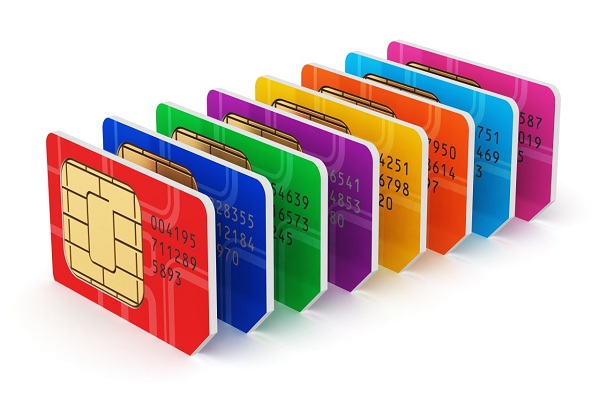
The directive last week by the Ministry of Communications and Digital Economy that the National Identity Number, NIN, has become mandatory for a subscriber to carry a mobile phone is not only a slap on the faces of Nigerians already going through very troubled times but a plain manifestation that arbitrariness is being elevated to the dizzy heights of national policy.
Operators have been given only two weeks to comply and ensure that over 190m subscribers on their networks are properly registered. Or your operating license withdrawn.
We view this as a death sentence for the telecommunications industry, and some experts cautioned last week that a reversal of industry fortunes has been set afoot by an obnoxious official proclamation.
One operator moaned that the regulator wants to wipe out at least more than half of the subscriber base of the industry.
We agree that times are desperate in Nigeria, very desperate. Whole mass of students are spirited away from school and they reappear after a whole week in the den of criminals. Road travel has become a nightmare for the ordinary and the mighty ones. Bandits have taken over the roads and the farms.
Quite unfortunately even for the rich, air travel is beyond the reach of those who used to fly except the hedonists who steal the people’s money for plain pleasure.
According to figures from the National Population Commission, NPC, very bizarre decisions are being taken to rubbish the collective intelligence of a nation and expose the citizenry to ridicule before the international community.
So, using failure in security as pressure point, the ministry under the grip of Dr. Isa Pantami has given a directive capable of destroying the entire communications industry except common sense prevails.
The December 15, 2020, statement signed by Public Affairs Director, Dr. Ikechuckwu Adinde, which affirmed earlier directive for operators to totally suspend registration of new SIMs, stated among others: “Operators to require all their subscribers to provide valid National Identification Number, NIN, to update SIM registration records; The submission of NIN by subscribers to take place within two weeks (from today, December 16, 2020 and end by December 30, 2020).
After the deadline, all SIMs without NINs are to be blocked from the networks.” While conceding the pervasive security challenges, there has been outrage across the land; understandably, by subscribers who feel that apart from the suffering that has worsened more because of COVID-19, a major inconvenience is being added to their burden.
Recall that the country’s economy has gone into recession again and is not expected to recover until late 2021, a development that is forcing more Nigerians to fall into the poverty pit.
Vanguard immediately reached out to a powerful industry source to ask if the directive could be executed in two weeks. The answer was an emphatic NO. We also reached out to a source in the regulatory institution. Is this what should have been done? The answer again was NO. Let’s try to unwrap the intricacies of the unfolding story.
The SIM Card registration regime started in 2011. The exercise was carried out simultaneously by licensed agents of the NCC and the mobile operators. NCC was to warehouse the data. An understanding at the time was that, because of the sensitive nature of personal data, all data will be handed over to the National Identity Management Commission, NIMC, whose responsibility it is to manage the National Identity Database.
Till date the progress recorded in that area opens windows to speculations and recriminations. It is interesting to point out here that NIMC was established in 2007. In all the years of existence, the organisation has succeeded in registering only 43.6m! So what magic wand will it wave to accomplish the act in two weeks?
According to figures gleaned from the NCC website, there were 207,954,737 subscribers on the four mobile networks of MTN, Airtel, GLO and 9Mobile by October 2020. An industry source told Vanguard last week that of this figure, about 120m are unique subscribers, discounting double registration of mobile numbers, while the rest could be used in personal internet modems, sectors like banking, vehicle tracking and other sectors where mobile communications have become very handy. There has to be a way to capture these numbers and this cannot be enforced overnight.
Matching the 120m subscriber figure with their NINs is a nightmare which will rubbish the two-week window. For the journey to start at all, all the companies being licensed by NIMC, one expert explained, will have to source for their equipment and get them certified by NIMC before procurement and purchases can take place. To make any meaningful impact immediately, the industry may need at least 250,000 of those machines which are not manufactured here.
Moreover, the NIMC machines are not what are easily sourced in the open market. They are called the 442 machines because they can take four fingers at a go and take the remaining two fingers once. They are more robust than the SIM Card registration machines which can take only two fingers at a time.
The source told Vanguard that this is a logistics nightmare that can hardly be afforded by some of the companies being recruited by NIMC at the moment.
Industry observers are of the opinion that the President Muhammadu Buhari and the National Assembly should put a leash on the minister before he totally destroys the telecommunications industry.
In attendance at the meeting that had to do purely with the regulation of the industry were the CEOs of NCC, the National Information Development Agency, NITDA, and NIMC.
At least one operator told Vanguard they were never at the meeting; instead the minister is taking all the decisions which he is shoving down their throat, thus increasing the fear that the regulator is increasingly losing direction and hold on the industry.
Strains of helplessness are already showing. “We don’t know why the Executive Vice Chairman, EVC, is unable to call some meetings. We are not able to sit down to negotiate on anything,” the source lamented.
Those who fear the directive may become a dangerous super spreader of the COVID-19 pandemic may have been proven right when, last week, somewhere in Abuja, an eye witness told Vanguard that some youths who had gathered for two days at one registration spot, suddenly started demonstrating on noticing the near futility of the exercise and how some advantaged personalities were bending all the rules to favour a few.
The desperation to register will obviously rubbish the PTF recommendation on social distancing in a season of pandemic. Meanwhile, more trouble looms for the industry.
A knowledgeable industry source told Vanguard that, if not properly managed, the directive could destroy half the base of the industry, stymie revenue and investment, and lead to massive job losses.
But all these could pale into insignificance if the minister ever executes his growing threats that “violations of this directive will be met by stiff sanctions, including the possibility of withdrawal of operating license.”
This is hardly the way to speak to organisations that have invested heavily in your economy.


Telecom operators in Nigeria have compensated more than 75 million subscribers for poor network services, according to the Nigerian Communications Commission (NCC).

This represents one of the largest consumer redress exercises in Africa’s biggest mobile market.
Recall that the NCC on March 29, 2026, mandated that mobile network operators directly credit affected subscribers with airtime when network quality falls below established thresholds, compensating for dropped calls, failed SMS, and disrupted data connections.
Giving update, the NCC rising from its 109th board meeting recently, said that the credits are calculated based on customers’ average spending patterns in areas where service quality fell below regulatory benchmarks.
“The board noted substantial progress in the implementation of the commission’s directive, particularly the full compliance, which has resulted in compensation being offered to over 75 million affected subscribers,” the communiqué stated.
The NCC said it is still conducting independent validation to confirm that all eligible subscribers received their due compensation, while urging consumers to continue engaging with the regulator on service-related issues.
Nigeria currently has over 200 million mobile subscriptions.
The exercise addresses long-standing consumer complaints about dropped calls, slow data speeds, and inconsistent coverage.
The board also reviewed ongoing network expansion efforts, noting that operators have committed to deploying over 12,000 new sites, with more than 5,000 already completed.
It further highlighted investments in fibre infrastructure and concerns over persistent vandalism of telecom facilities.
The NCC reiterated its commitment to improving service quality through stricter enforcement, consumer protection, and infrastructure development in the sector.


Nigeria among other African countries are falling “dangerously” behind the rest of the world in the adoption of WiFi technologies, with nearly half of the continent’s internet users still relying on the ageing WiFi 4 standard, while developed markets increasingly transition to WiFi 6 and WiFi 7.

This is according to Ookla’s Global State of WiFi 2026 report, which analysed speed test data from Android devices worldwide and found a widening gap between Africa and leading global markets.
The firm used these devices to track the prevalence of different WiFi generations (WiFi 4 through WiFi 7), the spectrum bands being used (2.4GHz, 5GHz and 6GHz), and the installed base of customer premises equipment connected to those devices.
While WiFi 6 has become firmly established across much of the world, Africa remains heavily dependent on legacy wireless technologies that were introduced more than a decade ago, the report finds.
While countries such as South Korea, Japan, Singapore and the US are rapidly migrating toward WiFi 6 and WiFi 7, Africa remains largely anchored on WiFi 4.
South Africa remains one of the continent’s most advanced broadband markets, yet the country is struggling to gain traction with the latest WiFi technologies, states Ookla.
The report notes: “WiFi 4 – a standard finalised back in 2009 – still accounted for 48.8% of Africa’s WiFi samples in the first quarter, with WiFi 5 a fast riser at 34.4%, up from 19.9% four years earlier. WiFi 6 climbed from 1.6% to 16.8% over the same period, while WiFi 7 barely registered at 0.1%.”
Ookla’s findings show a divide between advanced broadband markets and developing regions when it comes to next-generation WiFi adoption.
By comparison, WiFi 6 has already captured 27% of the global market, up from just 6% in 2022.
“WiFi 7 has also begun establishing a foothold globally, accounting for nearly 2% of worldwide connections. Meanwhile, older WiFi 4 and WiFi 5 technologies continue to decline globally, falling to 34% and 39%, respectively,” says Ookla.
The strongest uptake of WiFi 6 and WiFi 7 is concentrated in technologically-mature markets such as the US, Canada, South Korea, Japan, Singapore and several Western European countries, where fibre broadband penetration is high and consumers upgrade smartphones, routers and home networking equipment more frequently, according to the report.
“These markets have also moved more aggressively to open up the 6GHz spectrum needed to support WiFi 6E and WiFi 7 services, helping accelerate adoption of newer wireless technologies.”
WiFi 7, the next evolution of the WiFi network protocol, promises to be a substantial upgrade over its predecessor – surpassing the speeds of Ethernet cables, and significantly improving connection reliability and latency over WiFi 6.
While SA’s market is still in the early stages of migration to next-generation wireless technologies, research firm 6Wresearch forecasts strong growth in SA’s WiFi 6 and WiFi 6E ecosystem over the next few years, driven by increasing demand for high-speed connectivity, fibre expansion and growing use of connected devices.
Legacy spectrum dependency
The report also highlights Africa’s continued dependence on older wireless spectrum bands.
The congested 2.4GHz band remains the dominant carrier of internet traffic across Africa, accounting for 52.4% of all WiFi samples during the first quarter of 2026.
Although this represents a significant improvement from the 76.4% share recorded in 2022, the continent still lags behind regions where users have largely migrated to higher-capacity spectrum, the report states.
The 5GHz band has expanded rapidly across Africa, growing from 23.6% of samples in 2022 to 47.6% in 2026. However, the newer 6GHz spectrum, which is critical to unlocking the full capabilities of WiFi 6E and WiFi 7, remains virtually non-existent across the continent.
“The congested 2.4GHz band remained the continent’s majority carrier at 52.4%, down from 76.4% in 2022, with the 5GHz band the chief beneficiary, rising from 23.6% to 47.6%.”
One of the starkest findings in the report is Africa’s complete absence from the global shift towards 6GHz WiFi.
Across the continent as a whole, the 6GHz band accounted for a flat 0.0% share of WiFi samples during the first quarter of 2026. South Africa was the only market to record any meaningful activity on the band, but even then usage reached just 0.2%.
The report states: “Just 0.2% of WiFi connections in South Africa ran over the 6GHz band in the first quarter of 2026. In a market where households keep routers and handsets for years, and where service providers have been slow to bundle 6GHz-capable customer premises equipment, an allocation on paper turns into real-world use only gradually.”
According to forecasts from Grand View Research, SA’s demand for WiFi 6 and WiFi 6E technologies is expected to accelerate sharply over the remainder of the decade, driven by enterprise digital transformation, smart-home deployments and increasing bandwidth requirements.
Device readiness
The Ookla report suggests that consumer devices are no longer the primary barrier to WiFi upgrades globally and in SA.
According to Ookla, 61.4% of Android devices sampled worldwide already support WiFi 6 or newer technologies. This indicates that many markets now possess the device ecosystem needed to support more advanced wireless networks.
“However, Africa faces a different reality. The continent’s slower replacement cycle for smartphones and routers, combined with high equipment costs, and slower deployment of advanced customer premises equipment, continues to delay migration to newer standards,” notes the report.
Other obstacles include regulatory and spectrum availability constraints, as a result of the full 6GHz spectrum still being debated by the Independent Communications Authority of South Africa and local telecoms operators.
Widening connectivity gap
The Ookla findings suggest Africa risks falling further behind as the rest of the world accelerates toward WiFi 6, WiFi 6E and WiFi 7.
While the continent has made notable progress by shifting traffic from the overcrowded 2.4GHz spectrum to the more capable 5GHz band, the overwhelming dominance of WiFi 4 and the near absence of 6GHz adoption highlight the scale of the challenge ahead.
While SA can function without widespread WiFi 6 and WiFi 7 adoption, there are significant economic, technological and competitiveness consequences if the country falls too far behind.
“These include reduced return on fibre investments, challenges supporting artificial intelligence and data-intensive applications, lower business competitiveness, persistent network congestion, slower smart city and internet of things development.”

Yuno, the global financial infrastructure platform, today announced a strategic partnership with Onafriq, the leading Pan-African payments network, to bring Africa’s most expansive payments infrastructure to merchants worldwide. Through this integration, Yuno’s clients gain instant access to Onafriq’s network spanning 43 African markets, nearly 1 billion mobile wallets, 500 million bank accounts, and 2,000 cross-border payment corridors, all through Yuno’s single, developer-friendly API.

As businesses increasingly look to Africa as a high-growth frontier, the partnership addresses one of the most persistent friction points in cross-border commerce: the complexity of connecting to fragmented, local payment rails across dozens of markets. By combining Yuno’s payment infrastructure capabilities with Onafriq’s deep-rooted African network, the two companies aim to dramatically reduce the time and technical overhead required for merchants to go live and scale across the continent.
Onafriq’s infrastructure supports the full payment lifecycle, from real-time disbursements and omnichannel collections to card issuance, treasury management, and stablecoin settlement, all underpinned by local regulatory licences and ISO 27001 and CMML3-certified security. For Yuno’s merchant base, this means the ability to pay out to mobile wallets, bank accounts, or cash pickup points, and accept payments across channels, without managing multiple integrations or compliance frameworks independently.
“Africa represents one of the most exciting growth opportunities in global commerce, and yet too many merchants are still locked out by payment infrastructure that wasn’t built for scale. Our partnership with Onafriq changes that,” said Juan Pablo Ortega, Co-Founder and CEO, Yuno. “By bringing their unmatched African network into our infrastructure layer, we’re giving our clients a single path to a continent-wide ecosystem with the reliability, compliance, and local depth they need to grow with confidence.”
The partnership is part of Yuno’s broader strategy to build a truly global platform that connects merchants to every meaningful payment method and network, regardless of geography. Following successful expansion in the Middle East, Europe, and Asia, Africa is a key pillar of Yuno’s next phase of growth.
For Onafriq, the integration with Yuno extends its reach to an entirely new segment of global merchants who now benefit from a streamlined entry point into African markets. The partnership reinforces Onafriq’s mission of making borders matter less, bringing together mobile money operators, banks, fintechs, and enterprises into one connected payment ecosystem.
“Africa’s payment landscape has never lacked ambition or momentum, what it needed is the right infrastructure that matches its pace. Our partnership with Yuno changes the equation for global merchants who want to be part of this growth story” said Dare Okoudjou, CEO, Onafriq. “Through a single connection, global merchants can reach consumers and businesses across Africa more seamlessly than ever before, while more people across the continent gain access to the digital economy on their own terms. For us, this is what making borders matter less looks like in practice.”
The integration is now live and available across Egypt, Ghana, Kenya, Nigeria, Cameroon, Cote D’Ivoire, and Uganda. Yuno’s clients can access Onafriq’s capabilities, including mobile money disbursements and collections, card issuance, and FX treasury services, directly from the Yuno dashboard with no additional contract or integration required.

Telcos Compensate 75m Subscribers over Poor Network Quality – NCC

IMF Warns Nigeria of Risks in $5Bn Swap Deal with First Abu Dhabi Bank

Senate Moves to Regulate Crypto Sector, Seeks Investor Protection

Kaspersky Report Shows Early 2026 Witnessed an Increase in Cyberattacks on the Manufacturing Sector

Nigeria, Others Stuck on WiFi 4 As World Adopts WiFi 6, WiFi 7

CBN Extends PoS Geo-Fencing Enforcement Deadline to August 2026

FG to Launch Nationwide Free Digital TV Platform June 17

MTN, Airtel, Glo Under Pressure as FG Demands Better Service Delivery

Jumia Nigeria Records Strong Q1 2026 Growth as Technology-Led Strategy Drives Market Expansion

Metro Digital, Nigerian Firm Accuses Multichoice Of Refusal to Obey Court Judgements




 E-Financial2 days ago
BOI Wins Dual Honours @ EMEA Finance Awards for Sustainability and Social Impact Leadership

 E-Financial2 days ago
CBN Imposes N100m Penalty on Dealing Bank Inadequate Processing of Forex Documents

 Telecom2 days ago
Price of Data in Nigerian Mobile among Top Four Cheapest Globally – MTN CEO

 E-Business2 days ago
NITDA Okays NiRA’s Annual, Business Report

 Telecom2 days ago
NAIFF Returns for 2026, Expands Focus on AI-Powered Storytelling in Africa

 General News2 days ago
SSDC Warns Businesses against Cyber, Election-Related Risks

 Telecom2 days ago
FCCPC Refutes Airtime Market Takeover Claims

 General News2 days ago
Moniepoint DreamDevs Bootcamp Graduates Second Cohort to Strengthen Homegrown Talent Pipeline