

General News
Local Software Not Good Enough for Aviation Sector – Adekitan

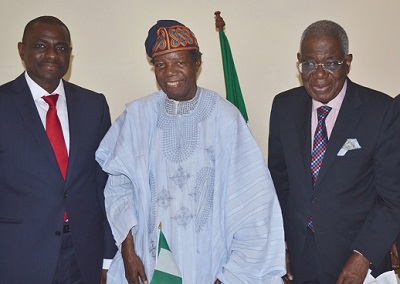
Adejare Adekitan, head, Information and Communications Technology (ICT) at Skyway Aviation Handling Company Limited (SAHCOL) notes that Africa’s aviation sector lags in IT application.
He is a Computer Engineering graduate of the Federal University of Technology, Akure. Adekitan stressed the need for a comprehensive ICT package in aviation handling business in Nigeria.
He spoke to peter ugwu.
Assessment of ICT in Nigeria Aviation Industry
Although we can boast of fantastic developments in the industry in Nigeria lately, I would stress that African countries are lagging behind in the comity of aviation nations.
And Nigeria is no different.
But relatively, we are moving on compared to the way we were in the last 10 years.
The emphasis for sometime now is how we can safeguard passengers that are traveling by air.
If we must achieve this, two things we must not overlook are human capacity development and deployment of modern ICT equipment.
We have seen cases where these hi-tech equipment are installed and abuse becomes inevitable because the people meant to man them are incompetent.
Even IATA has stressed that airlines can use opportunities in ICT to grow their finances.
There is so much ICT software application we could use to manage the aviation sector; unfortunately, we don’t seem ready to apply the right remedy to our situation.
Overview of SAHCOL ICT
The major focus is to enhance, sustain or maintain the technical functions of the company.
And also to contribute towards elevating the company even beyond international ICT benchmarks in cargo and aviation handling viz-a-viz delivering service that are profitable to both parties comprising the company and her numerous public.
All areas of our operations are computerized.
Warehouse ICT installations
We have installed some ICT equipment like security base gadgets – the CCTV that covers the warehouse surroundings.
The installations were informed by the fact that our warehouse can not be out area surveillance tools, essentially to prevent or detect abnormalities.
Beside that most operations that take place within the warehouse are automated. Our operation starts the moment goods arrive at our tarmac.
So, ICT presence is critical in this aspect of business.
For instance, if you have a cargo, it needs to be captured and once that is done, it makes the rest of the process very convenient for the parties involved.
We could recall that when Sifax Group took over SAHCOL in December, 2009, one of the immediate promises made by the chairman, Dr. Taiwo Afolabi to customers and the public is the re-fleeting of the company.
In January 2010, we placed order for some units of ground handling equipment from various manufacturers in Europe and America.
And since March, 2010 we have installed equipment like Commander 15i, Commander 30i, Smart steps, Push back, Tractors, Mobile Belt Loaders, Airstarter Units, Baggage Tractors, Ground Power Units, amongst others.
This is to buttress management’s resolve to improve on services rendered to the public as it affects safety.
Cargo Tracking Gadgets
Currently, we are pursuing a process that can aide anyone track movement of his cargo in any part of the world through our tracking equipment.
We have also acquired internationally recommended software that can aide us in spotting cargo; in essence we can interact with counterparts in other countries in checkmating movements of cargo, so that any cargo company can send signal to and from us through the deployed infrastructure.
Other areas like passenger service are also computerized.
There is what we call the common user terminal equipment (CUTE), deployed for terminal operations.
With this device, as we are checking a passenger here in Lagos or in any airport that we carry out this duty in Nigeria, data records are transmitted to the passenger’s destination even before their arrival.
Although there are few areas that are still handled manually, especially in documentation, we can say to a very large extent at SAHCOL that our ICT compliance level has improved tremendously.
In addition to that, ICT is dynamic; as changes occur we would continue to harness the opportunities inherent ICT and automation processes as we are determined to contribute our quota towards Federal Government’s airport transformation agenda.
Successes
The automation has helped a lot.
It has enhanced cargo clearing; gone are the days cargo clearing are delayed due to inept practices or human interference.
It has even helped in reducing cases of losing cargo on transit.
Without mincing words, it is a global phenomenon that aviation industry can only grow its financial earnings through ICT compliance.
In other words, SAHCOL today can say it has benefited from computerizing its operations.
SAHCOL Aviation Security (SAS)
Yes, SAS is a specialized platform through which we provide services for airlines in the areas of control and supervision of access to check-in zones; passport control and detection of fake international passports/travel documents; security questioning/profiling and protection and control of luggage chain from check-in to aircraft.
Other aspects of the initiative include reconciliation between boarding pass and passenger identification; X-ray control for hand luggage and magnetic detection for passengers; supervision of aircraft zones and loading/offloading of aircraft and reconciliation of passengers and luggage in transit.
These are part of efforts to ensure maximum and passenger safety are maintained within our nation’s airports.
Data Security
We have made concerted efforts in securing our data, especially from external (cyber) attacks.
That does not mean that the internal arrangements are porous, because we know that some attack from external bodies are orchestrated from within, therefore, we have made efforts to secure our data.
Apart from the software we installed, we do carry out frequent back up and maintenances. The make sure our data are secured within and offshore.
Locally Developed Software
We have tried using some of them, but we discovered that the capacities are not enough to drive our programme.
This industry is very sensitive and not everything can fit into what we are doing, especially for security purposes.
Some of them are yet to meet international standards, which is the reason for foreign software used in most companies in the country.
There is a need for government to encourage our local productions to meet world standards, by putting enabling infrastructure in place.
By the time the standards are heightened government can show example by mandating its ministries, departments and agencies to patronize the local developers.
The truth is that we have youths who have interest in that aspect of national development.
But at present we don’t even have an incubating centre; many of our tertiary institutions offering ICT related courses are either ill-equipped or the equipment are archaic.
It may be a shocker to you that only about ten per cent of local software developers have shown interest in aviation.
If they have done that, perhaps we could have seen a way to help out. Therefore, 90 per cent of software used in the sector is imported.
Power challenges
I want to believe that since the Sosoliso crash few years back, the airport managers (Federal Airport Authority of Nigeria – FAAN), has done a lot of thing to plug incessant power outages. Although it was only recently we learnt the air crash was as result of power outage.
Especially in Lagos, a lot of things are been done. I had opportunity to be at the Control Tower, of which they recently installed new gadgets to back up their systems in times of power failure.
Of course, the Control Tower has to be powered 24 hours of the day. My assessment of the situation is that there are improvements in critical areas.
Human development
Permit me to emphasis that it amount to wrong approach for us to believe that our challenges are over, once equipment are in place, without individuals with the technical knowledge to handle them.
The two are married together. However, we cannot do without human error in an industry like this.
But for us to minimize such errors constant training and awareness campaign must not be ruled out.
There are certain areas that human capacity development can be compromised without it showing much in the operations of such industry, but in a technical field like aviation, we can not trade it for anything.
For instance, when the Dana air crash happened, the first eyebrow raised was human error.
To set example, as we are in the period of expansion, every staff of SAHCOL is expected to master ICT equipment usage.
Cargo handling Industry
Well, cargo handling is not different from Nigerian aviation industry.
Before now, the Nigerian Aviation industry was a passenger-driven sector. The focus was largely on proceeds from passenger air travels.
But today, the business model has the ability to satisfy the yawning of travelers who are not far from those engaged in global supply chain.
The sector contributes immensely to the economic development of the world and Nigeria in particular.
So, we are working towards increasing our cargo base, constructing a new warehouse. Nowadays, e-ticking or booking is the order, we are working towards perfecting that aspect of our operation.



Haleon, a global consumer health company with a purpose to deliver better everyday health, is introducing its corporate identity across Nigeria in a phased transition. Trusted brands such as Panadol, Sensodyne, Macleans, Otrivin, Voltaren, Cac 1000 and Andrews Liver Salts remain unchanged in formulation, quality, and effectiveness.

Following the formal demerger from GSK, Haleon was launched on July 18, 2022, as an independent company 100% focused on consumer health. Haleon is the new home for brands like Sensodyne, Panadol, Centrum and others, trusted by millions worldwide for their proven effectiveness in improving everyday health.
From relieving tooth sensitivity or pain to providing essential vitamins and nutrients, our products are designed to fulfil Haleon’s purpose: to deliver better everyday health with humanity.
This revised corporate identity is a branding change only and does not affect the safety, quality, or efficacy of the products. Haleon is sharing this update as part of its commitment to transparency and consumer confidence, helping consumers continue to choose the brands they know and trust.
Haleon’s collaboration with Fidson Healthcare forms part of this approach, reinforcing the value of local production in supporting trusted everyday health brands in Nigeria.
Panadol Extra 100s and Panadol Pain & Fever 100s are currently being produced and supplied to the market under the Haleon identity. Sensodyne Rapid Action will bear the Haleon corporate identity from mid-June, followed by Andrews Liver Salts later this year.
In due course, additional brands—including Otrivin, Voltaren, Cac 1000, Macleans, and the wider Sensodyne portfolio—will also transition to the Haleon identity.
Haleon remains committed to ensuring consumers can continue to access the same high-quality brands at pharmacies, supermarkets and other retail outlets across Nigeria.
“As Haleon introduces its identity in Nigeria, we want consumers to feel informed and reassured. The trusted products they rely on remain the same in quality, formulation and effectiveness.
“At the same time, our local production approach in partnership with Fidson Healthcare supports reliable access to high-quality everyday health products in Nigeria,” said Himanshu Raj, Haleon General Manager for Sub-Saharan Africa.


Tech entrepreneur and SpaceX founder, Elon Musk, has become the world’s first trillionaire after the successful public listing of SpaceX pushed his net worth beyond the $1 trillion mark.

Elon Musk
According to multiple financial reports, Musk’s fortune surged to approximately $1.1 trillion following SpaceX’s historic stock market debut on June 12, making him the first individual in history to achieve the milestone.
The sharp increase in wealth was driven primarily by SpaceX’s initial public offering (IPO), which valued the company at more than $1.7 trillion at listing before rising above $2 trillion during its first day of trading. Musk’s holdings in SpaceX, combined with his stakes in Tesla and other ventures, significantly boosted his net worth.
Musk, 54, is also the founder or co-founder of companies including Tesla, SpaceX, Neuralink and The Boring Company. He acquired social media platform X, formerly Twitter, in a $44 billion deal and has remained one of the most influential figures in technology and business.
Financial analysts noted that Musk’s wealth now far exceeds that of any other billionaire.
Matt Durot, deputy editor at Forbes Wealth, said the gap between Musk and the world’s second-richest individual had widened significantly, with no other person currently close to the trillion-dollar threshold.
Despite the historic achievement, Musk’s vast wealth has reignited debates over global inequality and the responsibilities of ultra-wealthy individuals in addressing humanitarian challenges.
Advocacy groups have frequently pointed to issues such as hunger, disease eradication and access to education as areas where large-scale private philanthropy could make a significant impact.
In 2021, Musk publicly challenged the United Nations to provide a detailed plan showing how billions of dollars could help combat world hunger. Although a proposal was later presented, no donation followed.
Analysts note that much of Musk’s wealth remains tied to company shares rather than liquid cash, meaning his net worth can fluctuate significantly with market movements.
Nevertheless, the SpaceX IPO marks a historic moment in global finance, placing Musk in a wealth category previously considered unimaginable.
Commenting on Musk’s business achievements, Jamie Dimon, chief executive officer of JPMorgan Chase, described him as “the Edison of our time.”
Musk’s rise from co-founding internet startup Zip2 in the 1990s to becoming the world’s first trillionaire is regarded by many analysts as one of the most remarkable wealth creation stories in modern history.
Recent research by Kaspersky has shown that the so-called “grey” websites repeatedly target all world regions, and this may be driving both financial loss and large-scale data harvesting.

Grey websites are deceptive online platforms that fall outside traditional phishing definitions but still manipulate users into voluntarily handing over money and personal data. Kaspersky’s new report provides detailed insights into the threats posed by the grey websites on global and regional levels.
Unlike classic phishing attacks, which aim to steal credentials outright, grey websites rely on persuasion, misleading interfaces, and hidden terms to exploit users. They often impersonate legitimate services such as e-commerce platforms, financial tools, AI services, or subscription-based content, making them significantly harder to detect.
Kaspersky analysis shows that the majority of suspicious resources globally fall into several recurring categories:
- Fake browser extensions and “security tools” that actually harvest browsing data and track user activity.
- Fraudulent financial platforms including crypto exchanges, trading tools, and investment schemes promising unrealistic returns.
- Intermediary services (e.g., legal or real estate), charging for low-value or nonexistent services while harvesting sensitive personal data.
- Subscription traps offering low-cost trials that convert into costly recurring payments hidden in fine print.
- Fake online shops that either deliver counterfeit goods or nothing at all.
Example of a grey website.
A notable trend is the emergence of tools disguised as AI services or image-processing platforms, reflecting attackers’ ability to adapt to current digital trends and target younger audiences.
There are proven security solutions that help users to detect grey websites across different types of devices – those running on Windows, Linux, Android and iOS. The detection model is based on many factors, including domain name and age, IP reputation, stability of the infrastructure used, DNS configurations, HTTP security headers, digital identity and popularity of the web resource and other criteria.
Regional specifics
Regional variations in grey websites demonstrate how threat actors localise scams based on user behaviour and trending technologies.
In Europe, the threat landscape is dominated by links to suspicious browser extensions and fake “privacy-enhancing” tools.
These resources often present themselves as security solutions, promising safer browsing or anonymous search capabilities. In reality, they function as browser hijackers – intercepting traffic, collecting cookies, tracking user behaviour, and injecting advertisements.
The popularity of these threats reflects a high level of user concern around privacy and security, which attackers actively exploit. Additionally, these regions show a steady presence of phishing intermediaries and crypto-related scams, indicating a blend of technical and financially motivated attacks.
Across African markets, financial scams are the most prominent category of suspicious resources. Fraudulent trading platforms, fake brokers, and investment schemes frequently mimic legitimate financial services, often accompanied by fabricated licenses or endorsements.
These platforms typically prevent users from withdrawing funds, instead introducing additional “fees” or taxes to prolong the scam. The concentration of these threats highlights how attackers leverage growing interest in online investing while exploiting gaps in regulatory enforcement and financial literacy.
In the Middle East and North Africa region, suspicious resources frequently mimic communication (Internet telephony) tools, financial platforms, or betting services. Additionally, Ponzi-style investment schemes and crypto scams are widespread, often presented through polished interfaces that mimic legitimate platforms.
Web browser-based threats also play a significant role, with malicious extensions targeting user data and browsing activity. The regional threat profile reflects a convergence of financial fraud and technical compromise, where users risk both data exposure and monetary loss.
“Suspicious websites don’t look harmful at first glance. But they exploit trust, urgency, and familiarity, and a single click on what looks like a harmless AI image tool, a “secure” browser extension, or a heavily discounted online shop could be all it takes to lose money or expose sensitive data.
Instead of direct credential theft, attackers turn to behavioural manipulation – whether that’s subscribing, investing, or installing software,” comments Anna Larkina, Web Content and Privacy Analysis Expert at Kaspersky.

UK, Nigeria Launch £15m Growth Programme to Accelerate Economic Transformation

Haleon Introduces New Corporate Identity in Nigeria

Elon Musk Makes History as the World’s First Trillionaire

NITDA Unveils Ambitious Strategy to Turn Southwest into Nigeria’s Next Innovation Powerhouse

Airtel Africa Foundation Publishes Inaugural Annual Report

CBN Extends PoS Geo-Fencing Enforcement Deadline to August 2026

Jumia Nigeria Records Strong Q1 2026 Growth as Technology-Led Strategy Drives Market Expansion

NCC Drafts New Rules for Virtual Mobile Operators

TD Africa, HPE Drive Conversations on the Future of Intelligent Networking

Anthropic Raises $65 Bn to Expand AI Research, Innovation




 Telecom3 days ago
NDSF 2026: Teniola, Ebeledike Inducted into Hall of Fame as NiRA, MTN, Digital Realty sweep top honors

 News3 days ago
Mobile Internet Gender Gap Widest in Africa – GSMA
 Telecom3 days ago
Airtel Africa Foundation Publishes Inaugural Annual Report

 E-Financial3 days ago
Access Holdings Affirms Long-Term Value Strategy @ 4th AGM

 Telecom3 days ago
Zoho Unveils Homegrown Server, Takes Bold Step Toward Tech Independence

 General News3 days ago
Kaspersky Warns of “Grey” Scam Websites Exploiting User Trust
 News2 days ago
UK, Nigeria Launch £15m Growth Programme to Accelerate Economic Transformation
 General News2 days ago
Haleon Introduces New Corporate Identity in Nigeria