

E-Business
10 Benefits of Online Data Storage in the Cloud

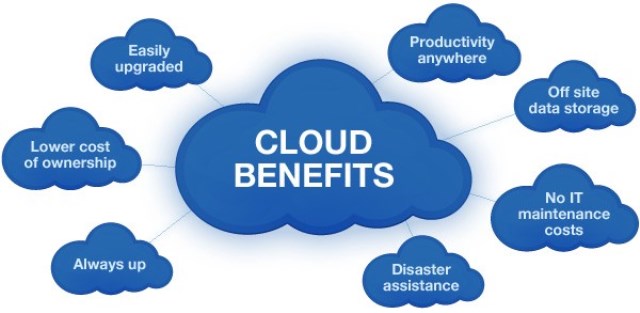
Does your company desire a better yesterday – I bet the answer is no. In earlier times, most companies depended on in-house servers for storing their growing collection of data and online files but as cloud servers allow unlimited storage, it has become the next big thing. Cloud storage is affordable and allows easy access from anywhere in the world.

Here are ten benefits of online data storage in the cloud:
- Cost-Effectiveness
Business owners can rest assured that once data is in the cloud, safety is guaranteed. With this technology, the company itself does not need any inner manpower and support to manage and store their data; the cloud storage vendor handles it all.
- Usability and accessibility
Most all of the cloud services come with an easy-to-use user interface and provide a feature of drag and drop. For instance, you can think of Google drive from Google or iDrive from Apple. They both have a simple interface, and you can easily upload your file on your online drive without any expert knowledge.
For example, if you have saved a file in a drive using a mobile device, you can retrieve that file using a computer or any other device with internet connectivity. It doesn’t matter where you are right now. If you have a good internet connection, you can access your files, which is saved online somewhere in the data centres.
- Security
The cloud storage saves your data across the redundant servers, so even if one of the data centres gets collapsed, your data will be managed by the other data centers, which make your data safe and supervised.
If all the data centers of the storage provider get collapse or destroyed, then only your data could be lost, and this is an entirely impossible phenomenon because a cloud storage service is formed of thousands of data centers.
Some of the cloud storage vendors keep the copies of your data at the different data centers, so even if the data get lost or corrupted at the server, the backup must be there.
- Convenience in file Sharing
Cloud storage service provides file-sharing features, which helps you to share your file with other users. You can either send a file to another user or invite multiple users to view your data.
- Automation
One of the biggest issues that most of business owners face is creating data backup plans and scheduling the said backup in a way that the daily run smoothly. With cloud storage technology, the tedious task of data backups is simplified through automation. All you need to do is select what you want to backup and when you want to backup and your cloud environment will easily take care of the needful.
- Multiple users
The same cloud environment can have more than one use associated with it. With cloud storage, multiple users can collaborate with the common file. For instance, you can give access to your files to multiple users so they can access and edit your file. The authorized person can access your file from any part of the world in real-time.
- Synchronization
With proper credentials, you can log in to your subscribed storage service with any device, and you will be able to access all data that have been stored in that cloud storage. There is no need to copy data from one device to another, but you need a good internet connection to have access to all of your files. Synchronization affords a chance to sync the cloud storage data with any device you want
- Convenience
You do not need any hard disk or flash drive to access or view your data — all is done online. However, if you want to download any file or data, you may require a storage device or you can download that data in your device. But if you want to surf your data, then it would not occupy any space on your device.
Even if you make any changes to the data, all the changes will reflect on every device which is synced with that storage service. You do not require any expert or technical knowledge to use the cloud storage service. All the heavy lifting is managed by the vendor itself.
- Scalable
Upon subscription, and you realize the current plan of storage is not enough, all that is needed is an upgrade. You do not need to move any data from one location to another, the extra space will be added to your storage environment with some extra features. Cloud storage is scalable and flexible.
- Disaster recovery
Every business has a backup storage plan where they store all the copies of their data. If they encounter any collapse or loss of data problem, they can retrieve data from their backup plan, and that is why cloud storage is the best method to deal with this problem. Cloud storage service provides the best platform for disaster recovery data. Any business can use cloud storage as a data backup storage, so if there is a data loss, the company can retrieve backup data from the cloud.
Challenged by the need to have your data stored in the cloud? I present to you Layer3’s on-demand Cloud Storage solution, CloudShare, is built for the corporate enterprise. It gives you complete control over the storage, distribution and retrieval of your data.
Our CloudShare is a very cost-efficient solution, eliminating the need to invest in expensive data storage infrastructure. Request for a consultation today.


As the global community commemorates World Consumer Rights Day, Jumia Nigeria joined industry leaders, regulators, and consumer advocates at the Lagos Marriott Hotel, Ikeja, for a high-level panel session hosted by the Lagos State Consumer Protection Agency (LASCOPA) on Tuesday, March 17, 2026.

Speaking during the session, Peters Afebuame, Group Head of Content and Production at Jumia, highlighted Jumia’s comprehensive approach to protecting consumers from counterfeit or adulterated products on its marketplace, noting that the company has implemented structured checks and technology-driven systems across the entire product lifecycle, from seller onboarding to post-listing monitoring, to safeguard product authenticity.
“Ensuring product authenticity on our platform requires a combination of technology, policy enforcement, and continuous seller engagement,” he stated.
“At Jumia Nigeria, we have implemented a multi-layered process that begins with rigorous seller onboarding and policy agreements, followed by catalogue configuration controls, AI-driven product attribute verification, and the use of global product identification standards. These systems are reinforced by ongoing quality moderation, brand protection mechanisms, and strict enforcement actions, including product and seller delisting, ensuring that customers can shop on our platform with confidence.”
Central to Jumia’s consumer protection framework is a rigorous seller verification process designed to ensure marketplace integrity. Vendors are required to provide proof of legal and regulatory compliance before gaining access to the platform. This vetting process is reinforced by a strict quality control system that monitors products listed on the platform, backed by a zero-tolerance policy toward counterfeit or substandard goods. Non-compliant sellers face penalties and permanent delisting from the marketplace.
Transparency also remains a core priority in helping customers make informed purchasing decisions. Product listings across the platform feature clear specifications, verified descriptions, and detailed images, enabling shoppers to understand exactly what they are purchasing before completing a transaction.
Recognising that digital literacy plays a critical role in online safety, Jumia continues to invest in consumer education initiatives through instructional “how-to” videos, platform guides, and social media campaigns that equip Nigerian shoppers with practical knowledge to navigate online shopping securely and confidently.
To further strengthen transaction security, Jumia leverages its proprietary payment solution, JumiaPay, which provides a secure and encrypted payment infrastructure designed to protect customer financial data. The company also adheres to internationally recognised data protection standards such as the General Data Protection Regulation (GDPR) and local regulatory frameworks established by the Nigeria Data Protection Commission (NDPC), ensuring responsible handling and protection of user information.
Beyond the point of purchase, Jumia reinforces consumer protection through a customer-centric return and refund policy designed to ensure seamless resolution when issues arise. A dedicated customer service team also provides support through multiple channels, including phone and social media, enabling swift response to consumer inquiries and complaints.
As e-commerce continues to expand across Nigeria, Jumia reaffirmed its commitment to building a marketplace that prioritises fairness, transparency, and consumer safety. Through continuous investment in technology, strong policy enforcement, and ongoing consumer engagement, the company aims to strengthen trust and confidence in Nigeria’s growing digital commerce ecosystem.

Federal government is determined to protect Nigerians’ rights and privacy in the digital space, according to Dr Ayodele Bakare, assistant director, Cybersecurity Department, National Information Technology Development Agency (NITDA),

To achieve that, Bakare, said that the government has developed several policy and regulatory frameworks to strengthen cybersecurity.
Bakare, stated all these during an interview with the News Agency of Nigeria (NAN) in Abuja on Monday.
He said that cybersecurity governance in Nigeria was implemented through a collaborative approach involving multiple government institutions with different responsibilities.
According to him, the Office of the National Security Adviser (ONSA) provides overall coordination of national cybersecurity efforts through the National Cybersecurity Coordination Centre, which serves as its operational arm.
“At the national level, cybersecurity implementation is done collectively, and different government organisations are responsible for implementing different aspects of the national cybersecurity framework.
“At the top, however, the Office of the National Security Adviser coordinates these efforts through the National Cybersecurity Coordination Centre,” he said.
Bakare said that one of the key policy instruments guiding the country’s cybersecurity efforts was the National Cybersecurity Policy and Strategy Framework.
He also highlighted the legal framework provided by the Cybercrimes Prohibition and Prevention Act 2015, which was recently amended in 2024 to strengthen Nigeria’s response to cyber threats and digital crimes.
According to him, NITDA has also introduced sector-specific regulations to enhance cybersecurity in the country.
“One such regulation is the National Public Key Infrastructure Regulation, which is one of the core infrastructures required to ensure trust and security in digital communications and transactions,” he said.
Bakare said that NITDA played a pioneering role in Nigeria’s data protection landscape through the Nigeria Data Protection Regulation 2019, which laid the foundation for the current data protection framework.
He said the regulation had since evolved into a full legal framework implemented by the Nigeria Data Protection Commission.
Bakare disclosed that the agency was also finalising an Information Security Regulation that would soon be made available to the public.
He further explained that the regulation would provide organisations and individuals with clear guidelines on their responsibilities in safeguarding information and digital assets.
“Nigeria has continued to strengthen its legal and policy environment for cybersecurity, a development reflected in the country’s performance in the Global Cybersecurity Index.
“One of the pillars of the index focuses on legal measures and assesses the availability of national cybersecurity laws and regulations.
“Nigeria recorded a strong performance under the legal measures pillar, reflecting the country’s efforts to establish the necessary frameworks to support cybersecurity governance,” he told NAN.
He said that sustained collaboration among government agencies and stakeholders remained essential to effectively implement the existing policies and strengthen Nigeria’s digital security architecture.

According to Kaspersky telemetry, in 2025, spyware and password stealers attacks showed the biggest year-over-year growth in Nigeria among different analysed malware types.

Spyware, which is a type of malicious software installed on users’ devices to collect their data, grew in the number of attacks by 28% compared with the previous year. Password stealers, designed to gather users’ account information, increased in the number of attacks by 22%.
Exploits decreased slightly in the number of attacks in Nigeria, however they remain an acute threat that should not be underestimated. These are programs designed by cyber attackers to take advantage of vulnerabilities in an application or operating system to gain unauthorised access to it and to cause unintended behaviour to occur on software.
Ransomware, though very targeted in distribution, remains a high-risk threat for organisations, who should also guard themselves from supply chain and trusted relationship attacks.
Overall, Kaspersky security tools blocked more than 4 million online attack attempts on users in Nigeria in 2025. Online threats typically include different types of malware attacks, such as for example, password stealers, exploits, spyware, etc. Another 9 million on-device threats were blocked in the country, including malware delivered via infected USB drives.
“Operations coordinated by INTERPOL, such as Serengeti to which Kaspersky has contributed, demonstrate how international cooperation and threat intelligence sharing can strengthen the fight against cybercrime across Africa. At the same time, both organisations and individual users in the region play an important role in improving cybersecurity by staying informed about evolving threats and practicing good cyber hygiene.
“Dedicated security solutions, including Kaspersky Next for organisations and Kaspersky Premium for individuals, can further help reduce exposure to cyber risks,” said Moses Munguti, Technical Expert & Team Lead in Africa at Kaspersky.
Malware often reaches a device through phishing messages and websites employing social engineering techniques. If an operating system, browser, or application is outdated, attackers may exploit security flaws to install malware. To significantly reduce the risk of infections with malware, Kaspersky experts advise individuals and organisations to follow these best practices:
- Be cautious with links and attachments received, verify the sender before opening files or clicking links.
- Download software only from official sources.
- Install updates for systems and applications as soon as they become available.
- Use strong, unique passwords and enable multi-factor authentication wherever possible.
- Install reputable security software that can detect malware before it compromises the system.
- Regularly back up important data.
- Staying informed about current cyber threats and maintaining good digital hygiene helps keep devices and data safe.

SEC Shuts Over 400 Fraudulent Investment Schemes, Arrests Operators

NigComSat-1R, Nigeria’s Only Satellite to Expire this Year

Nigeria, Ghana Trigger Stunning 45 Percent Surge in MTN Dividends

Banks, Offices to Close for Thursday and Friday for Eid-el-Fitr

ATCIS Urges FG to Ensure Safety of Consumers Data

Kaspersky Discovers New Phishing Campaign Exploiting Google Tasks Notifications to Steal Corporate Credentials

esentry 2025 Report Shows Healthcare, Financial Services and Telecoms as Staging Grounds for Increased Cyberattacks in Africa

AfDB, UNDP Launch $10Bn AI Initiative for Africa

Mutual Benefits Assurance Settles ₦5.9bn Claims in January 2026

MultiChoice Suspends Yearly DStv Price Hike as Canal+ Pushes Growth




 E-Financial3 days ago
CBN Rolls Out New Rules for Safer Instant Payments, More Customer Control

 News3 days ago
NIMMME Inaugurates Engr. Michael Orekyeh as 13th National Chairman in Abuja

 E-Financial3 days ago
CBN Tightens BVN Rules to Curb Fraudulent Banking Transactions

 Broadcasting2 days ago
Spotify’s Loud & Clear Report Reveals Over ₦60Bn Revenue for Nigerian Artists in 2025

 Telecom3 days ago
MTN Nigeria Races Ahead in Fibre Broadband Market

 E-Financial3 days ago
Nova Bank Appoints Jude Anele as Managing Director/CEO

 E-Business3 days ago
Tech Expert Unveils BAT-BOT AI App to Curb Fake News ahead of 2027 Elections

 News2 days ago
Elumelu Tags Elon Musk, Disowns AI-Generated Scam Video