

Broadcasting
The challenge facing 95% of IT leaders when it comes to AI agents – and how to overcome it

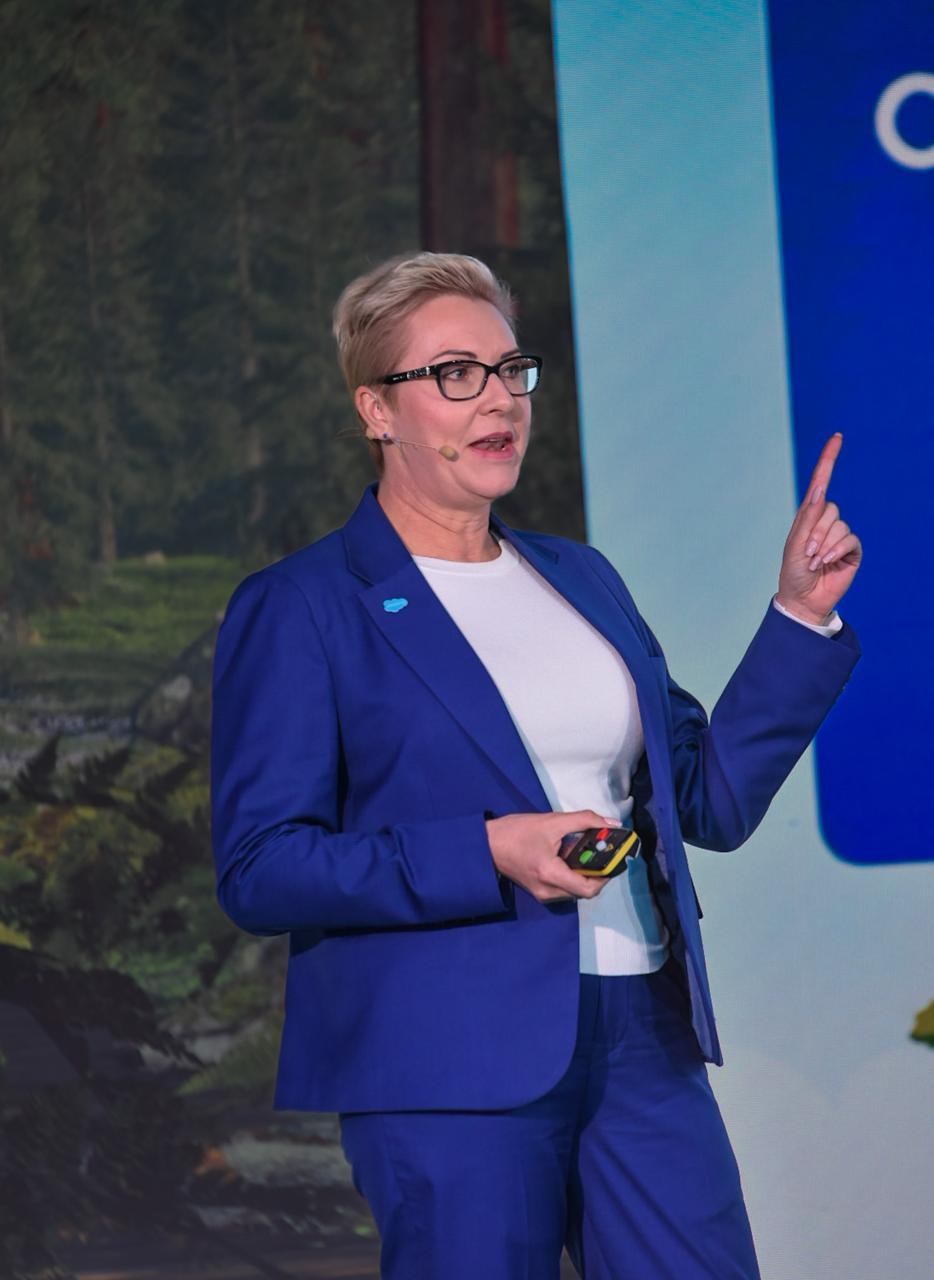
By Linda Saunders, country leader and senior director solutions engineering Africa at Salesforce
Generative AI has transformed how people interact with technology through prompts, and the next frontier promises an even greater impact. As organisations refine their AI strategies, we are witnessing the next chapter of work and the emergence of digital labour with agentic AI.

Since the launch of Chat GPT many business leaders focused on what they thought was the right topic – the Large Language Models ( LLMs). But these models are quickly becoming a commodity, as each one races to build the best for a specific use case.
To truly unlock value from AI, you need to focus on everything around the model such as the orchestration, the low code / no code approach to building and refining, the metadata framework and a data engine that compliments the data strategy. It’s this platform advantage that is seeing agents across the globe stand up and deliver value with real data, leveraging real integration in a few short weeks.
To unlock the action and value of generative AI requires a deeply integrated and connected platform with a one code base, but this takes significant time and money to build unless you have already been empowering your human employees on the Salesforce platform. Our platform leverages everything you have built to empower your digital workforce. Its a win-win where even for those who are not quite ready for a digital workforce – will be unlocking their ability to pivot to an agentic workforce with every flow, cloud, integration and build – Ultimately future proofing their business.
Agentic technology is a multi-trillion-dollar industry opportunity. The agentic enterprise will operate with unprecedented independence capable of responding to queries and handling complex tasks autonomously. This autonomy will optimise workflows, drive innovation, and break down barriers related to the need for continuous human intervention.
By 2028, Gartner predicts that 33% of enterprise software applications will include agentic AI, up from less than 1% in 2024, allowing 15% of day-to-day work decisions to be made autonomously.
Yet, AI agents are only as good as the data they have. They need connected data—both structured and unstructured—to understand user queries and make informed decisions. That’s where integration and APIs come in, building a solid foundation for these agents.
While 93% of IT leaders are either implementing or planning to implement AI agents within the next two years, they face significant integration challenges that hold back the full potential of these agents.
According to the latest MuleSoft Connectivity Benchmark Report, which surveyed more than 1,000 IT leaders globally, 95% struggle with data integration across systems. On average, only 29% of applications are connected, which really affects the accuracy and usefulness of AI agents.
The report found that, on average, enterprise organisations are using 897 applications, and those with AI agents are using even more—1,103 applications. 90% of IT leaders say data silos are creating business challenges.
The more applications and AI models there are, the harder it gets to integrate everything. Data silos make it even tougher, limiting agents’ access to the data they need and leading to less accurate and useful outputs.
Disconnected data also places major strain on IT resources. IT leaders are looking for ways to boost efficiency and productivity, but they expect their teams’ workload to increase in the next year. Balancing current capabilities with integrating AI agents across hundreds of unique applications while maintaining those systems, is a real challenge.
To unlock the full potential of AI agents, businesses need to align their integration and AI strategies. APIs and integration solutions can simplify and unify data infrastructure, allowing AI agents to access critical data and interact with existing systems and automations. This can significantly improve IT infrastructure, enable data sharing across teams, and integrate disparate systems.
Organisations that have successfully integrated their data and systems using APIs are reaping the rewards: increased productivity (49%), faster response to business needs (49%), and higher revenue generation (45%). On average, half of an organisation’s internal software assets and components are available for reuse, which means companies can leverage their existing investments, instead of starting from scratch.
The reliance on IT teams highlights the need for a clear automation strategy, along with robust governance and monitoring to ensure everything runs smoothly and securely.
A well-rounded automation strategy is crucial for integrating AI effectively, but many teams are still working on theirs. One key part of this strategy is making AI accessible to non-technical users, which is essential for broader adoption and creating a solid foundation for employees to build on, and this is where agents are changing the game.
Every company, team, and employee will soon have an agent. But how useful is a team of agents if they can’t interact with other systems or agents to coordinate and take action across the entire business? AI must have a smooth handoff to a human, and if that transition isn’t well-coordinated and seamless, any benefits are quickly undone
As AI, integration, automation, and API use continue to drive transformation and performance, organisations that invest in these technologies to harness unlimited digital labour are best placed to stay agile, efficient, and ultimately succeed.



Federal Airports Authority of Nigeria (FAAN) says the country now ranks second in Africa for domestic passengers, hitting 10.5 million in 2025—a 10 percent jump.

FAAN
FAAN boss Olubunmi Kuku disclosed this at the Airports Council International Africa conference in Luanda, Angola.
Lagos’ Murtala Muhammed International Airport posted 11.8 percent growth in air traffic movements, one of Africa’s strongest.
Cargo surged 34.4 percent at Lagos, cementing its top-tier status.
Abuja’s Nnamdi Azikiwe and Lagos airports cracked Africa’s top 10 for domestic traffic.
Kuku stressed Nigeria’s push to host and shape African air links amid rising demand for modern, resilient airports.


Afro-pop star Joeboy takes centre stage this week as he features on the Easter edition of African Voices, the Globacom-sponsored magazine programme on CNN.

In this episode, the Nigeria-born singer sits down with show anchor, Larry Madowo, in Lagos, where he shares the story of his journey from a young university student with big dreams to becoming one of Afrobeats’ most recognised voices.
Long before global attention, Joeboy, born Joseph Akinwale Akinfenwa-Donus, started out experimenting with music and sharing covers online. His 2017 cover of Ed Sheeran’s “Shape of You” marked a turning point, helping him transition fully into singing and setting the stage for what was to come.
That moment soon opened new doors, including a connection with Mr. Eazi, who brought him into the emPawa Africa talent programme. This provided support and exposure for his music to reach a wider audience, laying the foundation for his professional career. The alliance also birth “Fààjí,” which featured Mr. Eazi in 2018, after which he was signed to Warner Music Africa.
Under this partnership, Joeboy released his hit single “Baby” in 2019, followed by “Beginning,” which has 23 million views on YouTube. He also released “Love & Light” the same year and featured Mayorkun in the tracks “Don’t Call Me” and “All for You”
Since then, the 29-year-old has gone on to release two albums, Somewhere Between Beauty & Magic in February 2021 and Body & Soul in 2023, while earning recognition across the continent, including awards for his contributions to African pop music. He won Best Artist in African Pop at the 2019 All Africa Music Awards and Best Pop at the 2020 Soundcity MVP Awards Festival.
The programme will air on Saturday at 7.30 a.m., with several repeat broadcasts scheduled across the weekend and into the following week. 11 a.m. on Saturday; on Sunday at 3.30 a.m. and 6 p.m. This continues on Monday at 3 a.m. and 5.45 p.m, and on Tuesday at 5.45 p.m. The schedule will be repeated next week until 3 a.m. on Monday.
The Court of Appeal sitting in Abuja has dismissed an appeal filed by the National Broadcasting Commission (NBC), seeking to overturn a Federal High Court judgement that restrained it from imposing fines on radio and television stations across the country.

NBC
Delivering the lead judgement, Justice Oyebiola Oyewumi, on behalf of a three-member panel, upheld the earlier ruling and set aside the fines imposed by the NBC on 45 broadcast stations on March 1, 2019, for alleged breaches of the Nigeria Broadcasting Code.
The panel was presided over by Justice Abba Mohammed, with Justice Donatus Okorowo as the third member.
According to a statement issued by Idowu Adewale, Communications Officer of Media Rights Agenda (MRA), the unanimous decision of the Court of Appeal stemmed from a suit filed by the non-governmental organisation in November 2021, challenging the NBC’s powers to impose fines on broadcasters.
The Federal High Court, in its judgement delivered on May 10, 2023, by Justice James Omotosho, ruled in favour of MRA after the NBC failed to defend the suit.
The court held that fines are sanctions imposed on persons found guilty of criminal offences and, under Nigerian law, only courts of law have the authority to impose such penalties.
Setting aside the fines of ₦500,000 each imposed on the affected stations, Justice Omotosho stated that the NBC “is neither a court nor a judicial tribunal to make pronouncements on the guilt of broadcast stations, notwithstanding what the NBC Code says.”
He added that the Commission’s actions violated the Constitution.
Dissatisfied with the ruling, the NBC filed a motion in July 2023, urging the same court to set aside the judgement on the grounds that it lacked jurisdiction and had reached its decision without considering relevant facts.
However, in November 2023, Justice Omotosho dismissed the application, describing it as futile and an afterthought, noting that available evidence showed the Commission had been duly served but failed to appear in court to defend the case.
The NBC subsequently approached the Court of Appeal in July 2024, seeking to overturn the judgement.
Advertisement
At the hearing on February 4, 2026, Mr Victor Ogude (SAN), leading Mr Kehinde Wilkey for the NBC, adopted his brief of argument and made additional submissions.
Counsel to MRA, Ezenwa Anumnu, also adopted his brief and responded accordingly.
In its ruling, the appellate court agreed with MRA’s position that the NBC, having failed to contest the suit at the Federal High Court, could not raise fresh challenges at the appellate level.
Justice Oyewumi held that the appeal lacked merit and accordingly dismissed it.
With this decision, MRA has secured victory in the first of two appeals involving the NBC over separate Federal High Court judgements barring the Commission from imposing fines on broadcast stations.
The second appeal, filed by the NBC against a similar judgement delivered on January 17, 2024 by Justice Rita Ofili-Ajumogobia of the Federal High Court, Abuja, is still pending. The Court of Appeal heard arguments in that matter on March 25, 2026 and has reserved judgement.
In that case, the NBC is challenging a ruling arising from a suit filed by MRA after the Commission imposed fines of ₦5 million each on a television station and three pay-TV platforms in 2022 for allegedly undermining national security through the broadcast of documentaries on banditry in Nigeria.

From Import Dependency to Local Capacity: Nigeria’s Tech Manufacturing Journey

NIBSS Says 28 Percent of Nigerians have Registered for BVN

NITDA DG Urges Stronger Collaboration to Drive Nigeria’s Digital Economy

Ogun Set for Direct London Flights as Gateway Airport Gains Momentum

Airtel Becomes World’s Second Largest Telco as Global Customer Base Surpasses 650 Million

Spotify’s Loud & Clear Report Reveals Over ₦60Bn Revenue for Nigerian Artists in 2025

Madonna University Taps Tech Guru Adote for Strategic Board Role

China Threatens to Shut Nigeria’s Satellite Over $11.44m Unpaid Debt

Healthcare Under Attack: Why Cybersecurity is Now Critical Care

Why JustMarkets Is a Strong Choice for Gold Trading




 E-Business2 days ago
FG to Strengthen Cybersecurity Coordination as NDPC Probes Alleged Data Breach

 Telecom2 days ago
Compensation for Poor Service Quality is Automatic- NCC

 E-Business2 days ago
Offset Communications Slams N50m Suit against Qore Technologies for Alleged Copyright Infringement

 General News2 days ago
Tinubu Approves N3.3 Trillion Payment Plan to Boost Power Supply

 Telecom2 days ago
FG Moves to Strengthen Cybersecurity Coordination as NDPC Probes Alleged Data Breach

 News2 days ago
Beware of Fake Cerelac Products – NAFDAC

 General News2 days ago
SERAP Sues CCB over Electoral Act, New Tax law

 E-Business20 hours ago
Nigeria Cyberattacks: Stronger Collaboration as a Panacea