

General News
2021: Time for Nigeria to Move into Higher Gear?

by Lukman Otunuga, Senior Research Analyst at FXTM
2020 will be remembered for its extraordinary uncertainty, explosive market volatility, unprecedented events, supply chain upheavals and a worldwide wave of monetary policy easing.
The new year 2021 may bring renewed hope and a return to normality for many developed and developing economies but what are the chances it will happen by the end of the first quarter? COVID-19 vaccination programmes rolled out in the EU, UK and US and Nigeria expect the first Pfizer/BioNTech vaccines to arrive at the end of January. Hope for better days lies ahead and the positive news has been welcomed by investors.
However, while steps are taken to secure and improve the public health circumstances, economic circumstances are still troubled by the crushing impact of the pandemic. The economic impact of the pandemic will likely set personal incomes in Nigeria back four decades, according to the World Bank. The outlook for the full-year GDP growth is 1.1 percent compared to an estimated minus 4.1 percent, said the World Bank.
Meanwhile, Nigeria registered 1,184 deaths from COVID-19 and a four-week lockdown hit the informal economy hard, meaning that the short-term outlook appears clouded by persistent pandemic headwinds.

Fiscal policy moved ahead after President Muhammadu Buhari signed the 2021 appropriation bill of N13.59 trillion into law with the 2020 Finance Bill set to run concurrently. The annual budget dubbed ‘Budget of Economic Recovery and Resilience’ is expected to reposition Nigeria’s economy back to recovery, growth and flexibility. The bill shows an expected revenue of N7.99 trillion and an aggregate estimated expenditure of N13.59 trillion, implying a budget deficit of N5.60 trillion.
The medium-to-long-term fiscal outlook is one of the significant debt burdens which will need servicing. For a developing economy in the midst of diversifying away from a reliance on the crude Oil industry, this presents enormous challenges. The historical problems in Nigeria’s economy precede the COVID-19 exposures and are mainly to do with structural weaknesses bombarded by persistent external shocks.
The Nigerian economy slipped into a recession in the third quarter of last year after GDP contracted by minus 3.62 percent. Classically, recessions in Nigeria were mostly caused by a fall in the price of crude Oil and the relatively limited fiscal and monetary buffers within a structurally weak economy.
Pandemic response
The economic recession is likely to trigger changes in the benchmark interest rates in 2021 to support a recovery. Monetary policymakers will probably be concerned about the misalignment of interest rates in the fixed income markets, further supporting the argument for one or multiple rate cuts in 2021.
In related developments, the introduction of the Central Bank of Nigeria’s Special Bill as an alternative investment vehicle may absorb a proportion of the liquidity in the system and stabilise the interest rate environment, at least in the short term.
Prolonged recession?
At this point, the best scenario for the Nigerian economy is to save the long-term outlook from a prolonged recession. The World Bank warned that in the next three years, Nigeria could enter a recession the depths of which haven’t been seen since the 1980’s. Efforts have been made to harmonise exchange rates, introduce a market-based pricing mechanism for gasoline, adjust electricity tariffs to reflect the costs and reduce non-essential expenditures.
While there may still be short-term pain ahead, there is still time to enact a series of potentially politically unpopular reforms in line with the World Bank’s recommendations. These include enabling the private sector to be the engine of growth and job creation and redirecting public spending towards development projects and investments in Nigeria’s people and youth in particular, said the World Bank.
Difficult choices lie ahead for investors, consumers, fiscal and monetary policy makers and other stakeholders in the Nigerian economy. Nonetheless, the ground covered so far is promising and with better confidence generated by the vaccination programme, Nigeria’s recovery could move into a higher gear.



Socio-Economic Rights and Accountability Project (SERAP) has called on President Bola Tinubu to direct, Lateef Fagbemi (SAN), attorney general of the federation and minister of Justice; Olatunji Rilwan Disu, inspector-general of Police, and relevant anti-corruption agencies to investigate allegations that more than ₦6.79 billion in public funds were missing, diverted or misapplied within the Nigeria Police Force and the Federal Ministry of Police Affairs.

The allegations are contained in the Auditor-General of the Federation’s 2022 Annual Report, published on September 9, 2025.
In a letter dated August 1, 2026, and signed by Kolawole Oluwadare, deputy director, SERAP, the organisation urged the government to ensure that anyone implicated in the report is prosecuted and that all missing public funds, firearms and ammunition are recovered.
“Anyone suspected to be responsible—including contractors, companies and public officials implicated in the report—should be promptly prosecuted, while all missing public funds, firearms and ammunition should be fully recovered, secured and properly accounted for.”
SERAP described the Auditor-General’s findings as a serious breach of public trust.
“The Auditor-General’s findings suggest a grave betrayal of the public trust and raise serious concerns about corruption and the management of public funds, police exhibits, firearms and ammunition.”
The organisation also expressed concern over allegations involving missing firearms, unauthorised use and release of police exhibits, and poor storage of weapons.
“The report also raises serious concerns over missing firearms and ammunition, the unauthorised use and release of police exhibits, failures to properly account for exhibits, and the insecure storage of firearms, creating significant risks to public safety and national security.”
According to SERAP, the alleged diversion of funds meant for policing and the reported irregularities have weakened the operational effectiveness of the Nigeria Police Force.
“The diversion of funds meant for policing, abandoned security projects, missing firearms and ammunition, and the misuse of police exhibits undermine the operational effectiveness of the Nigeria Police Force, weaken public confidence and may contribute to Nigeria’s worsening insecurity.”
The organisation said the Auditor-General’s report documented several alleged financial irregularities, including payments for projects that were never executed, abandoned contracts, inflated contract costs, irregular procurement, unretired cash advances, unsettled insurance claims and payments for services allegedly not rendered.
“The report documented numerous alleged financial irregularities within the Nigeria Police Force and the Federal Ministry of Police Affairs, including payments for projects that were never executed, abandoned contracts, inflated contract costs, and irregular procurement.”
“The report also documented unretired cash advances, unsettled insurance claims, payments for services allegedly not rendered, and other suspected diversion and misapplication of public funds amounting to over ₦6.79 billion.”SERAP further cited allegations of missing firearms and ammunition, failures to properly account for recovered weapons and exhibits, and insecure storage of firearms.
“The allegations also include missing firearms and ammunition, the unauthorised use and release of police exhibits, failures to properly account for recovered firearms and other exhibits, and the insecure storage of firearms, posing serious risks to public safety and national security.”
The organisation gave the Federal Government seven days to act on its demands, warning that it would pursue legal action if no response is received.
“We would be grateful if the recommended measures are taken within seven days of the receipt and/or publication of this letter. If we have not heard from you by then, SERAP shall consider appropriate legal action to compel your government to comply with our request in the public interest.”
SERAP also argued that the allegations, if left unaddressed, would violate constitutional provisions requiring the government to combat corruption and safeguard the welfare and security of Nigerians.
Among the specific findings cited from the Auditor-General’s report were allegations of payments for abandoned and unexecuted police projects worth hundreds of millions of naira, inflated contract values, unretired cash advances, irregular procurement processes, unsettled insurance claims exceeding ₦681 million, over ₦1 billion in uncleared insurance policy liabilities, missing firearms and ammunition, unauthorised release of police exhibits, and contracts allegedly awarded without due diligence by the Federal Ministry of Police Affairs.
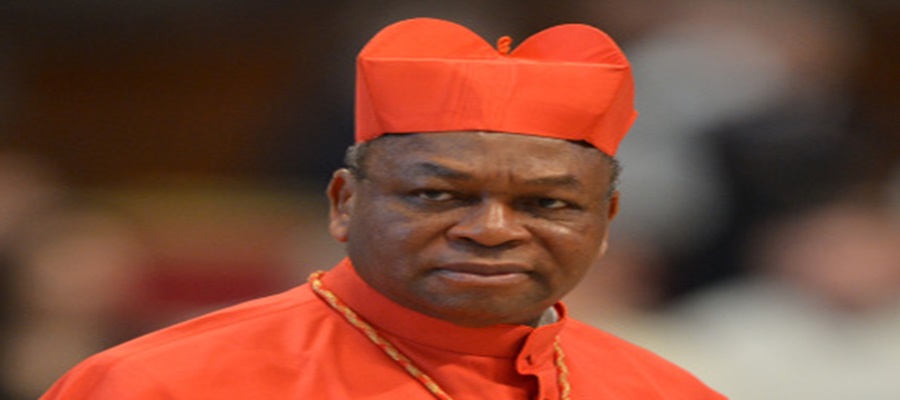
Sunday Dare, special adviser to the President on Media and Public Communication, has faulted the criticism directed at President Bola Tinubu and his economic policies by John Cardinal Onaiyekan, Archbishop Emeritus and the Catholic Bishops’ Conference of Nigeria (CBCN).

Sunday Dare, special adviser to the President on Media and Public Communication,
During an interview with Arise TV, Onaiyekan, who had led Catholic Bishops on a visit to the President, revealed details of their discussion.
“When the nation is bleeding, you cannot expect a polite meeting with the Head of State. We told him the economy is not helping our poor people; he told us the economy is doing fine. Frankly speaking, he told us quite clearly that he did not agree with us,” Onaiyekan said.
He added, “We didn’t expect him to agree with us. We have done our duty, we have delivered our message, and we have a feeling that somehow, along the line, somebody will show him a few of the things we said.”
Reacting, Dare stated that while Onaiyekan and his cohort choose the easy path of populist lamentation, the facts of President Tinubu’s administration reveal a relentless, methodical restoration of the Nigerian state. He said that by courageously removing the petrol subsidy and unifying the foreign exchange windows within his first days in office, President Tinubu ended decades of economic illusion.
“State and local governments now receive record-breaking monthly allocations from the Federation Account Allocation Committee (FAAC), enabling governors—including those in the Catholic heartlands—to pay salaries, fund local infrastructure, and service pensions promptly. The debt service-to-revenue ratio has been dramatically slashed to under 65%, pulling Nigeria back from the edge of default and restoring international credit rating confidence, he said..
According to Dare, the administration did not merely reform numbers; it invested in human dignity. He noted that through the landmark establishment of the Nigerian Education Loan Fund (NELFUND), millions of indigent students across tertiary institutions now access interest-free loans for tuition and stipends. “Academic calendar stability has been restored, ending the agony of prolonged university strikes that once paralysed national development,” he said.
The presidential spokesperson revealed that to counter global inflation and local supply shocks, the Tinubu administration deployed emergency agricultural interventions that involve direct distribution of hundreds of thousands of metric tons of grains and fertilisers to smallholder farmers nationwide, the multi-billion naira investments in dry-season farming, mechanisation hubs, and irrigation infrastructure aimed at achieving permanent food self-sufficiency.
He said to understand the weight of President Tinubu’s achievements, one must first measure the abyss Nigeria faced on the eve of his inauguration. He recalled that in May 2023, the Nigerian nation was hovering on the precipice of total economic collapse and structural paralysis.
“The unsustainable petrol subsidy regime was draining trillion-naira holes into the national treasury monthly, enriching a parasitic cabal of smugglers and middlemen while starving sub-national governments of basic infrastructure funding. A fraudulent multi-tiered foreign exchange system had turned the Central Bank of Nigeria into an arbitrage engine, crippling legitimate manufacturing, scaring off foreign direct investment, and burning through scarce external reserves.
“The nation’s debt service-to-revenue ratio had spiralled to an unsustainable 97 per cent, meaning Nigeria was literally borrowing money to pay interest on past loans while operational governance ran on fiscal fumes. This was the broken, bleeding nation handed over to President Tinubu. It required bold surgery, not diplomatic sedation. Yet, when the President applied the sharp scalpel of structural reform, armchair critics and political opponents decried the incision while ignoring the terminal tumour it removed,” he said.
General News
Lenacapavir, HIV Injectable Drug Offers Pregnant, Lactating Mothers 100 Percent Protection – Study

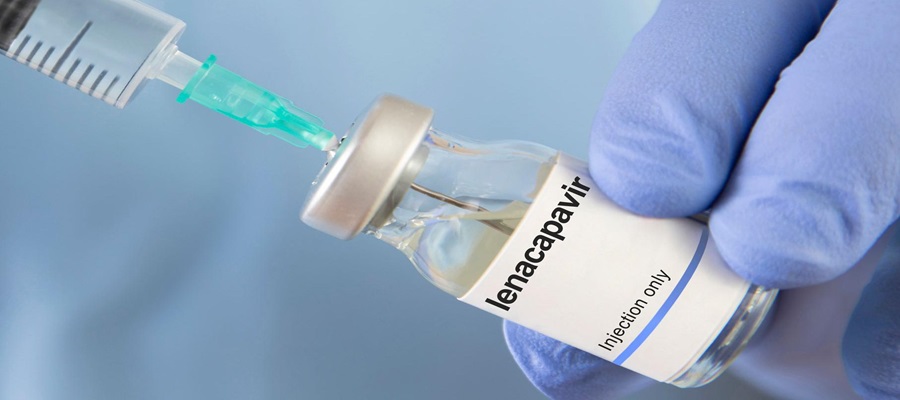
Lenacapavir, injectable HIV prevention drug, has been found to provide 100 percent protection against HIV infection among pregnant and breastfeeding women using it as pre-exposure prophylaxis (PrEP).

This is according to sub-study of the landmark clinical trial evaluating the safety and efficacy of the twice-yearly injectable HIV prevention drug.
The Phase 3 PURPOSE 1 trial results, published in the Lancet Medical Journal last week and presented at the ongoing 2026 International AIDS Conference Rio de Janeiro, Brazil, show the injection to be safe for use in pregnancy.
While Lenacapavir was previously studied and demonstrated high efficacy and safety as PrEP in cisgender women, its use during pregnancy and lactation, when women are disproportionately vulnerable to HIV acquisition, was not described in the initial studies that formed the World Health Organisation’s global recommendation for the drug.
Now, in the latest study, Dr Flavia Matovu Kiweewa, a senior Research Scientist at MUJHU, said they checked for drug traces in breast milk and exposure to an unborn baby and found drug exposure levels across all trimesters and postpartum were comparable to non-pregnant participants, confirming no dose adjustments are needed for this group.
Among 5345 women enrolled between Sept 28, 2021, and Sept 15, 2023, 487 participants, 184 allocated to Lenacapavir and 303 allocated to oral PrEP, had one or more pregnancies, resulting in 509 total pregnancies with 512 pregnancy outcomes, including three sets of twins.
While the study involved women aged between 16 and 26 years in both South Africa and Uganda, 80 percent of all the pregnancies recorded were in Uganda. Results show Lenacapavir was present in breast milk, but exposure in breastfed infants was minimal. Drug concentrations were measured in the blood of the mothers, breast milk, and breastfed infants’ blood.
Kiweewa said thatthese results are a breakthrough as pregnant and postpartum women face elevated vulnerability of HIV acquisition, yet historically they have been excluded from early prevention trials, leading to years-long evidence gaps.
The study compared twice-yearly Lenacapavir with daily oral PrEP in women who were not pregnant at enrollment.
But, unlike previous studies, women who got pregnant while participating in the study were, for the first time, left on their allocated study drug.
Now, because of the new findings, Kiweewa said at one of their study sites in Mityana District Hospital, they have decided to dedicate seventy percent of their drug supplies to women.

SERAP Asks Tinubu to Probe Alleged N6.79Bn Missing Police Funds, Firearms

FCT Court Awards Ex-Customers N15m against Stanbic IBTC over Data Privacy Breach

CBN Exposes over 13,000 BVNs Tied to Fraud as Banks Tighten Security

Atte, Nigerian Develops AI Algorithm for Hair Transplants

Dare Tackles Onaiyekan over Criticism of Tinubu, Says Economic is Working

NRC, Ponzi Scheme Collapses Resulting Loss of Billions of Naira

EFCC Busts NIS Visa Overstay Racket, Uncovers N700m in an Account

From Scarcity to Scale: What Africa Can Learn from India’s Agricultural Transformation

Tokenization, Blockchain Technology will Transform Financial Institutions – IMF

BON Establishes Six Ad Hoc Committees to Modernize Broadcasting




 Broadcasting2 days ago
Davido Shares Past Suicidal Thoughts, Drops Oriadé Album

 E-Business2 days ago
How Temu Helped a Madagascan Vanilla Family Business Sell Direct to Consumers Across Europe

 General News2 days ago
MTN Nigeria Posts N707.5bn H1 Profit, Declares N26 Interim Dividend

 General News2 days ago
Gavi Okays $500m for Vaccines, PHCs in Nigeria

 News2 days ago
Cisco Explores AI for Nigeria Farmers

 News2 days ago
AfCFTA Urges Africa to Stop Exporting Raw Materials

 E-Business2 days ago
82% of Organizations Concerned about AI Risks Even as Adoption Accelerates – Survey Reveals

 General News2 days ago
Police Uncover Fake Diplomatic Number Plate Syndicate in Abuja