

General News
2023 Elections: How Meta is Working to Promote Election Integrity in Nigeria

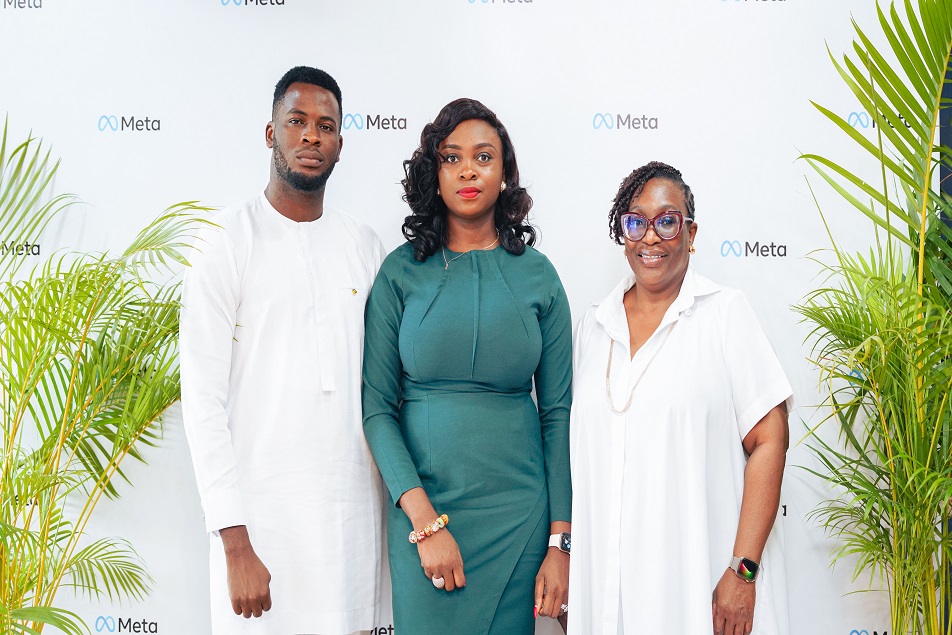
Meta on Wednesday revealed the steps it is taking to protect the integrity of the Nigeria elections taking place in 2023. This includes its efforts to combat the spread of misinformation and to make political advertising more transparent.

L-R: Ebuka Ogbodo, Public Policy Manager, Anglophone West Africa, Meta; Oluwasola Obagbemi, Corporate Communications Manager, Anglophone West Africa, Meta and Adaora Ikenze, Head of Public Policy, Anglophone West Africa, Meta during a media roundtable focused on how Meta is preparing for Nigeria’s 2023 elections, which held in Lagos, Nigeria on Wednesday December 7, 2022.
This work will continue in the lead up to, during, and after voting and builds on Meta’s experience and learnings from supporting elections across Sub-Saharan Africa and globally.
Meta’s approach has also been informed by conversations with human rights groups, NGOs, local civil society organisations, regional experts and local election authorities – to help ensure the safety of people using Meta’s family of apps, customise election strategies for Nigeria, maintain the integrity of its platforms and keep users safe.
Commenting at the event, Meta’s Head of Public Policy for Anglophone West Africa, Adaora Ikenze said, “We know we have an important responsibility when it comes to helping keep people safe during the elections.
“Using lessons from the past including input from experts and policymakers across the national spectrum, we’ve made substantial investments in people and technology to reduce misinformation, remove harmful content on our platforms, fight voter interference and promote civic engagement during the elections.
“We continue to work closely with election authorities and local partners in Nigeria to ensure we’re preparing for the specific challenges in Nigeria and taking appropriate steps to stay ahead of emerging threats.”
Some of the steps we are taking to prepare for the Nigerian elections include:
● A dedicated cross functional team spread across the world as well as locally focused on the Nigerian elections. This includes a number of people from Nigeria and people who have spent significant amounts of time in the country, as we recognise that local understanding is critical. The team also includes individuals with global expertise in misinformation, hate speech, elections and disinformation. These teams are working hard to prevent any abuse of our services before, during and after Nigeria’s 2023 general elections. Locally, we also have staff who reside in Nigeria and work in the public policy, & public policy programmes and communications.
● Keeping people safe: Since 2016 we have quadrupled the size of the global teams working on safety and security to about 40,000 people, and have invested more than $16 billion in teams and technology in this area. This also includes over 15,000 content reviewers, who are located across the globe, in every major timezone. Collectively, these reviewers are able to review content in more than 70 languages- including Yoruba, Igbo and Hausa.
● Outlining our Community Standards that publicly explain what is and isn’t allowed on our platforms to prioritise integrity on our platforms during and after elections.
● Addressing virality: On WhatsApp bulk or automated messaging is a violation of our terms of service. If we find instances of people misusing the service we remove those accounts. We continue to constrain forwarding and earlier in 2022 we announced that any message that has been forwarded once, will now only be able to be forwarded to one group at a time, rather than five, which was the previous limit. When we introduced the same feature for highly forwarded messages, it reduced the number of these messages sent on WhatsApp by over 70%. We also label ‘forwarded’ and ‘highly forwarded’ messages to highlight when something has been shared multiple times. We’ve introduced forward limits to Messenger too, so messages can only be forwarded to five people or groups at a time.
● Taking aggressive steps to fight the spread of misinformation on our services in Nigeria, because we know it’s important for people to see accurate information on Facebook and Instagram. We’re removing misinformation which could lead to imminent violence or physical harm and working with our fact-checking partners in Nigeria – AFP, Africa Check and Dubawa – to review and rate potentially false content on our platforms, label it, and place it lower in our feed, so fewer people see it. To further educate Nigerians on how to spot false news and the actions to take, we’re partnering with local radio stations to create ‘#NoFalseNews’ radio dramas in English and Pidgin, executing a WhatsApp awareness campaign #YouSaid in Yoruba, Hausa, Igbo and Pidgin to educate users to verify information before sharing and running online ads on Facebook and radio in Yoruba, Pidgin, Hausa and Igbo to educate people on how to spot false information.
● Made political ads more transparent in Nigeria: Anybody who wants to run political ads in Nigeria must go through a verification process to prove who they are and that they live in Nigeria. These ads are labelled with a disclaimer, so you can see who paid for them and stored them in our public Ads Library for seven years, so that everyone can see what ads are running, what types of people saw them and how much was spent. We also offer controls so that people in Nigeria can choose not to see any of these political ads which run with a disclaimer.
● Promoting civic engagement: Helping to build informed and civically engaged communities is central to our work around elections. Our dedicated teams have engaged in training and conversations with civil society organisations, academia, political parties and government to inform them of our election integrity efforts.


Kashifu Inuwa, the Director General of the National Information Technology Development Agency (NITDA), has called for a fundamental shift in Kano State’s economic strategy, urging stakeholders to embrace innovation, technology and collaboration as the drivers of growth in the 21st century.

Speaking at the Kano Startup Weekend, Inuwa acknowledge Kano’s long-standing reputation as the commercial nerve centre of Northern Nigeria and the wider Sahelian region, noting that its history of trade, enterprise and human capital provides a solid foundation for future growth.
He emphasised that while these strengths powered Kano’s success for centuries, the modern economy now offers even greater opportunities through innovation and technology.
He described innovation as the process of transforming ideas into impactful solutions through commercialization, stressing that when ideas are effectively deployed, they create value, solve societal challenges and generate sustainable economic growth. He noted that Kano’s large market, strategic location and vibrant entrepreneurial culture place it in a strong position to take advantage of innovation-driven opportunities.
According to him, “Innovation is the process of taking an idea from inception to impact. Invention on its own is a cost centre, but when you commercialise an idea, when you turn it into a product or service that solves a real problem and creates value, that is when you begin to drive economic growth and inclusion.”
He noted that the state hosts numerous degree-awarding institutions across federal, state and private ownership, providing a strong base for human capital development. However, he expressed concern that these institutions often operate in isolation from industry, with research outputs rarely translating into commercial or industrial applications.
He explained that innovation does not happen in silos and stressed the need for a strong, interconnected ecosystem that brings together academia, industry, startups, entrepreneurs and government.
According to him, universities should conduct research informed by industry needs, industries should leverage research to improve productivity and competitiveness, and startups should serve as the bridge that converts ideas into market-ready solutions.
He further encouraged entrepreneurs to leverage technology to build businesses that can grow beyond local markets, explaining that innovation-driven enterprises have the power to scale rapidly, create jobs and position Kano competitively at both national and global levels. According to him, digital platforms and emerging technologies now make it easier for startups to reach wider markets and develop solutions that were previously unimaginable.
“You can start your business here in Kano, but your thinking must be global from day one. Technology has removed barriers. With the right skills and platforms, a startup in Kano can build solutions that serve not just Nigeria, but the world,” he noted.
Highlighting NITDA’s ongoing interventions, the Director General outlined the Agency’s commitment to building national innovation capacity through targeted human capital development programmes. He cited the Digital Literacy for All (DL4ALL) initiative, which aims to equip Nigerians across all segments of society with essential digital skills, and the 3 Million Technical Talents (3MTT) programme, designed to produce a pipeline of globally competitive technical professionals in areas such as software development, data analysis and emerging technologies.
He said, “Through DL4ALL, we are ensuring that Nigerians at all levels have the basic digital skills needed to participate in the digital economy, while 3MTT is deliberately building a pipeline of globally competitive technical talents who can drive innovation, create jobs and attract investment.”
He explained that these programmes are key pillars of President Bola Ahmed Tinubu’s Renewed Hope Agenda, which prioritises skills development, innovation, job creation and inclusive economic growth as pathways to national prosperity. According to him, empowering Nigerians with digital and technical skills is essential for building a resilient economy capable of competing in the global digital landscape.
“President Tinubu’s Renewed Hope Agenda is about investing in people, empowering them with relevant skills and creating opportunities for inclusive growth. At NITDA, we are using digital skills and innovation as tools to translate that vision into real economic impact for Nigerians,” he said.
Inuwa urged all stakeholders in Kano to work together to build a functional innovation ecosystem that can unlock the state’s vast potential. He expressed confidence that with the right mindset, strong collaboration and sustained investment in digital skills and innovation, Kano can reclaim its historic leadership role and emerge as a major innovation and entrepreneurship hub in Nigeria and beyond.
General News
Sterling Bank Renewable Energy Colloquium Urges Stakeholders to Unlock Nigeria’s Clean Energy Potential

Sterling Bank Limited on Monday convened stakeholders in the renewable energy industry to explore strategies for accelerating Nigeria’s transition to clean energy and boosting economic growth.

L-R: Mr. Ayo Ademilua, President, Renewable Energy Association of Nigeria; Dr. Jekwu Ozoemene, Group Executive, The Alternative Bank; Mr. Biodun Ogunleye, The Honourable Commissioner, Lagos State Ministry of Energy and Mineral Resources; Mr. Dele Faseemo, Group Executive, Coprporate and Investment Banking, Sterling Bank; Engr. Bem Samuel Anyangeuor, Representative, Honorable Minister of Power and Mr. Oluwaseyi Okunnuga, Group Head, Renewable Energy & Sustainability Finance, Sterling Bank at the just concluded Renewable Energy Colloquium held in Lagos recently.
The colloquium, themed “Beyond the Grid: Unlocking New Frontiers in Renewable Energy”, was held in Lagos and brought together policymakers, financiers, and industry leaders to deliberate on priority areas for action.
In his opening address, Managing Director and Chief Executive Officer of Sterling Bank, Mr. Abubakar Suleiman, represented by Mr. Dele Faseemo, Group Executive, Corporate and Investment Banking, said the bank would focus on regulation and financing to expand access to energy.
He noted that energy access remained critical to supporting economic growth and achieving Nigeria’s ambition of building a one trillion-dollar economy.
Delivering a keynote address titled “Scaling Electrification in Nigeria: The REA Impact”, Managing Director of the Rural Electrification Agency (REA), Dr. Abba Aliyu, represented by Mr. Abba Hayatudden, said Nigeria required about 26 billion dollars to bridge its energy deficit.
Aliyu explained that the energy transition strategy integrates grid, mini-grid and off-grid technologies to achieve universal, reliable and sustainable energy access while aligning with national development and climate goals.
Minister of Power, Mr. Adebayo Adelabu, represented by Engineer Samuel Ayangeaor, commended Sterling Bank for convening the dialogue.
He said renewable energy and rural electrification were central to the Federal Government’s Renewed Hope Agenda.
“The Ministry of Power has continued to expand electricity access to underserved communities to drive economic growth, foster industrial activity and create jobs across the nation,” Adelabu said.
Lagos State Commissioner for Energy and Mineral Resources, Mr. Biodun Ogunleye, highlighted the state’s efforts in renewable energy, including the ongoing two-gigawatt grid-scale solar project.
He described it as the most ambitious energy transformation ever undertaken by the state.
Chief Executive Officer of Sterling One Foundation, Mrs. Olapeju Ibekwe, urged participants to move beyond communiqués and act with intention to deliver meaningful impact.
The colloquium featured panel sessions on financing and scaling green energy solutions in Africa, among other discussions.

Cellulant, a leading Pan-African payments company enabling seamless digital transactions across Africa, has appointed Mr. Freddie Oduro as its new Country Manager for Ghana.

Mr. Freddie Oduro, New Country Manager for Ghana.
Freddie’s appointment is a key step in Cellulant’s broader strategy to deepen its presence in priority markets by accelerating the acquisition of in-country enterprise businesses and strengthening its position as the payments partner of choice in Africa.
Freddie brings over a decade of commercial and strategic leadership experience in the telecommunications and financial services sectors, with expertise in sales, business operations, and market expansion.
In his new role, he will drive merchant acquisition, strengthening partnerships, oversee collections and payout operations, while ensuring strong internal controls and regulatory compliance.
He joins Cellulant from Payaza and previously served as Sales Director at Cellulant, where he helped significantly expand the company’s footprint in Ghana.
Cellulant has been powering payments in Ghana for leading brands in sectors like e-commerce, utilities, oil and gas and retail, helping them offer their customers a wide range of secure digital payment options.
“We are happy to welcome Freddie back to the Cellulant family,” says Richard Gesimba, Chief Revenue Officer at Cellulant. “Ghana remains a critical market for us, with immense potential driven by rising digital payments adoption.
“As we sharpen our focus on in-country enterprise customers, Freddie’s leadership and industry insight make him the ideal person to steer our Ghana operations.”
The appointment comes at a transformative time for the company. Following a strategic shift between late 2023 and early 2024, focused on streamlining operations, doubling down on enterprise payments, and strengthening customer intimacy, Cellulant achieved profitability in 2024 and continues to build on this momentum.
The company now processes close to 4.5 million transactions daily for businesses across Africa, reinforcing its position as a fintech leader.
“I am honoured to return to Cellulant and lead the Ghana team at such a defining moment,” says Freddie, Country Manager for Cellulant Ghana. “Ghana presents a tremendous opportunity.
“We will ramp up our efforts to sign on more local merchants, strengthen our compliance and control frameworks, and introduce innovative solutions like Tingg Edupay, our automated school fee management solution that eliminates reconciliation delays by validating payments in real time and instantly updating student accounts.
“We will build on Cellulant’s strong foundation to deliver real value, reliability, and economic impact.”
Ghana’s digital payments sector continues to grow steadily, supported by increased mobile money usage and a progressive regulatory environment. Between January and October 2025, the value of mobile money transactions hit about GH¢ 3.6 trillion, up sharply from GH¢ 2.37 trillion in the same period of 2024.
Registered mobile money accounts now exceed 79 million, demonstrating strong consumer and business confidence in digital financial services and in turn creating many opportunities for payment innovation.
This leadership appointment underscores Cellulant’s commitment to building a resilient, high-performance organisation geared towards playing a pivotal role in the next era of Africa’s digital economy.
Looking ahead to 2026, Cellulant plans to further enhance the user experience on its payment platform, Tingg, and expand its footprint across Ghana.

SiBAN New Executive Council to Champion Vision for Nigeria’s Digital Economy

NITDA DG Calls for Innovation-Led Economic Rebirth @ Kano Startup Weekend

Sterling Bank Renewable Energy Colloquium Urges Stakeholders to Unlock Nigeria’s Clean Energy Potential

Tax Reform or Financial Exclusion? The Trouble with Mandatory TINs

APC National Chairman Appoints Mr. Abimbola Tooki as Special Adviser on Media

Nigeria Records Highest Weekly Cyberattacks in Africa — Report

Hackers Breach Phones of Dangote and Otedola, Demand Ransom

Cyber Tsunami Hits Nigeria as Breaches Surge 1,047%, esentry Q3 Report Reveals

MTN Nigeria Has Invested Over ₦32.23 Billion in National Priorities Through Its Foundation

FG Lists Bank Charges Nigerians Will Stop Paying from January 2026




 E-Financial2 days ago
Supreme Court Clears Fidelity Bank in ₦225bn Sagecom Saga

 E-Financial2 days ago
Preventing Financial Crimes Amid Mounting Insecurity: Why Following the Money is Now a Survival Imperative

 E-Financial2 days ago
Union Bank Clinches Top Workplace Practice Honour at Sustainability Awards

 Broadcasting1 day ago
Davido, Babajide Sanwo-Olu, Karl Toriola, Others To Be Honoured At The Most Influential People of African Descent Awards In Lagos

 Telecom2 days ago
NITDA Charts Path for Kano as Innovation Hub
 E-Financial17 hours ago
Tax Reform or Financial Exclusion? The Trouble with Mandatory TINs
 News17 hours ago
SiBAN New Executive Council to Champion Vision for Nigeria’s Digital Economy

 Telecom17 hours ago
NCC Blames NOGASA for Abuja Outage