

General News
5 Festive Season Online Shopping Checklist From DHL Perspective


In the lead up to the festive season, consumers are increasingly turning to online shopping portals instead of visiting physical stores.
Oliver Facey, vice president, Operations for DHL Express Sub Saharan Africa said that shopping online not only offers consumers access to a greater selection of products with easy to compare prices, but also allows individuals to purchase products that may not yet be available in in their own country.
Although internet penetration in Sub Saharan Africa is still far below the world average of around 30%, the numbers are increasing as Africans become more familiar and comfortable with online shopping.
According to figures from the International Telecommunication Union (ITU), in South Africa, 51% of individuals with internet access shop online and in Kenya, 18-24% make online purchases and according to a 2014 Phillips Consulting survey, Nigeria’s online shopping sector grew from N68.4 billion in 2011 to N78 billion in 2012, representing a growth of 25%.
He warns though that while there are many motivators of why to shop online, consumers must be aware of the do’s and don’ts of online shopping to avoid possible drawbacks.
Consumers, Facey said, should also be aware of the regulations involved with purchasing from international retailers, in order to avoid incurring additional expenses, thereby making the product less of an attractive buy.
Facey offers advice to consumer on what to consider when buying from international e-retailers:
Be Conscious of Customs’ Import Duties and Taxes:
Consumers are often caught off-guard when their shipments arrive from international retailers with unexpected additional charges.
It is therefore imperative for consumers to be aware that they may have to pay customs duty for their online purchases, depending on the country that they are buying the goods from.
All shipments transported across international borders must be cleared through Customs, where, depending on the type of goods being shipped, they may also be subject to additional charges. Import duties and taxes differ in each country and are usually calculated as a percentage of the item value.
Import shipments may also be subject to interventions by Customs where the price, contents and country of manufacture are often investigated to mitigate a wide range of risks.
This could result in delivery delays as well as additional costs.
There are also e-retailers that offer Delivered Duty Paid (DDP) terms which clearly communicates that all costs, inclusive of the duties, taxes and clearance costs, are payable at checkout, to avoid any surprise costs at destination.
Regulations/Restrictions on Certain Products:
Some products are prohibited or have certain limitations when imported.
These could be aviation restrictions – for example, flammable liquids are categorized as dangerous goods, therefore importing of perfume would be restricted.
There may also be country specific restrictions – for example, on certain food or animal by-products.
Gifts Are Not Necessarily Exempted From Duties And Taxes:
When purchasing online products as a gift, check on the receiving country’s regulations to avoid the recipient being held liable for additional charges.
For example, Customs Bureaus in Angola have legislated tax-free exemptions for gifts to an individual as long as the value is less than USD 350. In Zimbabwe, the limit is USD 50.
This shows the varying limits for exemptions and demonstrates the importance of checking local regulations prior to making your online purchases.
Check Delivery Options and Costs:
Most websites offer a variety of delivery options, with associated costs. Make your decision by taking into account the cost of shipping, the expected transit times and the value of your order.
For peace of mind, it is advisable to select a premium courier delivery option, where the delivery process can be tracked from dispatch to final delivery.
Use Reputable E-retailer Websites:
Be sure to only make online purchases from websites that are well-known and reputable.
Do not be fooled by websites with offers that may look enticing – if it sounds too good to be true, it usually is.
“Online shopping is definitely the way to go, from a convenience and cost saving point of view, so once consumers become familiar with their local regulations, they can really reap the rewards. We have seen a steady increase over the past couple of weeks as consumers took advantage of the Black Friday and Cyber Monday deals available online.
The build up to the festive season is always peak season for parcel shipments within the express industry, and this year is no different. We recognize and welcome the influx of volumes and our ongoing investment in our people and extensive infrastructure across Africa ensures that we are well positioned to continue to exceed our customers’ service expectations,” concluded Facey, as dostributed by African Press Organization.


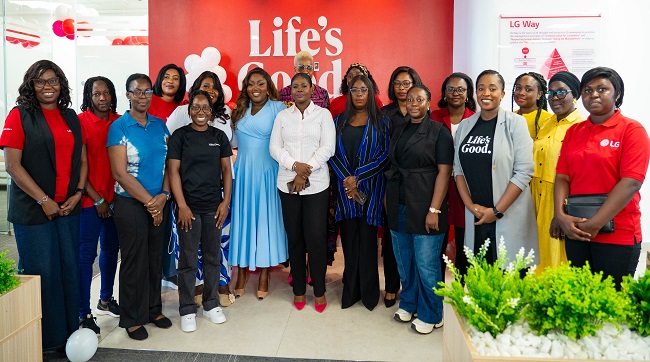
LG Electronics has reinforced its commitment to gender inclusion and women’s empowerment with the successful hosting of its 2026 Women’s Month event, themed “Women Who Power Progress,” at its Lagos office.

The event brought together accomplished women from diverse industries for a thought‑provoking panel discussion that explored their personal journeys, career-defining moments, and the inspiration behind their success in traditionally male-dominated and highly competitive fields.
The distinguished panel featured award‑winning filmmaker Mrs. Biodun Stephen, Mechanical Engineer Engr. Adeola A. Adeleke, Interior Design Leader Dr. Jennifer Chukwujekwe, and MEP Engineer Engr. Moyosore Onabolu. The session was expertly moderated by actress and entrepreneur Blessing Obasi‑Nze, who guided candid conversations around ambition, resilience, and purpose.
Throughout the discussion, panelists shared compelling stories of perseverance, the challenges they overcame, and the values that shaped their professional paths. They also offered practical advice to women navigating their careers, emphasizing the importance of resilience, continuous learning, self-belief, and mentorship as key drivers of long-term success.
A major highlight of the event was the keynote address delivered by Engr. Dr. Funmilade Akingbagbohun, the first female National Chairman of the Nigerian Institution of Mechanical Engineers (NIMechE), Mechanical Engineer, and STEM Advocate. Her keynote address tagged “Women Building, Fixing, Innovating, and Powering the Future of Technology,” delivered a compelling call to action for women, organisations, and society at large.
“Women are building, fixing, innovating, and powering the future of technology. As we mark International Women’s Day, my call to action is simple but urgent: rise, build, break barriers, and lift others along the way,” she said.
“To organisations like LG Electronics, continue to foster inclusive environments where women can thrive, lead, and innovate. To every woman here, be bold, pursue excellence, and never underestimate your potential. To the next generation, embrace STEM careers with confidence and courage. And to all of us, support one another because success is more meaningful when it is shared.”
“While we celebrate progress, we must acknowledge the challenges that still exist, from gender stereotypes and underrepresentation in leadership to the pressure of balancing multiple roles. Yet today’s woman is competent, resilient, and visionary. We are no longer waiting for opportunities; we are creating them, claiming them, and excelling in them. When women rise, organisations grow, and society progresses. There is no limit to what we, as women, can accomplish.”
Speaking at the event, the Managing Director of LG Electronics, Mr. Hyoung Sub Ji, underscored the company’s belief in the transformative power of inclusion.
“At LG Electronics, we believe that empowering women is not just a social responsibility, it is a catalyst for innovation, growth, and sustainable progress. Creating platforms where women’s voices and experiences are celebrated is essential to building a more inclusive future,” he said.
Held in a vibrant and engaging atmosphere, the event also provided a valuable networking platform for attendees to connect, celebrate achievements, and exchange ideas in a relaxed and inspiring environment.
In line with the broader International Women’s Day theme, “Give to Gain,” LG Electronics used the occasion to reaffirm its belief that investing in women strengthens communities, organisations, and society at large.
Through initiatives like “Women Who Power Progress,” LG Electronics continues to champion diversity and inclusion, celebrating women who are not only breaking barriers but actively shaping the future and powering progress across industries.

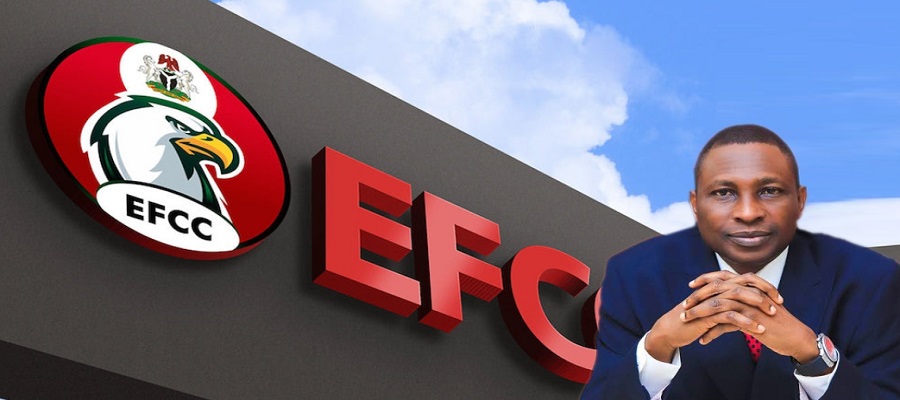
Economic and Financial Crimes Commission (EFCC) has warned of rising cryptocurrency-related crimes, revealing that illicit digital currency transactions exceeded $160 billion globally in 2025.

Ola Olukoyede, chairman, raised the concern during the inauguration of the United Nations Office on Drugs and Crime Country Programme for Nigeria (2026–2030) in Abuja.
Olukoyede, warned that digital currencies such as Bitcoin are increasingly being exploited by criminal networks to move funds across borders undetected.
According to him, advances in technology, weak regulatory frameworks, and gaps in global financial systems have created fertile ground for cyber-enabled financial crimes.
The anti-graft agency boss stressed that tackling cryptocurrency crime required coordinated national strategies, stronger institutions, and intelligence-driven enforcement.
According to him, the new UNODC programme comes at a critical time when Nigeria and the global community are facing growing threats from organised crime, cybercrime, and illicit financial flows.
Olukoyede described the initiative as a strategic platform to strengthen the rule of law, improve the criminal justice system, and protect citizens from financial and violent crimes.
Musa Aliyu, chairman of the Independent Corrupt Practices and Other Related Offences Commission (ICPC), in his comments, called for stronger inter-agency cooperation.
Aliyu said Nigeria faced interconnected threats, including violent extremism, smuggling, organised crime, and illicit financial flows, warning that no single agency could address them alone.
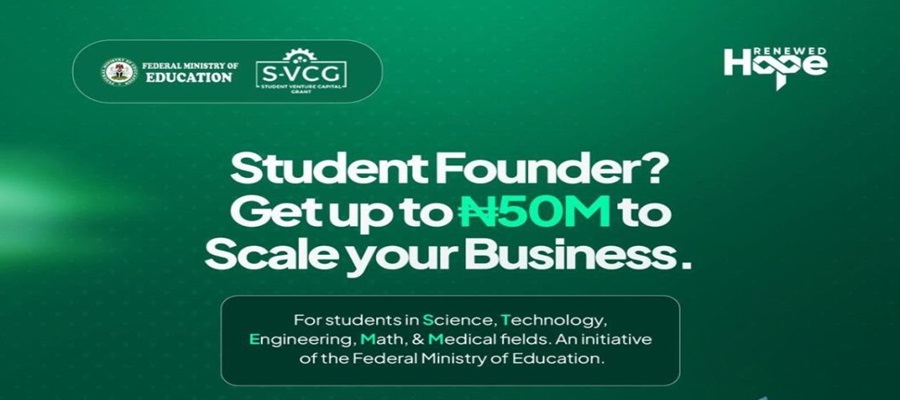
Federal government has awarded N50 million each to 45 students selected from 65 finalists drawn from public and private tertiary institutions nationwide under the Student Venture Capital Grant (S-VCG).

Tunji Alausa, minister of Education, unveiled the initiative at the weekend at the United Nations Development Programme Innovation Hub in Ikoyi, Lagos, describing it as a bold step toward positioning Nigerian youth as drivers of global innovation.
Alausa said the programme marked a significant shift in education policy, aimed at empowering students through innovation, entrepreneurship, and skills development. He noted that the grant offers equity-free funding, mentorship, incubation, and access to digital tools.
He explained that the beneficiaries emerged after a rigorous selection process involving over 30,000 applicants from more than 400 tertiary institutions across the country, culminating in a three-day bootcamp and pitch session before industry experts.
According to the minister, the initiative is designed to transform tertiary institutions into hubs of innovation and economic development, enabling students to move from ideation to commercialisation and become job creators.
“Today is not just another programme event. We are activating a new future for Nigerian students where great ideas are nurtured into impactful solutions,” he said.
Also speaking, Suwaiba Ahmad, minister of State for Education, described student entrepreneurship as a critical national strategy for job creation and economic growth. She emphasised the need for institutions to move beyond theory and support students in translating ideas into viable enterprises.
Similarly, Bosun Tijani, minister of Communications and Digital Economy, commended the initiative, urging beneficiaries to focus on building sustainable and impactful solutions rather than pursuing short-term gains.
He advised students to adopt consistency and long-term thinking, noting that small, sustained efforts could lead to meaningful innovation and societal impact.
In her goodwill message, Elsie Attafuah reaffirmed the commitment of the United Nations to supporting Nigeria’s innovation ecosystem.
She encouraged beneficiaries to refine their ideas, respond to market needs, and contribute meaningfully to national development through innovative solutions.
The minister acknowledged key partners, including the UNDP, Google, and the Bank of Industry, for their support in implementing the initiative and expanding opportunities for young innovators across Nigeria.

LG Electronics Celebrates Women Who Power Progress @ 2026 Women’s Month Event

EFCC Waxes Worriedly over $160Bn Crypto Crime Losses

Dangote Refinery Debunks Speculations on IPO

FG Awards N50m Each to 45 Students under S-VCG

NGX REGCO Fines 5 Firms N291m for Market Manipulation

Spotify’s Loud & Clear Report Reveals Over ₦60Bn Revenue for Nigerian Artists in 2025

Madonna University Taps Tech Guru Adote for Strategic Board Role

China Threatens to Shut Nigeria’s Satellite Over $11.44m Unpaid Debt

Jumia Tech Week 2026 Begins with Tech Deals on Smartphones, Electronics, and Everyday Technology

FCCPC Bans Lagos ‘No Refund’ Policy, Vows Fines and Shutdowns for Traders




 E-Financial2 days ago
CBN bars large‑ticket loan defaulters from banking services in tough new crackdown

 General News2 days ago
ARN Rejects Medical Bill over Attempt to ‘Scrap’ Profession

 Telecom2 days ago
NIGCOMSAT Supports Startups Growth with the Launch of Accelerator 3.0

 News2 days ago
Meningitis Kills a Quarter Million People a Year -Study

 Telecom2 days ago
FG Unveils Digital Economy Research Fund Scheme

 News2 days ago
Stakeholder says AI is Crucial to Nigerian Data Centres Amid Persistent Grid Collapse
- General News2 days ago
Nigeria Advances Digital Governance as NITDA takes over NGEA Portal

 General News2 days ago
Zarttech Reflects on Its Role in Changing Global Perceptions of Africa