

Broadcasting
The Future is Messy, End of Pay-Tv as We Knew It


David Abraham, founder of Wonderhood Studios on the value chain of pay-TV has offered insights into the trends observed and how audiences across Africa are changing.
Abraham who spoke at the second day of the Digital Dialogue conference, a thought-leadership platform facilitated by MultiChoice, shared his varied experience running TV channels in the UK and the US between 2001 and 2017 – explaining how the environment for content and channel providers evolved from the early days of digital TV to the much more complex internet-based distribution environment we see today.
According to Abraham, the past used to be all about a battle between free TV and service providers’ intent on building pay-walls and maintaining exclusivity over key content in order to promote ‘big basic’ monthly subscriptions and minimise monthly churn of customers.
Then came broadband as an additional service to lock in customer loyalty, followed by mobile. “The old walls of traditional pay TV are now tumbling down and what’s coming next is infinitely more fragmented, and messy”, he remarked.
Telecoms providers compete with content platforms to build customer loyalty with original content and rights in a world where global digital competition is intensifying traditional competitive boundaries yet further. The question remains whether consumers will be able to navigate between so many different providers to find the best content in this more crowded forest of choice.
Abraham reviewed the key recent trends in UK, European and US pay TV and his talk offered a look into the future – looking at potential new models such as ‘quasi-linear’ and ‘post cable’ channels; the growth of emerging market platforms such as iflix and will consider what the long-term impact of blockchain technology could be on future models of pay TV consumption and distribution.
Abraham concluded his talk by stating that although the future is uncertain, there are many opportunities for content exploration amongst African audiences: “The African continent, with its younger populations and progressive use of mobile, can both build on and leapfrog Western markets in terms of future models of content creation and distribution”.
ENDS
Note to Editors:
- For more information, please visit www.multichoiceafrica.com and follow the social media conversation on the hashtag #DigitalDialogue2018 and tag Instagram: MultiChoice Africa; Twitter: MultiChoiceAF; Facebook: MultiChoice Africa.
Speaker Bio: David Abraham – Chief Executive of Wonderhood Studios
David has spent the past three decades working at the intersection of leadership, commerce and creativity in the UK and the United States. He is regularly cited as a prominent media executive in lists published by Variety, The Telegraph, Debretts, The Evening Standard and The Guardian. As Chief Executive of Channel 4 between 2010 and 2017 he led the organisation through a prolonged period of creative and brand renewal and public remit delivery – while also posting record revenues of £1bn in 2015 and 2016. During his tenure Channel 4 ended its reliance on Big Brother and delivered a diversified schedule including shows such as Gogglebox, The Last Leg and Educating Yorkshire. The Channel also successfully delivered the largest events in its history – the London and Rio Paralympic Games and began broadcasting Formula 1 and The Great British Bake Off while winning multiple BAFTAs and Channel of the Year Awards. David has many years of experience operating at the sharp end of editorial risk-taking in all genres of TV and film including investigative journalism, news, current affairs, comedy, drama and live events. Under his leadership Channel 4 also navigated through profound digital change by building an industry leading data strategy which today engages over 15m people across the UK via its All4 platform. Prior to Channel 4, David led UKTV where he launched its biggest Channel, Dave, (which is not in fact named after himself) and spent several years in the United States running TLC, a major cable network. David was also closely involved in the digital expansion of Discovery Channels in the UK and Europe in the early 2000’s. David has recently announced that he will be launching Wonderhood Studios in June 2018 in London.
About the Digital Dialogue Conference:
The 2018 Digital Dialogue Conference is a thought leadership platform facilitated by MultiChoice Africa in order to foster a better understanding of the future direction of the video entertainment industry in Africa. This is the 5th edition of the conference which was established in 2012 to create a better understanding of Digital Migration and its impact on Africa’s digital landscape. Since then, the independent and growing platform has been critical in fostering a better understanding and building knowledge on video entertainment and Digital terrestrial markets while creating necessary conversations with thought leaders about various industry-related issues.


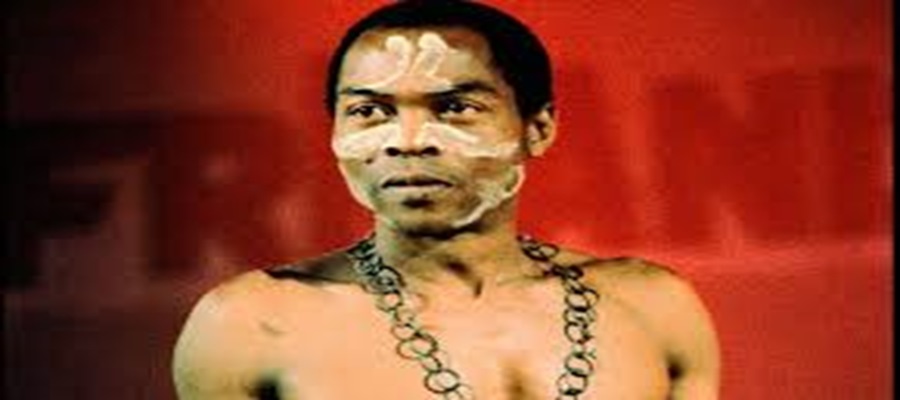
Fela Anikulapo-Kuti, simply known as Fela, legendary Nigerian musician, has made history as the first African artist to be inducted into the Rock & Roll Hall of Fame.

Fela
This is coming after he was posthumously honored with the 2026 Grammy Lifetime Achievement Award, becoming the first African artist to receive this prestigious special merit recognition.
Fela will be honoured in the early influence category this year, along with Queen Latifah, rapper MC Lyte, country rocker Gram Parsons, and Cuban singer Celia Cruz at this year’s Rock and Roll Hall of Fame event.
The honorees were revealed on Monday night in the US, during an airing of American Idol.
Sade Adu, Nigerian-born British singer, will be honoured in the performance category.
However, Shakira, Mariah Carey, Lauryn Hill, New Edition, and Pink, missed out on the final cut despite being nominated.
Over 1,200 artists, historians and music industry professionals voted to decide the honorees.
The induction ceremony will be held on 14 November at the Peacock Theatre in Los Angeles.

National Broadcasting Commission (NBC) is set to launch so-called FreeTV, with over 100 channels for news, sports, education, entertainment and children’s programming in multiple Nigerian languages.

The launch is scheduled for May 15.
Charles Ebuebu, director-general, NBC, who disclosed this, said the new platform will offer free-to-air access with no carriage fees, leveraging hybrid satellite and internet delivery via NigComSat-1R.
The new plan is not an upgrade, the NBC stressed. This is a rebuild, according to Ebuebu .
FreeTV will be true free-to-air – no encryption, no set-top box barrier.
Any DVB-T2/S2 television will work. A mobile app will extend reach to phones and tablets.
The platform will launch with over 100 national, regional and state channels across sports, news, children’s programming, education, entertainment and cultural content in Hausa, Yoruba, Igbo, Tiv, Ijaw, Edo, Fulfulde, Ibibio, Efik and Nupe – all in HD.
Crucially, the NBC has partnered with a Bulgarian firm, GARB (operating since 2006 and recognised by the European Broadcast Union), to deliver a 94 per cent-accurate audience measurement system using return-path data, app analytics, demographic panels, and Artificial Intelligence (AI).
To qualify broadcasters, must commit their channels, produce a minimum of 60 per cent local content, and promote FreeTV until January 2029.
After that, a regulated tiered rate card takes effect.
According to NBC, the strategic rationale is simple: build viewers first, monetise later.
The document further revealed that six regional production hubs in Lagos, Abuja, Port Harcourt, Enugu, Kano and Benin would function as local content factories, expected to generate 500 to 1,000 jobs per zone within two years.

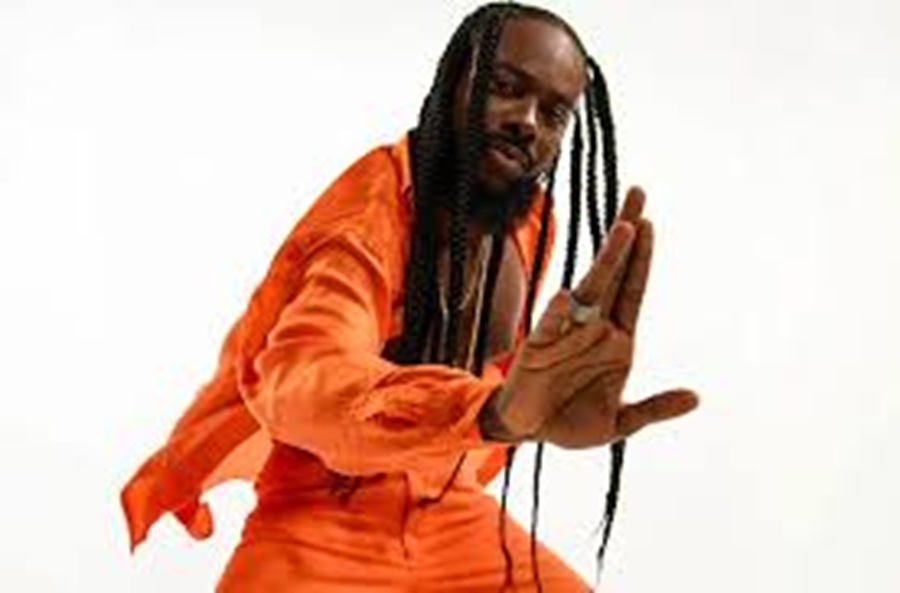
Popular Nigerian artist Adekunle Gold has lent his support to the growing youth-driven movement behind The Gathering on 100, further amplifying conversations around what is fast becoming one of the most talked-about upcoming experiences among young Nigerians.

Adekunle Gold
Known for his music and his strong connection with youth culture and evolving creative expression, Adekunle Gold’s involvement signals a deeper alignment between the event and the kind of audience it is attracting, a generation that is bold, expressive, and constantly redefining what community looks like.
While details of his involvement remain understated, his visible support adds a new layer of support and cultural relevance to the movement. In a landscape where attention is currency, endorsements from artists of his stature often act as a signal, drawing more eyes, more curiosity, and ultimately, more participation, but beyond visibility, the significance lies in what it represents.
The new father has, over the years, built a reputation for embracing creativity in its many forms, from music to visual storytelling, fashion, and digital engagement. His brand has consistently resonated with young Nigerians navigating similar spaces of self-expression and identity.
From interactive experiences like live music sessions and open performance moments to fashion runways and content creation spaces, the event is designed to blur the lines between audience and participant. It invites attendees to move beyond observation and become part of the moment.
This is a concept that closely mirrors the kind of cultural shift Adekunle Gold has been part of, one where boundaries between creator and consumer continue to dissolve.
His support also reflects a broader trend within Nigeria’s entertainment industry, where artists are increasingly engaging with youth-led initiatives that go beyond traditional performances. Rather than simply appearing on stage, they are aligning with movements that foster community, creativity, and shared experience.
For fans and attendees, this adds another dimension to what The Gathering on 100 represents.
As registrations increase and conversations expand across social platforms, the movement is gradually taking shape through the collective interest of those drawn to it.
Head to gathering.com to register.

FCCPC Denies Banning Airtime Borrowing, Blames Cartel for Misinformation

Court Suspends Enforcement of FCCPC’s Reform on Loan Apps

FG Rules Out Borrowing from IMF’s $50Bn Support Fund

CBN Introduces Overnight Financing Rate to Compete with US, EU

AfriStakes Unveils Platform to Connect SMEs with Investors

NBC Boss Urges Content Ceators to Participate in DSO

NITDA Takes Over National Digital Architecture System

DLM SPV PLC Lists ₦9.00bn AAA-Rated Medium-Term Notes on FMDQ Exchange, Sets Benchmark in Corporate Bond Market

FG Shifting Focus to “Meaningful Connectivity” to Drive Inclusion – Minister

Jury Finds Meta, Google Liable for Woman’s Social Media Addiction



 Telecom3 days ago
MTN Suspends Data, Airtime Borrowing Service over New FCCPC Lending Rules

 General News3 days ago
NiRA Unveils DNSSEC to Tackle Rising Cyber Threats, Strengthen Digital Trust

 E-Business3 days ago
NDPC Issues Critical Advisory as Hackers Target Nigeria’s Key Digital Systems

 General News3 days ago
NiRA Charges Media to Drive Nationwide Adoption of .ng Domain

 News3 days ago
Nigeria Customs Deploys AI to Cover Revenue Leaks

 Telecom3 days ago
Nokia, Orange Partner on AI-native 6G Networks

 General News3 days ago
Top 7 Reliable Virtual Cards for Running Ads in Nigeria
 E-Financial2 days ago
Court Suspends Enforcement of FCCPC’s Reform on Loan Apps