

Telecom
Google to Invest $1Bn to Support Digital Transformation in Africa

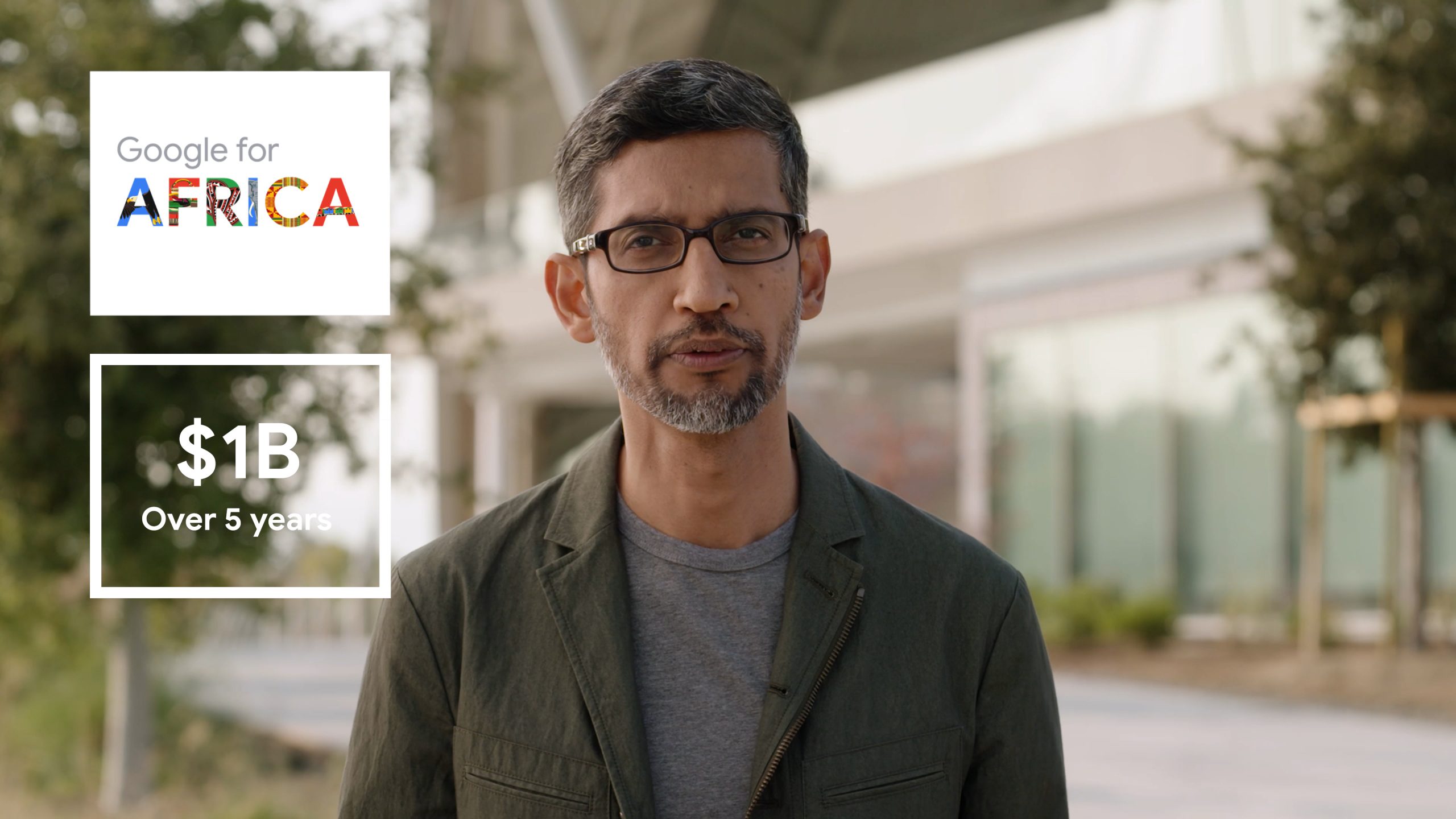
Google has announced plan to invest $1billion over 5 years to support Africa’s digital transformation.

Sundar Pichai, CEO of Google and Alphabet
The investment focuses on enabling fast, affordable internet access for more Africans; building helpful products; supporting entrepreneurship and small business; and helping nonprofits to improve lives across Africa.
The announcement was made at Google’s first ever Google for Africa event, held virtually and livestreamed.

Juliet Ehimuan. Google country manager, Nigeria speaking on Google’s investment in Sub-Saharan Africa
The planned $1billion investment announced today by Sundar Pichai, CEO of Google and Alphabet, will include:
- Enabling affordable internet access and building helpful products
- Google is building global infrastructure to help bring faster internet to more people and lower connectivity costs. The subsea cable Equiano will run through South Africa, Namibia, Nigeria and St Helena and connect the continent with Europe.
- Internet access is also hampered by the affordability of smartphones. Android has developed a device locking technology as part of the Android platform that will enable partners to offer financed devices. Google has collaborated with Kenya’s largest carrier Safaricom to support the launch of the first “Device Financing” plan in Kenya, and will expand this initiative across Africa with partners like Airtel,MTN, Orange, Transsion Holdings and Vodacom, and more. These partnerships will help millions of first-time smartphone users gain access to quality, affordable Android smartphones.
- Plus Codes are a free and open source addressing system to provide addresses for everyone. The government of The Gambia has adopted this in providing addresses for residents and businesses across the capital Banjul and are now scaling to the rest of the country. Plus codes will expand to South Africa, Kenya and other countries in partnership with governments and non-governmental organisations.
- Investments in entrepreneurship and technology. Through a Black Founders Fund, Google will invest in Black-led startups in Africa by providing cash awards and hands-on support. This is in addition to Google’s existing support through the Google for Startups Accelerator Africa, which has helped more than 80 African startups with equity-free finance, working space and access to expert advisors over the last three years. Google also announced the launch of an Africa Investment Fund. Through this fund, the company will invest $50M in startups and provide them with access to Google’s employees, network, and technologies to help them build meaningful products for their communities.

Ruth Porat, chief financial officer of Alphabet Inc. and Google Inc
- Empowering businesses as they continue or embark on their digital transformation: In collaboration with the non-profit organisation Kiva, Google is providing $10M in low-interest loans to help small businesses and entrepreneurs in Ghana, Kenya, Nigeria and South Africa get through the economic hardship created by COVID-19.
- Renewed funding for nonprofits.org is expanding its commitment to support nonprofits working to improve lives across Africa, with $40M to help more partners who are responding to challenges they see first hand in their communities – innovators like the Airqo team at Makerere University, who use AI and sensors to monitor poor air quality, a leading cause of premature death. Google is providing $3M in new grant funding to expand this pioneering work from Kampala across 10 cities in 5 countries on the continent.
The announcement expands Google’s ongoing support for Africa’s digital transformation and entrepreneurship. In 2017, Google launched its Grow with Google initiative with a commitment to train 10 million young Africans and small businesses in digital skills. To date, Google has trained over 6 million people across 25 African countries, with over 60% of participants experiencing growth in their career and/or business as a result.

Mariam Abdullahi. Director | Android Platform Partnerships | Africa at Google
Google has also supported more than 50 nonprofits across Africa with over $16million of investment, and enabled hundreds of millions of Africans to access internet services for the first time through Android.
Sundar Pichai, CEO of Google and Alphabet, said: “We’ve made huge strides together over the past decade — but there’s more work to do to make the internet accessible, affordable and useful for every African.
“Today I’m excited to reaffirm our commitment to the continent through an investment of $1B over five years to support Africa’s digital transformation to cover a range of initiatives from improved connectivity to investment in startups.”
Nitin Gajria, Managing Director for Google in Africa added: “I am so inspired by the innovative African tech startup scene. In the last year we have seen more investment rounds into tech startups than ever before.
“I am of the firm belief that no one is better placed to solve Africa’s biggest problems than Africa’s young developers and startup founders. We look forward to deepening our partnership with, and support for, Africa’s innovators and entrepreneurs.”
Hon. Minister Stella Tembisa Ndabeni-Abrahams, Minister of Small Business Development, South Africa said: “I am happy to note that Google has been active in supporting Small to Medium Enterprises, dedicating even more resources to this sector, since the start of the Covid-19 pandemic. In the last 12 months, Google has helped close to 500,000 African businesses get online and reach new customers.”

Nitin Equiano
Providing a platform for African cultural treasures and collections
Since 2012, the Google Arts & Culture team has partnered with institutions across the continent to preserve and promote their collections, providing a free online platform which anyone around the world can access.
The result is hundreds of expertly-curated stories about Africa by Africans. This includes a new project called ‘Cradle of Creativity’ dedicated to the creative history and heritage of Africa.
In collaboration with the Yemisi Shyllon Museum of Art in Nigeria and the Origins Centre in South Africa, people across the globe can explore more than five hundred high resolution images, sixty expertly-curated stories with audio narrations, as well as Street View virtual tours, helping to showcase Africa’s creative talent and heritage.


Telecom
SERAP Demands Probe of Disappearance of N27.9Bn from USPF, Calls Out Minister, Secretary of Fund

Socio-Economic Rights and Accountability Project (SERAP) has called on President Bola Ahmed Tinubu to immediately order an investigation into the alleged disappearance or diversion of N26.9 billion from the Universal Service Provision Fund (USPF).

SERAP warned the scandal could worsen Nigeria’s digital divide and deny millions access to basic connectivity.
In a letter dated May 9, 2026, and signed by Kolawole Oluwadare, deputy director, SERAP urged the president to direct Dr. Bosun Tijani, minister of Communications, Innovation and Digital Economy, as well as Yomi Arowosafe, secretary of the USPF, to explain the whereabouts of the funds.
The organisation also asked Lateef Fagbemi (SAN), attorney general of the Federation and minister of Justice, alongside anti-corruption agencies, to investigate the allegations and prosecute anyone found culpable.
SERAP said the accusations were contained in the 2022 audited report by the Auditor-General of the Federation, published on September 9, 2025.
According to the group, the report exposed several financial irregularities, including unremitted operating surpluses, undocumented expenditures, questionable contract awards, and payments for services allegedly not rendered.
“The USPF is vital to expanding telecommunications access in underserved and rural communities, and any diversion of its funds directly undermines its mandate to bridge the digital divide, support infrastructure development, and promote inclusive connectivity,” the letter stated.
Among the allegations cited by SERAP was the failure of the USPF to remit over ₦13.8 billion in operating surplus between 2016 and 2019.
The Auditor-General reportedly warned that the money may have been diverted and recommended recovery and remittance to the treasury.
The report also allegedly questioned over ₦11.7 million claimed for international training in October 2020 without supporting documents such as invitations, invoices, or certificates of participation.
SERAP noted that the spending was especially suspicious because of travel restrictions during the COVID-19 lockdown.
Other claims included contracts worth ₦2.8 billion allegedly awarded without due approval, ₦8 million paid to a non-existent fund manager, ₦6.4 billion spent on projects not captured in the approved 2020 budget, and over ₦2.8 billion reportedly spent between January and May 2021 without documentation.
SERAP further alleged that the USPF failed to collect and remit over ₦333 million in stamp duties and did not deduct more than ₦144 million in withholding tax from consultant payments.
It also cited payments exceeding ₦390 million to consultants for projects allegedly lacking proof of execution.
According to the group, mismanagement of the fund has serious implications for millions of Nigerians, especially residents of rural and underserved areas who depend on the USPF to access telecom infrastructure and internet services.
“Poor access to reliable and affordable internet connectivity directly affects Nigerians’ ability to exercise a range of fundamental human rights, including freedom of expression, access to information, education, and participation in public affairs,” SERAP said.
The organisation warned that lack of accountability could deepen inequality, limit economic opportunities, and further exclude vulnerable communities from essential digital services.
SERAP gave the federal government seven days to act on its demands or risk legal action aimed at compelling the government, the Nigerian Communications Commission (NCC), and the USPF to respond in the public interest.
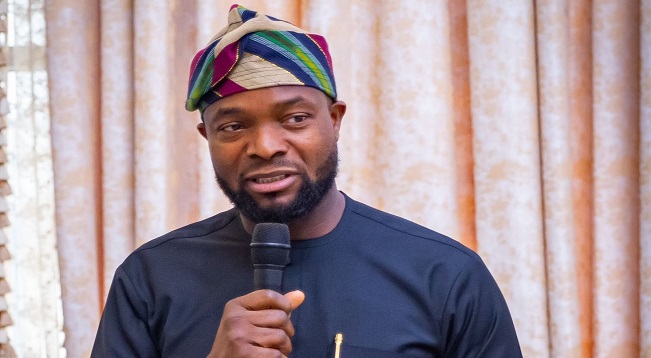
Federal Government has warned telecommunications operators to improve service quality or face regulatory sanctions, stating that recent reforms have stabilized the sector and removed excuses for poor network performance.

Telcos
Minister of Communications, Innovation and Digital Economy, Dr. Bosun Tijani, issued the warning in a statement on Sunday, emphasizing that Nigeria’s connectivity gaps were largely structural, driven by years of underinvestment and constraints on operators.
The government has tackled these problems through long-term infrastructure planning and immediate sector-stabilization measures aimed at restoring sustainability and investor confidence.
These long-term reforms focus on expanding infrastructure through new fibre deployment and tower rollout initiatives designed to close critical gaps in the digital backbone.
Funding has been secured with support from the World Bank for Project BRIDGE, alongside additional investments in satellite capacity to boost nationwide coverage. These interventions are expected to transform connectivity over the next two to five years, enabling businesses and households to access reliable high-speed internet beyond unstable mobile connections.
“When we assumed office, it was clear that Nigeria’s connectivity challenges were structural, driven by years of underinvestment in infrastructure and constraints that limited the ability of operators to deliver quality service,” the Minister noted.
“We have addressed this on two fronts. First, the long-term structural solution. We have secured funding, led by the World Bank, and established the framework for a special purpose vehicle with Project BRIDGE, to deliver nationwide open access fibre infrastructure.
Deployment of fibre will commence, alongside new tower rollouts through NUCAP, before the end of the year even as we also expand our satellite capability.”
Regarding immediate interventions, the government has stabilized the sector through tariff adjustments, the designation of telecom infrastructure as critical national infrastructure, tax harmonization efforts, and broader macroeconomic reforms.
These changes have restored operator profitability and created a more transparent, market-driven environment, giving telcos the capacity to invest in network improvements.
“It is now the responsibility of telecom operators such as MTN Nigeria, Airtel Nigeria, Globacom, and 9mobile to take all necessary steps to resolve network challenges and deliver the level of service Nigerians expect,” the minister insisted.
The Nigerian Communications Commission (NCC) has been fully empowered to monitor performance, enforce standards, and ensure compliance, with sanctions expected for defaulting operators.
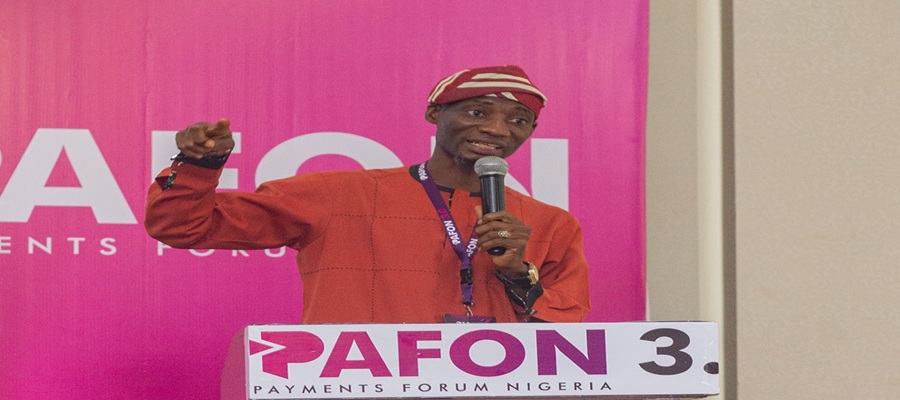
Dr. Obioha Oti, National President of the Association of Mobile Money and Bank Agents in Nigeria (AMMBAN), has described agency banking as Nigeria’s most critical last-mile channel for achieving meaningful financial inclusion, stressing that millions of Nigerians, particularly in rural and underserved communities, remain financially excluded despite notable progress in the sector.

PAFON 3.0
Speaking at the third edition of the Payments Forum Nigeria (PAFON 3.0), themed “Fair Digital Payments as a Catalyst for Deepening Financial Inclusion in Nigeria,” Oti, represented by Alhaji Yusuf Adeyemo, vice president of the Association of Mobile Money and Bank Agents in Nigeria (AMMBAN), said agency banking has become Nigeria’s most practical and scalable solution for bridging the persistent financial access gap caused by poor infrastructure, low financial literacy, trust deficits, and high service delivery costs.
According to him, without effective last-mile financial access, Nigeria’s financial inclusion ambitions may remain unattainable.
Oti noted that through extensive agent networks, Nigerians now enjoy convenient access to critical financial services including cash deposits, withdrawals, transfers, bill payments, account opening, and other essential banking products, adding that beyond transactional services, agency banking offers trust, human interaction, and proximity-factors that purely digital channels cannot fully replicate.
“Agency banking has emerged as the most practical, scalable, and human-centred solution,” he stated, adding that agents serve as trusted financial intermediaries within local communities.
Highlighting AMMBAN’s contributions, Oti said the association has played a central role in strengthening Nigeria’s financial inclusion ecosystem through policy advocacy, professional training, rural agent expansion, fraud awareness campaigns, consumer protection initiatives, and strategic collaborations involving banks, fintechs, telecom operators, and mobile money providers.
He further noted that the agency banking sector has created millions of jobs and unlocked significant economic opportunities nationwide.
Oti acknowledged the contributions of major ecosystem drivers, including the Central Bank of Nigeria (CBN), which he said continues to provide regulatory support through financial inclusion frameworks, consumer protection policies, and interoperability initiatives.
He also credited the Shared Agent Network Expansion Facilities (SANEF) for accelerating agent expansion across the country, while Enhancing Financial Innovation and Access (EFInA) was recognized for its support through research, innovation funding, and data-driven insights.
Despite these achievements, Oti warned that the sector continues to grapple with significant obstacles such as liquidity shortages, network instability, fraud risks, poor agent profitability, infrastructure deficits, and overlapping regulations.
He stressed that these challenges must be urgently addressed to sustain growth and deepen inclusion. “For inclusion to truly deepen, digital payments must be affordable, reliable, transparent, and accessible to all Nigerians,” he said, insisting that fairness in digital payments is essential to closing the financial inclusion gap.
He warned that unfair pricing structures, unstable systems, and exclusionary payment models could further marginalize vulnerable populations.
Looking ahead, Oti urged stakeholders across the financial ecosystem to prioritize stronger collaboration, improved agent profitability, infrastructure development, enhanced financial literacy, increased financing access for agents, and supportive regulatory frameworks.
He projected that Nigeria’s financial inclusion future will be “phygital,” combining physical agent networks with digital platforms to create seamless financial access.
According to him, agents are rapidly evolving beyond transaction points into community-based financial service hubs capable of driving grassroots economic development. “Agency banking is no longer just a distribution channel; it is the backbone of financial inclusion in Nigeria,” Oti declared.
He reaffirmed AMMBAN’s commitment to working with regulators, financial institutions, and technology providers to strengthen the ecosystem, empower underserved populations, and build a more inclusive national financial system.

Mastercard, BMONI Launch Multi-Currency Payment Cards in Nigeria

NCDC Enhances Monitoring, Releases Advisory amid Rising Global Hantavirus Cases

Metro Digital, Nigerian Firm Accuses Multichoice Of Refusal to Obey Court Judgements

SERAP Demands Probe of Disappearance of N27.9Bn from USPF, Calls Out Minister, Secretary of Fund

Moniepoint Partners GDG Lagos, Women Techmakers to Empower the Next Generation of Women Architects in Tech

Kaspersky Discovers Vulnerability in Qualcomm Snapdragon Chips that can Lead to Data Loss & Device Compromise

MTN Suspends Data, Airtime Borrowing Service over New FCCPC Lending Rules

Bank Customers to Pay N1,500 for ATM Card Issuance, Replacement – CBN

FCCPC Licenses 5 Firms for Airtime, Data Lending as Telcos Step Aside

ATM Card Fees Jump to ₦1,500 as CBN Scraps Maintenance Charges




 E-Financial1 day ago
Transcorp Excites Shareholders with ₦20.3 Billion Dividend @20th AGM

 E-Financial1 day ago
Africa Prudential Launches Sabivest to Boost Digital Investment Access

 Telecom1 day ago
PAFON 3.0: Agency Banking Key to Reaching Millions of Unbanked Nigerians – AMMBAN

 General News1 day ago
Interswitch Inducts 3rd Interns into Its Developer Academy

 General News1 day ago
PIN Records 3.07Bn Media Reach, Expands Digital Rights Impact Across Africa in 2025

 General News1 day ago
UK Reaffirms Commitment to Press Freedom, Science Journalism Training for Nigerian Media
 E-Financial2 hours ago
Mastercard, BMONI Launch Multi-Currency Payment Cards in Nigeria

 Telecom2 hours ago
MTN, Airtel, Glo Under Pressure as FG Demands Better Service Delivery