

Telecom
Google to Invest $1Bn to Support Digital Transformation in Africa

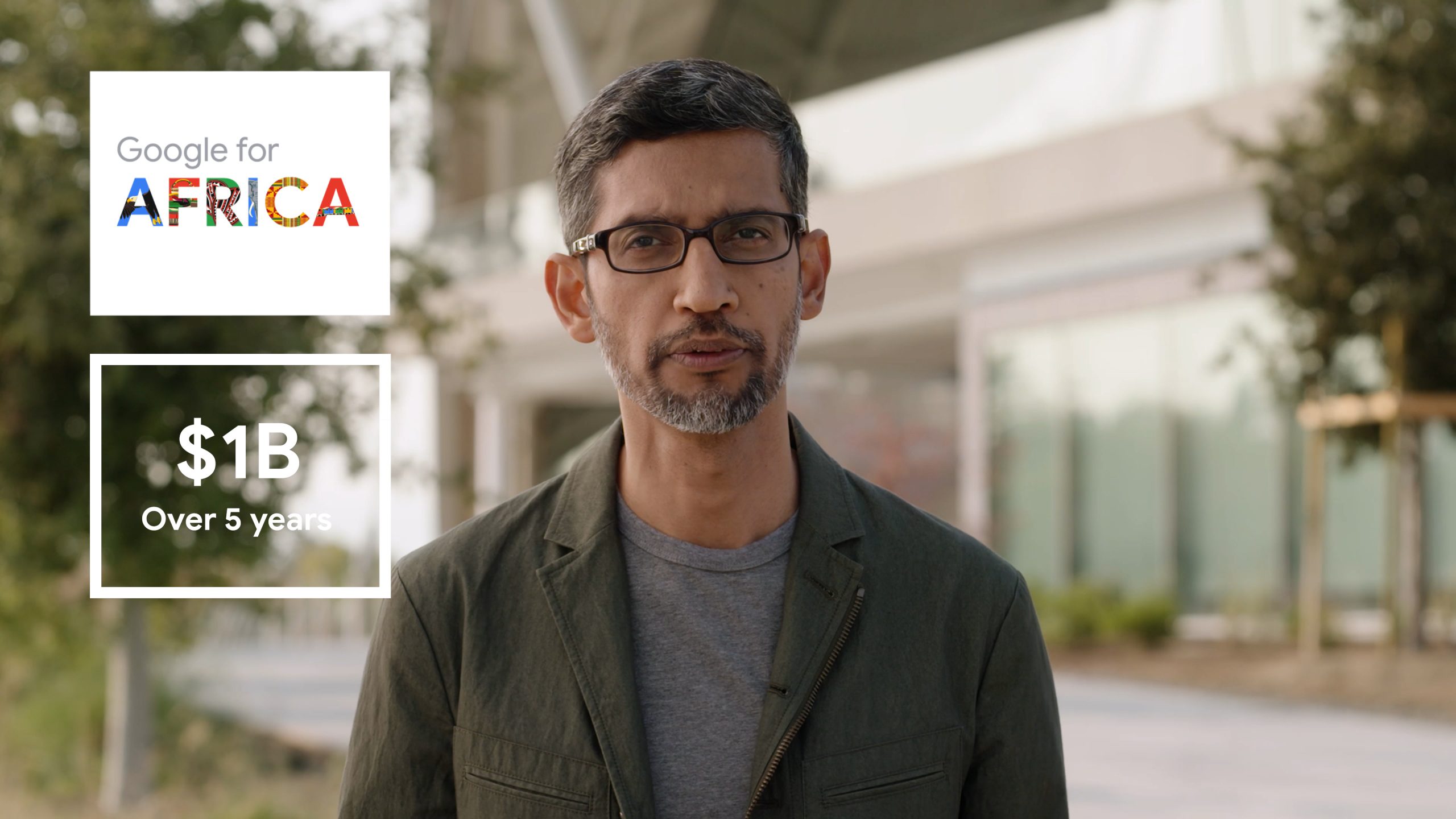
Google has announced plan to invest $1billion over 5 years to support Africa’s digital transformation.

Sundar Pichai, CEO of Google and Alphabet
The investment focuses on enabling fast, affordable internet access for more Africans; building helpful products; supporting entrepreneurship and small business; and helping nonprofits to improve lives across Africa.
The announcement was made at Google’s first ever Google for Africa event, held virtually and livestreamed.

Juliet Ehimuan. Google country manager, Nigeria speaking on Google’s investment in Sub-Saharan Africa
The planned $1billion investment announced today by Sundar Pichai, CEO of Google and Alphabet, will include:
- Enabling affordable internet access and building helpful products
- Google is building global infrastructure to help bring faster internet to more people and lower connectivity costs. The subsea cable Equiano will run through South Africa, Namibia, Nigeria and St Helena and connect the continent with Europe.
- Internet access is also hampered by the affordability of smartphones. Android has developed a device locking technology as part of the Android platform that will enable partners to offer financed devices. Google has collaborated with Kenya’s largest carrier Safaricom to support the launch of the first “Device Financing” plan in Kenya, and will expand this initiative across Africa with partners like Airtel,MTN, Orange, Transsion Holdings and Vodacom, and more. These partnerships will help millions of first-time smartphone users gain access to quality, affordable Android smartphones.
- Plus Codes are a free and open source addressing system to provide addresses for everyone. The government of The Gambia has adopted this in providing addresses for residents and businesses across the capital Banjul and are now scaling to the rest of the country. Plus codes will expand to South Africa, Kenya and other countries in partnership with governments and non-governmental organisations.
- Investments in entrepreneurship and technology. Through a Black Founders Fund, Google will invest in Black-led startups in Africa by providing cash awards and hands-on support. This is in addition to Google’s existing support through the Google for Startups Accelerator Africa, which has helped more than 80 African startups with equity-free finance, working space and access to expert advisors over the last three years. Google also announced the launch of an Africa Investment Fund. Through this fund, the company will invest $50M in startups and provide them with access to Google’s employees, network, and technologies to help them build meaningful products for their communities.

Ruth Porat, chief financial officer of Alphabet Inc. and Google Inc
- Empowering businesses as they continue or embark on their digital transformation: In collaboration with the non-profit organisation Kiva, Google is providing $10M in low-interest loans to help small businesses and entrepreneurs in Ghana, Kenya, Nigeria and South Africa get through the economic hardship created by COVID-19.
- Renewed funding for nonprofits.org is expanding its commitment to support nonprofits working to improve lives across Africa, with $40M to help more partners who are responding to challenges they see first hand in their communities – innovators like the Airqo team at Makerere University, who use AI and sensors to monitor poor air quality, a leading cause of premature death. Google is providing $3M in new grant funding to expand this pioneering work from Kampala across 10 cities in 5 countries on the continent.
The announcement expands Google’s ongoing support for Africa’s digital transformation and entrepreneurship. In 2017, Google launched its Grow with Google initiative with a commitment to train 10 million young Africans and small businesses in digital skills. To date, Google has trained over 6 million people across 25 African countries, with over 60% of participants experiencing growth in their career and/or business as a result.

Mariam Abdullahi. Director | Android Platform Partnerships | Africa at Google
Google has also supported more than 50 nonprofits across Africa with over $16million of investment, and enabled hundreds of millions of Africans to access internet services for the first time through Android.
Sundar Pichai, CEO of Google and Alphabet, said: “We’ve made huge strides together over the past decade — but there’s more work to do to make the internet accessible, affordable and useful for every African.
“Today I’m excited to reaffirm our commitment to the continent through an investment of $1B over five years to support Africa’s digital transformation to cover a range of initiatives from improved connectivity to investment in startups.”
Nitin Gajria, Managing Director for Google in Africa added: “I am so inspired by the innovative African tech startup scene. In the last year we have seen more investment rounds into tech startups than ever before.
“I am of the firm belief that no one is better placed to solve Africa’s biggest problems than Africa’s young developers and startup founders. We look forward to deepening our partnership with, and support for, Africa’s innovators and entrepreneurs.”
Hon. Minister Stella Tembisa Ndabeni-Abrahams, Minister of Small Business Development, South Africa said: “I am happy to note that Google has been active in supporting Small to Medium Enterprises, dedicating even more resources to this sector, since the start of the Covid-19 pandemic. In the last 12 months, Google has helped close to 500,000 African businesses get online and reach new customers.”

Nitin Equiano
Providing a platform for African cultural treasures and collections
Since 2012, the Google Arts & Culture team has partnered with institutions across the continent to preserve and promote their collections, providing a free online platform which anyone around the world can access.
The result is hundreds of expertly-curated stories about Africa by Africans. This includes a new project called ‘Cradle of Creativity’ dedicated to the creative history and heritage of Africa.
In collaboration with the Yemisi Shyllon Museum of Art in Nigeria and the Origins Centre in South Africa, people across the globe can explore more than five hundred high resolution images, sixty expertly-curated stories with audio narrations, as well as Street View virtual tours, helping to showcase Africa’s creative talent and heritage.



National Agency for Science and Engineering Infrastructure (NASENI) has signed a Memorandum of Understanding (MoU) with the Rural Electrification Agency (REA) to promote locally manufactured renewable energy technologies under the Federal Government’s ‘Nigeria First Policy’.

L-R: EVC/CEO, National Agency for Science and Engineering Infrastructure, Mr. Khalil Suleiman Halilu; Director-General of the Bureau of Public Procurement (BPP), Dr. Adebowale Abraham Adedokun; and Dr. Abba Abubakar Aliyu, Managing Director and Chief Executive Officer of the Rural Electrification Agency (REA), at the signing of the MoU on implementation of Nigeria First Policy for offtake of NSSENI’s renewable energy products for rural electrification projects held on Friday, June 19, 2026 at BPP’s office in Abuja.
The agreement signing was facilitated by the Director-General of the Bureau of Public Procurement (BPP), Dr. Adebowale Abraham Adedokun at the BPP headquarters in Abuja on Friday, June 19, 2026.
Speaking at the event, the Executive Vice Chairman/CEO of NASENI, Mr. Khalil Suleiman Halilu, said the Agency is focused on linking research, production, and commercialization to ensure that innovations are translated into market-ready products.
He said “NASENI would scale up renewable energy production, including solar panels and streetlights, through initiatives such as DefFrontier, to strengthen local manufacturing and reduce import dependence, adding that the Agency will meet the renewable energy requirements of REA.”
Instead of continuous importation of technologies, machines and equipment for producing renewable energy solutions, NASENI by this MoU will be committed to local manufacturing and domestication of the technologies, equipment and other ways and means of proliferation of renewable resource in the country and to increase the nation’s off-grid energy solutions.
The Managing Director/CEO of REA, Dr. Abba Abubakar Aliyu, described the relationship with NASENI as a strategic partnership aimed at building Nigeria’s renewable energy ecosystem through local production and deployment.
He stated that “while NASENI provides the manufacturing and technological capacity for renewable equipment, REA will focus on deploying solutions to expand electricity across rural areas.”
Meanwhile, the Director-General of BPP, Dr. Adebowale Abraham Adedokun, said the Nigeria First Policy, exemplified by this agreement, is aimed at strengthening local content, ensuring value for money, and promoting accountability in public procurement.
He emphasized that implementation of the agreement will be performance-based, with strict monitoring to ensure compliance and measurable outcome. He added that the MoU is expected to deepen collaboration between NASENI and REA in expanding renewable energy and reducing dependence on imported technologies.
The MoU will be implemented through NASENI’s subsidiary company, NASENI Devfrontier Green Energy FZE and REA limited liability company, RAMco.The two Federal Government agencies seek to establish a strategic collaboration under which REA shall offtake PV modules, inverters, energy storage batteries of NASENI-Devfrontier Green Energy FZE directly or through its approved distribution companies/assembly and manufacturing factory.
As part of the agreement, REA shall provide institutional visibility to enable NASENI participate in electrification projects; facilitate opportunities for engagements between NASENI and eligible developers/contractors under REA programs; ensure that such facilitation is consistent with applicable procurement, local content, and transparency requirements; and also collaborate with NASENI in promoting standardized, high-quality PV technologies across its programme portfolio.
Telecom
TikTok, ICC Gather Nigeria’s Entrepreneurs to Drive Small Business Growth and Digital Transformation
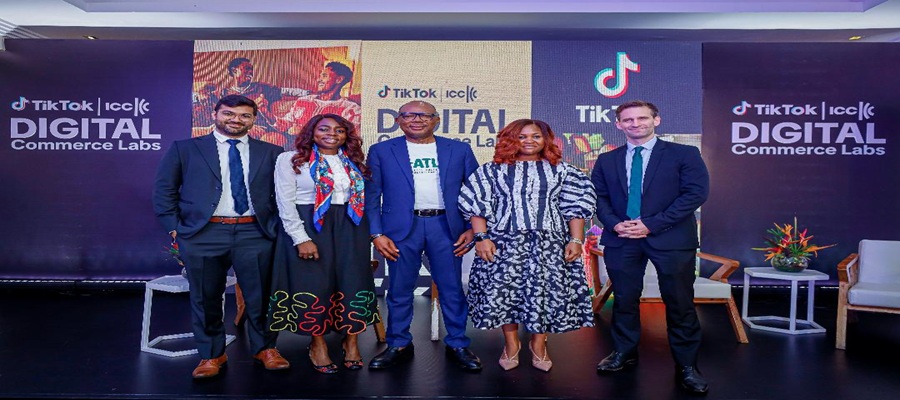
TikTok, in collaboration with the International Chamber of Commerce (ICC), on Thursday convened hundreds of entrepreneurs, small business owners, digital creators and industry stakeholders in Lagos for a flagship Digital Commerce Labs (DCL) event aimed at accelerating digital skills development and economic inclusion across Sub-Saharan Africa.

TikTok
The event, supported by the National Information Technology Development Agency (NITDA) and the Lagos State Employment Trust Fund (LSETF), brought together participants from across Nigeria’s business and technology ecosystem to explore how digital platforms can be leveraged to scale enterprises, improve market access and drive job creation.
Speaking at the event, organisers said the initiative marks the beginning of a broader programme designed to train thousands of small and medium-sized enterprises (SMEs) across the region in digital commerce skills through both online and physical learning platforms.
According to TikTok, the partnership reflects its commitment to supporting small businesses and strengthening Africa’s growing digital economy.
“Digital commerce is reshaping how businesses grow across Sub-Saharan Africa, and Nigerian entrepreneurs are at the heart of that shift,” said Tokunbo Ibrahim, Acting Head of Government Relations and Public Policy, Sub-Saharan Africa, TikTok.
He said the initiative would ensure that small businesses benefit from emerging opportunities in social commerce and digital trade.
The Director-General of NITDA, Kashifu Inuwa Abdullahi, said digital platforms have evolved beyond entertainment and are now key drivers of economic growth and innovation.
He noted that Nigeria’s youth population and growing digital adoption position the country to benefit significantly from the expansion of online commerce and creator-led businesses.
“At NITDA, our vision is to make Nigeria a digitally enabled nation, fostering inclusive economic development through technological innovation,” he said.
The ICC Deputy Secretary General, Julian Kassum, described the programme as a strategic effort to equip small businesses with tools needed to compete in the global digital economy.
He said the Digital Commerce Labs initiative would help expand opportunities for trade, entrepreneurship and employment.
The Lagos State Employment Trust Fund (LSETF) also announced support for the programme through capacity-building training in financial literacy, business structuring, record keeping, taxation and legal advisory services. It said participating businesses would gain access to funding opportunities after completing the programme.
Data presented at the event showed that Nigeria’s social commerce sector is projected to reach $2.04 billion in 2025 and nearly $4 billion by 2030, while Africa’s wider market is expected to grow to $9.43 billion within the same period.
Speakers at the event noted that social media platforms have become central to business growth in Nigeria, with many SMEs relying exclusively on digital channels to reach customers and drive sales.
The programme also featured keynote presentations, business training sessions, and a creator economy spotlight where Nigerian entrepreneurs shared experiences on building brands and scaling businesses through digital platforms such as TikTok.
Organisers said the initiative is expected to strengthen digital literacy, expand market access for SMEs, and deepen Nigeria’s participation in the global digital economy.
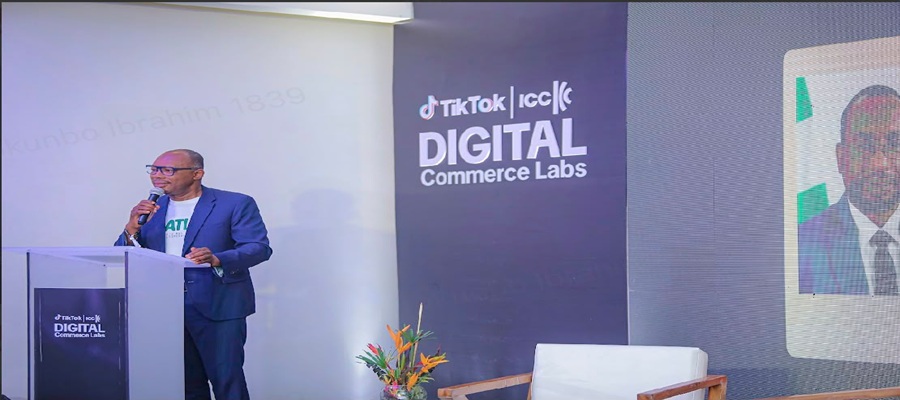
National Information Technology Development Agency (NITDA) and TikTok have launched a strategic partnership aimed at equipping Nigerian Small and Medium Enterprises (SMEs) with digital commerce skills, tools, and opportunities to compete effectively in the digital economy.

NITDA
The partnership was unveiled at the launch of the TikTok Digital Commerce Labs Programme for SMEs, held in Lagos, where stakeholders from government, the private sector, entrepreneurship support organisations, and the digital ecosystem gathered to explore innovative pathways for empowering Nigerian businesses through technology.
Speaking at the event, the Director-General and Chief Executive Officer of NITDA, Kashifu Inuwa Abdullahi, CCIE, represent at the event by Dr Aristotle Onumo, Director Stakeholder Management and Partnerships, described digital commerce as one of the most powerful drivers of economic inclusion and business growth in the modern economy, noting that access to digital skills has become increasingly critical for the survival and competitiveness of businesses.
According to the NITDA boss, the future of commerce is increasingly digital, and entrepreneurs who embrace technology will be better positioned to access larger markets, increase productivity, and create sustainable wealth.
He observed that while Nigeria is blessed with millions of hardworking and innovative entrepreneurs, many small businesses still lack the digital capabilities required to fully participate in the opportunities offered by the digital economy.
“Today, a young entrepreneur with a smartphone can reach customers beyond geographical boundaries, build a brand, market products globally, and create economic opportunities that were previously unimaginable. Our responsibility is to ensure that every entrepreneur, regardless of location, has access to the digital skills and tools needed to succeed in this new economy,” he said.
A major highlight of the event was the announcement of a collaborative programme between NITDA and TikTok designed to extend digital commerce training to SMEs across the country.
As part of the initiative, TikTok has committed an initial investment of approximately US$20,000 to support a pilot Train-the-Trainer Programme, which will leverage NITDA’s Digital Literacy for All (DL4ALL) networks to deliver digital commerce training to entrepreneurs, particularly those in remote and underserved communities.
Inuwa commended TikTok for its commitment to supporting entrepreneurship and digital inclusion in Nigeria, describing the initiative as a practical example of how technology platforms can contribute meaningfully to economic empowerment and national development.
He noted that the collaboration aligns with NITDA’s Strategic Roadmap and Action Plan (SRAP 2.0), particularly the Agency’s commitment to achieving widespread digital literacy, promoting innovation, supporting entrepreneurship, and fostering inclusive economic growth.
The DG stressed that technology should not merely be viewed as a tool for communication and entertainment but as a platform for creating opportunities, generating income, and transforming lives.
“Technology is most powerful when it empowers the least connected, creates opportunities for the underserved, and transforms potential into prosperity,” he stated.
Industry stakeholders at the event described the initiative as timely, especially at a period when businesses are increasingly leveraging digital platforms to connect with customers, expand operations, and access new markets.
The TikTok Digital Commerce Labs Programme is expected to strengthen digital capabilities among SMEs, improve access to digital opportunities, and contribute to the growth of Nigeria’s digital economy by enabling entrepreneurs to harness the power of technology for business development.
The launch reinforces NITDA’s vision to building a digitally empowered Nation fostering inclusive economic development through technological innovation where individuals, startups, and businesses can leverage technology to create value, generate employment, and contribute to national prosperity.
As Nigeria continues its journey towards becoming a leading digital economy in Africa, collaborations such as the NITDA-TikTok partnership are expected to play a significant role in empowering citizens, fostering innovation, and expanding economic opportunities for millions of Nigerians.

FG Bans Use of Gmail, Other Personal Emails for Civil Service Operations

Indwelt Studios Seeks Increased Awareness @ World Sickle Cell Day

Standard Bank Targets $15.4b SME Growth in Nigeria, Others with Trade Expansion Drive

Payaza Launches AI-powered Storefront Platform to Drive Cross-border Commerce

NAICOM’s 18 Months Management Spill @ African Alliance Ends

CBN Extends PoS Geo-Fencing Enforcement Deadline to August 2026

London Strengthens Global Investment Ties with Africa @ First Ever London-Africa Business Summit

FG Targets Alleged N3tn Capital Flight, Opens Airtime Credit Market to Nigerian Fintechs

NCC Drafts New Rules for Virtual Mobile Operators

Japan, UNESCO Boost Digital Learning in 15 CoEs with Donation of ICT Equipment




 E-Financial3 days ago
FG Issues Transition Guidelines for Tax Acts 2025

 E-Financial2 days ago
How Fraudsters Stole N134Bn from Banks, Customers in 6 Years – CBN

 Telecom3 days ago
Telecom Regulator, NCC, Digital Encode, AfriGoPay Support eBusinesslife Girls In ICT Campaign

 Telecom3 days ago
Mobile Technologies Boost Africa’s Economy by $240B in 2025, Commences a New Phase of Digital Transformation

 General News2 days ago
Police Uncovers N7.7Bn Telecom Data Fraud Syndicate, Recovers Assets Worth Millions

 Telecom2 days ago
TikTok, ICC Gather Nigeria’s Entrepreneurs to Drive Small Business Growth and Digital Transformation
 E-Business2 days ago
Payaza Launches AI-powered Storefront Platform to Drive Cross-border Commerce

 Telecom2 days ago
How a New NITDA-TikTok Partnership Could Transform Thousands of Nigerian Businesses