

E-Financial
Agba Calls for Fair Bitcoin Regulation


Clem Agba, minister of state for budget and national planning has reportedly said uncertainty in Bitcoin regulation risks depriving government and citizens of plugging into opportunities.

Agba also called for friendly Bitcoin regulation that would promote innovation and allow citizens to plug into the network’s opportunities rather than suppress usage of the possibilities enabled by the technology, reported Bloomberg.
In February, the Central Bank of Nigeria (CBN) issued a reminder that it had banned financial institutions from facilitating bitcoin-related transactions back in 2017 and ordered them to shut down accounts that had transacted with cryptocurrency exchanges since.
The central bank said the decision was necessary to prevent crimes and mitigate risks.
As the renewed ban came into effect, trading volume in peer-to-peer (P2P) markets skyrocketed quickly.
By April, P2P bitcoin trading in Nigeria had increased by 27% as citizens flocked to the alternative bitcoin on-ramp. Although the CBN had banned financial institutions from dealing with BTC, local media outlet Today AG reported that the central bank did not impose restrictions on Nigerians’ bitcoin usage.
That subtle difference, paired with Bitcoin’s decentralized and uncensorable nature, allowed citizens to work around the ban on exchanges and resort to pure P2P solutions to acquire BTC.
Despite being able to bypass the bitcoin trading ban, Nigerians pointed out the move by the CBN was likely related to the “End SARS” protests, which in November of last year set out to try and put a halt to police brutality in the country.
The CBN ordered banks to freeze protesters’ accounts in hopes to stop the campaigns; however, Bitcoin provided an escape valve in that case as well, enabling donations and funding to continue.
“There’s a direct line that can be drawn from the EndSARS protests — which carried on partly with funding from cryptocurrency even though CBN restricted several accounts — to these latest regulations,” said Joachim MacEbong, a senior analyst at SBM Intelligence in Lagos, in February.
“This latest instruction will end up making the case for cryptocurrency adoption better than any other argument. One promises freedom, while the status quo only reinforces restrictions.”
Ten months later, a minister is stepping up to encourage a “healthy cryptocurrency space” in Nigeria.
According to Agba, regulation should enable the promotion of Bitcoin and new developments in the industry rather than crack down on businesses.



Wale Edun, minister of Finance and Coordinating Minister of the Economy, has raised concern over Africa’s mounting revenue losses, warning that the continent forfeits an estimated $88 billion annually to illicit financial flows (IFFs), a development he described as a critical threat to sustainable growth.

Speaking at the 5th Session of the Sub-Committee on Tax and Illicit Financial Flows of the African Union, in Abuja, Mr Edun said the persistent outflows continue to deprive African countries of vital resources required for infrastructure, healthcare, and overall economic development.
The high-level meeting, held at Transcorp Hilton Abuja, brought together policymakers, tax administrators, and development partners to examine strategies for strengthening fiscal systems amid evolving global economic uncertainties.
Mr Edun stressed the need for African countries to reduce reliance on external financing sources such as debt, aid, and foreign investment, noting that these options are becoming increasingly unpredictable. He maintained that domestic resource mobilisation must serve as the foundation for long-term economic sustainability.
“Our ambition is to finance up to 90 per cent of Africa’s development needs from domestic resources,” he said, referencing the continent’s Agenda 2063 development framework.
He identified structural challenges, including tax evasion, weak institutional capacity, and limited economic diversification, as key impediments, while emphasising that curbing illicit financial flows remains central to unlocking Africa’s fiscal potential.
Highlighting ongoing reforms under President Bola Tinubu, Mr Edun noted that measures such as tax system reforms, fuel subsidy removal, and exchange rate unification are beginning to improve revenue performance and boost investor confidence.
He added that initiatives like the National Single Window are helping to reduce trade-related leakages, while enhanced international tax cooperation is supporting efforts to recover lost revenues. He also cited Executive Order 9 as a key policy aimed at strengthening transparency in the oil and gas sector.
Calling for broader continental action, Mr Edun urged African nations to expand their tax base, strengthen public financial management systems, and deepen financial inclusion. He listed institutional strengthening, digital infrastructure investment, and cross-border collaboration as critical reform priorities.
“The question is no longer whether we must reform, but how urgently and how boldly we act,” he said, warning that failure to act could leave African economies exposed to external shocks.
On his part, Mr Zacch Adedeji, executive chairman of the Nigeria Revenue Service (NRS), called for urgent steps to safeguard domestic resources and address widening financing gaps across the continent.
Mr Adedeji noted that illicit financial flows ranging from tax evasion and trade mispricing to aggressive tax avoidance continue to weaken Africa’s capacity to fund critical sectors such as infrastructure, healthcare, and education.
“Every year, billions meant for development are lost through illegal financial transfers. These are lost hospitals, lost schools, and lost opportunities,” he said.
He stressed that the cross-border nature of illicit flows requires coordinated responses at both national and continental levels, adding that Nigeria is pursuing reforms to modernise revenue administration through expanded tax coverage, improved compliance, and digital innovation.
According to him, efficient and transparent tax systems are essential not only for revenue generation but also for strengthening public trust in government institutions.
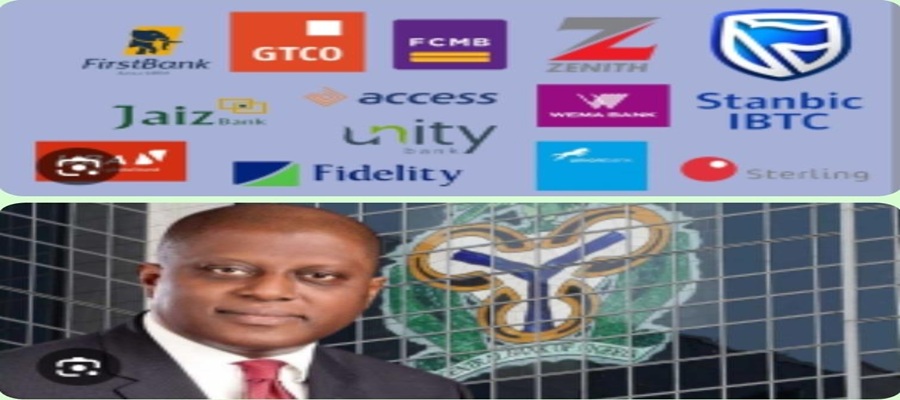
Central Bank of Nigeria (CBN) has announced the successful conclusion of the banking sector recapitalisation programme initiated in March 2024.

Over the 24-month period, Nigerian banks raised a total of N4.65 trillion in new capital, strengthening the resilience of the financial system and enhancing its capacity to support the economy, according to a statement that was issued by CBN on Wednesday.
The programme recorded strong participation from both domestic and international investors, with 72.55 per cent of capital sourced locally and 27.45 per cent from international markets, reflecting sustained confidence in the Nigerian banking sector.
Olayemi Cardoso, governor, CBN, said: “The recapitalisation programme has strengthened the capital base of Nigerian banks, reinforcing the resilience of the financial system and ensuring it is well-positioned to support economic growth and withstand domestic and external shocks.”
The CBN confirmed that 33 banks have met the revised minimum capital requirements established under the programme. A limited number of institutions remain subject to ongoing regulatory and judicial processes, which are being addressed through established supervisory and legal frameworks.
All banks remain fully operational, ensuring continued access to banking services for customers.
The apex bank stated that the programme has strengthened capital adequacy ratios (CAR), with the sector maintaining levels above international Basel benchmarks.
Minimum CAR thresholds remain at 10 per cent for regional and national banks and 15 per cent for banks with international authorisation.
The recapitalisation, implemented alongside an orderly exit from regulatory forbearance, has improved asset quality, reinforcing balance sheet transparency and overall financial system stability.
To safeguard the gains, the CBN said it has strengthened its risk-based capital adequacy framework, requiring banks to conduct regular stress testing across defined scenarios and maintain appropriate capital buffers.
It stated that key regulatory measures, including prudential guidelines and the supervisory framework, are subject to periodic review to support ongoing strengthening of governance, risk management and sector resilience.
The recapitalisation programme was carried out without disruption to banking services, ensuring continuous access for individuals and businesses throughout the process.
The successful completion of the programme establishes a stronger and more resilient banking system, better positioned to support lending, mobilise savings, and withstand domestic and global shocks, the CBN said in the statement that was issued by Olubukola A. Akinwunmi, director, banking supervision, and Hakama Ali, acting director, corporate communications.
“The Central Bank of Nigeria remains committed to maintaining a stable, transparent, and resilient financial system that inspires confidence among depositors, investors, and the broader public, and to advancing the sustainability of the nation’s financial architecture,” the statement read in part.


Nigeria’s fast-growing digital banking ecosystem is facing increasing scrutiny over consumer safety, as rising fraud cases and weak redress mechanisms threaten to erode public trust in the sector.

Over the past decade, Nigeria has witnessed a remarkable shift from cash-based transactions to digital financial services, driven by mobile banking applications, instant transfers and Unstructured Supplementary Service Data (USSD) platforms.
Industry data show that Point-of-Sale (POS) transactions rose to a record N18 trillion in 2024, representing a 69 per cent increase year-on-year, while the number of deployed POS terminals more than doubled to 5.5 million nationwide.
Mobile banking has also emerged as the most widely used digital financial channel, with about four in five Nigerians reportedly accessing such services within a 90-day period.
Analysts say the growth reflects significant progress in financial inclusion and technology adoption, but warn that the expansion has exposed gaps in consumer protection.
According to a 2024 Nigeria Consumer Protection Survey by Innovations for Poverty Action, nearly one in four users of digital financial services reported experiencing unexpected charges, hidden fees or fraud attempts within the past year.
The report further indicated that only about half of affected users pursued formal complaints, a trend experts attribute to declining confidence in dispute resolution processes.
Data from the Nigeria Inter-Bank Settlement System (NIBSS) also highlight growing risks, with fraud-related losses rising to N52.26 billion in 2024.
Although the number of reported fraud cases declined, stakeholders note that the scale of losses per incident has increased significantly, suggesting more sophisticated and high-impact attacks.
Experts identify social engineering as the most prevalent fraud method, relying on deception rather than complex technology to exploit unsuspecting customers.
They also warn that insider involvement remains a critical concern, with cases of internal compromise posing systemic risks to the integrity of financial institutions.
The development, according to analysts, underscores a widening gap between the rapid expansion of digital banking infrastructure and the pace of consumer protection frameworks.
“Convenience and security must evolve together. When one outpaces the other, it creates vulnerabilities that fraudsters can exploit,” a financial analyst said.
Regulators, however, have taken steps to address the challenges.
Nigeria’s exit from the Financial Action Task Force (FATF) grey list in 2025 signalled improvements in the country’s financial safeguards.
In addition, the Central Bank of Nigeria (CBN) introduced risk-based cybersecurity frameworks for deposit money banks in 2024, setting stricter standards for managing digital risks.
Industry-wide enforcement has also intensified, with regulatory penalties reportedly exceeding N15 billion in 2024, reinforcing compliance with consumer protection rules.
Within the banking sector, institutions are increasingly investing in advanced security systems designed to monitor transactions in real time, detect anomalies and prevent fraud before it occurs.
Analysts note that such proactive measures, though largely invisible to customers, play a critical role in safeguarding digital transactions.
The experience of Union Bank of Nigeria illustrates this approach, with the bank reporting strong customer satisfaction across its digital platforms, including mobile banking, USSD services and enterprise solutions.
Observers attribute this performance to sustained investment in backend security infrastructure, proactive fraud monitoring systems and a corporate culture that prioritises customer protection.
Industry stakeholders agree that trust remains the cornerstone of banking, particularly in a digital environment where transactions are increasingly intangible.
They warn that without sustained improvements in security, transparency and accountability, the gains recorded in financial inclusion could be undermined.
As Nigeria continues to expand its digital financial ecosystem, experts say the next phase of growth must prioritise safety alongside convenience to ensure long-term sustainability.
“Digital banking has transformed access to financial services in Nigeria, but its future will depend on how well institutions protect the people who rely on it,” an industry stakeholder said.

Nigeria, Others Lose $88bn Yearly to Illicit Flows —Edun

Oracle Sacks 12,000 in India, Begins Shift to AI

CBN Says 33 Banks Raise Fresh N4.65 Trillion in Recapitalisation Exercise

NCC Insists Telcos Must Compensate Subscribers for Poor Quality of Service

NITDA Urges Joint Action to Drive Nigeria’s Digital Innovation

Spotify’s Loud & Clear Report Reveals Over ₦60Bn Revenue for Nigerian Artists in 2025

Madonna University Taps Tech Guru Adote for Strategic Board Role

China Threatens to Shut Nigeria’s Satellite Over $11.44m Unpaid Debt

FCCPC Bans Lagos ‘No Refund’ Policy, Vows Fines and Shutdowns for Traders

EFCC Arraigns Two FSDH Bank Officials Over $307k, €50k Fraud




 E-Financial2 days ago
NGX REGCO Fines 5 Firms N291m for Market Manipulation

 News2 days ago
Dangote Refinery Debunks Speculations on IPO

 E-Financial2 days ago
FG Launches Cross-Border Digital Payments Report

 News2 days ago
Descasio Launches “Give to Gain” Leadership Insights Report, Hosts Executive Brunch for Women in Leadership

 E-Financial2 days ago
Interswitch Deepens Strategic Partnership with KCB Group to Advance Digital Payments and Financial Inclusion

 News2 days ago
World Backup Day: Research Reveals 84% of Users Store Sensitive Data Digitally

 News1 day ago
Microsoft Revamps Copilot in Workplace AI Push

 General News2 days ago
Moniepoint Launches Sixth Edition of Women in Tech Internship with “There Is Space for You” Campaign