

E-Business
HP Introduces Durable Devices for Blended Learning Environments

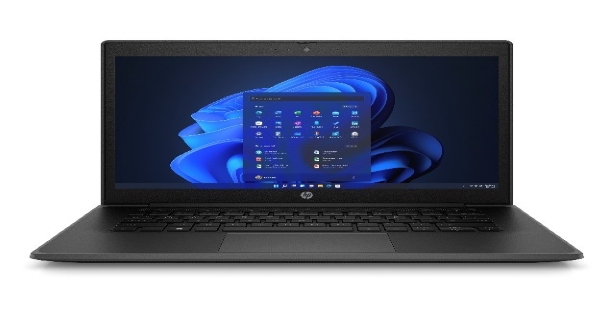
HP Inc. has introduced HP Fortis laptops, a new portfolio of PCs built to withstand the rigours of education environments.

Teaching and learning has forever changed. Before the pandemic, student PCs typically stayed in the classroom for occasional use.
Today, learning is happening beyond just the classroom including the playground, on the bus, and at home.
The PC is a critical tool for digital learning and students want devices that stand up to daily wear and tear, help them connect to the digital classroom, and make it easier to get more done.
“While hybrid work is the new standard for business, blended learning is the new standard for education. This requires technology with increased durability, enhanced connectivity, and large screens so content can be accessible and engaging from wherever learning happens,” said Bill Avey, General Manager and Global Head of Education, Personal Systems, HP Inc.
“Designed with features that reduce accidental drops, keep keys and ports intact, stand up to heavy wear and tear, and make it easier to clean and sanitise, HP is committed to providing students with the devices and PC experiences they need to be successful in these new learning environments.”
The new PCs include the new HP Fortis portfolio which embodies the strength and durability learners need to help withstand drops, resist spills, and keep keys where they belong: on the keyboard. The textured surfaces make it easier for students of all ages to grip and handle the lightweight devices.
The reinforced power and USB-C® ports limit damage from accidentally tugged cables, while the mechanically reinforced corners and co-molded rubber trims absorb shocks and reinforced hinges reduce stress on the hinges from repeated opening and closing.
The full-skirted anchored keyboards prevent keys from being removed when students are fidgeting and may want to pick at them during class. The keyboard also resists spills up to 350 ml/11.8 oz.
With more students going back to the classroom, it is important to keep devices clean. The chassis, keyboard, and display for the devices can be wiped down using commonly available household disinfecting and cleaning wipes. For enhanced safety and protection, the devices feature a new metal shield that helps protect the battery from external damage from daily drops or tumbles.
Built for the greater demands being placed on today’s students, the HP Fortis 14 devices feature 14” diagonal displays giving students large visual screen space to stay productive – whether it’s taking notes while watching a lecture or creating visual stories with ease.
Large screen space gives students the freedom to engage content while consuming it at the same time. Students can also see their work clearly with optional bright anti-glare displays.
The HP Fortis 14” G10 Chromebook is purpose-built for cloud-native learning. Powered by Intel® processors with optional 4G LTE for reliable connectivity, the Chromebook allows students to access their classroom from almost anywhere.
The 180-degree lay-flat hinge combined with the 88-degree wide-viewing angle HD camera and dual mics provide an excellent collaborative learning experience. The integrated HP Privacy Camera provides peace of mind to protect users from malicious surveillance, while Chrome Education Upgrade makes the device easy to deploy and simple to manage.
The HP ProBook Fortis 14” G9 and the HP ProBook Fortis 14” G10 help students to confidently move through their day. With HP ProBook Fortis 14” G9 – Powered by Intel processors with Windows 11 Pro, Windows 11 Pro Education or Windows 11 SE, students can easily collaborate and reliably access assignments with Wi-Fi 6 and optional 4G LTE connectivity.
HP ProBook Fortis 14” G10 – Powered with Intel 12th Gen Intel® i3/i5 processors and Windows 11 or Windows 11 Pro Education, enables students transition quickly between writing documents, running STEM applications, editing video, and more.
The latest in connectivity – Wi-Fi 6E – allows students to cut through crowded networks, while the battery learns students’ work patterns and optimises power consumption with intelligent charging. HP Wolf Security for Business makes it easy for IT to protect student devices with a hardware-enforced, always-on, resilient defence.
The HP Pro x360 Fortis 11” G9 and HP Pro x360 Fortis 11” G10 embrace the different ways learning happens. The 360-degree design gives students the freedom to choose the mode that best suits them and their assignment.
The optional world-facing 5 MP cameras and rechargeable pen with reinforced tip allows students to create, capture, and draw in laptop, tablet, tent, stand, or book mode. The rechargeable pen is stored and charged in an optional water-resistant garage so it’s ready to go whenever creativity strikes.
HP Pro x360 Fortis 11” G9 – Powered by Intel processors with Windows 11 Pro, Windows 11 Pro Education or Windows 11 SE, students can access assignments and apps seamlessly with Wi-Fi 6 and optional 4G LTE.
HP Pro x360 Fortis 11” G10 – Powered with Intel 12th Gen Intel® i3/i5 processors and Windows 11 Pro or Windows 11 Pro Education, the device helps students tackle demanding assignments, like editing videos for media class or analysing lab data.
Wi-Fi 6E delivers fast, dependable network connections for learning in the cloud. HP Wolf Security for Business provides a resilient defence against malware and hacking. Equipped with intelligent charging, the device’s battery learns students’ work patterns and optimises power consumption.
The HP Fortis 11” G9 Q Chromebook, powered by the robust Snapdragon® 7c compute platform, is exceptionally equipped for cloud-native mobile learning and provides secure and reliable access to the classroom.
This Chromebook is HP’s thinnest and lightest Fortis device built for the rigors of today’s students and providing ultimate portability. It boots in seconds so students can spend more time learning and less time waiting. The device’s 4G LTE connectivity makes education more accessible and equitable for all students to learn from virtually anywhere.
The HP 320 FHD Webcam and HP 325 FHD Webcam are easy-to-use all-in-one webcams for users everywhere. Enjoy crisp images with 66-degree wide angles that offer full HD at 1080p and 30 fps video quality for a natural conversational feel.
The webcams are easy to set up with USB-A, have 360-degree rotation for varying positions, and feature a removable lens cover for privacy.
As part of HP’s Sustainable Impact strategy, HP is aiming to empower millions of people with what they need to participate in the digital economy.
HP is committed to enabling better learning outcomes for 100 million people by 2025 and accelerating digital equity for 150 million people by 2030.


Nigeria Data Protection Commission (NDPC) has issued a regulatory advisory to data controllers and processors across the country following what it described as escalating threats to Nigeria’s data security architecture.

NDPC
In a statement signed by Babatunde Bamigboye, lead of Legal, Enforcement and Regulations, the commission said its technical assessment revealed that some shadowy threat actors were engaged in coordinated operations targeting financial systems and critical digital infrastructure in Nigeria.
The commission urged public institutions to comply with the presidential directive of Bola Ahmed Tinubu, which emphasises the strategic importance of data in national development.
According to the NDPC, the President had declared that “data is the new oil,” stressing the need for Ministries, Departments and Agencies (MDAs) to rigorously capture and safeguard information in line with the Nigeria Data Protection Act, 2023.
The commission therefore advised all data controllers and processors to urgently strengthen their technical and organisational measures to protect personal data and ensure compliance with the law.
It listed key measures to include the appointment of trained and certified Data Protection Officers, implementation of comprehensive privacy policies and information security standards, as well as conducting Data Privacy Impact Assessments.
Other measures recommended by the NDPC include deployment of robust identity and access controls such as Multi-Factor Authentication, adoption of zero-trust security architecture, prompt remediation of system vulnerabilities, and continuous patch management.
The commission also emphasised the need to secure cloud infrastructure, application programming interfaces (APIs), databases and access credentials, alongside real-time monitoring, logging and threat detection systems.
Further recommendations include encryption and secure credential handling, regular vulnerability assessment and penetration testing of critical systems, as well as routine backup and resilience testing.
The NDPC warned that organisations that fail to implement appropriate data protection measures in accordance with the Nigeria Data Protection Act, 2023 risk legal liabilities.
It reiterated its commitment to providing regulatory support to organisations while ensuring the protection of personal data and strengthening institutional resilience across all sectors.

The forex market across Africa is witnessing more participants and more regulatory attention than it did just a few years ago. This growth is part of a bigger picture: Sub-Saharan Africa is expected to expand by 4.3% in 2026, while global forex turnover already hit an estimated $9.6 trillion daily in April 2025. However, there’s more to it than macroeconomic figures.

The trends reshaping the market are happening from within. Here are six worth paying close attention to.
1. Trading Has Moved to the Phone
The number of people accessing the market via mobile phones exceeds those accessing it via traditional bank systems. GSMA states that in Sub-Saharan Africa alone, there are more than 1.1 billion registered mobile money accounts.
The International Monetary Fund states that digitalisation and increased usage of the internet are changing payment systems in the Sub-Saharan Africa region.
Mobile access changes traders’ behavior. It lowers the barrier to entry and speeds up deposits and withdrawals. Therefore, brokers who can provide a quality mobile trading experience will have a huge advantage.
2. Regulators Are Watching
The market is becoming more structured and more transparent. In South Africa, the FSCA regulates market conduct for financial institutions. In Kenya, the Capital Markets Authority regulates capital markets and maintains a licensing system that includes online forex brokers.
Nigeria’s SEC has publicly warned that online retail forex trading can be subject to abuse when unregulated. It also provides tools for investors to check operators’ registrations.
As a result, in 2026, more traders are likely to favour brokers that can show clear licensing, transparent operations, and stronger investor safeguards.
3. Volatility Varies by Country
A common mistake is perceiving the African market as one entity. In reality, according to RegTech Afrika, there are 21 countries out of a total of 54 that have a chance of seeing their currencies depreciate in 2025, with some of them losing value by as much as 6% or more.
A trader watching the rand, naira, shilling, or cedi, regional headlines needs more than regional headlines. Country-level macro data, central bank moves, and the US dollar will still play a major role.
4. Cross-Border Payment Infrastructure Is Quietly Improving
Platforms like PAPSS are helping make payments across African countries faster and easier to complete in local currencies. According to official announcements of PAPSS, it has become operational in 18 countries across Africa, with its latest launch in Algeria in 2025. It has also become operational in Kenya through a partnership with KCB Group, as well as in Rwanda through a partnership with Bank of Kigali.
Step by step, Africa is becoming a more financially connected continent.
5. Execution Quality Is the New Standard
Data from the BIS shows that in April 2025, three-quarters of FX trades were intermediated by the global centers of the United Kingdom, the United States, Singapore, and Hong Kong. Therefore, the best liquidity and best prices are still linked to global conditions.
For local markets, this raises the bar. Forex traders are becoming increasingly aware that tight spreads, while important, mean little without reliable prices and execution. Brokers like JustMarkets that can bring all of these elements together are in a much stronger position than competitors.
6. Education as a Necessity
Regulatory disclosures from major global brokers illustrate how tough it is to trade without proper knowledge. According to publicly available disclosures, between 70% and 80% of retail investor accounts lose money when trading CFDs.
Forex traders who understand risk management and which financial news to follow have a better chance of surviving the market. Brokers who invest in education are more likely to be seen by traders as valuable partners rather than mere facilitators.
The Market Rewards the Prepared
Africa’s forex market in 2026 is shaped by volatility, stricter rules, and mobile-first trading. The traders who combine market knowledge with the right tools and the right broker will find real opportunity here, while those who don’t adapt will find the market increasingly unforgiving.


Corporate Affairs Commission (CAC) has raised alarm over a cybersecurity incident involving unauthorised access to parts of its information systems, urging users to update their login credentials as a precaution.

In a public notice yesterday, CAC, informed stakeholders that the Commission is currently reviewing the breach and assessing its potential impact.
According to the Commission, response protocols have been activated, with containment measures already in place to safeguard affected systems.
The CAC stated that it is working closely with the National Information Technology Development Agency (NITDA) and other relevant government agencies and partners to determine the scope of the incident and prevent further compromise.
“Appropriate containment measures have been implemented, and additional safeguards are in place,” the Commission stated, while advising users to monitor activities on the CAC portal and remain cautious of unsolicited communications that may arise from the breach.
Reports online claim that as many as 25 million documents may have been exfiltrated from the Commission’s infrastructure.
The claims, attributed to a cybercrime-tracking account, have not been independently verified, and the CAC has not confirmed the figures or identified any perpetrators.
The development has raised fresh concerns over the security of Nigeria’s corporate registry, particularly given the Commission’s increasing reliance on digital systems.
In February 2026, the CAC disclosed that it processes up to 10,000 business registration requests daily, following the deployment of artificial intelligence across its service delivery platforms.
It also handles an average of 5,000 customer enquiries each day via emails and call centres.
Despite the breach, the Commission reaffirmed its commitment to maintaining the integrity and security of its systems, assuring stakeholders that updates will be provided as investigations progress.

MTN Suspends Data, Airtime Borrowing Service over New FCCPC Lending Rules

Nigeria Customs Deploys AI to Cover Revenue Leaks

Top 7 Reliable Virtual Cards for Running Ads in Nigeria

Nokia, Orange Partner on AI-native 6G Networks

NDPC Issues Critical Advisory as Hackers Target Nigeria’s Key Digital Systems

Kuda MFB Increases Kuda for Her Business Grants to ₦10 Million

Canal+ to Cut Jobs as Part Sweeping Restructuring

Nigeria tops global rankings for USDT, USDC ownership

NBC Boss Urges Content Ceators to Participate in DSO

NITDA Takes Over National Digital Architecture System




 General News3 days ago
Guinness Nigeria Surpasses ₦1Trillion Market Capitalisation, Signalling Strong Investor Confidence and Sustained Value Creation

 News3 days ago
CISA Asks NDPC, Police to Act on Alleged Data Breach by NIPSS

 Telecom3 days ago
Amazon Satellite to Challenge Starlink in Africa with Globalstar Acquisition

 E-Financial3 days ago
FG Investigates ‘Sharp Sharp’ Loan Operators over Alleged Privacy Violations

 Broadcasting3 days ago
Fela Makes History as First African to be Inducted into Rock and Roll Hall of Fame

 E-Financial3 days ago
Ecobank Delivers Strong Results, Posts $801m in Pre-Tax Profit for 2025

 News3 days ago
Kaspersky Reports Online Scam Exposure Remains Widespread Despite High Levels of Self-assurance

 News3 days ago
Tinubu Tasks NRS to Restore Public Trust Amid Fiscal Changes