

News
How B2B e-commerce is Helping Micro Businesses Save Time, Energy, and Resources


Unlike the years where micro business owners in underserved areas face deprivation in accessing fast moving commodities and goods to sell to consumers due to factors such as: unavailable infrastructure, long distance to the market and lack of adequate transport for purchased goods. These days, the story has changed as they can boast of easily accessing what used to be far-fetched.

This is not without the efforts of e-commerce platforms like Alerzo who have their presence in rural areas and are reaching the underserved with access to extensive catalogue of products and logistics.
Through texts, phone calls and logging on to its site where applicable, customers can easily place orders and get the goods delivered swiftly without being charged for delivery.
Explaining this, Alerzo’s CEO, Adewale Opaleye stated: “Our strong presence in the Southwest, and continued expansion to the Northwest and Central consolidate our desire to grow in a sustainable manner and continue to serve those that are underserved.
“On our Alerzoshop retail app, we have a vast assortment available to our customers to choose from and we offer free delivery in all the over 13 cities we’re currently operational. We change the landscape for them (retailers) one delivery at a time.

“For the past two years, we have delivered to informal retailers at no cost. With our delivery services, retailers save time, energy, and resources that they would have otherwise expended in restocking. These benefits have resulted in 85% of our retailers reducing their two to four times a week restock trips to zero.”
Certainly, there is need for more intervention of e-commerce platforms in reaching the underserved, to further boost the nation’s gross domestic product (GDP), as the micro, small and medium enterprises (MSMEs) serve as the engine of the nation’s economy with 50% contribution to the GDP and 80 per cent of the country’s total employment.



The Nigerian Maritime Administration and Safety Agency (NIMASA) has introduced the Blue Economy Accelerator Programme, a strategic initiative designed to identify, nurture, and accelerate innovative startups that will contribute to the sustainable growth of Nigeria’s marine and blue economy.

The Blue Economy Accelerator Programme is aimed at attracting young, vibrant minds with innovative ideas capable of transforming Nigeria’s maritime ecosystem.
Dr. Dayo Mobereola, Director-General of NIMASA, said that through the initiative, participants will receive structured business development support, industry mentorship, and technical guidance to convert promising concepts into viable ventures that address critical challenges and opportunities within the blue economy.
“The programme reflects NIMASA’s commitment to supporting the implementation of the vision of the Federal Ministry of Marine and Blue Economy in unlocking the immense potential of the blue economy by empowering young innovators, entrepreneurs, and technology-driven enterprises. We at NIMASA want to provide a platform for investors to identify young talents and invest in them”.
Mobereola, who commended the Minister of Marine and Blue Economy, Adegboyega Oyetola for codifying the Marine and Blue Economy Policy as a clear roadmap for the sector’s development, urged young Nigerians to embrace the programme which has the potential to transform raw talents into big investments in the maritime sector.
Applications are open to startups and innovators developing solutions across several strategic sectors, including marine waste management and the blue circular economy; aquaculture and sustainable fisheries; maritime technology and logistics innovation; ocean energy including wave, tidal, and offshore renewable energy; marine tourism and coastal recreation; marine biotechnology such as, ocean data and analytics; green shipping, including vessel decarbonization; smart port solutions; autonomous marine vehicles; biofouling prevention technologies; and coastal resilience through nature-based coastal defencesolutions.
The first phase of the programme is expected to attract a minimum of 150 high-quality applications from within and outside the country provided they are Nigerian citizens.
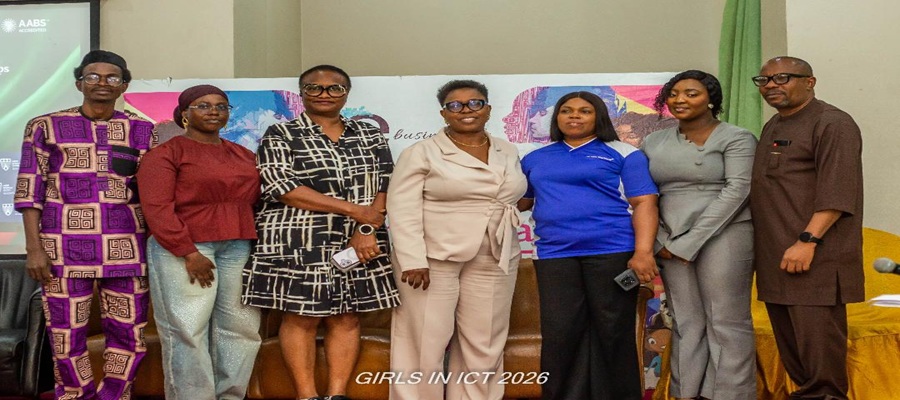
Stakeholders have called for increased support to encourage girls to pursue careers in Information and Communication Technology (ICT), saying greater participation is critical to bridging the gender gap in the digital economy.

eBusinessLife
The call was made at the 2026 International Girls in ICT Day organised by eBusiness Life Communication Limited in Lagos, with the theme: “AI for Development: Girls Shaping the Digital Future.”
The event brought together students, educators, technology experts and industry stakeholders to inspire young girls to embrace careers in science, technology, engineering and mathematics (STEM), particularly in artificial intelligence (AI) and other emerging technologies.
Speaking at the event, the Convener and Chief Executive Officer of eBusiness Life Communication Limited, Mrs Ufuoma Emuophedaro, said empowering girls with digital skills was essential for innovation, economic growth and inclusive national development.
She stressed the need to eliminate barriers limiting female participation in technology and called for equal access to scholarships, mentorship, leadership opportunities and career development programmes.
“Today, we challenge the existing narrative. We stand together to break barriers, challenge stereotypes and create opportunities for every girl to pursue a career in technology,” she said.
Emuophedaro cited International Telecommunication Union (ITU) projections indicating that the global ICT industry could face a shortage of more than two million skilled professionals over the next five years.
According to her, girls equipped with skills in coding, application development and computer science would enjoy significant career opportunities across multiple sectors.
She noted that more than 417,000 girls and young women had participated in over 11,500 International Girls in ICT Day activities across 175 countries.
She described this year’s event as a movement aimed at encouraging girls to become innovators, software developers, entrepreneurs, researchers and technology leaders rather than merely consumers of digital technologies.
A student panel session highlighted how young girls are already leveraging AI tools such as ChatGPT, Gemini and Meta AI for learning, creativity and entrepreneurship.
The students, however, cautioned against excessive dependence on AI and identified gender stereotypes, limited access to digital resources, inadequate funding and societal expectations as major barriers to girls’ participation in technology.
They advocated increased mentorship, parental support, digital literacy programmes and the responsible integration of AI into school curricula.
The event also featured a Women in ICT Partners’ Panel, where participants encouraged girls to explore opportunities in cybersecurity, data science, data analytics, networking and user interface and user experience (UI/UX) design.
The panelists described artificial intelligence as an enabler capable of creating new opportunities rather than replacing human potential.
One of the highlights of the programme was an exhibition of technology-driven projects developed by students.
The innovations included an emergency distress application, a flood detection system with GSM integration, AI-powered study cards, a smart irrigation system, Waste Intelligence Nexus and the EDUVERSE AI educational platform.
The projects demonstrated how young girls are applying technology to solve real-life challenges in education, agriculture, environmental sustainability, disaster management and public safety.
The event also featured AI practical and quiz competitions.
Reagan Memorial College, Yaba, emerged winner of the quiz competition, while Baptist Girls Academy, Lagos, and Triple Crown Academy, Ketu, finished second and third respectively.
Faith Academy, Ota, won the AI practical competition, with Reagan Memorial College and Peaklane International College, Akute, Ogun State, taking second and third positions respectively.
News
NITDA Communications Director Hadiza Umar Named in 2026 PR Power List, Graces Glazia Magazine Cover

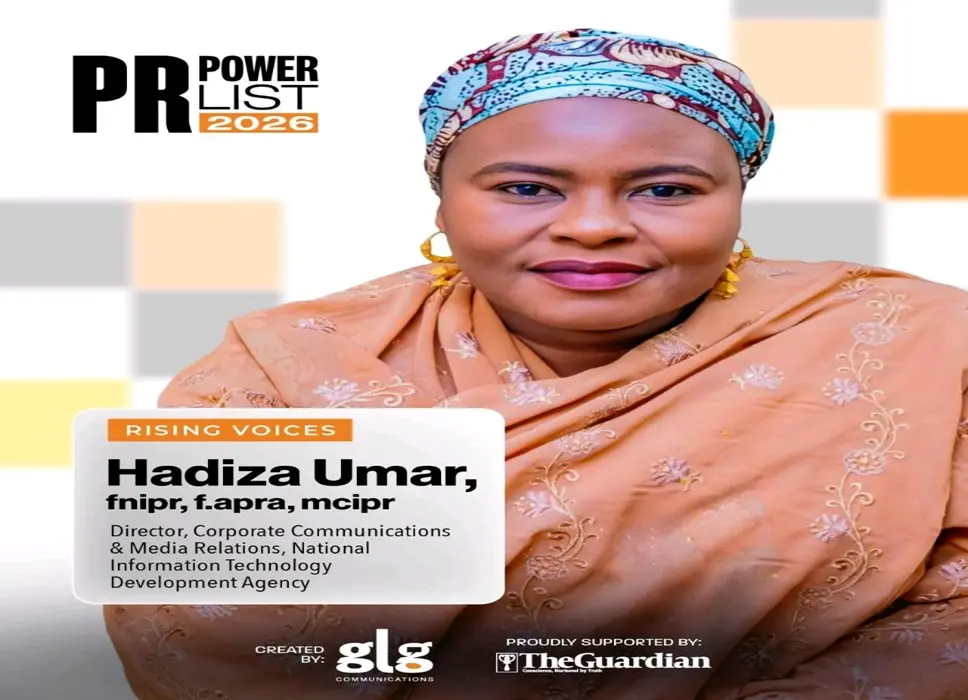
Mrs. Hadiza Umar, Director of the Corporate Communications and Media Relations Department at the National Information Technology Development Agency (NITDA), has been officially recognised as one of Nigeria’s top public relations professionals in the prestigious 2026 PR Power List.

The definitive annual list, compiled by GLG Communications in partnership with The Guardian, was unveiled to commemorate World PR Day.
It celebrates 50 outstanding professionals within Nigeria and the diaspora whose strategic communication strategies have significantly shaped organisations, influenced public discourse, and advanced the profession over the past 12 months.
Adding to the momentous milestone, Mrs. Umar was hit with a major surprise at the exclusive PR Power List Soirée and Awards ceremony held at the Alliance Française in Ikoyi, Lagos, where she was unveiled as a front-cover personality for the Glazia Magazine PR Power List Special Issue.
The double recognition highlights her exceptional distinction and impact in public sector communications and narrative management.
Speaking on the dual achievement, Mrs. Umar expressed profound gratitude for the honours, describing the magazine cover appearance as a breathtaking surprise.
“I am deeply humbled and honored to be recognized on the 2026 PR Power List and to feature on the cover of Glazia Magazine alongside other exceptional industry titans,” Umar said.
“This milestone is a testament to the enabling environment and visionary leadership of the Director General of NITDA, Kashifu Inuwa Abdullahi, CCIE, which has allowed us to strategically drive the narrative of Nigeria’s digital economy and technological innovation.”
Mrs. Umar, a highly respected corporate communications strategist, holds professional fellowships in the Nigerian Institute of Public Relations (Chartered), the African Public Relations Association (APRA), and the Institute of Corporate Administration (CICA).
Under her supervisory role, NITDA’s media relations have consistently projected national information technology frameworks, start-up support frameworks, and digital literacy initiatives, to position Nigeria competitively on the global stage.
The 2026 PR Power List selection process involved a rigorous, independent evaluation led by a distinguished international jury.
The organisers noted that the class of 2026 represents professionals raising the standard of strategic communications and introducing new ideas to the industry.

NRS Issues July 31 Deadline for e-Invoicing Compliance

SERAP to Sue NASS over Bill Empowering NDPC to Regulate Social Media

Access Holdings Sells 7.44% Stake in Ghana Unit

NIMASA Unveils Accelerator Scheme to Drive Innovation, Sustainable Growth

Female Executives Preach Gender Balance In Tech @eBusinessLife Forum

NRC, Ponzi Scheme Collapses Resulting Loss of Billions of Naira

NASENI Moves to Digitize CCB’s 5m Assets Declaration and Operations

Lebara Nigeria Launches Lebara Play, Africa’s First Telecom-Owned Micro-Drama Platform

CANAL+ Partners Samsung to Pre-Load DStv Stream on New Samsung TVs In Nigeria, Other African Countries

Tokenization, Blockchain Technology will Transform Financial Institutions – IMF




 News2 days ago
EFCC Busts NIS Visa Overstay Racket, Uncovers N700m in an Account

 News2 days ago
NCC, NDLEA Partner to Fight Piracy and Drug Trafficking

 General News2 days ago
Dangote Refinery’s Private Placement Reportedly Hits $2.5Bn

 Telecom2 days ago
NCC Leads Tecno, Hyperspace, Digital Realty To NITRA Forum On Scientific Innovation

 E-Financial2 days ago
CBN to Monitor Every Dollar with FXBT, Forex Tracker

 E-Financial2 days ago
FG Moves to Crack Down on Crypto Fraud with Virtual Assets Executive Order

 Broadcasting2 days ago
NBC Tasks Broadcasting Stations over 2028 DSO Global Deadline

 Telecom2 days ago
PayPal Rejects $53bn Stripe-Advent Takeover Bid, Says Offer Undervalues Company