

Broadcasting
Are there Really Cashless Economies?


By Yvonne-Faith Elaigwu, Head of Operations and Governance, OnePipe
‘Cashless’ has probably become one of the most popular words in Nigeria in the last few months. While it can be defined in different ways, it has one universal meaning and is characterised by the exchange of funds for goods and services by methods other than the use of cash.

This little or no dependence on cash is not forced by an inability to queue for hours at an ATM or an unwillingness to pay an exorbitant fee to a PoS or mobile money agent. No, this little dependence on cash is because of the ability to meet financial obligations without necessarily needing to handle cash.
You are probably thinking about the western world and the level of development that makes this their reality but some very solid examples of cashless economies also exist in Africa.
One of the easiest ways to identify a Nigerian in Kenya for example (excluding the Naija-ness) is by how they transact. As a Nigerian visitor, you are very likely to pay in cash when you buy food, shop at a neighbourhood market, buy things from the roadside or visit a tourist centre. This alone – paying in cash everywhere – is more likely to scream “foreigner” than if you had worn a green-white-green Ankara at that time.
When the M-Pesa platform marked its 15 year anniversary last year, it had grown to more than 51 million customers, 465,000 businesses, 600,000 agents, and 42,000 developers across Kenya, Tanzania, Mozambique, the Democratic Republic of Congo, Lesotho, Ghana, and Egypt, as reported by Business Insider.
Ghana, our neighbours, digitised their economy with Mobile Money. The Bank of Ghana in its payment systems annual report for 2021, reported that its volume of Mobile Money transactions increased to 4.25 billion in 2021, representing a 47.1 percent growth, compared to 2020. Similarly, the total value of transactions increased to GH¢ 978.32 billion in 2021, from GH¢ 571.80 billion in 2020.
In dollar terms, the value of transactions in 2021 was $75 billion (based on current exchange rates). For perspective, Ghana’s GDP was $77.59 billion that same year. This essentially shows us mobile money transactions could cover the entire economic activities in Ghana (when currency devaluation over the past year is factored in).
The Carnegie endowment for international peace also referencing a BOG report, said in recent years, Ghana has been identified as one of the biggest mobile money markets and the fastest-growing one in Africa with 40.9 million accounts as at February 2021. Again, for context; the population of Ghana is 32.8 million. A Business Day report in 2019, noted that in Ghana, the utilisation of Mobile Money has become so ubiquitous, that it no longer has a wow effect, and is just a part of their everyday life. The average Ghanaian can go about his or her day and be productive without ever needing to transact with cash, just like their peers in Kenya and other countries where cash is increasingly less important.
Somalia’s journey to a cashless economy is perhaps the most inspiring. It is recorded that between 1990 and 2013, Somalia received no foreign direct investment, and the monetary system broke down with the collapse of the Somali Central Bank. The Somali government installed its first ATM in 2014, but the progress of its wider digital economy has been astonishing. The Somali Central Bank introduced a central payments system in August 2021 which connects the nation’s 13 lenders, and formalises digital payments, making payments easier for people across the country.
According to a report by the World Bank published in 2018, almost three-quarters of the Somali population aged 16 and older use Mobile Money. Somalia’s Gross Domestic Product, grew by an estimated 2.9 percent in 2019 and by 3.2 percent and 3.5 percent in 2020 and 2021 respectively. Eight years after the installation of their first ATM, Somalia is now recognized globally as a cashless economy.
Today, in its urban centres, Mobile Money penetration is over 80 percent. Even in rural areas, it has become the currency of choice, with a penetration rate of 55 percent.
Need we add examples of the western world? Maybe just a few.
In 2022, Merchant Machine ranked Norway on the list of 10 countries closest to a completely cashless society, with cash accounting for only 2 percent of all payments in Norway, 100 percent of its population owning a bank account, and 71 percent also owning a credit card.
It was followed by Finland with the same small percentage of cash-based payments ( 2 percent) and none of its citizens going without a bank account, then New Zealand also having two percent cash-based payments but a very slightly higher unbanked population of one percent.
The UK ranks lower at number eight due to a slightly smaller percentage of credit card users (65 percent) and higher percentage of unbanked population (3 percent). However, it sees less cash-based payments overall, with just 1 percent of all payments being made with notes and coins.
Now imagine a scenario where you navigate the city of Lagos without worrying about “change”, or whether the cash in your hand is not counterfeit or too worn out. Imagine not worrying about making any payments, not because you are a Dangote or because Otedola is your daddy, but because you have various payment options in your pocket or at your disposal; cards, phone, apps, USSD codes etc. More importantly, imagine that your transactions are happening within the banking ecosystem, your bank therefore has visibility into your spending patterns and is able to adequately profile you to access credit. Despite the promising future a cashless economy offers, the experiment in India has offered the rest of the world some lessons on how not to go about it. The Economic Times of India for instance, noted that after invalidating 86 percent of the currency in circulation (the 500 and 100 notes), the government started scrambling to promote digital payments, yet, only about half of Indian adults had bank accounts, and only about a quarter had internet access. Mobile payments were rare and even if everyone had wanted to go digital, they couldn’t have.
The lesson? Before going cashless, alternatives should not only be in place, but reliable too. India’s move towards going cashless has not been a complete failure but it came at huge human and economic loss.
An article on The Balance Money describes a cashless society as one where all transactions are electronic, using debit or credit cards or payment services like PayPal, Zelle, Venmo, and Apple Pay. In Nigeria, we have companies like OnePipe, offering technologies that digitise and simplify payment processing to downplay the dependence on cash.
Although not a lot of societies are truly cashless, many economists believe that consumer preferences, competitive pressures on businesses, profit seeking by banks, and government policies designed to facilitate cashless transactions will soon lead to more cashless societies which eventually lead to economic growth.


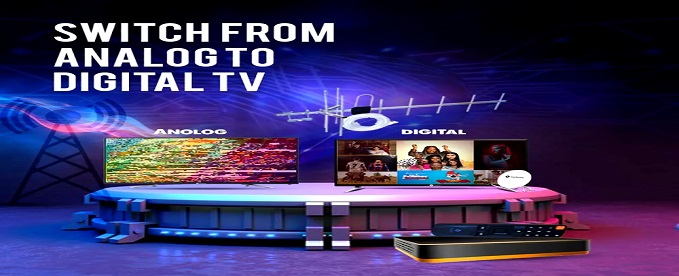
National Broadcasting Commission (NBC) has said that its planned Digital Switch-Over (DSO) project will create access to Nigeria’s N605.2 billion advertising market for broadcasters and content creators.

Speaking at a press conference, Charles Ebuebu, director-general, NBC, said the project is expected to officially launch nationwide on June 17, 2026, while analogue television broadcasting will completely end by December 31, 2028.
According to him, the switch from analogue to digital broadcasting will help government agencies deliver better television services across Nigeria in a way that is sustainable, reliable, and easier to regulate.
Ebuebu explained that digital broadcasting will allow broadcasters and content creators to earn more revenue because audience data can be measured more accurately.
He also said the project could benefit the economy through the release of valuable 700/800 MHz spectrum, which may generate more than $1 billion from future auctions.
The funds are expected to support digital infrastructure and expand broadband access in rural communities.
NBC added that Nigeria’s creative industry, which contributes about N5 trillion to GDP and supports more than 4.2 million jobs, could benefit from improved content distribution and export opportunities across West Africa using NigComSat-1R.
For consumers, NBC said the FreeTV service will not require monthly subscription payments. Households will only need a small satellite dish and an open-standard DVB-S2 decoder, estimated to cost between N15,000 and N25,000.
Broadcasters were encouraged to join the FreeTV platform and take advantage of an 18-month free carriage period.
However, the Commission noted that there is still an ongoing legal dispute involving local manufacturers over set-top boxes, although officials said this will not stop the national rollout.
On satellite expansion plans, Jane Egerton-Idehen, managing director and CEO, Nigerian Communications Satellite Limited, said NIGCOMSAT 2A is expected in 2028, while NIGCOMSAT 2B is planned for 2029.
She added that backup arrangements have already been made to ensure uninterrupted service and that migration to the new system will happen gradually across different regions to avoid nationwide disruptions.
National Broadcasting Commission (NBC) has unveiled a new “Big Picture” strategy aimed at achieving full nationwide Digital Switch-Over (DSO) by December 31, 2028.

DSOis designed to provide Nigerians with superior picture and sound quality while unlocking an estimated N605.2 billion in advertising revenue and generating over $1 billion from digital spectrum auctions.
Charles Ebuebu, director-general of NBC, in a statement issued on Monday, said the revised strategy adopts a converged broadcasting model combining Direct-to-Home (DTH), Digital Terrestrial Television (DTT) and Internet Protocol (IP) systems to expand access to digital television services nationwide.
The Commission also announced June 17, 2026, as the official national launch date for the renewed rollout, describing the framework as a more practical pathway toward a sustainable and affordable digital broadcasting system after nearly two decades of delays.
Ebuebu, said that the transition is no longer being treated as a competition between technologies but as a unified access solution tailored to Nigeria’s geographic and infrastructure realities.
“The Big Picture strategy recognises convergence as the future of broadcasting and aligns with the 2012 DSO White Paper, which adopted both terrestrial and satellite standards including DVB-T and DVB-S2 technologies,” the statement said.
NBC said the Nigerian Communications Satellite Limited (NIGCOMSAT) would play a central role in national content distribution, particularly in underserved and remote areas where terrestrial infrastructure remains weak.
The Commission cited countries such as the United Kingdom, Australia, Kenya, South Africa and Morocco as examples of jurisdictions that successfully adopted hybrid digital broadcasting models to accelerate migration from analogue systems.
On affordability, NBC assured Nigerians that the proposed FreeTV platform would remain subscription-free for baseline access, adding that compatible DVB-S2 decoders currently cost between N15,000 and N25,000. It said discussions were ongoing on possible subsidy arrangements and financing options for low-income households.
The regulator also defended its plan to support both local manufacturing and transitional importation of set-top boxes, noting that Nigeria would require millions of devices over several years to complete the migration.
Beyond transmission, NBC disclosed plans to introduce a national audience measurement system under the GARB ratings framework to improve advertising transparency and broadcasting analytics.
It projected that the DSO programme could unlock Nigeria’s estimated N605.2 billion advertising market while also freeing up valuable digital dividend spectrum estimated at over $1 billion.
NBC further said Nigeria’s creative industry, valued at about N5 trillion and employing more than 4.2 million people, stands to benefit from expanded distribution channels and improved content monetisation.
Broadcasters, it added, would enjoy free carriage on the platform for 18 months, alongside wider national reach, indigenous language channels and improved commercial opportunities.

Association of Licensed Set-Top Box Manufacturers of Nigeria (STBMAN) has warned that the unilateral implementation transition from analogue to digital broadcasting, could trigger confusion, legal disputes, and disruptions capable of undermining the credibility of the 2027 general election.

STBMAN urged President Bola Ahmed Tinubu to urgently intervene and halt what it described as a unilateral implementation process, pending wider consultations with stakeholders in the broadcasting industry.
Sir Godfrey Ohuabunwa, chairman of the association in statement in Abuja, faulted the current implementation process by the National Broadcasting Commission’s (NBC).
STBMAN said that although it supports Nigeria’s digital migration programme, the approach currently being pursued by the NBC appeared rushed and inconsistent with the 2012 Digital Switchover (DSO) White Paper approved by the Federal Executive Council.
The association argued that the arrangement being presented as a Digital Switchover was merely the aggregation of channels on NigComSat platforms rather than a fully Digital Terrestrial Television (DTT) migration as originally envisioned under the national DSO framework.
According to the group, failure to carry critical stakeholders along could erode public confidence, weaken access to information, and create avoidable disruptions in the broadcasting sector at a politically sensitive period ahead of the 2027 elections.
It noted that millions of Nigerians still depend on free-to-air broadcasting for information dissemination, civic education, election coverage,e and public enlightenment.
The group stressed that any poorly coordinated migration process could result in signal disruptions, public confusion, and unequal access to information during the election season.
STBMAN also expressed concern that the NBC risked creating a conflict of interest by acting simultaneously as regulator and content aggregator, contrary to the spirit of the 2012 White Paper and global best practices guiding digital broadcasting migration.
The association, therefore, called for an urgent national stakeholders’ roundtable, an independent legal and technical review of the DSO process, review and update of the 2012 DSO White Paper, nationwide public sensitisation on the implications of digital migration, and measures to protect local broadcasting and public interest.
It maintained that it was not opposed to digital migration but insisted that the process must be transparent, inclusive, lawful, and technically sound.
The group warned that failure to properly manage the transition could weaken democratic communication structures, waste public resources, and negatively affect national cohesion and the credibility of the 2027 elections.
“Mr. President, Nigeria cannot afford confusion in its broadcasting system at a time the nation is preparing for another critical democratic transition. The time to act is now,” the statement added.
Association of Licensed Set-Top Box Manufacturers of Nigeria, represents domestic electronics manufacturers responsible for producing the decoder boxes needed for the country’s transition from analogue to digital broadcasting.

CBN Extends PoS Geo-Fencing Enforcement Deadline to August 2026

Nigerian Capital Market to Transition to T+1 Settlement Cycle on Monday

Report Shows Start-ups Fuel Innovations in Africa

NCC Expands IPv6 Board with the Appointment of Olusola Teniola, Funke Opeke Others

FidBank UK Broadens Investment Pathways for Nigerians into the UK Market

MTN, VDT, Zoracom, Digital Realty Back 2026 Girls in ICT Campaign

Vitel Wireless Partners Fintechs to Expand Access to Services

FG Okays 112 as Toll-Free National Emergency Response Number

Opay Plans IPO in US, Targets $4Bn in Valuation

CPN Begins Crackdown on Quack IT Professionals, Vows Tougher Action against Cybercrime




 Telecom2 days ago
Bharti Airtel Named Fourth Largest Mobile Network Operator in the World

 News2 days ago
ALX Broadens AI Training in Africa

 Telecom2 days ago
MTN Nigeria Reaches 93.7% Population Coverage, Invests N2.7bn In Communities as Child Online-Safety Drive Launches

 News2 days ago
Swift Network Faces Winding-up Battle over Alleged N115m Debt

 General News1 day ago
How Enugu State is using GovTech to Fix its Housing and Land Administration

 General News2 days ago
NCDC Warns against Using Bitter Kola, Salt Water as Ebola Remedies

 Telecom2 days ago
MTN Reportedly Spends N60Bn on Diesel Annually

 E-Business1 day ago
EU Slams Temu With Massive $232m Fine over Dangerous Products