

Broadcasting
Boosting Profitability and Enhancing Deeper Customer Engagement with Conversational Banking

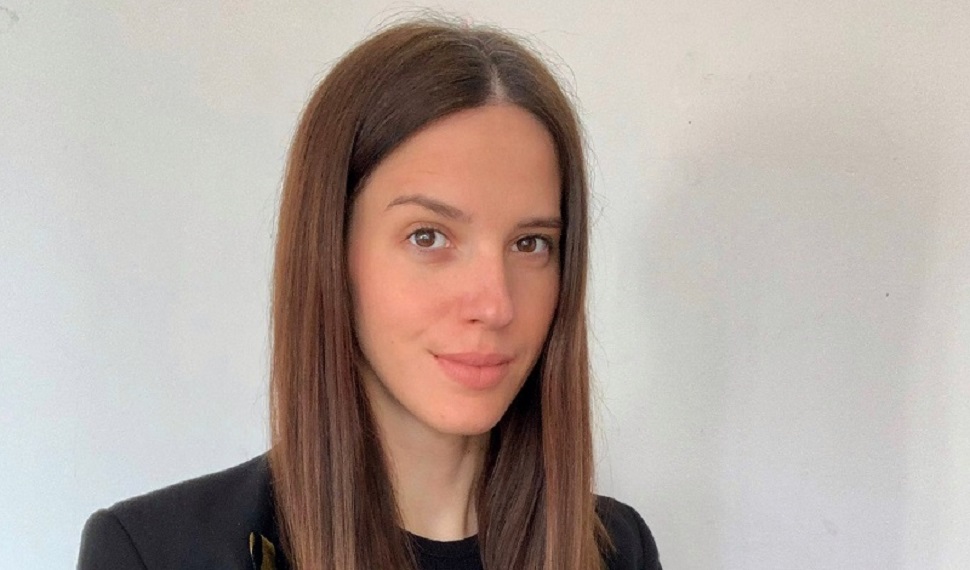
By Marina Bolfan, Senior Customer Growth Executive at Infobip Nigeria
Nigeria’s banking sector is becoming increasingly more competitive. This is especially the case within the digital banking space where traditional banks not only have to compete against each other in the use of cutting-edge technology to deliver better financial services, but also having to contend with emerging fintechs driven by the need to accelerate financial inclusion.

Marina Bolfan, Senior Customer Growth Executive at Infobip Nigeria
For financial institutions to maintain a competitive edge, it is becoming crucial to embark on a deeply rooted customer engagement strategy that will enable them to create strong and long-lasting relationships with their customers. Today, modern customers have various options at their disposal and are willing to switch to another bank should they feel dissatisfied with the Customer Experience (CX) at their current financial institution.
On the other hand, customers who feel connected with their bank are more likely to remain loyal and will even recommend the bank to other users. Loyal customers are also more likely to use banking services regularly and to try out new products and services. This ultimately leads to greater revenue generation and profitability for the financial institution.
As such, key stakeholders within the banking sector have come to the realisation that value innovation from a customer experience perspective is required, where new tactics to improve banking experiences from an end-to-end customer engagement viewpoint should be adopted to facilitate the launch of new business models backed by analytical insights.
New communication channels

Considering the current landscape, banks that continue to use traditional or conventional digital channels of communication such as SMS, USSD, email and mobile apps, are placed at a disadvantage and are less likely to gain a lead in the market. Instead, the rise of digital banking is prompting banks to focus on new communication channels that will tie their customers to them through enhanced experiences, that result in a better CX. While traditional channels will still remain part of the banking landscape, banks must provide additional banking channels and customer engagement platforms to compete in today’s market.
Part of this strategy is for banks to provide conversational or chat banking that takes offline banking online by enabling customers to interact with chatbots, voice assistance systems, human agents, and online chats that can provide personalised advice without customers having to visit a branch. Conversational banking enables banks to shift towards hyper-personalisation, automation and 24/7 availability, which can be harnessed to deliver personalised and seamless experiences while also driving cost efficiency for the business. This results in improved CX and drives business growth, which is ultimately every bank’s main goal.
Rich Communication Services
Rich Communication Services (RCS) is a channel that is becoming integral to conversational banking. While still relatively new to Nigeria, RCS can be seen as an upgraded version of SMS, complete with the rich features of a chat app. Rich features include images, videos, and audio files that can be seen in RCS messages and that provide a more engaging and personalised experience for customers. RCS offers a wide range of features that can improve CX, including interactive functionality that enables customers to make bill payments or balance enquiries, while providing privacy and security through end-to-end encryption.
The main value of incorporating an RCS channel is that it yields better customer engagement, increases trust and builds long-term customer relationships. By sending RCS messages, banks can ensure that customers gain higher visibility of their brand, while also presenting new offers and campaigns in a more effective way, such as information about loans, changing interest rates or new credit cards. Banks can also use RCS to send notifications or useful reminders about card activations or payment instructions.
While RCS is new to the local market, the opportunities it presents are huge and use cases will grow exponentially as the channel gains traction. Conversational banking should ultimately provide a seamless flow of conversation to ensure positive CX and manage a host of complex transactions that will lead to a deeply rooted engagement that translates into a long-term relationship between a bank and its customers.


Mrs. Clementine Wamba, head, Digital Switch Over (DSO) at the National Broadcasting Commission (NBC), has stressed the need for broadcasting stations and practitioners nationwide to work towards meeting the 2028 global deadline for the switch over.

She made the call in her presentation titled, “DSO Big Picture: Free TV Audience Measurement and the Evolving Media Landscape”, at the 2026 NBC South West Summit held in Ibadan.
Wamba harped on the need for practitioners to adopt DSO in the transmission of news and other programmes in order to meet future challenges, stating that any country that fail to align with the DSO by 2028 will be shut out of practice.
This development, according to her, may result in job losses and other consequences that could hinder the growth of the industry in Nigeria, noting that Free TV is tailored towards the DSO, with provision for many channels in contrast to the age-long analogue system.
According to her, “The Digital Switch Over is a technological improvement on the age-long analogue style of broadcasting in the country. With the adoption of the DSO, practitioners will be in tune with global practice of broadcast journalism.
“Also, its benefits include efficient use of spectrum, changing of industry landscape, more access to national development programmes and better viewing experience.”

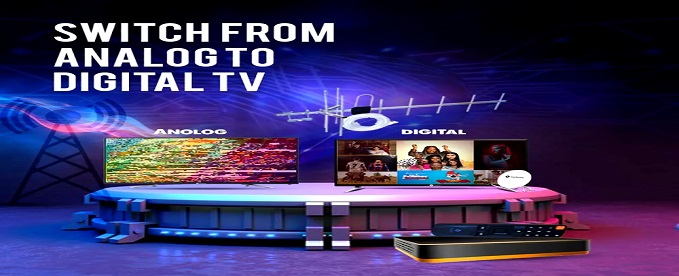
National Broadcasting Commission (NBC) has said that Nigerians will no longer pay annual Digital Access Fees under the renewed Digital Switch Over (DSO) project.

Charles Ebuebu, director-general, NBC, disclosed this in an exclusive interview with the News Agency of Nigeria (NAN) on Wednesday in Abuja,
Ebuebu said viewers only need to purchase an approved decoder and satellite dish which cost below N20,000 to enjoy free television permanently.
“Previously, users paid an annual digital access fee of about N1,500, described as an administrative charge.
“The new system removes that annual fee. It provides free access to free-to-air television channels without any payment.
“Premium channels will be introduced later. Viewers who want those additional channels will be able to access them through paid services.
“Nigerian content on free-to-air channels remains free to watch. Unlike Pay TV, this platform does not require monthly subscriptions for its basic service,” he said
Ebuebu said approved decoders for the FreeTV will cost less than N20,000 and authorised sales outlets will soon be announced.
He urged Nigerians to wait for official information on approved dealers for the DSO decoders, warning that unauthorised sellers are exploiting growing public demand.
He reiterated that people only need a free-to-air decoder, along with a satellite dish instead of the old antenna system to receive the DSO signal.
“Once the equipment is installed, viewers can access all available channels across the country without paying any subscription fees,” he stressed
The DG dismissed claims by some retailers that there are different categories of decoders sold at varying prices, stressing that such sellers are not authorised by the commission.
According to him, the NBC will soon publish the list of approved dealers, official prices, and locations where genuine decoder boxes and accessories can be purchased.
The NBC boss said the DSO project is designed not only to improve television broadcasting but also to stimulate economic growth by creating jobs, attracting investment, and opening up opportunities for businesses that support the broadcasting industry.
Ebuebu noted that content producers and broadcasters stand to benefit significantly from the nationwide reach of the DSO platform.
Unlike the previous system, where many stations had limited regional audiences, he said the new platform will make their channels available to viewers across Nigeria.
He added that the introduction of audience measurement technology will provide scientific and reliable data on television viewership.
Ebuebu added that audience measurement technology will give advertisers greater confidence in placing adverts and enable broadcasters to demonstrate the true size and reach of their audiences nationwide.
Uchenna Mbunabo, Nigerian filmmaker, has raised concerns over the alleged unauthorised broadcast of Nollywood films by some Ghanaian television stations, calling on Ghana’s National Film Authority (NFA) to strengthen the enforcement of copyright laws.

Uchenna Mbunabo, Nigerian filmmaker
Mbunabo made the remarks during a conversation with James Gardiner, deputy CEO of the National Film Authority (NFA) of Ghana.
He questioned whether it was permissible for television stations in Ghana to download Nigerian movies from YouTube and air them without obtaining permission from the producers.
“I noticed that Ghanaian TV stations, the way they are stealing our films and showing them for free with impunity. Is it legalised in your country for TV stations to go on YouTube, download people’s sweat and show it for free?”
According to Mbunabo, some Ghanaian television stations have been downloading newly released Nollywood films from YouTube and broadcasting them without authorisation, depriving producers of revenue generated through the platform.
He also stated that he had not witnessed Nigerian television stations engaging in similar practices and questioned what measures Ghana was taking to protect filmmakers’ intellectual property.
Responding to the concerns, Gardiner acknowledged that the issue exists and said the National Film Authority had begun engaging relevant stakeholders to address it.
He disclosed that the NFA has held discussions with the Ministry of Communications, the National Communications Authority (NCA) and the National Media Commission (NMC) on improving copyright enforcement.
Gardiner explained that while Ghana has copyright laws, enforcement remains challenging because many television stations now operate digitally and may not have physical offices within the country.
“There are copyright laws, but they are not effective because a lot of the TV stations don’t have offices. Most of them are now digital, so they operate from anywhere. They can even have a Ghanaian TV station but be operating from Austria simply because it is digital.”
He added that authorities are considering a new licensing framework that would require broadcasters to undergo a fresh licensing process to improve monitoring and enforcement.
According to Gardiner, television stations found guilty of illegally broadcasting copyrighted content would be required to compensate affected producers through fines.
He added that repeat offenders could face suspension of their broadcasting licences, while a third violation could result in the revocation of their licences.
Although he did not provide a specific timeline, Gardiner said the reforms were already underway and expressed hope that significant progress would be seen next year.
Mbunabo welcomed the proposed measures but urged the National Film Authority to expedite the process, stating that unauthorised broadcasts continue to affect filmmakers’ ability to recover production costs through legitimate distribution channels such as YouTube.
He also stressed that his comments were not directed at Ghana’s film industry, noting that he has worked with several Ghanaian actors over the years and supports collaborations between Nollywood and Ghallywood.

Dangote Refinery’s Private Placement Reportedly Hits $2.5Bn

FG, UNODC Plan National Strategy against Organized Crime

EFCC Busts NIS Visa Overstay Racket, Uncovers N700m in an Account

CBN to Monitor Every Dollar with FXBT, Forex Tracker

NCC, NDLEA Partner to Fight Piracy and Drug Trafficking

NRC, Ponzi Scheme Collapses Resulting Loss of Billions of Naira

NASENI Moves to Digitize CCB’s 5m Assets Declaration and Operations

Lebara Nigeria Launches Lebara Play, Africa’s First Telecom-Owned Micro-Drama Platform

CANAL+ Partners Samsung to Pre-Load DStv Stream on New Samsung TVs In Nigeria, Other African Countries

Tokenization, Blockchain Technology will Transform Financial Institutions – IMF




 Telecom2 days ago
Helios Towers Secures $29m Facility to Expand Across Africa

 News2 days ago
ValueJet Expands Fleet with Boeing Aircraft, Targets Wider African Network

 Telecom2 days ago
NCC Begins Stakeholder Consultation on MVNO Business Rules

 E-Financial2 days ago
First Securities Brokers Empowers Nigerians to Trade in the Stock Market with the Launch of FirstInvest App

 Telecom2 days ago
Surge in Fibre Cuts Hobbles Service Provisioning

 Broadcasting2 days ago
NBC Scraps Annual Digital Access Fee on DSO

 News2 days ago
Court Orders Final Forfeiture of 48 Properties Linked to Former AGF Abubakar Malami

 E-Business2 days ago
Jumia Seeks for Payment Harmonisation, Stronger Policies to Boost Africa’s Digital Trade