

General News
Sterling One Foundation Launches New Project for Women Farmers in Flood-Affected Areas

As part of relief interventions following the devastating nationwide floods in Nigeria, the Sterling One Foundation has launched Project Ladder, in partnership with Whitefield Foundation and Sterling Bank, to provide support for victims whose farms were affected by the floods.

The project which kicked off in Ndokwa East and Oshimili North Local Government Areas of Delta State is aimed at not only providing relief for the flood victims but providing improved farm inputs with better yield potential than the regular options.
Delta State is one of the 33 states in Nigeria that were affected by the 2022 floods, which started in May and lasted until October, claiming over 500 lives, displacing millions of people from their homes, and destroying about 110,000 hectares of farmland.
Following the cholera outbreak in the country’s north-eastern region, several interventions were launched in response to the disaster, many of which focused on providing alternative shelter for the displaced, food materials, and drugs.
Mrs. Olapeju Ibekwe, ceo of the Sterling One Foundation, explained why they started the project, saying that it was important to shift the focus from the immediate survival response that followed the floods to how to help the victims rebuild their lives.
“The floods affected several farming communities, and what we’ve set out to do is support them with resources to regain some self-sufficiency. Project Ladder is not just a flood relief project, but an initiative under our food security portfolio aimed at driving increased yield by supporting farmers with better inputs, and teaching them better farming practises, thus fighting the food shortages across the country,” she said.
For the project’s launch phase, about 100,000 enhanced cassava stems were distributed to women farmers, marking the start of a robust plan to support them all through the planting season in hopes of a great harvest.
Mrs. Funmi Johnson, ceo of Whitefield Foundation, spoke about the project’s impact, emphasising how important it was for the nation’s food security, as most flood victims are farmers who need to be empowered to rebuild their means of livelihood and continue to contribute their quota to supporting the nations.
The project touches on two of the Sterling One Foundation’s five focus areas: food security and gender equality, as well as women empowerment. This year, the Foundation plans to deepen the work done in these areas to cater to more communities and impact more direct beneficiaries.



World Health Organisation (WHO), yesterday, said that Ebola outbreak is “very high” but added that the global risk remains “low”.

So far, 82 cases and seven deaths have been confirmed in the Democratic Republic of Congo (DRC), but WHO, said, the real scale of the outbreak is likely far larger, with nearly 750 suspected cases and 177 suspected deaths reported
Tedros Adhanom Ghebreyesus, chief, WHO, said the situation was “deeply worrisome”.
He said there were now nearly 750 suspected cases in the DR Congo and 177 suspected deaths, as health workers scramble to track down contacts of everyone thought to be infected with the virus.
“The Ebola outbreak in the Democratic Republic of the Congo is spreading rapidly,” he told a press conference.
“So far, 82 cases have been confirmed in DRC, with seven confirmed deaths.
“But we know in people who travelled from DRC and one death.
Measures to address the epidemic in DRC are much larger.
There are now almost 750 suspected cases and 177 suspected deaths.”
He said the situation in Uganda was “stable”, with two cases confirmed in Uganda, including “intense contact tracing” and calling off the Martyrs’ Day commemorations, “appear to have been effective in preventing the further spread of the virus”, Tedros added.
While a US national who was working in the DRC has tested positive and been transferred to Germany for care, Tedros said another US national deemed to be a high-risk contact had been transferred to the Czech Republic.
Besides national staff already in the DRC, he said 22 international staff had been deployed to the field, “including some of our most experienced people”.
Tedros said that violence and insecurity were impeding the response to the outbreak in the DRC.
“We are now revising our risk assessment to very high at the national level, high at the regional level, and low at the global level.
“So far, 82 cases have been confirmed in DRC, with seven confirmed deaths.
“But we know the epidemic in DRC is much larger. There are now almost 750 suspected cases and 177 suspected deaths.
“The situation in Uganda is stable, with two cases confirmed in people who travelled from DRC, with one death.”
Tedros said that violence and insecurity were impeding the response to the outbreak.
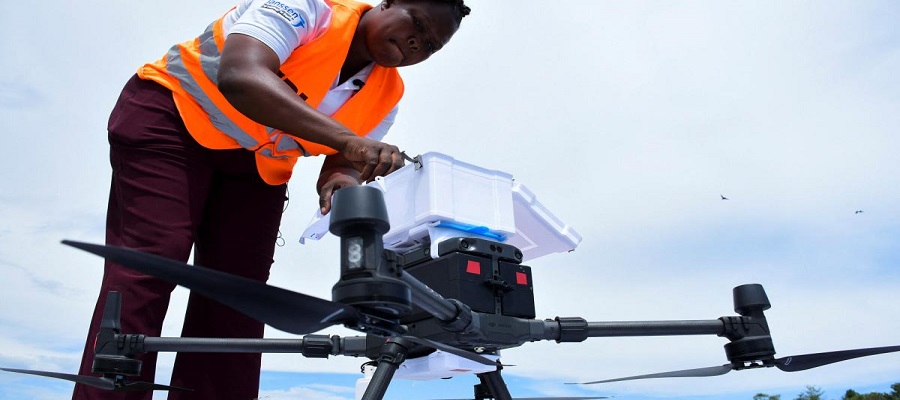
Nigerian Army has acquired additional drones and other advanced force multipliers to strengthen surveillance operations, improve target acquisition, and enhance precision strike and casualty evacuation capabilities.

Lt.-Gen. Waidi Shaibu, chief of Army Staff (COAS), said that the new drones will boost surveillance, precision strikes.
Shaibu, who disclosed this in a statement shared via the Nigerian Army’s official X handle, noted that the conference provided a platform for critical assessment of ongoing operations and the development of forward-looking strategies to address Nigeria’s evolving security challenges.
He said deliberations at the Nigerian Army Conference Centre, Asokoro, focused on sharpening operational responses, strengthening training frameworks and adapting to the demands of modern security warfare.
According to him, the resolutions reached are aimed at building a more agile, combat-ready, technologically driven and mission-oriented force capable of responding effectively to emerging threats.
A key highlight of the reforms is the Army’s increasing investment in modern warfare technology, including the acquisition of additional tactical drones and the reconfiguration of Army aviation assets for combat roles.
Shaibu explained that these developments have significantly enhanced intelligence gathering, precision targeting, operational mobility and casualty evacuation across various theatres of operation.
He also highlighted ongoing improvements in recruitment, advanced training, professional military education and leadership development, stressing that discipline, competence and meritocracy remain central to building a stronger institution.
Reaffirming his “soldier-first” philosophy, the COAS said troop welfare remains a top priority, stressing that “troop welfare remains non-negotiable; well-motivated soldiers operating in conducive environments are critical to mission success.”
He urged senior officers to ensure that resolutions from the conference are fully implemented in field operations, stressing that the true value of the gathering lies in measurable impact on the battlefield.
Describing the ongoing reforms, Shaibu said: “We are not just reforming the Army; we are building a lethal, technology-driven fighting force where only discipline, merit, and mission success matter.”
The Army Chief expressed appreciation to President Bola Ahmed Tinubu for his support, as well as the Minister of Defence, Minister of State for Defence, Chief of Defence Staff, service chiefs and intelligence agencies for their continued collaboration.
The conference ended with the presentation of commendation plaques to senior officers recognized for outstanding contributions to operational effectiveness.

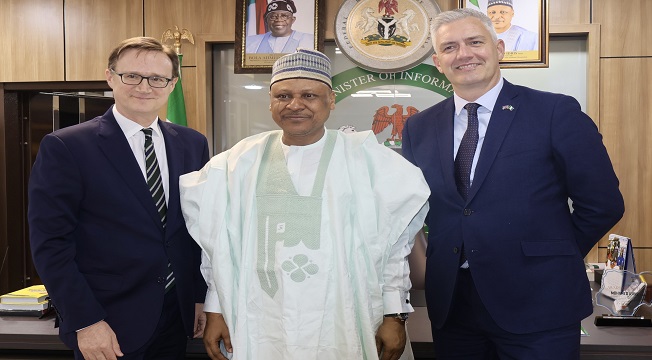
The UK Special Envoy for Freedom of Religion or Belief (FoRB), David Smith MP, concluded a three-day visit to Abuja this week, marking Nigeria as the first focus country he has visited under the UK’s FoRB strategy.

During the visit, David Smith MP held a wide range of meetings with senior Nigerian government officials, religious leaders, civil society organisations, and local communities – reflecting the UK’s commitment to sustained, practical engagement and partnership on freedom of religion or belief in Nigeria.
Meetings included discussions with the National Security Adviser, Mallam Nuhu Ribadu, the Honourable Minister of Information and National Orientation, Mohammed Idris, and the Governor of Plateau State, Caleb Mutfwang.
The Special Envoy also met with the co-chairs of the Nigeria Inter-Religious Council, Archbishop Daniel Okoh, President of the Christian Association of Nigeria, and HRH the Sultan of Sokoto, Muhammadu Sa’ad Abubakar III, President-General of the National Supreme Council for Islamic Affairs.
At the end of the visit, the UK Special Envoy for Freedom of Religion or Belief, David Smith MP, said: “Over the past few days, I have been honoured to meet a wide range of people — from senior government figures and civil society to faith leaders and local communities. I came to listen, learn, and see both how freedom of religion or belief is experienced in everyday life, and how it connects to – and is a core part of addressing – Nigeria’s wider challenges around security and cohesion.
“Some of the most powerful moments of this visit were at community level. Visiting Father Emmanuel Unamba’s parish and meeting Christian and Muslim neighbours living side by side was a real reminder that peaceful coexistence is something people build every day through leadership, dialogue, and shared responsibility.
“What I take away from this visit is the importance of further progress being Nigerian led, rooted in strong institutions and inclusive dialogue, with FoRB at its heart. The UK will continue to support practical efforts in ensuring greater peace, security and prosperity for all.”
The visit also included a roundtable with partners of the UK’s Strengthening Peace and Resilience in Nigeria (SPRiNG) programme, a £38 million UK government-funded conflict and resilience programme operating primarily in Kaduna, Katsina, Benue and Plateau states.
During the visit, Special Envoy David Smith MP held meetings with the Institute for Peace and Conflict Resolution, the Nigerian National Human Rights Commission, and civil society organisations working at the intersection of insecurity and religious freedom. He also visited the National Mosque and the National Ecumenical Centre in Abuja.
Speaking to the various stakeholders, Mr Smith called for greater tolerance across religion or belief in Nigeria and hoped that the cohesion he saw on a community level in the capital, could be achieved nation-wide with the same resolve. He hoped to continue these dialogues with interlocutors in the UK.
The visit builds on the momentum of President Tinubu’s State Visit to the United Kingdom in March 2026, which reinforced the UK-Nigeria Strategic Partnership and included interfaith events attended by President Tinubu and His Majesty The King, underlining both countries’ shared commitment to fostering constructive interfaith dialogue.

WHO Says Ebola Risk Now at Highest Level

Airtel Africa Launches $110m Share Buyback Programme for Capital Efficiency

NCC Drafts New Rules for Virtual Mobile Operators

LG Electronics Showcases Advanced HVAC Solutions at Mega Clima Nigeria 2026

FG Unveils AI Public Services Platform

MTN, VDT, Zoracom, Digital Realty Back 2026 Girls in ICT Campaign

Vitel Wireless Partners Fintechs to Expand Access to Services

Kaspersky Discovers Vulnerability in Qualcomm Snapdragon Chips that can Lead to Data Loss & Device Compromise

Bank Customers to Pay N1,500 for ATM Card Issuance, Replacement – CBN

FG Okays 112 as Toll-Free National Emergency Response Number




 Telecom2 days ago
MTN to Turn its African Tower Network Into a Distributed AI Compute Grid

 News2 days ago
Elon Musk to Become First World’s Trillionaire with SpaceX Historic IPO

 Telecom2 days ago
NCC Begins Review of Nigeria Telecoms Policy after 26 Years

 Broadcasting2 days ago
STBMAN Warns of “Broadcasting Crisis”, Urges Tinubu to Halt NBC’s DSO

 E-Business2 days ago
Kaspersky Warns that Scammers are Exploiting World Cup 2026 Travellers

 E-Business2 days ago
Meta Platforms Contributed $820m to Nigeria’s Economy in 2025 – Report

 News2 days ago
Moniepoint Boosts UK Payments Security

 E-Business2 days ago
NITDA Unveils AI-Powered Government System That Tracks Workers, Flags Delays Automatically @ICSC 2026