

Telecom
Samsung Leads Again With Biometric Scanner-Enabled Galaxy S5


Samsung Electronics’, the world’s largest maker of mobile handsets, has taken the lid off its highly anticipated Galaxy S5 smartphone, adding a new Galaxy device to its range of products in this category.
The fifth generation of the Galaxy S series was unveiled at an ‘Unpacked’ event during the 2014 edition of the Mobile World Congress in Barcelona and will be available for purchase in 150 countries, including Nigeria, on April 11.
Powered by a 2.5GHz quad-core processor, the Galaxy S5 sports a 5.1-inch super AMOLED display, making it slightly larger than its predecessor, the Galaxy S4.
The device also boasts an upgraded 16-megapixel camera, new fitness tracking features, a heart rate scanner and is dust and water resistant.
The highlight of the Galaxy S5 is a new fingerprint sensor, which is integrated with the device’s home button.

The finger scanner will provide consumers with a safe, biometric screen-locking feature and also make their mobile payment experience more secure.
Speaking at the unveiling of the device, Mr. Emmanouil Revmatas, director, Hand Held Products, Samsung Electronics West Africa, said the new Galaxy S5 offers consumers a refined experience with the added advantage of innovation on essential features for everyday use.
“With the Galaxy S5, Samsung is going back to basics to focus on delivering the capabilities that matter most to consumers. A great number of innovations have been injected into the device towards delivering new value to enhance their lives and also provide them with the ultimate communication experience. The Galaxy S5 represents an iconic design with essential and useful features to focus on delivering the ultimate smartphone in the market today through people-inspired innovation,” he said.
He added that the device will set the benchmark for how a smartphone can be integrated into daily life.
The new Galaxy S5 features a perforated pattern on the back cover creating a stylish and modern look. It comes in an array of colors, including Charcoal Black, Shimmery White, Electric Blue and Copper Gold. The device is expected to become the best-selling smartphone in the world once it goes on sale in April.
Samsung also expanded its industry-leading wearable device line with Samsung Gear Fit, a breakthrough and futuristic fitness tracker that offers the convenience of Samsung Gear technology with comprehensive fitness tools that empower consumers to stay physically active without sacrificing personal style or mobile connectivity.
The wrist-worn device incorporates a built-in heart rate monitor and a lightweight swappable strap, alongside its signature curved AMOLED screen. The Gear Fit will also be available globally from April.
Speaking of the Gear Fit, Revmatas said: “Samsung understands that the next generation of wearable mobile solutions must directly reflect the diverse interests and needs of consumers.
In response, our Gear product portfolio continues to expand with unique devices for a wide range of lifestyles, including the new Gear Fit, which is designed to help consumers live fit and active lives without forfeiting their ability to stay connected on the go.”
Samsung Electronics Co. Limited is a global leader in technology, opening new possibilities for people everywhere.
Through relentless innovation and discovery, Samsung is transforming the worlds of televisions, smartphones, personal computers, printers, cameras, home appliances, LTE systems, medical devices, semiconductors and LED solutions.
The company employs 236,000 people across 79 countries with annual sales of $187.8 billion.


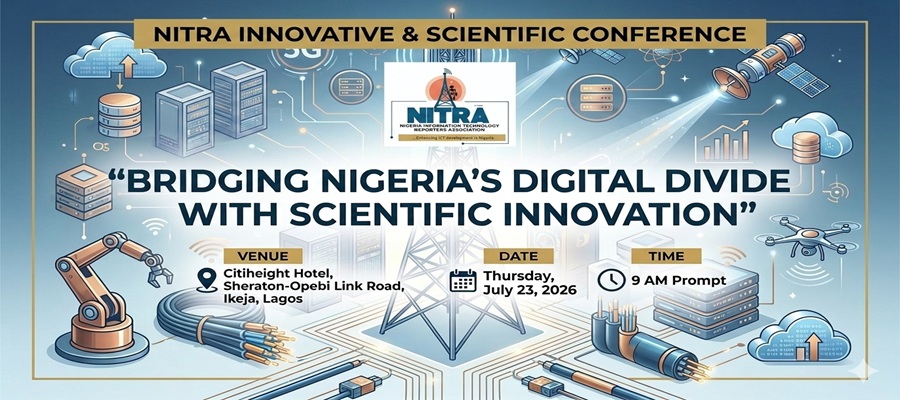
The need for Nigeria to think outside the box in its need to drive towards global relevance with innovations and scientific developments will be on the front burner at the NITRA Innovative & Scientific Conference scheduled to hold on Thursday July 23, 2026 in Ikeja, Lagos.

NITRA
The Nigerian Communications Commission (NCC) will lead other delegates to discuss and take far-reaching decisions at the event, which has its theme as “Bridging Nigeria’s Digital Divide With Scientific Innovation”.
Other companies that have indicated interest in partnering with NITRA include mobile communications company, Tecno; Africa’s premier end-to-end AI solutions company, Hyperspace; and telecommunications data infrastructure company, Digital Realty.
Speaking on the proposed event, the Chairman, Nigeria Information Technology Reporters Association (NITRA), Chike Onwuegbuchi noted that the event will seek to create a platform for government and private organisations to deliberate on policies around scientific innovations in Nigeria, challenges, place of indigenous and foreign collaboration, roles of each stakeholder, and grassroots development in that regard, among others.
According to him: “The Federal government, with series of programmes and partnerships, has established the urgent need to create an ecosystem that thrives on scientific innovation, breeding institutions and individuals with a target of placing the country at the fore-front of Next-Gen development.
It is a known fact that digital and scientific innovations are crucial, not only to the survivability of a nation, but also to the sustainability of its growth and development, with significant effect on economic strength, global image, defense and security, government capabilities to function, and public health and safety, communication and digital footprint, among others.
The federal government is actively driving scientific innovation to foster economic diversification and build a $1 trillion economy by 2030. Efforts are heavily focused on commercializing research, establishing massive research funds, and funding strategic infrastructure, particularly in technology, biotechnology, and healthcare. Core government initiatives and policies include the newly instituted National Research and Innovation Development Fund (NRIDF), which aims to mobilize about $500 million annually to support research and the commercialization of scientific outputs; and the Nigeria Genomic City, a multi-ministerial initiative aimed at transforming Nigeria into a leading hub for genomics, precision medicine, and biotechnology. It is designed to protect indigenous data, stimulate artificial intelligence in health, and develop a highly skilled scientific workforce.
According to the General Secretary of NITRA, Mr. Chidiebere Nwankwo, the forum will also be a vehicle to propagating the views of decision makers to the public, thereby furthering the cause of public awareness and information dissemination on the topic.
The focus, he said will be on how Nigeria can sustain digital innovative growth and scientific development in Nigeria

The board of global payments company, PayPal, says a 53 billion dollars takeover offer from financial technology firm, Stripe, and private equity company, Advent International, does not adequately reflect the company’s long-term value.

PayPal
According to reports, the proposed acquisition, valued at 60.50 dollars per share, remains under consideration, with the board yet to formally respond to the offer.
The directors are said to be evaluating not only the financial value of the proposal but also the structure of the financing, the timeline for completing the transaction and the likelihood of obtaining regulatory approvals.
They are also considering the possibility of competing bids emerging.
Although the offer represents a premium of about 28 per cent above PayPal’s recent share price, the board believes the company could deliver greater value to shareholders if its ongoing turnaround strategy succeeds.
Following reports of the bid, PayPal shares gained about two per cent to close at 56.73 dollars.
Sources familiar with the discussions said Stripe and Advent have secured approximately 50 billion dollars in debt financing from JPMorgan and Morgan Stanley, while both firms would jointly contribute 17 billion dollars in equity.
Under the proposal, the two companies would jointly own PayPal instead of dividing its operations.
PayPal, Stripe, Advent International, JPMorgan and Morgan Stanley have all declined to comment on the proposed transaction.
The discussions come as PayPal seeks to strengthen its business after years of increasing competition from rivals including Apple Pay, Google Pay and emerging financial technology firms.
The company, which was valued at about 360 billion dollars in 2021, now has a market capitalisation of approximately 36 billion dollars.
Since assuming office as Chief Executive Officer in March 2026, Enrique Lores has embarked on a restructuring programme aimed at improving operational efficiency and restoring growth.
The restructuring includes the creation of three business divisions comprising Checkout, Venmo and Consumer Financial Services, and Payments and Crypto.
The company is also targeting 1.5 billion dollars in cost savings through the deployment of artificial intelligence technologies.
PayPal’s latest financial results indicated signs of recovery, with first-quarter revenue rising seven per cent year-on-year to 8.35 billion dollars, while total payment volume increased by eight per cent to 464 billion dollars.
If approved, the transaction would combine two of the world’s largest digital payments companies.
The combined business would process an estimated 3.7 trillion dollars in annual payment volume, significantly strengthening its position in the global online payments market.
However, analysts expect the proposed acquisition to face intense regulatory scrutiny because of the companies’ combined market share in merchant payment services.
To address possible antitrust concerns, the bidders have reportedly considered options, including separating PayPal’s Braintree business or other assets if required by regulators.
Sources said Stripe and Advent remain interested in pursuing the acquisition despite the board’s reservations, although negotiations are expected to continue.
Market observers are also awaiting PayPal’s earnings report scheduled for July 28 for further indications of the company’s financial recovery and future growth prospects.
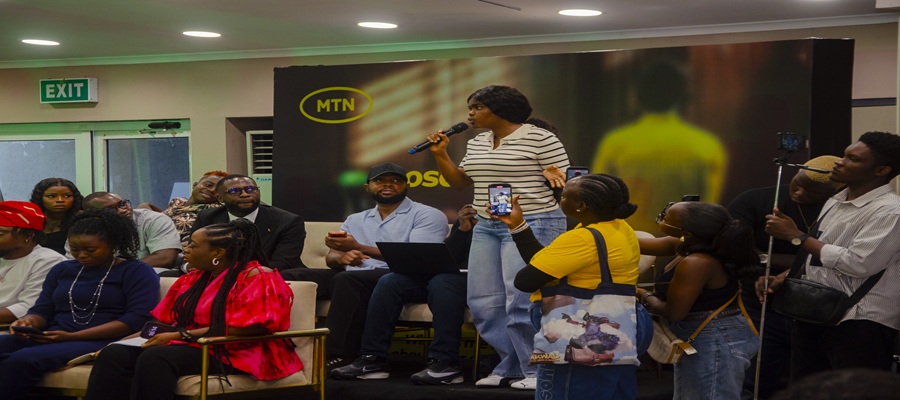
Concerns over network reliability and its impact on Nigeria’s growing creator economy took centre stage at MTN Nigeria’s Data on Trial event, where content creator and streamer, Jarvis, challenged telecommunications operators to improve connectivity for digital creators.

Speaking during the event, Jarvis asked whether there were locations in Nigeria where uninterrupted internet connectivity could support real-life (IRL) streaming without network disruptions.
“Are there places where there is no breakage when streaming IRL?” she asked.
Her question highlighted the challenges faced by content creators who depend on stable internet services for live streaming, content uploads and real-time engagement with audiences.
Responding, MTN Nigeria’s Chief Technical Officer, Mr Yahaya Ibrahim, said network performance depends on several factors, including location, network coverage, device capability and the number of users connected to a particular base station.
He noted that operators continue to invest in expanding network capacity to meet the growing demand for data services.
Earlier, MTN’s General Manager, Network Performance and Quality Assurance, Mr Michael Ndukwe, explained the evolution of mobile network technology in Nigeria, from first-generation (1G) services to the current fifth-generation (5G) technology.
According to him, each phase of technological advancement has significantly increased network capacity and enabled new digital services.
Ndukwe cited Nigerian Communications Commission (NCC) data showing that Nigerians consumed about 13.2 million terabytes of data in 2025.
He added that data usage reached approximately 4.06 million terabytes in the first quarter of 2026, reflecting the country’s increasing reliance on digital platforms and online services.
According to him, the growth is being driven by wider adoption of 4G and 5G networks, increased smartphone penetration, the proliferation of smart devices and expanding use of social media platforms.
Participants at the event noted that as more Nigerians build businesses and careers around digital content, access to reliable and high-speed internet has become critical to sustaining the country’s digital economy and creator ecosystem.

Dangote Refinery’s Private Placement Reportedly Hits $2.5Bn

FG, UNODC Plan National Strategy against Organized Crime

EFCC Busts NIS Visa Overstay Racket, Uncovers N700m in an Account

CBN to Monitor Every Dollar with FXBT, Forex Tracker

NCC, NDLEA Partner to Fight Piracy and Drug Trafficking

NRC, Ponzi Scheme Collapses Resulting Loss of Billions of Naira

NASENI Moves to Digitize CCB’s 5m Assets Declaration and Operations

Lebara Nigeria Launches Lebara Play, Africa’s First Telecom-Owned Micro-Drama Platform

CANAL+ Partners Samsung to Pre-Load DStv Stream on New Samsung TVs In Nigeria, Other African Countries

Tokenization, Blockchain Technology will Transform Financial Institutions – IMF



 News24 hours ago
EFCC Busts NIS Visa Overstay Racket, Uncovers N700m in an Account

 News3 days ago
Court Orders Final Forfeiture of 48 Properties Linked to Former AGF Abubakar Malami

 News3 days ago
ValueJet Expands Fleet with Boeing Aircraft, Targets Wider African Network

 News3 days ago
Court Grants Former CCT Chairman Danladi Umar N100m Bail Over EFCC Charges

 Telecom3 days ago
Helios Towers Secures $29m Facility to Expand Across Africa

 E-Financial3 days ago
First Securities Brokers Empowers Nigerians to Trade in the Stock Market with the Launch of FirstInvest App

 Broadcasting3 days ago
NBC Scraps Annual Digital Access Fee on DSO

 Telecom3 days ago
NCC Begins Stakeholder Consultation on MVNO Business Rules