

Telecom
NCC Blames Taxes for Poor QoS, Warns Against Unauthorized Radio


Peter Igho, chairman, Nigerian Communications Commission (NCC) has decried multiple taxation on telephone service providers by different levels of governments, denials of rights of way for expansion of telecommunication infrastructure and vandalization of equipment as the major factors militating against the attainment of quality service in the country’s telecommunication sector, regarded as one of the fastest growing in the world.
This is coming as the commission yesterday warned that it is illegal to sell, install or use in Nigeria any Radio Frequency (RF) Jamming device without its authorization.
But speaking during a courtesy call on Dr. Olusegun Mimiko, Ondo State governor, in his Akure Office during the week, Igho, appealed to governments to ease these burdens for the sector to record the desired growth.
The NCC chairman specifically appealed to Mimiko, who is a member of the National Economic Council on Multiple Taxation, Levies and Charges on ICT Infrastructure in Nigeria, under the chairmanship of Namadi Sambo, Vice-President,to further influence the reduction in the taxes and levies payable by telecommunication companies operating in Nigeria.
He described the outlined impediments as being beyond the scope of the NCC as the regulatory body of the telecommunication industry “but within the mandate of the government”, and that the commission is already tackling those under its control to achieve maximum results.
According to him, “the issue of right of way and multiple taxations deserves serious attention. There are multiple taxations and regulations that await the service providers at the various levels of government, including state governments and even some communities.
“In most cases, unfortunately, telecom masts and towers easily become specific targets for multiple taxes and regulations even where there are other masts and towers in existence, or even when appropriate taxes have been imposed at the Federal level.
“The resolution of these issues would go beyond enhancing quality of service as it would contribute to expansion of infrastructure and attraction of investment in the sector for the benefit of the nation.
“As we all know, rights of way for deployment of infrastructure determines the ease with which service providers can easily and quickly deploy or add new infrastructures at a given time and place. Related also is the vandalization of equipment across the nation, which also contributes negatively to quality of service.”
The NCC boss, who was accompanied on the visit by members of the board and management of the commission also blamed ignorance of how the communication system works across the globe on the way authorities in Nigeria seek to limit the infrastructure of the service providers especially in the erection of masts.
He said: “In the United Kingdom, there are more than 65,000 base stations for telecommunication services in a land that is far less than Nigeria’s. Nigeria is yet to achieve 25,000 installations across its huge land mass, yet many feel that we already have enough and are defacing the environment.
“This of course is causing infrastructure deficit and the situation is alreasy becoming very discouraging to the service providers who are being forced to depend on very few base stations to serve the populace.”
Igho however sought the support of the Ondo governor as the commission according to him, “is currently pursuing a major broadband infrastructure deployment programme and we would expect progressive governments to join hands with us and also plan ahead to tap on these potentials.”
He also disclosed that the commission is currently putting on efforts in the provision of Emergency Communication Centres (ECC) across the country and that by this, the NCC “has elected to assist the Federal and state governments to introduce this most desired service across the nation in partnership with state governments.
“The pilot of these centres in Awka and Minna were currently commissioned. Few more centres located in some other state would be commissioned soon. It may not be out of place to say that all citizens of Ondo state would appreciate this service.”
Mimiko who requested the NCC to assist the state in the provision of a three-digit line to be deployed in the operations of the state’s intervention programmes in healthcare delivery such as the Abiye Safe Motherhood programme, the Trauma and Kidney Care Centres, charged the commission to put in place a quality measurement mechanism ‘that will tell us the efficiency of our telecom service.”
According to him, “the perception of Nigerians that the service providers are only out to cheat them and milk them dry must be changed and the NCC must see to it because for each minute that subscribers are denied usage of their telephones through bad service, billions of naira are skimmed from them.”
Elsewhere, NCC said it is illegal to sell, install or use in Nigeria any Radio Frequency (RF) Jamming device without its authorization.
Radio Frequency (RF) Jammers are devices used to disrupt or prevent communication via a broadcasted RF signal.
“Individual towers partition cities into small sections called cells. As a cell phone user traverses the cells in an area, the signal is passed from tower to tower.
Jamming devices take advantage of this fact by transmitting on the spectrum of radio frequencies used by cellular devices.
Through its concurrent transmission, the jamming device is able to disrupt the two-way communication between the phone and the base station. This form of a denial-of-service attack inhibits all cellular communication within range of the device.
Thus, “Radio jamming is the (usually deliberate) transmission of radio signals that disrupt communications by decreasing the signal to noise ratio”.
Speaking at the opening of a two-day capacity building/workshop for ICT journalists in Lagos, Engineer Austine Nwaulune, director, Spectrum Administration at NCC lamented the spray in radio frequency jammers usage in churches, mosques, hotels and other social outlets, especially without the permission of the Regulator.
He said that the effect is evident in the low quality of service (QoS) which has become topical in the industry in recent time, particularly, polarizing the Regulator, operators and telecom subscribers in the country.
He said, “These devices are illegal to sell, install or use in Nigeria without authorisation from the Commission and have been found to be used by Hotels, Security operatives, Courts, Religious institutions to prevent the operation of phone devices in their premises and areas of security concerns.
“They contribute to degrade the QoS in the areas they are deployed and could affect a large area depending on the range and transmit power of the jammer.
“Like any radio transmitter they can radiate beyond the intended perimeter of coverage.
The use is prohibited by extant laws of the country”.
He warned the perpetrators to obtain permission from the Commission, desist from the act or face full wrath of the law, adding that NCC is unrelenting on its responsibilities to monitor the trend.
The International Telecommunications Union (ITU) had established National & International Frequency Coordination, that is a technical and regulatory process which is intended to remove or mitigate radio-frequency interference between different radio systems which utilize the same operational frequency.
International coordination is carried out through Intergovernmental treaties in line with coordination procedures in the Radio Regulations of the ITU.
NCC’s powers are drawn from its enabling Act 2003 in Nigeria and as a national coordination under ITU to undertaken by spectrum regulators/operators within an administration to ensure coexistence between inter and intra service users of the spectrum.
Tony Ojobo, (4th from left), director, Corporate Communications (NCC), flanked by speakers and staff off NCC at the opening of a two-day capacity building/workshop for ICT journalists in Lagos on Wednesday.
—



Irvine Partners, the woman-led, African-born creative communications agency operating across Nigeria, has cemented its position as a disruptive force on the global stage following a landmark week of international industry recognition for its CEO and founder, Rachel Irvine.

Rachel-Irvine-CEO-Irvine-Partners
Irvine has been named to Campaign UK’s prestigious 40 over 40 list for 2026, while simultaneously earning a place on PRovoke Media’s Innovator 25 EMEA index – two of the communications industry’s most closely watched honours, secured in the same week. The achievement places her among the most influential and progressive communications leaders across Europe, the Middle East, and Africa.
For Nigeria – Africa’s largest economy and one of its most competitive and complex communications environments – the recognition speaks directly to something the local industry has long understood: that the strategic thinking, cultural intelligence and executional precision forged in African markets is not a regional advantage. It is a global one.
Irvine Partners brings this philosophy to some of the world’s most prominent digital and consumer brands in the Nigerian market, including TikTok, Spotify, Uber and Google – organisations that demand communications work of the highest international calibre, delivered with genuine local understanding.
An African agency rewriting the global narrative
Campaign UK’s 40 over 40 celebrates individual excellence, leadership and lasting impact within the British media and marketing landscape. PRovoke Media’s Innovator 25 spotlights those who are dismantling traditional PR structures, advancing data-led practice, and reshaping how the industry operates. To earn both in a single week is rare by any measure.
What underpins both honours is a story that begins not in London but in Africa – in the dynamic, high-stakes communications environments of markets like Nigeria, where agencies must be sharper, faster and more culturally precise than anywhere else in the world.
“These accolades are less about my own journey and far more about where Irvine Partners is going as a collective,” says Rachel Irvine. “For a long time, the global communications industry treated African agencies as local executors of global strategies. What we’ve proven over the past few years is that the technical craft, cultural capital, and data frameworks built within our agency are not just scalable for the continent; they are world-class.”
Built on the same ethos that works in Lagos
The recognition follows the agency’s strong performance at the IN2 SABRE Awards EMEA, where Irvine Partners took major wins for Unicorn School – its proprietary internal talent development programme – and for its advanced data analytics capability, alongside notable shortlists for global clients including Spotify and Uber.
Nigeria’s communications market is one of the most demanding in the world. Consumer audiences are sophisticated and discerning. The media environment is layered, fast-moving and deeply attuned to authenticity. Brands that succeed here do not do so through generic messaging – they do so through precision, cultural credibility and strategic consistency. These are precisely the competencies that Irvine Partners has built its international reputation on.
“The PR landscape has fundamentally shifted,” Irvine adds. “Clients no longer want siloed regional strategies; they want intelligent, culturally intuitive storytelling backed by bulletproof analytics that move the business needle. We built our foundations on that exact ethos in highly dynamic markets, and bringing that specific DNA to the UK and EMEA regions is why we are winning.”
The agency’s agile, borderless model – deliberately structured to move at the speed of modern brands rather than the pace of legacy networks- is one that Nigerian communications professionals will recognise as a natural evolution of how the best African agencies have always operated: lean, sharp and built for impact.
Underlying both honours is Irvine’s sustained commitment to talent development and cultural diversity across all of the agency’s wholly owned offices – a principle as central to its Lagos work as to any other market in its growing global footprint.

Mark Zuckerberg, Meta Chief Executive Officer, has announced a major leadership change at WhatsApp, confirming that Will Cathcart will step down as head of the messaging service after seven years in office.

Zuckerberg made the announcement in a post shared on Facebook on Monday, June 22, 2026, praising Cathcart’s contributions to the growth of the platform.
According to him, Cathcart played a key role in expanding WhatsApp’s global user base to over three billion people while promoting privacy-focused communication across its services.
“Will’s been one of Meta’s most important and effective leaders, helping to bring WhatsApp to over 3 billion people and championing privacy for our community,” Zuckerberg stated.
The Meta CEO also announced that Kunal Shal will take over leadership of WhatsApp.
He described Shal as a “builder” with strong international experience, adding that his leadership style aligns with Meta’s long-term vision for the messaging platform.
Meta said the transition is aimed at strengthening WhatsApp’s role in both personal and business communication globally, as the platform continues to expand its services across markets.
Industry observers say the leadership change marks a significant transition for WhatsApp, which has grown rapidly under Cathcart’s stewardship, particularly in areas of privacy, encryption, and enterprise messaging solutions.
However, Meta has not disclosed the exact timeline for the leadership handover or further structural changes within the messaging division.
The company reaffirmed its commitment to maintaining WhatsApp’s security standards and continued innovation under the new leadership.

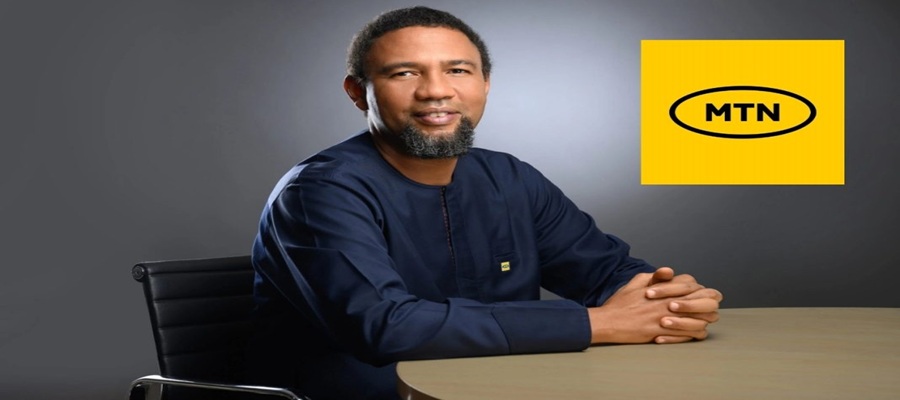
MTN Nigeria has raised the bar for corporate disclosure in Africa after publishing its 2025 sustainability report in full compliance with International Financial Reporting Standards S1 and S2.

Dr. Karl Toriola, CEO of MTN Nigeria,
The report, independently assured by Ernst & Young, marks the telecom operator’s seventh consecutive annual sustainability publication and third year as an early adopter of the global framework ahead of its mandatory implementation.
Dr. Karl Toriola, CEO of MTN Nigeria, said, “strong governance and ethical conduct are foundational to our sustainability strategy. We reinforced compliance through our Conduct Passport Framework and robust internal controls.”
He added that “in May 2025, we became the first telecommunications company in Nigeria to publicly present a sustainability report on the Nigerian Exchange Group platform, an important milestone in our commitment to IFRS S1 and S2- aligned disclosure and accountability.”
The company also secured Carbon Disclosure Project ratings of ‘B-’ for climate change and ‘C’ for water security.
Under the IFRS S2 framework, the telecoms operator disclosed climate-related risks linked to flooding, heat stress, regulatory changes and possible future taxes or charges on carbon emissions, following a climate scenario analysis completed in 2024.
The report also showed that MTN Nigeria now uses a digital reporting format – XBRL. This makes its sustainability and governance data easier for investors and ESG rating agencies to access and analyse through automated systems.
The Company also carried out assessments to understand how sustainability issues affect both its business operations and society at large, while measuring its overall economic, environmental and social impact from 2021 to 2024.
In addition, over one-third of MTN Nigeria’s biggest suppliers (based on spending) have committed to supporting the company’s net-zero emissions goals, although these commitments have not yet gone through an independent audit or verification process.

CredibleVoteNG Opens Free Access to all Polling Units in Nigeria after INEC Demanded N1.Bn for Register

NESREA Defends Plastic Waste Rules, Says Policy Targets Pollution

FG Engages Banks on RevOp, New Digital Platform for Revenue Generation

Kaspersky Discovered a Malware Campaign Targeting Steam Users Through Infected Wallpaper

Fiona Ahimie Launches LEADHER Mentorship Session to Inspire the Next Generation of Female Leaders

CBN Extends PoS Geo-Fencing Enforcement Deadline to August 2026

London Strengthens Global Investment Ties with Africa @ First Ever London-Africa Business Summit

FG Targets Alleged N3tn Capital Flight, Opens Airtime Credit Market to Nigerian Fintechs

Japan, UNESCO Boost Digital Learning in 15 CoEs with Donation of ICT Equipment

Mobile Internet Gender Gap Widest in Africa – GSMA




 Telecom1 day ago
MTN Nigeria Commits to Ethical Conduct with IFRS S1, S2 Compliance

 E-Financial1 day ago
FG Moves to End Double Taxation

 News1 day ago
BoI’s EIB-Backed Financing Accelerates Fidson’s Pharmaceutical Manufacturing Growth

 General News1 day ago
ALTON Backs CBN on Local Data Hosting Rule for Banks, Fintechs

 E-Business1 day ago
NDPC to Review Data Law to Address AI, Privacy Concerns

 Telecom1 day ago
NCC, CAC Move to Block Unapproved Ownership Changes in Telecom Sector

 E-Business1 day ago
Galaxy Backbone @ 20, Unveils New Identity

 General News1 day ago
Nwanegbo Bags Africa Digital Award in Applied Artificial Intelligence and Data Science