

/home/kenneth/web/nigeriacommunicationsweek.com.ng/public_html/wp-content/themes/zox-news/parts/post-single.php on line 153
">
Warning: Undefined array key 0 in /home/kenneth/web/nigeriacommunicationsweek.com.ng/public_html/wp-content/themes/zox-news/parts/post-single.php on line 153
Warning: Attempt to read property "cat_name" on null in /home/kenneth/web/nigeriacommunicationsweek.com.ng/public_html/wp-content/themes/zox-news/parts/post-single.php on line 153
PCCW, Phase3 Ink Deal on West Africa Communications Solutions

PCCW Global, a Hong Kong based international operating division of HKT, Hong Kong’s premier telecom service provider, has signed a collaborative agreement with Phase3 Telecom, a West African market leader in telecommunications infrastructure and broadband solutions.
Co-operation between the two companies will enable new and advanced communications solutions for Nigeria and other West African countries with Phase3 Telecom now having access to PCCW Global’s vast international MPLS network covering major African cities such as Nairobi, Dar es Salaam, Maputo, Johannesburg, and Cape Town, as well as 3,000 other cities around the world.
PCCW Global will also gain improved access to networks in Nigeria via Phase3 Telecom’s robust fiber infrastructure.
PCCW Global operates an international network which covers more than 3,000 cities in 130 countries worldwide, providing services based on the latest Ethernet, IP, fiber and satellite transmission technologies in major cities across the globe as well as to markets in Asia, Africa, the Middle East and Latin America.
Phase3 Telecom is a National Long Distance Operator (NLDO) licensed by the Nigeria Communication Commission (NCC) to provide transmission services to Nigerian telecommunications operators, Internet service providers and corporations using fiber optic systems carried along electricity infrastructure.
Mr. Stanley Jegede, Phase3 Telecom’s chief executive officer, said, “We have deployed more than 6,000 km of fiber optic cable to date with another 3,000 km planned for the next 18 months while commissioning several Points of Presence at sites in all key cities.
“This partnership is a strong endorsement of the quality of the network we have built and a clear step forwards in our mission to connect all Nigerians with each other, and with the rest of the world. PCCW Global’s extensive network provides us with an unrivalled offering for corporate and institutional clients looking for a truly global solution, locally. We will continue to expand our West African network, and diversify our business with additional products distributed through our infrastructure.”
He added that PCCW Global has a solid track record in providing superior data, voice, high-definition video solutions and managed services based on cutting-edge technologies.
The company’s African MPLS capability consists of an extensive network covering most of the continent and is served by PoPs in a variety of African cities.
On his part, Mr. James Welch, PCCW Global’s vice president and head of Sales of EEMEA, said, “PCCW Global is keen to explore new opportunities with Phase3 Telecom, as our collaboration opens up new connectivity in West Africa. We are looking at facilitating improved communications for Nigerian businesses and beyond, thanks to our cost-effective and reliable communications solutions.”
Phase3 Telecom is on track to complete an additional aerial cable system connecting Lagos with Cotonou, the largest city and economic center of West Africa’s Benin.
The move will offer alternative routes and increased resilience for Nigerian and multinational enterprises wanting to connect with other West African markets at low cost.
PCCW Global and Phase3 Telecom will continue to collaborate to enable the expansion of advanced telecommunications services across Nigeria and throughout the African continent in order to deliver the most innovative communications solutions for businesses operating in the region.
In January, PCCW Global announced that it will collaborate with 16 other prominent service providers to construct the Asia Africa Europe-1 (AAE-1) cable system, which will interconnect Hong Kong, Asia, the Middle East, Africa and Europe.
AAE-1 will be the first high-capacity system to link all the leading Southeast Asian nations with Africa and Europe via the Middle East, thereby supporting unprecedented Asia-Africa trade growth.


Warning: Undefined array key 0 in /home/kenneth/web/nigeriacommunicationsweek.com.ng/public_html/wp-content/themes/zox-news/parts/post-single.php on line 493
Warning: Attempt to read property "cat_ID" on null in /home/kenneth/web/nigeriacommunicationsweek.com.ng/public_html/wp-content/themes/zox-news/parts/post-single.php on line 493


Wale Edun, minister of Finance and Coordinating Minister of the Economy, has raised concern over Africa’s mounting revenue losses, warning that the continent forfeits an estimated $88 billion annually to illicit financial flows (IFFs), a development he described as a critical threat to sustainable growth.

Speaking at the 5th Session of the Sub-Committee on Tax and Illicit Financial Flows of the African Union, in Abuja, Mr Edun said the persistent outflows continue to deprive African countries of vital resources required for infrastructure, healthcare, and overall economic development.
The high-level meeting, held at Transcorp Hilton Abuja, brought together policymakers, tax administrators, and development partners to examine strategies for strengthening fiscal systems amid evolving global economic uncertainties.
Mr Edun stressed the need for African countries to reduce reliance on external financing sources such as debt, aid, and foreign investment, noting that these options are becoming increasingly unpredictable. He maintained that domestic resource mobilisation must serve as the foundation for long-term economic sustainability.
“Our ambition is to finance up to 90 per cent of Africa’s development needs from domestic resources,” he said, referencing the continent’s Agenda 2063 development framework.
He identified structural challenges, including tax evasion, weak institutional capacity, and limited economic diversification, as key impediments, while emphasising that curbing illicit financial flows remains central to unlocking Africa’s fiscal potential.
Highlighting ongoing reforms under President Bola Tinubu, Mr Edun noted that measures such as tax system reforms, fuel subsidy removal, and exchange rate unification are beginning to improve revenue performance and boost investor confidence.
He added that initiatives like the National Single Window are helping to reduce trade-related leakages, while enhanced international tax cooperation is supporting efforts to recover lost revenues. He also cited Executive Order 9 as a key policy aimed at strengthening transparency in the oil and gas sector.
Calling for broader continental action, Mr Edun urged African nations to expand their tax base, strengthen public financial management systems, and deepen financial inclusion. He listed institutional strengthening, digital infrastructure investment, and cross-border collaboration as critical reform priorities.
“The question is no longer whether we must reform, but how urgently and how boldly we act,” he said, warning that failure to act could leave African economies exposed to external shocks.
On his part, Mr Zacch Adedeji, executive chairman of the Nigeria Revenue Service (NRS), called for urgent steps to safeguard domestic resources and address widening financing gaps across the continent.
Mr Adedeji noted that illicit financial flows ranging from tax evasion and trade mispricing to aggressive tax avoidance continue to weaken Africa’s capacity to fund critical sectors such as infrastructure, healthcare, and education.
“Every year, billions meant for development are lost through illegal financial transfers. These are lost hospitals, lost schools, and lost opportunities,” he said.
He stressed that the cross-border nature of illicit flows requires coordinated responses at both national and continental levels, adding that Nigeria is pursuing reforms to modernise revenue administration through expanded tax coverage, improved compliance, and digital innovation.
According to him, efficient and transparent tax systems are essential not only for revenue generation but also for strengthening public trust in government institutions.

Oracle, US-based technology giant, has initiated a sweeping round of layoffs affecting thousands of employees globally, with India among the worst-hit regions, according to multiple reports.

The job cuts, which began on March 31, are part of a broader restructuring exercise that could impact between 20,000 and 30,000 employees worldwide, making it one of the largest workforce reductions in the company’s history.
While the exact number remains unconfirmed, multiple reports suggest that around 12,000 employees in India have been affected,
Employees across several geographies, including India, the United States, Canada, and Mexico, reported receiving termination emails early in the morning, informing them that their roles had been eliminated with immediate effect.
“Today is your last working day,” the email stated, citing “organisational change” as the reason for the decision. Access to company systems, including email and internal platforms, was revoked shortly thereafter.
The communication, according to Business Insider, described the move as part of a broader “reduction in force and other terminations,” and said affected employees would be eligible for severance benefits subject to company policy.
The email also instructed employees to share personal contact details to receive separation documents.
In India, impacted employees have reportedly been offered severance packages that include 15 days’ salary for each completed year of service, notice period pay, leave encashment, gratuity where applicable, and an additional two-month salary top-up in cases of voluntary separation.
The layoffs are linked to Oracle’s strategic shift towards artificial intelligence (AI) and cloud infrastructure.
The company has announced plans to invest approximately USD 50 billion in AI infrastructure and has reportedly raised an equivalent amount in debt to fund its expansion.
In a recent regulatory filing, Oracle said it expects restructuring costs for fiscal 2026 to reach up to USD 2.1 billion, largely driven by severance payouts and related expenses.
The move comes as Oracle looks to strengthen its position against global cloud competitors such as Amazon and Alphabet.
Uncertainty continues to loom over employees, with reports indicating that another round of layoffs could follow in the coming weeks. Employees who were affected described the layoffs as abrupt, with little prior indication.
Some former staff members have taken to social media to share their experiences.
Tricia S Marsh, a former Senior Principal at Oracle, said the layoffs marked the end of an important chapter in her career while urging affected colleagues to remain hopeful.
As of May 2025, Oracle had around 162,000 full-time employees globally.
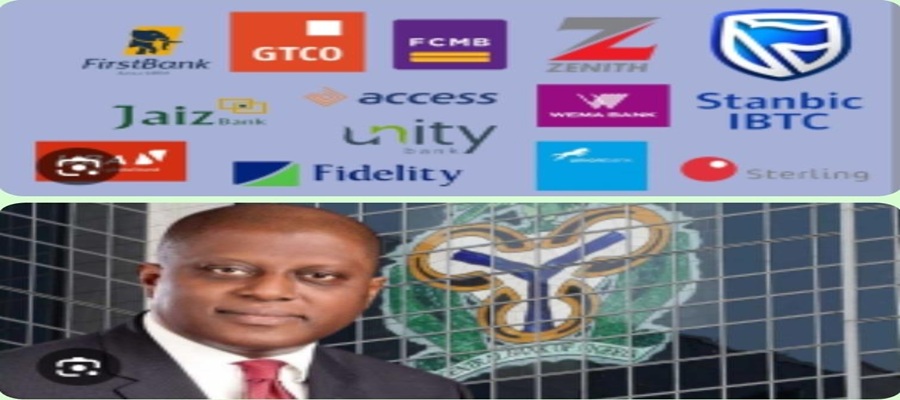
Central Bank of Nigeria (CBN) has announced the successful conclusion of the banking sector recapitalisation programme initiated in March 2024.

Over the 24-month period, Nigerian banks raised a total of N4.65 trillion in new capital, strengthening the resilience of the financial system and enhancing its capacity to support the economy, according to a statement that was issued by CBN on Wednesday.
The programme recorded strong participation from both domestic and international investors, with 72.55 per cent of capital sourced locally and 27.45 per cent from international markets, reflecting sustained confidence in the Nigerian banking sector.
Olayemi Cardoso, governor, CBN, said: “The recapitalisation programme has strengthened the capital base of Nigerian banks, reinforcing the resilience of the financial system and ensuring it is well-positioned to support economic growth and withstand domestic and external shocks.”
The CBN confirmed that 33 banks have met the revised minimum capital requirements established under the programme. A limited number of institutions remain subject to ongoing regulatory and judicial processes, which are being addressed through established supervisory and legal frameworks.
All banks remain fully operational, ensuring continued access to banking services for customers.
The apex bank stated that the programme has strengthened capital adequacy ratios (CAR), with the sector maintaining levels above international Basel benchmarks.
Minimum CAR thresholds remain at 10 per cent for regional and national banks and 15 per cent for banks with international authorisation.
The recapitalisation, implemented alongside an orderly exit from regulatory forbearance, has improved asset quality, reinforcing balance sheet transparency and overall financial system stability.
To safeguard the gains, the CBN said it has strengthened its risk-based capital adequacy framework, requiring banks to conduct regular stress testing across defined scenarios and maintain appropriate capital buffers.
It stated that key regulatory measures, including prudential guidelines and the supervisory framework, are subject to periodic review to support ongoing strengthening of governance, risk management and sector resilience.
The recapitalisation programme was carried out without disruption to banking services, ensuring continuous access for individuals and businesses throughout the process.
The successful completion of the programme establishes a stronger and more resilient banking system, better positioned to support lending, mobilise savings, and withstand domestic and global shocks, the CBN said in the statement that was issued by Olubukola A. Akinwunmi, director, banking supervision, and Hakama Ali, acting director, corporate communications.
“The Central Bank of Nigeria remains committed to maintaining a stable, transparent, and resilient financial system that inspires confidence among depositors, investors, and the broader public, and to advancing the sustainability of the nation’s financial architecture,” the statement read in part.

Nigeria, Others Lose $88bn Yearly to Illicit Flows —Edun

Oracle Sacks 12,000 in India, Begins Shift to AI

CBN Says 33 Banks Raise Fresh N4.65 Trillion in Recapitalisation Exercise

NCC Insists Telcos Must Compensate Subscribers for Poor Quality of Service

NITDA Urges Joint Action to Drive Nigeria’s Digital Innovation

Spotify’s Loud & Clear Report Reveals Over ₦60Bn Revenue for Nigerian Artists in 2025

Madonna University Taps Tech Guru Adote for Strategic Board Role

China Threatens to Shut Nigeria’s Satellite Over $11.44m Unpaid Debt

FCCPC Bans Lagos ‘No Refund’ Policy, Vows Fines and Shutdowns for Traders

EFCC Arraigns Two FSDH Bank Officials Over $307k, €50k Fraud




 E-Financial3 days ago
NGX REGCO Fines 5 Firms N291m for Market Manipulation

 News3 days ago
Dangote Refinery Debunks Speculations on IPO

 E-Financial3 days ago
FG Launches Cross-Border Digital Payments Report

 News3 days ago
Descasio Launches “Give to Gain” Leadership Insights Report, Hosts Executive Brunch for Women in Leadership

 E-Financial3 days ago
Interswitch Deepens Strategic Partnership with KCB Group to Advance Digital Payments and Financial Inclusion

 News3 days ago
World Backup Day: Research Reveals 84% of Users Store Sensitive Data Digitally

 News2 days ago
Microsoft Revamps Copilot in Workplace AI Push

 E-Business2 days ago
Kaspersky Warns of a New Phishing Technique Leveraging Bubble, a no-code AI Platform