

General News
G-MAX Will Slash Internet Costs, Make it Ubiquitous- Nwosu

Engr. Gerald Nwosu, is the Chief Executive Officer of Galaxy Wireless Communications Ltd, a Broadband Internet Solutions company providing the revolutionary G-Max brand of convergent services in Nigeria. A trained and chartered engineer of the Institution of Engineering and Technology (IET) London, Nwosu is also registered as a Professional Engineer in Alberta, Canada. He has worked in both the ICT and the Petroleum industry in many parts of the world since 1985. Nwosu spoke about his company and other issues in this interview with chris alu in Abuja.
About G-Max
G-Max stands for Galaxy Wireless Communications’ implementation of the WiMAX broadband technology. We not only utilize the principles of WiMax but hope to extend it such that we are not confined to that technology alone.
Our aim is to give a speedy broadband internet service using the necessary infrastructure at an affordable price, in order to make it ubiquitous in the country.
Right now we started our services in Abuja and Port-Harcourt but we hope to extend our services to 16 states before the end of the year.
We plan to build an internet cloud over Nigeria so that everyone can have access to it in and around the country.
Accessibility and Cost
The challenge we always face is in providing these services at an affordable operating cost, the most dominant of which is the cost of internet bandwidth.
As you may be aware, the same bandwidth costs ten times in Nigeria than in North America or India for that matter. For instance in this country satellite bandwidth goes as much as $7,000 per Mbit/s full duplex while those in India pay about $500 per Mbit/s for a fibre-optic connection with its superior latency characteristics.
It is because of the high cost of bandwidth that made us to sign the agreement with O3b Networks Ltd to deploy a new high capacity backhaul infrastructure to provide high-speed, low-cost Internet connectivity to our subscribers in Nigeria.
We hope that within a span of one or two years, we would be providing quality service with high speed connectivity at much cheaper rates than we have today.
We are also planning some new strategies that will make people get used to or have greater access to internet facilities at an affordable rate. Even though we are encountering other challenges which include erratic power supply and manpower shortages, we are still confident that broadband internet will spread through the country.
High Speed Internet
We do not, as a nation, even have enough fibre-optic capacity and that is an impediment to greater internet speeds. If we have reliable fibre-optic connectivity then it will be a different proposition. But there is hope because Galaxy Wireless is collaborating actively with other companies to use other innovative technologies including satellite technology and provide internet services and connectivity at high speed.
For now majority of Nigerians are not experiencing genuine broadband internet services because of the high cost of bandwidth and so many other issues.
Interconnectivity between Operators
We are not a telephone operator but a broadband internet company so I cannot really comment on interconnectivity issues between the different phone operators in the telecom industry. In the broadband space however, there is really no issue of interconnectivity between operators. In the internet, connectivity is simply having access to the Information Super Highway as quickly as possible so that you can do your business without delay, while in the telecoms sector you need to be connected to various networks like MTN, Glo, Zain.
Infrastructure Issues
Nigeria is still behind in the provision of necessary infrastructure needed for ubiquitous broadband. I think what the government should do is provide infrastructure for the private sector to move in and do the last-mile or if government cannot do it, then the enabling environment needs to be created for private sector participation.
Sea Cable Initiative and Laying Of Fibre Optics Around the Country
As I mentioned earlier, what we need is fibre-optic capacity and every other thing boils down to bandwidth, whether by sea cables or fibre optic on land. The most important thing is the provision of the needed infrastructure so that ISPs can dispense their services on to consumers at affordable rates.
However, there are several initiatives in the pipeline and we are hopeful that on fruition, Nigeria will really be connected to the Information Super Highway.
What Government Must Do
Government is supposed to provide the needed infrastructure for ISPs to ride on and provide better services or sustain the enabling environment for some sort of collaboration with the private sector. We are aware that government is equally trying to work out some initiatives for basic infrastructure deployment that will help our operations in the country.
There are initiatives like SABI (State Accelerated Broadband Initiative) and others being handled by USPF but is still some time before we are yet to start reaping those dividends.
The much needed infrastructure investment needs to be addressed quickly to avoid Nigeria falling into the Information Dark Age.
Global Recession
The big issue is that if the recession bites deeper, people may cut down on the use of internet services as it may be classed as a luxury item.
We do believe that when people really understand what internet is all about, despite the crisis it will be necessary for them to use it, especially during difficult times in order to even find out how to cope.
We hope though that the crisis does not deepen and adversely affect the sector but we are taking several measures to cushion the effect on our business.
Of more serious concern is the sharp depreciation of our local currency against the US Dollar over the past few months which increased our cost of doing business by more than 55% as we buy bandwidth in US Dollars and sell our services in Naira.
Other Challenges
One of the biggest challenges we are facing is power.
Poor power supply is really affecting the industry making us spend a huge portion of our operating expenses on fuel, diesel and plant maintenance.
Another challenge that we tend to forget is manpower.
The needed manpower to fill several vacancies in the communication sector is difficult to come by in this country and this has been a serious challenge to all the operators. It is really unfortunate that in a country with high unemployment, there still remain many jobs that cannot be filled due to lack of local expertise.
Many companies have now resorted to hiring expatriates as a way of attempting to solve this problem which entails additional expenses.
This really goes back to the quality of education in Nigeria and this remains an issue that requires urgent and concerted attention by both the government and the private sector. A situation where we produce illiterate graduates from the universities must be seen as unacceptable. We therefore need to take a hard look at this issue and address it for our own national interest as no nation can develop without a sound educational backbone.
Galaxy has recently launched an e-Learning Initiative to connect our universities to the World Wide Web in order to provide the much-needed access to content required by our schools. This is our way of contributing to education in our country.


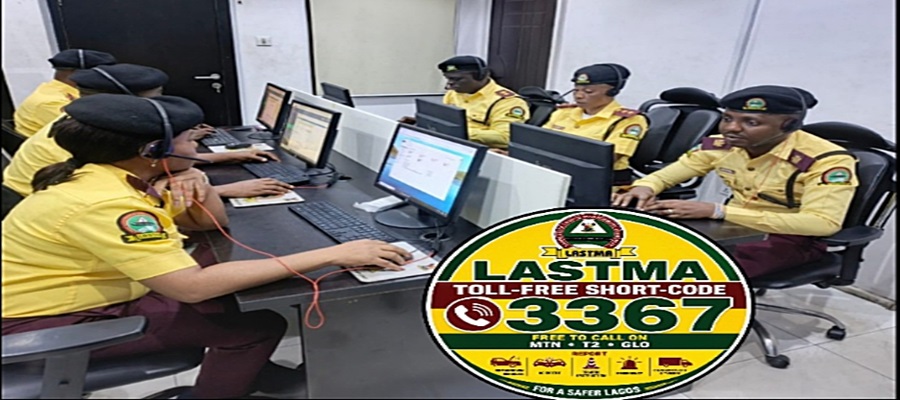
(LASTMA) has launched a new toll-free short-code hotline, 3367, to improve emergency response, enhance traffic managemestrengthen accountability across Lagos State.

The new platform replaces the agency’s previous long-service code and provides a simpler and more accessible channel for residents to report traffic-related incidents. The service is available at no cost to subscribers on MTN, Glo and Etisalat (T2) networks.
Motorists and other road users can use the hotline to report vehicle breakdowns, road crashes, disabled trucks, stranded tankers, traffic obstructions and other emergencies requiring immediate intervention.
The platform also allows members of the public to report the conduct and professionalism of LASTMA personnel, a move aimed at promoting transparency and accountability within the agency.
To ensure wider accessibility, callers can communicate with hotline operators in English, Yoruba or Pidgin English, helping to eliminate language barriers and encourage greater public participation.
Speaking on the initiative, Mr. Olalekan Bakare-Oki, general manager, LASTMA, described the launch as a major milestone in the agency’s efforts to build a safer, more efficient and technology-driven traffic management system.
He said the hotline reflects LASTMA’s commitment to leveraging digital solutions to tackle transportation challenges while strengthening collaboration with residents.
According to Bakare-Oki, the 3367 hotline provides Lagos residents with a direct, convenient and free channel to report incidents requiring urgent attention, noting that the growing complexity of Lagos as a major African megacity demands a proactive and technology-enabled approach to traffic management.
He assured residents that all reports received through the platform would be handled professionally and confidentially before being forwarded to the appropriate operational units for prompt action
Bakare-Oki urged the public to make effective use of the hotline to support road safety, improve accountability and contribute to a more efficient and sustainable transportation system across the state.
General News
PalmPay Strengthens Data Protection Culture with Employee Privacy Workshop and Privacy Champions Programme

PalmPay has reinforced its commitment to responsible data governance and customer information protection through a specialised two-day data protection workshop for employees and the launch of its internal Privacy Champions Programme, an initiative designed to strengthen awareness, accountability, and responsible data handling across the organisation.

The initiative comes at a time when data protection is increasingly critical following recent reports of recorded 281,500 compromised user accounts in the first quarter of 2026, ranking 34th among the world’s most breached countries, according to a new quarterly data breach analysis by cybersecurity firm, Surfshark.
Facilitated by the Nigeria Data Protection Commission (NDPC) and leading Data Protection Compliance Organisation (DPCO) TechHive Advisory, the two-day workshop equipped employees with practical knowledge on privacy governance and data protection obligations, incident awareness, and the role each employee plays in protecting personal data.
The initiative forms part of PalmPay’s ongoing efforts to advance compliance with the Nigeria Data Protection Act (NDPA) 2023. It also reflects the company’s continued investment in safeguarding customer information and fostering a culture where privacy remains everyone’s responsibility.
The Privacy Champions Programme establishes a network of employee representatives across business functions who will support awareness, promote best practices and help strengthen the organisation’s privacy culture. By integrating privacy considerations into day-to–day activities the initiative aims to further enhance accountability and reinforces customer trust.
Speaking on the initiative, Managing Director of PalmPay, Chika Nwosu, stated: “At PalmPay, protecting customer information is fundamental to maintaining the trust our customers place in us everyday, and remains central to our operations. Statistically, 10 out of 100 Nigerians have been affected by data breaches.
Hence, we have a greater responsibility to ensure that personal information is collected, processed, stored, and protected responsibly. This specialised training reflects our continued investment in strengthening internal awareness and ensuring our teams remain equipped to uphold the highest standards of data privacy and protection.”
As a digital financial services platform serving millions of users, PalmPay reaffirmed that privacy and data protection remain embedded in its operational culture, with continuous investments in data governance practices.
PalmPay also encourages customers to remain vigilant and adopt safe digital practices, including protecting account credentials, exercising caution when sharing personal information online, and reporting suspicious activities promptly. The company maintains that building a secure digital ecosystem requires a shared commitment from organisations, regulators, and users alike.


President Bola Tinubu has appointed Dr Obi Adigwe as the National Coordinator of the newly established National Health Technology and Data Analytics Office (NHTDAO).

President Bola Tinubu
The appointment was announced in a statement issued on Friday.
The office, which will be domiciled in the Office of the Coordinating Minister of Health and Social Welfare, is expected to serve as the national coordination platform for Nigeria’s digital health system.
According to the statement, the NHTDAO will complement the work of existing health institutions by promoting coordination and interoperability across public and private healthcare systems, rather than replacing existing agencies.
It said the office would also drive the implementation of the National Digital Health Architecture approved by the National Council on Health in November 2025.
The statement said the initiative formed part of the Federal Government’s efforts to strengthen a secure, technology-driven and data-enabled healthcare system capable of improving service delivery nationwide.
Adigwe, who currently serves as the Director-General of the National Institute for Pharmaceutical Research and Development (NIPRD), has led several initiatives in science, pharmaceutical research, technology transfer and artificial intelligence.
He also coordinated major research funding initiatives, including a ¥300 million nanotechnology grant and an €18 million European Union research grant, while supporting the establishment of Africa’s first Active Pharmaceutical Ingredient (API) training facility through support from Afreximbank.
The statement said the new office would be guided by a steering committee co-chaired by the Coordinating Minister of Health and Social Welfare, Prof. Muhammad Ali Pate, and the Chairman of the Nigerian Economic Summit Group, Mr Olaniyi Yusuf.
Other members of the committee include the Minister of State for Health, Dr Iziaq Adekunle Salako; senior officials of the Federal Ministry of Health and Social Welfare; representatives of the National Information Technology Development Agency (NITDA); and heads of key health agencies, including the National Primary Health Care Development Agency (NPHCDA) and the National Health Insurance Authority (NHIA).
The committee will also include representatives of state commissioners for health from the six geopolitical zones, as well as industry and community stakeholders.
The Federal Government expressed optimism that the office would strengthen coordination across the health sector, accelerate digital transformation and improve healthcare delivery in line with the Renewed Hope Agenda.

FCCPC Dismisses Report Claiming Approval of 48 New Loan Apps

ALTON Backs NCC’s Local Smartphone Manufacturing Drive to Widen Digital Access

LASTMA Launches 3367 Toll-Free Hotline for Emergency Response, Traffic Management

PalmPay Calls for Trust, Infrastructure and Responsible AI to Drive Payment Ecosystem Innovation

OADC Reaffirms Abundant Capacity in Data Centres in Nigeria to Host Financial Data

CBN Extends PoS Geo-Fencing Enforcement Deadline to August 2026

London Strengthens Global Investment Ties with Africa @ First Ever London-Africa Business Summit

FG Targets Alleged N3tn Capital Flight, Opens Airtime Credit Market to Nigerian Fintechs

Mobile Internet Gender Gap Widest in Africa – GSMA

Japan, UNESCO Boost Digital Learning in 15 CoEs with Donation of ICT Equipment




 General News2 days ago
Tinubu appoints Adigwe to head National Health Technology, Data Analytics Office

 E-Financial2 days ago
NRS, CITN Deepen Partnership to Strengthen Tax Awareness

 E-Financial2 days ago
Paystack Unveils AI-powered Payments Tools

 E-Financial2 days ago
Fidelity Bank Wins DBN Award for Expanding First-Time Credit Access to MSMEs

 General News2 days ago
PalmPay Strengthens Data Protection Culture with Employee Privacy Workshop and Privacy Champions Programme

 Telecom2 days ago
Meta, FG Unveil New Safety Measures to Protect Nigerian Teens Online

 E-Financial2 days ago
FCMB Turns Normal Banking into Rewards with New Mobile App Upgrade

 E-Financial2 days ago
Despite Warnings, FG Draws Down $1.5Bn as First Tranche of FAB $5Bn Loan Deal