

E-Financial
CBN Fines 29 Banks N15Bn for Violation of Money Laundering, Terrorism Financing Regulations

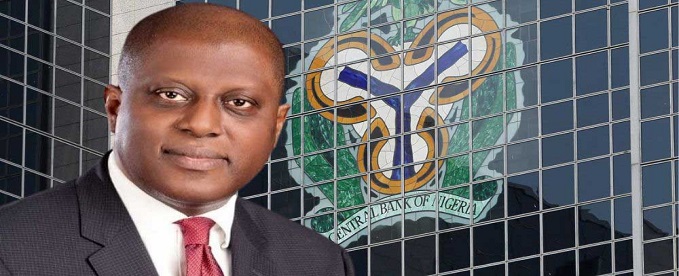
Central Bank of Nigeria (CBN) has said penalties totaling N15 billion were imposed on 29 banks for violations of Anti-Money Laundering (AML) and Counter-Terrorism Financing (CTF) regulations.

This was disclosed by Olayemi Cardoso, CBN governor, during the 2024 Bankers’ Night organised by the Chartered Institute of Bankers of Nigeria (CIBN) in Lagos.
In his remarks, Cardoso stressed the gravity of these violations and stressed the need for the affected banks to address the systemic weaknesses that allowed such lapses to occur.
“In addition to these penalties, the banks are required to address the root causes of the lapses, which is crucial for improving regulatory effectiveness. Historically, the industry has struggled with recurring issues, but we are confident that this approach will help change that narrative,” Cardoso stated.
The Broader Implications of Compliance
The CBN governor highlighted the broader impact of compliance on the financial ecosystem, noting that institutions that prioritise regulatory adherence contribute to national growth and stability.
“A bank that prioritises compliance does more than protect itself -it strengthens the entire financial ecosystem. It directs financial resources toward growth, innovation, and prosperity rather than crime and corruption. Together, we must exceed standards, demonstrating to the public and the world that we are stewards of integrity and trust,” he added.
Cardoso also pointed out that the consequences of non-compliance extend beyond regulatory penalties. According to him, issues such as money laundering, fraud, and corruption undermine the foundation of the financial system.
“The cost of inaction is profound—fraud undermines confidence, corruption erodes trust, and money laundering perpetuates organized crime,” he remarked.
The governor articulated a vision for a robust compliance culture across Nigeria’s banking industry. He emphasised that financial institutions must not only comply with regulatory standards but also adopt a proactive approach to identifying and mitigating risks.
Cardoso explained that executives and boards must lead by example by making compliance a strategic priority and championing zero tolerance for breaches—not just in policy but in practice. He urged financial institutions to anticipate vulnerabilities and address risks in high-risk areas proactively.
He also called for the education of staff to recognise red flags and report concerns about fraud, money laundering, or unethical behavior, ensuring they are protected when they do so.
Additionally, he stressed the importance of conducting enhanced due diligence for high-risk clients, politically exposed persons, and vendors to prevent illicit funds from flowing through financial institutions.
The governor emphasised the need for industry-wide collaboration to combat systemic threats. This includes sharing intelligence on emerging risks, cooperating with law enforcement agencies, and maintaining open communication with regulators.
Cardoso acknowledged the challenges facing the sector, from cybersecurity threats to disparities in financial inclusion. However, he expressed optimism that with strengthened compliance frameworks, the Nigerian banking industry could address these challenges effectively.
Reflecting on the broader implications, he said, “Compliance is not just a regulatory requirement; it is central to our mission of fostering trust and integrity within the financial system. Together, we can build an industry that not only meets but exceeds global standards.”
Credit: Business Day



Central Bank of Nigeria (CBN) has extended the enforcement date for the mandatory geo-fencing of Point-of-Sale (PoS) terminals to August 1, 2026, in a move aimed at giving financial institutions and payment service providers additional time to comply with the regulatory framework.

The directive was contained in a circular dated May 29, 2026, signed by Dr. Rakiya Yusuf, director of the Payments System Supervision Department, and obtained from the apex bank’s website on Friday.
The circular was addressed to Deposit Money Banks, Microfinance Banks, Mobile Money Operators, Switching and Processing Companies, Payment Terminal Service Providers, Payment Solution Service Providers, Super Agents and other licensed operators in the financial ecosystem.
According to the CBN, the extension followed stakeholder engagements and operational considerations arising from earlier directives issued in August 2025 on ISO 20022 migration and mandatory geo-tagging of payment terminals.
The apex bank also announced adjustments to the framework, increasing the permissible geo-fence radius for PoS terminals from 10 metres to 70 metres, in addition to shifting the enforcement deadline.
“Geo-fence radius is hereby increased from 10 metres to 70 metres,” the circular stated, adding that enforcement of the requirement has been moved to August 1, 2026.
Geo-fencing is designed to restrict PoS operations to approved merchant locations, strengthening transaction monitoring and reducing fraud within the electronic payment system.
The CBN directed all affected institutions to submit evidence of compliance on or before July 31, 2026, through the Payments System Supervision Department.
“Evidence of compliance to the above should be addressed… not later than July 31, 2026,” the circular added.
Financial institutions were also instructed to resolve all outstanding technical and operational issues with the National Central Switch to ensure seamless implementation.
The extension is expected to provide operators additional time to upgrade systems and align with regulatory requirements ahead of full enforcement.

Nigerian capital market will officially transition to a one-day (T+1) settlement cycle on Monday, June 1, 2026, cutting the time required to finalise securities and commodities transactions in half.

The mandate, formally announced by the Securities and Exchange Commission (SEC) requires all eligible trades to settle exactly one business day after the trade date, replacing the previous two-day (T+2) standard.
The SEC noted that the journey from T+3 to T+2, and now to T+1, took less than seven months, highlighting an aggressive push toward market modernisation.
To ensure a seamless launch, the SEC has outlined a unique convergence window for the transition.
Friday, served as the final trading day under the old T+2 system, consequently, trades executed on both May 29 and Monday, June 1, will visually converge and settle on the exact same day: Tuesday, June 2, 2026.
From June 1 onward, all transactions will strictly operate under the 24-hour T+1 timeline.
The migration is being coordinated on the technical front by the Central Securities Clearing System Plc (CSCS), the market’s central depository, alongside major securities exchanges, trade associations, and brokerage firms.
According to financial regulators, the compressed timeline will immediately benefit retail investors by providing quicker access to cash proceeds from share sales.
For institutional players and custodians, the shift requires an immediate reconfiguration of back-office systems and reconciliation workflows to meet the faster execution demands.
Mr. Shehu Yahaya Shantali, managing director and chief executive officer of CSCS, stated that the infrastructure overhaul positions Nigeria alongside top-tier international frameworks.
“The transition to T+1 represents another important milestone in the evolution of Nigeria’s capital market infrastructure.
“It reflects the market’s readiness to embrace reforms that enhance efficiency, strengthen investor confidence, improve liquidity, and align Nigeria more closely with leading global markets,” Shantali said.
Shantali credited the market-wide readiness to months of intensive system upgrades and joint planning spearheaded by the SEC and the T+1 Implementation Plan Committee.
By compressing the settlement cycle, the SEC aims to reduce counterparty exposure, lower systemic settlement risks, and boost overall market liquidity.
The regulator emphasised that this reform bridges the infrastructure gap with developed economies, following the United States, Canada, and Mexico, which migrated to T+1 in May 2024, as well as India’s recent strides toward instantaneous settlement.
The SEC stated it will continue to monitor operational workflows and engage market participants through its automated division ([email protected]) to ensure an orderly transition.
To formalise the launch, CSCS and the Nigerian Exchange Group (NGX) will host a joint Special Closing Gong ceremony on June 1 at the NGX House in Lagos, drawing together institutional heavyweights and regulatory bodies to mark the start of the live environment.

Leading financial institution, Fidelity Bank Plc’s international subsidiary, FidBank UK Limited, has announced a commitment to support Nigerians – both individuals and corporations – in acquiring properties in the United Kingdom.

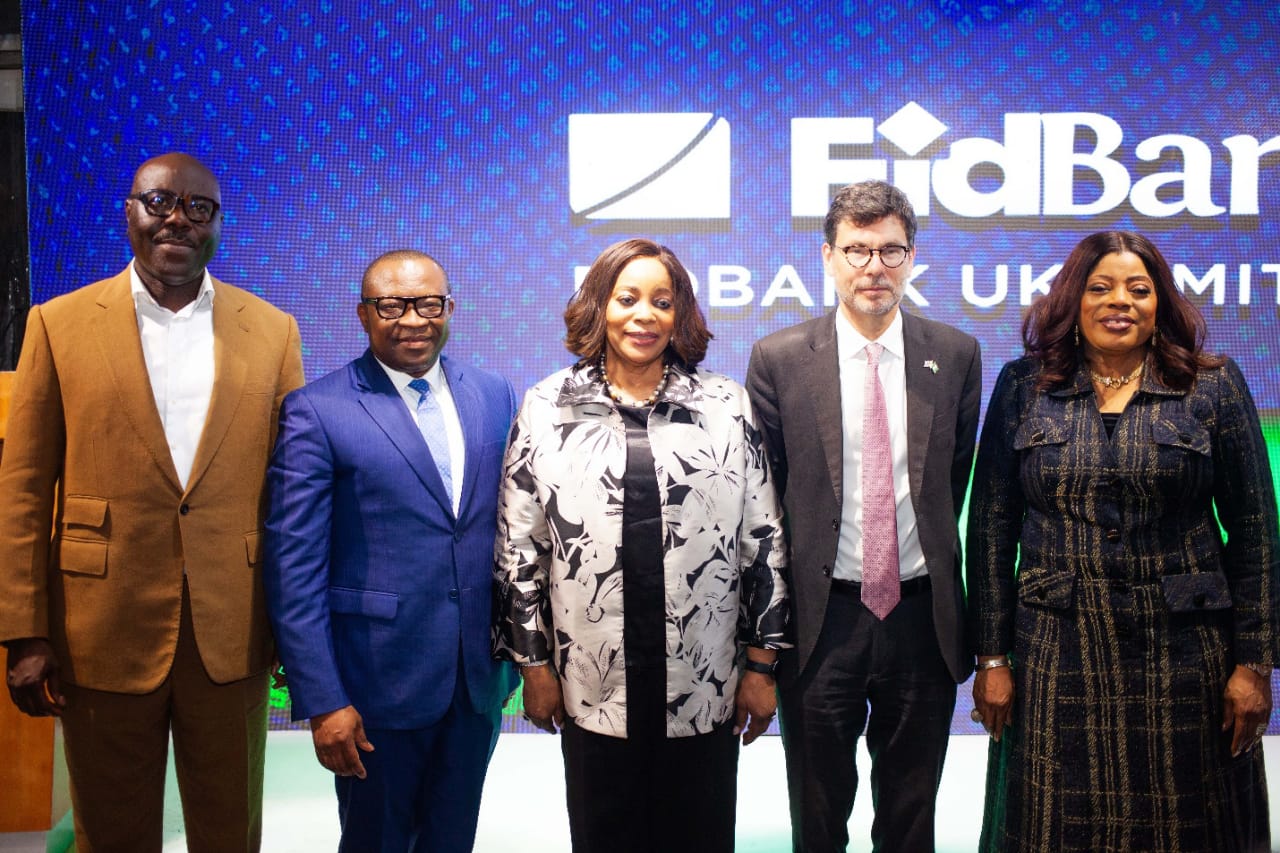
L – R: The Governor of Lagos State, Mr. Babajide Sanwo-Olu, represented by the Honourable Commissioner for Finance, Mr. Abayomi Oluyomi; Managing Director/Chief Executive Officer, FidBank UK Ltd, Mr. Johnson Ememandu; Chairman, Fidelity Bank Plc, Mrs. Amaka Onwughalu; British Deputy High Commissioner in Lagos, Mr. Jonny Baxter; and Chairman, FidBank UK Ltd and Chief Executive Officer, Fidelity Bank Plc, Dr. Nneka Onyeali-Ikpe; at the FidBank UK Ltd exclusive product showcase held at the British Deputy High Commissioner’s residence in Lagos recently.
Fidbank UK which provides a comprehensive suite of financial services, including trade finance, personal and business banking, treasury services, commercial lending, and private banking, is set to deliver tailored financial solutions for high-net-worth individuals (HNIs) seeking to invest in the UK real estate market through its FidBank Buy-to-Let product.
This announcement was made at an exclusive product showcase hosted by the British Deputy High Commissioner, Mr. Jonny Baxter at his Residence in Lagos on Tuesday, 26 May 2026. The event was attended by a select audience comprising captains of industry and corporate leaders.
Highlighting the significance of the event, the Managing Director/Chief Executive Officer of FidBank UK Ltd, Mr. Johnson Enemadu, said: “This event is about showcasing to the market and our customers that there is something exciting in the market and we are able to take them along in this journey, supporting their businesses by bringing capital both in the financial institutions and corporate space and also for our high networth inidividuals. It is a total experience.
“Today’s event is also taking place against the backdrop of strengthened bilateral relations between Nigeria and the United Kingdom, highlighted by the recent state visit of the President of the Federal Republic of Nigeria to the UK. This renewed engagement between both countries continues to unlock new pathways for trade, investment, and financial collaboration; and FidBank UK is pleased to play a leading role in driving this.”
In his welcome remarks, the British Deputy High Commissioner in Lagos, Mr. Jonny Baxter said: “The United Kingdom remains firmly committed to deepening its economic partnership with Nigeria, with a clear focus on driving inclusive, sustainable investment, trade and economic growth. London’s position as a leading global financial centre is central to this, supported by robust financial infrastructure that enables efficient trade flows and seamless cross-border transactions between our markets.
It is therefore encouraging to see institutions such as FidBank UK advancing financial service offerings that not only expand investment opportunities in the UK, but also strengthen the financial systems supporting growing commercial ties. We welcome and support efforts that continue to enhance liquidity, facilitate trade, and drive sustainable UK-Nigeria economic connections.”
The well-attended event also featured art exhibitions by two of Nigeria’s leading visual art talents -Femi Morakinyo and Oswald Chukwunyeremugo – who displayed their latest works to the admiration of the guests.
Also speaking at the event, the Governor of Lagos State, Mr. Babajide Sanwo-Olu, represented by the Honourable Commissioner for Finance, Mr. Abayomi Oluyomi, lauded the initiative as it aligned with the administration’s T.H.E.M.E.S. Agenda, saying:
“FidBank UK offers a private banking relationship grounded in regulatory rigour and institutional trust. This is not a catalogue of products, it is a comprehensive financial architecture built for people who live, work and invest across the Nigerian-UK corridor”.
Operating from the heart of the City of London since 1983, FidBank UK provides a comprehensive range of banking services to customers doing business from and into Nigeria and other West African countries, including trade finance, personal banking, business banking, treasury services, commercial lending and private banking.
The bank is authorised by the Prudential Regulation Authority and regulated by the Financial Conduct Authority and Prudential Regulation Authority and subscribe to the Financial Services Compensation Scheme.

CBN Extends PoS Geo-Fencing Enforcement Deadline to August 2026

Nigerian Capital Market to Transition to T+1 Settlement Cycle on Monday

Report Shows Start-ups Fuel Innovations in Africa

NCC Expands IPv6 Board with the Appointment of Olusola Teniola, Funke Opeke Others

FidBank UK Broadens Investment Pathways for Nigerians into the UK Market

MTN, VDT, Zoracom, Digital Realty Back 2026 Girls in ICT Campaign

Vitel Wireless Partners Fintechs to Expand Access to Services

FG Okays 112 as Toll-Free National Emergency Response Number

Opay Plans IPO in US, Targets $4Bn in Valuation

CPN Begins Crackdown on Quack IT Professionals, Vows Tougher Action against Cybercrime




 Telecom2 days ago
Bharti Airtel Named Fourth Largest Mobile Network Operator in the World

 News3 days ago
ALX Broadens AI Training in Africa

 Telecom3 days ago
MTN Nigeria Reaches 93.7% Population Coverage, Invests N2.7bn In Communities as Child Online-Safety Drive Launches

 News3 days ago
Swift Network Faces Winding-up Battle over Alleged N115m Debt

 General News2 days ago
How Enugu State is using GovTech to Fix its Housing and Land Administration

 General News2 days ago
NCDC Warns against Using Bitter Kola, Salt Water as Ebola Remedies

 Telecom2 days ago
MTN Reportedly Spends N60Bn on Diesel Annually

 E-Business2 days ago
EU Slams Temu With Massive $232m Fine over Dangerous Products