

General News
Nigerian Banks Lose Millions of Naira in Frauds Due to Lack of Live Detection


Nigeria Inter-Bank Settlement System (NIBSS) has revealed that the country’s financial sector lost around N52.26 in 2024 to fraudsters, some of whom enrolled fake identities for Bank Verification Numbers (BVNs).

These incidents, observers say, evoke the need for liveness detection systems to secure biometric identity verification by banks and financial institutions in the country.
Specifically, about N329 million from this total amount was directly lost to fraudsters using static images of BVNs to activate financial transactions, NIIBSS said in its latest report on financial fraud trends in Nigeria.
According to Punch, the NIBSS report indicates that the BVN fraud scheme was facilitated by some enrollment agents registering still images as if they were live, allowing ill-intentioned individuals to use those fraudulent BVN records to open bank and mobile money accounts to carry out transactions.
Liveness or presentation attack detection is not always used for in-person biometric enrollments, but if not the integrity of enrollments can be undermined by the kind of collusion observed in these incidents.
Per the report, many of the fraudulent BVNs were given Nigerian names to dissipate any strong suspicion, but the fake accounts were eventually discovered and deleted with the suspects tracked down for arrest and possible prosecution.
An additional N400 million ($270,000) in fraud was carried out with stolen identities in the past year, according to 21st Century Chronicle.
Nigeria introduced the BVN system in 2014 with the idea being to strengthening banking security. It has since been an official requirement for anyone opening a bank account or carrying out a banking transaction.
The federal government insists that all bank accounts must be linked to the biometric bank ID number.
Last year, Dermalog said it now ensures BVN use for over 64 million Nigerian bank account owners.
“Still images of Asians and Nigerians are taken and enrolled for BVN by recalcitrant agents. An estimated N329m being proceeds of fraud was received into some of the accounts opened with the BVN generated with these still images a few days before the fraud,” Punch quoted the NIBSS report as stating.
The report offers insights into other fraud indicators, noting for example that the 52.26 billion Naira lost to fraudsters in 2024 is a massive jump from the 11.6 billion Naira loss recorded four years earlier. Paradoxically, there were more fraud cases reported then than in 2024.
In the face of the growing financial sector threats and scams, actors in the industry are of the opinion that stronger response measures need to be taken, in terms of strengthening the regulatory frameworks.
Adaora Eze, fintech expert and CEO of Digital Finance Solutions, told Blueprint newspaper that “the regulatory landscape needs to evolve in response to these emerging threats” and that “financial institutions must implement stricter compliance measures, and the government should introduce more stringent policies to ensure accountability.”
“Without these interventions, fraud losses will continue to rise,” she opines.
NIBSS released a similar annual fraud landscape report in 2023 in which it also noted high levels of financial sector fraud in the country.



World Health Organisation (WHO), yesterday, said that Ebola outbreak is “very high” but added that the global risk remains “low”.

So far, 82 cases and seven deaths have been confirmed in the Democratic Republic of Congo (DRC), but WHO, said, the real scale of the outbreak is likely far larger, with nearly 750 suspected cases and 177 suspected deaths reported
Tedros Adhanom Ghebreyesus, chief, WHO, said the situation was “deeply worrisome”.
He said there were now nearly 750 suspected cases in the DR Congo and 177 suspected deaths, as health workers scramble to track down contacts of everyone thought to be infected with the virus.
“The Ebola outbreak in the Democratic Republic of the Congo is spreading rapidly,” he told a press conference.
“So far, 82 cases have been confirmed in DRC, with seven confirmed deaths.
“But we know in people who travelled from DRC and one death.
Measures to address the epidemic in DRC are much larger.
There are now almost 750 suspected cases and 177 suspected deaths.”
He said the situation in Uganda was “stable”, with two cases confirmed in Uganda, including “intense contact tracing” and calling off the Martyrs’ Day commemorations, “appear to have been effective in preventing the further spread of the virus”, Tedros added.
While a US national who was working in the DRC has tested positive and been transferred to Germany for care, Tedros said another US national deemed to be a high-risk contact had been transferred to the Czech Republic.
Besides national staff already in the DRC, he said 22 international staff had been deployed to the field, “including some of our most experienced people”.
Tedros said that violence and insecurity were impeding the response to the outbreak in the DRC.
“We are now revising our risk assessment to very high at the national level, high at the regional level, and low at the global level.
“So far, 82 cases have been confirmed in DRC, with seven confirmed deaths.
“But we know the epidemic in DRC is much larger. There are now almost 750 suspected cases and 177 suspected deaths.
“The situation in Uganda is stable, with two cases confirmed in people who travelled from DRC, with one death.”
Tedros said that violence and insecurity were impeding the response to the outbreak.
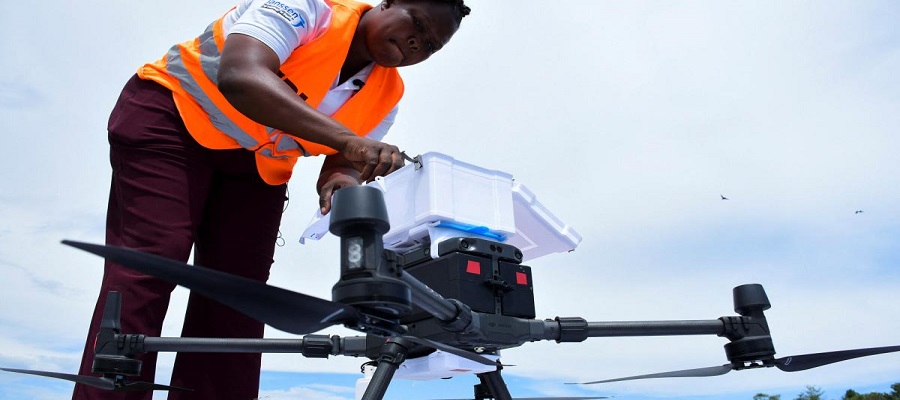
Nigerian Army has acquired additional drones and other advanced force multipliers to strengthen surveillance operations, improve target acquisition, and enhance precision strike and casualty evacuation capabilities.

Lt.-Gen. Waidi Shaibu, chief of Army Staff (COAS), said that the new drones will boost surveillance, precision strikes.
Shaibu, who disclosed this in a statement shared via the Nigerian Army’s official X handle, noted that the conference provided a platform for critical assessment of ongoing operations and the development of forward-looking strategies to address Nigeria’s evolving security challenges.
He said deliberations at the Nigerian Army Conference Centre, Asokoro, focused on sharpening operational responses, strengthening training frameworks and adapting to the demands of modern security warfare.
According to him, the resolutions reached are aimed at building a more agile, combat-ready, technologically driven and mission-oriented force capable of responding effectively to emerging threats.
A key highlight of the reforms is the Army’s increasing investment in modern warfare technology, including the acquisition of additional tactical drones and the reconfiguration of Army aviation assets for combat roles.
Shaibu explained that these developments have significantly enhanced intelligence gathering, precision targeting, operational mobility and casualty evacuation across various theatres of operation.
He also highlighted ongoing improvements in recruitment, advanced training, professional military education and leadership development, stressing that discipline, competence and meritocracy remain central to building a stronger institution.
Reaffirming his “soldier-first” philosophy, the COAS said troop welfare remains a top priority, stressing that “troop welfare remains non-negotiable; well-motivated soldiers operating in conducive environments are critical to mission success.”
He urged senior officers to ensure that resolutions from the conference are fully implemented in field operations, stressing that the true value of the gathering lies in measurable impact on the battlefield.
Describing the ongoing reforms, Shaibu said: “We are not just reforming the Army; we are building a lethal, technology-driven fighting force where only discipline, merit, and mission success matter.”
The Army Chief expressed appreciation to President Bola Ahmed Tinubu for his support, as well as the Minister of Defence, Minister of State for Defence, Chief of Defence Staff, service chiefs and intelligence agencies for their continued collaboration.
The conference ended with the presentation of commendation plaques to senior officers recognized for outstanding contributions to operational effectiveness.

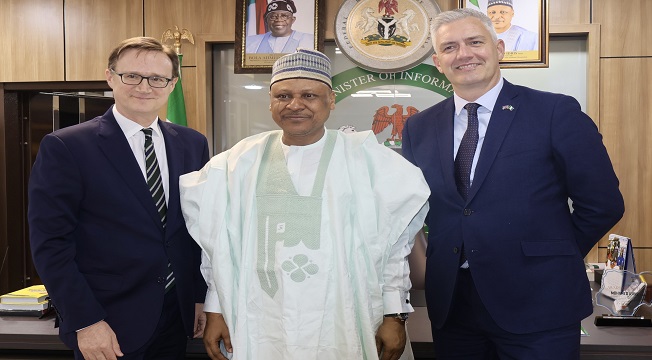
The UK Special Envoy for Freedom of Religion or Belief (FoRB), David Smith MP, concluded a three-day visit to Abuja this week, marking Nigeria as the first focus country he has visited under the UK’s FoRB strategy.

During the visit, David Smith MP held a wide range of meetings with senior Nigerian government officials, religious leaders, civil society organisations, and local communities – reflecting the UK’s commitment to sustained, practical engagement and partnership on freedom of religion or belief in Nigeria.
Meetings included discussions with the National Security Adviser, Mallam Nuhu Ribadu, the Honourable Minister of Information and National Orientation, Mohammed Idris, and the Governor of Plateau State, Caleb Mutfwang.
The Special Envoy also met with the co-chairs of the Nigeria Inter-Religious Council, Archbishop Daniel Okoh, President of the Christian Association of Nigeria, and HRH the Sultan of Sokoto, Muhammadu Sa’ad Abubakar III, President-General of the National Supreme Council for Islamic Affairs.
At the end of the visit, the UK Special Envoy for Freedom of Religion or Belief, David Smith MP, said: “Over the past few days, I have been honoured to meet a wide range of people — from senior government figures and civil society to faith leaders and local communities. I came to listen, learn, and see both how freedom of religion or belief is experienced in everyday life, and how it connects to – and is a core part of addressing – Nigeria’s wider challenges around security and cohesion.
“Some of the most powerful moments of this visit were at community level. Visiting Father Emmanuel Unamba’s parish and meeting Christian and Muslim neighbours living side by side was a real reminder that peaceful coexistence is something people build every day through leadership, dialogue, and shared responsibility.
“What I take away from this visit is the importance of further progress being Nigerian led, rooted in strong institutions and inclusive dialogue, with FoRB at its heart. The UK will continue to support practical efforts in ensuring greater peace, security and prosperity for all.”
The visit also included a roundtable with partners of the UK’s Strengthening Peace and Resilience in Nigeria (SPRiNG) programme, a £38 million UK government-funded conflict and resilience programme operating primarily in Kaduna, Katsina, Benue and Plateau states.
During the visit, Special Envoy David Smith MP held meetings with the Institute for Peace and Conflict Resolution, the Nigerian National Human Rights Commission, and civil society organisations working at the intersection of insecurity and religious freedom. He also visited the National Mosque and the National Ecumenical Centre in Abuja.
Speaking to the various stakeholders, Mr Smith called for greater tolerance across religion or belief in Nigeria and hoped that the cohesion he saw on a community level in the capital, could be achieved nation-wide with the same resolve. He hoped to continue these dialogues with interlocutors in the UK.
The visit builds on the momentum of President Tinubu’s State Visit to the United Kingdom in March 2026, which reinforced the UK-Nigeria Strategic Partnership and included interfaith events attended by President Tinubu and His Majesty The King, underlining both countries’ shared commitment to fostering constructive interfaith dialogue.

NITDA Inaugurates Regulatory Sandbox Team to Drive Digital Innovation

WHO Says Ebola Risk Now at Highest Level

Airtel Africa Launches $110m Share Buyback Programme for Capital Efficiency

NCC Drafts New Rules for Virtual Mobile Operators

LG Electronics Showcases Advanced HVAC Solutions at Mega Clima Nigeria 2026

MTN, VDT, Zoracom, Digital Realty Back 2026 Girls in ICT Campaign

Vitel Wireless Partners Fintechs to Expand Access to Services

Bank Customers to Pay N1,500 for ATM Card Issuance, Replacement – CBN

FG Okays 112 as Toll-Free National Emergency Response Number

Opay Plans IPO in US, Targets $4Bn in Valuation



 Telecom2 days ago
NCC Drafts New Rules for Virtual Mobile Operators
 Telecom2 days ago
Airtel Africa Launches $110m Share Buyback Programme for Capital Efficiency

 Telecom2 days ago
MTN Nigeria Tops Gender Equality Rankings After Major Workplace Transformation, IFC Report Reveals

 News2 days ago
FG Unveils AI Public Services Platform
 E-Business2 days ago
LG Electronics Showcases Advanced HVAC Solutions at Mega Clima Nigeria 2026
 General News2 days ago
WHO Says Ebola Risk Now at Highest Level

 Telecom2 days ago
Microsoft, Partners Launch ‘LINGUA Initiative’ to Save African Languages From Digital Extinction

 Telecom2 days ago
Australian Court Upholds Fine Against X Over Child Safety Compliance Failures