

Telecom
How Starlink Took over Africa’s Largest Internet Market

Starlink has become a major internet service provider in Nigeria, driven by its reliable, high-speed access.

Its success has led to local internet service providers losing subscribers and raising concerns about unfair competition, according to restofworld.org, which reports global tech stories.
Critical institutions have avoided using Starlink’s network because of national security concerns.
In the sprawling electronic market of Lagos’ Computer Village, an item is flying off the shelves: the Starlink kit.
These satellite dishes, with their distinctive white faces and plug-and-play simplicity, represent more than just easy internet availability in Nigeria. They symbolize a technological coup in Africa’s most populous nation, where terrestrial broadband or wireless options are unreliable or inaccessible.
“I have about 20 pieces in the store, but I’m sure they will go before today ends or at the latest tomorrow morning,” Quadri AbdulFatai, a local electronics vendor who claims to have sold more than a thousand units in just 13 months, told Rest of World. “Starlink is very hot now.”
In January 2023, Nigeria became the first African market that Starlink entered.
Two years later, it now ranks second among internet service providers, which are classified separately from large telecom players by the Nigerian authorities.
With over 65,500 users at the end of the third quarter last year, Starlink is second only to 16-year-old Lagos-based ISP Spectranet, according to data from the Nigerian Communications Commission (NCC), the country’s telecom regulator.
At current growth rates, analysts predict Starlink will become Nigeria’s top internet service provider by mid-2026.
The secret to Starlink’s meteoric rise lies in a simple market reality: Nigerians are desperate for reliable, high-speed internet, which local providers have consistently failed to deliver, according to Temidayo Oniosun, managing director at Space in Africa, a market intelligence company focusing on the continent’s space and satellite industry.
Telecom companies and traditional ISPs in Nigeria suffer from frequent outages, sluggish speeds, and spotty coverage, especially in rural areas where terrestrial infrastructure is limited or nonexistent.
“Nigerians want high-speed and reliable internet, and Starlink’s technology offers that better than anyone else,” Oniosun told Rest of World.
“That’s why it is growing at an incredible speed. While the services aren’t the cheapest, launching with different pricing in different African markets shows that Starlink understands the markets.”
Starlink has made investments in building infrastructure in Nigeria. It has built a base station in Lagos and plans to add facilities in neighboring Abeokuta and Port Harcourt, Nigeria’s oil hub.
These stations will enable the company to beam low-latency internet directly to its rapidly growing user base throughout the country. Low latency is the ability of a network to respond with minimal delay.
Starlink’s success has unsettled competitors. When the company increased subscription prices last October, local operators cried foul, accusing regulator NCC of applying double standards by ignoring their requests for tariff reviews.
The regulator eventually granted local providers a 50% tariff increase in January, but customer perception had been damaged.
The regulator has fostered a fair and enabling environment that empowers all licensed operators, including Starlink, “to compete, innovate, and grow in response to market needs,” an NCC spokesperson told Rest of World.
The regulator has fostered a fair and enabling environment that empowers all licensed operators, including Starlink, “to compete, innovate, and grow in response to market needs,” an NCC spokesperson told Rest of World.
The regulator has licensed over 27 satellite-based communications services providers and issued over 90 landing rights to space segment operators, which include established providers like Eutelsat, SES, Viasat, and YahClick.
“In recent times, the commission has observed growing interest from both established global players and new entrants (especially those providing emerging satellite services) seeking to enter the Nigerian market,” the spokesperson said.
“This level of engagement reflects growing investor confidence in Nigeria’s digital economy and the enabling environment provided by the commission.”
Nigeria has 241 licensed ISPs, of which only 124 had active users as of the third quarter of 2024, collectively serving more than 300,000 subscribers, according to NCC data.
Starlink’s arrival has been nothing short of catastrophic for incumbents. Market leader Spectranet lost 8,428 subscribers between the last quarter of 2023 and the third quarter of 2024, while Tizeti lost about 700 in the same period.
While the losses appear modest, they are significant in the context of the small size of the market served by Nigeria’s ISPs.
The internet landscape is more dominated by mobile network operators MTN, Airtel, Globacom, and 9mobile, which collectively serve 132.4 million subscribers, providing both internet access as well as traditional phone services.
The playing field is fundamentally uneven, said Temitope Osunrinde, chief marketing officer at Tizeti.
The challenges for local operators include buying spectrum and building local capacity, hiring talent, and paying multiple taxes. If digging for fiber, they have to contend with multiple local government right-of-way permits and also area goons.
“You can’t compare Starlink with local companies because they don’t have to set up local capacity, nor hire and set up an office,” Osunrinde told Rest of World.
Gbenga Adebayo, chairman of the Association of Licensed Telecommunications Operators of Nigeria (ALTON), believes Starlink’s success reflects not a failure of local providers but “a challenging operating environment, which includes issues such as multiple taxes, multiple regulations, high right-of-way charges, infrastructure vandalism, and the rising cost of foreign exchange.”
Yet for ordinary Nigerians, these industry complaints hold little water compared with the tangible benefits of reliable connectivity. “For me, it was less speed and more concern about constant internet blackouts during meetings,” Olumide Lewis, a Lagos-based tech worker who recently installed Starlink, told Rest of World. “Since we bought our Starlink, we have had some peace of mind. We don’t spend our time thinking about the bad internet again because everything just works.”


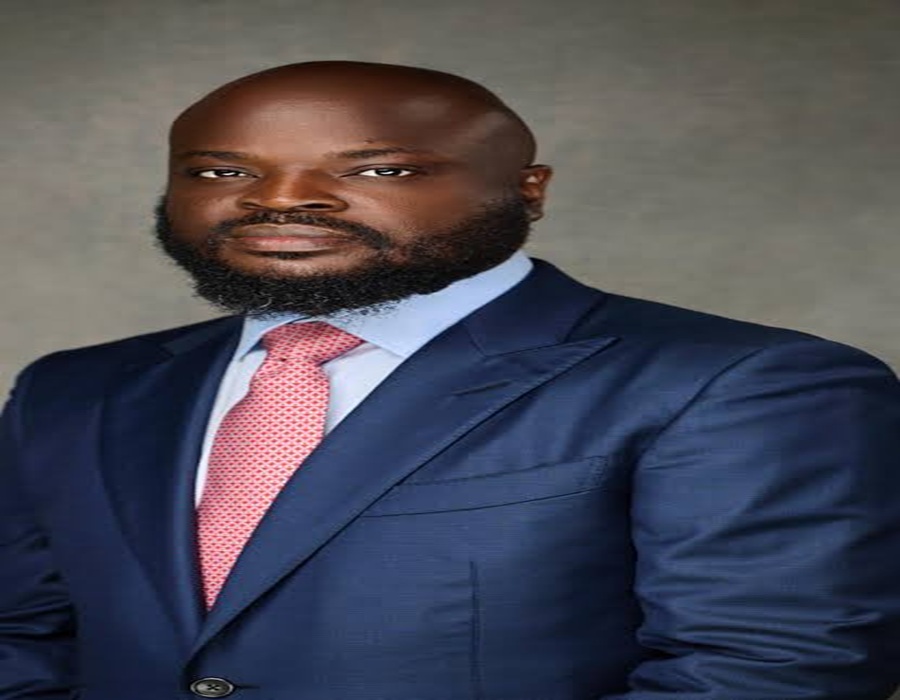
Nigerian government has opened a high-stakes window of opportunity for international tech investors, offering direct presidential intervention and sweeping economic waivers for hardware companies that anchor their manufacturing hubs in Nigeria by November 2026.

Chief Idris Ibikunle Olorunnimbe
Chief Idris Ibikunle Olorunnimbe, the Chairman of the Governing Board of the Nigerian Communications Commission (NCC), made this groundbreaking declaration during his ministerial-level address at the Digital Africa Summit Roundtable in Shanghai.
Highlighting the government’s total dedication to backing these new factories, Olorunnimbe stated: “Whatever it takes to get the plant standing, we will pursue it together, because every factory that rises in Nigeria grows our economy, employs our young people, and brings the price of a phone closer to what an ordinary Nigerian can pay”.
The offer is designed to stimulate immediate foreign direct investment and create sustainable employment for Nigeria’s teeming youth population.
The economic logic underwriting this regulatory ultimatum is both practical and urgent. Currently, the Nigerian telecommunications ecosystem is highly vulnerable to external economic shocks, with foreign-exchange swings and import duties constantly pushing genuine, formal devices out of reach for average citizens.
By localising the supply chain, the NCC seeks to anchor device pricing to the local currency, stripping away the pricing volatility tied to the US Dollar.
Olorunnimbe candidly stated that the administration is ready to deploy massive executive support, viewing connectivity infrastructure as the central engine of President Tinubu’s Renewed Hope agenda, which treats “connectivity as productive infrastructure for the whole economy rather than a luxury for a few”.
This infrastructural push is designed to directly fuel the NCC’s highly praised initiative to transition Nigeria into an era of digital free education through the zero-rating of educational portals.
Drawing inspiration from classic free education philosophies, Olorunnimbe has previously stated that asking a child to buy data to look at a textbook is the modern equivalent of charging tuition at the gates of a public school.
To operationalise this vision, the proposed locally assembled smartphones, MiFi units, and home routers will come pre-configured with embedded access to these zero-rated educational platforms. This ensures that digital literacy tools are structurally hardwired into the technology from the factory floor.
Additionally, these indigenous devices will come pre-installed with core government application portals, simplifying access to digital identity verifications, public health services, and agricultural extensions. By embedding these essential state services directly onto affordable, locally produced hardware, the NCC is solving the double dilemma of device cost and data expenses simultaneously.
This holistic blueprint bridges the digital divide and accelerates financial inclusion, as verifiable identity frameworks, like the NIN and BVN, will allow citizens to seamlessly transition into credit-linked device-financing schemes. Olorunnimbe noted that by pairing “verifiable identity with credit history and secure device technology, then the phone itself becomes the on-ramp: to a credit record, and then to the wider financial system”.
The visionary posturing of Chief Olorunnimbe and the executive leadership of the NCC mark a paradigm shift in how government agencies foster industrial growth. Rather than relying solely on traditional, rigid enforcement against informal markets, the Commission is actively building a structured, credible marketplace via policy incentives and strategic executive support.
Through this aggressive, forward-looking roadmap, the NCC is firmly establishing Nigeria as the digital powerhouse of the African continent, demonstrating that true digital inclusion is achieved when national infrastructure serves human development.
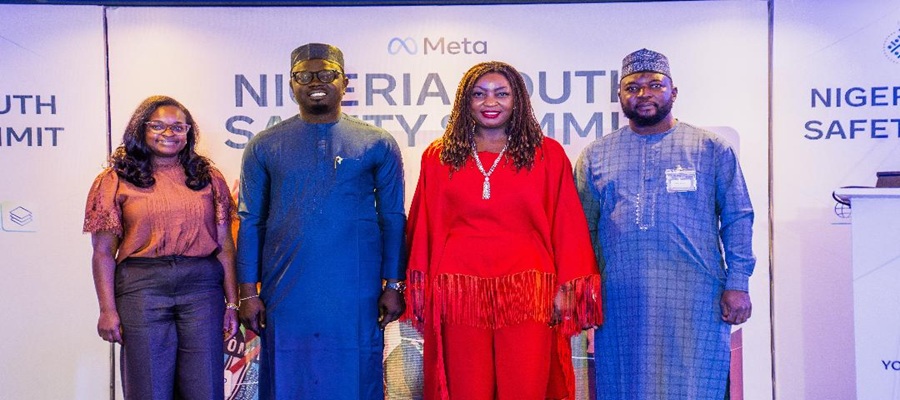
Meta on Thursday convened the Nigeria Youth Safety Summit in Abuja, bringing together government officials, civil society organisations, parents, educators, content creators and youth leaders to strengthen collaboration on digital wellbeing and safer online experiences for young people.

L-R: Sylvia Musalagani, Head of Safety Policy, Europe, Middle East and Africa (EMEA), Meta; Ayodele Olawande, Honourable Minister of Youth Development; Sade Dada, Head of Public Policy, Anglophone West Africa, Meta; and Ahmed Yusuf Tanbuwal, Ag Director, Digital Literacy and Capacity Building Department, National Information Technology Development Agency (NITDA), during the Nigeria Youth Safety Summit organised by Meta on Thursday, June 25, 2026, in Abuja.
The summit, held at the Transcorp Hilton Hotel and co-hosted with the Federal Ministry of Youth Development, highlighted Meta’s investments in youth online safety through built-in protections, parental supervision tools and digital literacy resources aimed at helping teenagers navigate the digital space safely.
The event featured keynote presentations, panel discussions and a Parents Learn and Brunch session organised in partnership with the Federal Ministry of Women Affairs and Social Development.
Participants explored practical approaches to promoting safer online engagement while emphasising the importance of partnerships among government, technology companies, parents, schools and civil society in advancing digital wellbeing.
Speaking at the summit, Meta’s Head of Safety Policy for Europe, the Middle East and Africa (EMEA), Sylvia Musalagani, said the company remained committed to providing teenagers with age-appropriate and safe online experiences.
“At Meta, our goal is to provide teens with safe, age-appropriate online experiences, and events like the Nigeria Youth Safety Summit reflect our commitment to promoting safer and more positive digital experiences for teens.
“With products such as Teen Accounts, Meta is putting the right protections in place so teens can explore their interests and express their creativity in a safe, age-appropriate space.
“We will continue to build the safety features and tools that families need to support young people online,” she said.
Musalagani explained that Teen Accounts represent a redesigned experience across Meta’s platforms specifically for teenagers.
She said the accounts are automatically enabled for all teenagers and include built-in safety features such as private accounts, the strictest messaging settings, restrictions on sensitive content, limited tagging and mentions to people they follow, daily time reminders after 60 minutes of use, and sleep mode between 10 p.m. and 7 a.m.
According to her, teenagers under the age of 16 require parental approval before making any changes that would reduce the default safety settings.
The Minister of Women Affairs and Social Development, Hajiya Imaan Sulaiman-Ibrahim, described child online safety as one of the ministry’s key priorities.
She said children require informed parental guidance to safely navigate the digital environment, stressing that online safety is a shared responsibility involving parents, technology companies and government.
“Child online safety is one of our central pillars and we are steadfast in our mandate to safeguard the Nigerian child from technology-enabled violence.
“Children cannot navigate the complexities of the online world without informed adults guiding them because safety begins with the parents.
“Safety is a shared tripartite responsibility between parents, technological industries and government.
“That is the fundamental premise of today’s summit, a hands-on walk through of parental supervision tools and Teen Accounts.
“We appreciate Meta for the collaboration and for creating a platform for these important conversations,” she said.
Meta also highlighted its parental supervision tools, which allow parents to receive notifications when teenagers report content, gain insights into who they communicate with, set daily usage limits, schedule breaks and monitor age-appropriate content interests.
The Minister of Youth Development, Ayodele Olawande, commended Meta for the initiative and noted its alignment with the ministry’s National Youth Data Protection and Awareness Training Programme.
“I want to thank Meta for this great achievement.
“At the ministry, one of the things we provide to all Nigerians is the skills to succeed in this digital world while making sure we protect them against emerging threats.
“We see a strong connection between the objectives of this summit and the goals of our National Youth Data Protection and Awareness Training Programme.
“We believe that keeping young people safe online is a shared responsibility.
“Government, technology companies, schools, parents, social organisations, community groups and young people themselves all have a role to play.
“We encourage Meta to make the tools, guides and learning materials from this initiative more widely available so that young people across Nigeria can continue to benefit from this laudable summit,” he said.
The summit concluded with discussions focused on strengthening partnerships, promoting digital literacy and advancing a shared vision for youth online safety across Nigeria.
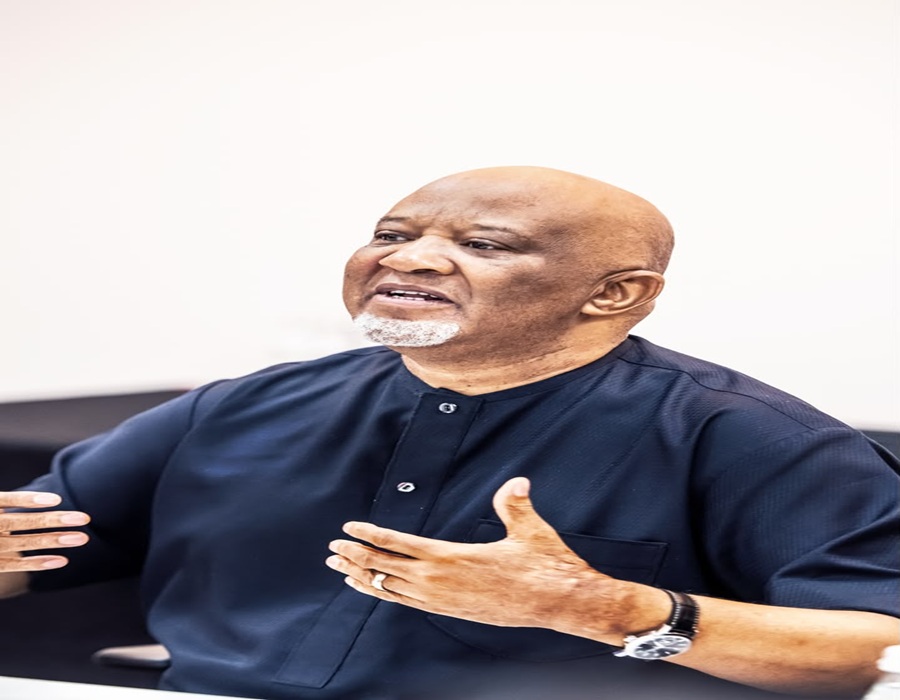
Mcebisi Jonas, MTN Group Chairma,n has used the funeral service of Zimbabwean-born activist and public servant Thokozani Damasane to mount a sweeping attack on xenophobia, ethnic politics and state failure in South Africa, warning that the country’s crisis cannot be solved by blaming foreigners.

MTN Group Chairman, Mcebisi Jonas
Delivering what many described as one of the most forceful interventions yet by a senior African business leader on South Africa’s immigration debate, Jonas said the persistence of anti-foreigner sentiment was a symptom of deeper governance failures, political opportunism and the erosion of a shared moral vision.
He argued that inequality, unemployment, corruption and weak institutions would remain even if all foreigners left the country, insisting that the real problem lay in the failure of the state to govern effectively.
“Foreigners can leave tomorrow – inequality will be with us,” he said. “Foreigners will leave tomorrow – unemployment will be with us. Foreigners will leave tomorrow – our police will remain corrupt.”
Jonas, a former South African Deputy Minister of Finance, made the remarks at a funeral service that had drawn mourners from civic, political and business circles. His speech, which blended philosophy, memory, political critique and grief, has since circulated widely across South Africa and beyond.
Jonas said a central question had stayed with him as he drove to the service: what home meant to Damasane, a man who had been born and educated in Zimbabwe before moving to South Africa during the post-apartheid period.
“I was thinking, what is home to Damasane?” he told mourners. “Because I understand, and I understood very early in life, that home is where humanity is. Home is about humanness. It is about the good of humanity and striving for the good of humanity.”
He described Damasane as someone who arrived in South Africa “as an outcast” but chose to immerse himself in the struggles of the country and its people.
“He immersed himself deeply into the struggles, into the pains of South Africans, and he became one of us,” Jonas said. “In Damasane’s strength, our strength as South Africa and South Africans are reflected. And in his weaknesses, our own weaknesses are reflected.”
The sharpest portion of Jonas’ speech came when he turned to the wave of xenophobic rhetoric that has repeatedly flared in South Africa, particularly against migrants from Zimbabwe, Mozambique, Nigeria, Malawi and other African countries.
He dismissed the argument that foreigners were responsible for the country’s social and economic hardship, saying that such claims merely masked the failures of political leadership and public institutions.
“The problem is the failure of the state,” he said. “The state doesn’t manage immigration. It doesn’t manage its borders. It doesn’t enforce law enforcement. It doesn’t manage education. What are you expecting?”
Jonas accused politicians of exploiting public frustration for electoral gain, warning that communities under pressure are easily manipulated by leaders who offer scapegoats instead of solutions.
“When people feel the burn, they become vulnerable to politicians whose sole purpose is to be elected and re-elected,” he said. “Some of them have no credibility whatsoever. But they lead marches and tell our people that the problem is not us – it is foreigners.”
Jonas also used the occasion to offer a sustained critique of tribalism and ethnic identity politics, describing them as colonial constructs that have survived into the present through political manipulation.
“The tribe is a product of colonial powers,” he said. “You would notice that it is so dominant in areas where the English conquered, because they used something called the principle of indirect rule.”
According to him, colonial administrations deliberately sharpened differences between communities in order to divide and control them.
“You have got to divide these people by psychologically enhancing the notion that one is different from the other. That’s how the notion of tribe was born,” he said.
Jonas argued that the same logic now fuels xenophobic violence and exclusion, with people increasingly persecuted not because of what they have done but because of who they are perceived to be.
He said liberation movements were also guilty of keeping ethnic identities alive for political convenience.
“Liberation movements still sustain this thing of tribes – Zulu and Xhosa – and we sustain this thing as if it is real,” he said. “It is in our heads. We’re creating it because it makes us feel big. Identity politics – we must banish them in our country. Ethno-nationalism is something in this country we must banish.”
In explaining Damasane’s significance, Jonas drew on the writings of Frantz Fanon, the anti-colonial thinker and psychiatrist whose work shaped liberation struggles across Africa and the Global South.
He compared Damasane to Fanon, noting that both men were born outside the societies they later helped shape and serve.
Fanon, he said, was “born elsewhere” and was “not a Muslim,” yet became one of the most respected theorists of the Algerian Revolution. The parallel, Jonas suggested, was deliberate: Damasane, too, had chosen commitment over comfort.
“Each generation must, out of relative obscurity, discover its mission, fulfil it, or betray it,” Jonas quoted Fanon as saying. “Damasane understood the mission. And he did not betray it.”
He also recalled a conversation Damasane had once had with a young man who questioned the presence of foreigners in South Africa. Damasane’s reply, Jonas said, had remained with him.
“Damasane said to this guy: just wait fifteen or twenty years. You will also be wanting to leave your country.”
Jonas said those words now sounded prophetic in light of worsening inequality, exclusion and corruption.
“As I stand up today, I look at South Africa. The level of oppression and inequality, the level of exclusion of our people, the level of corruption, the betrayal of the dream of liberation – those words of Damasane ring very loud in my ears,” he said.
Jonas ended on a note of continental solidarity, saying South Africa’s future was inseparable from Africa’s future.
“We are a nation embedded in Africa,” he said. “And without Africa, our growth as a country – economically – our fortune is intertwined with the growth of Africa. South Africa is nothing without Africa. And Africa is nothing without South Africa.”
He also urged mourners to rethink the way success and dignity are measured, saying merit should not be reduced to wealth alone.
“Sometimes this thing called meritocracy is measured in wealth. No. It is values, it is principle, it is integrity. And your father had all of that,” he said.
Jonas further stressed that a person’s legal or social worth should not be judged by their origin.
“We cannot judge people by their origin,” he said. “We cannot determine the legal status of people by their origin.”
Jonas’ intervention comes at a time when xenophobia remains one of South Africa’s most combustible social and political issues, with periodic attacks on foreign nationals continuing to draw outrage across the continent.
The consequences have often extended beyond South Africa’s borders, triggering diplomatic tensions, travel advisories and boycott calls in parts of Africa. For pan-African companies like MTN, whose operations depend on cross-border trust and political stability, the debate is not only moral but commercial.
That context made Jonas’ decision to speak so directly at a funeral especially notable. Rather than a corporate forum or policy panel, he used a farewell to make a wider argument about belonging, leadership and the future of the continent.
In doing so, he turned Damasane’s burial into something larger than a memorial: a warning against the politics of fear, and a plea for a South Africa that remembers its place in Africa.

FCMB Turns Normal Banking into Rewards with New Mobile App Upgrade

Despite Warnings, FG Draws Down $1.5Bn as First Tranche of FAB $5Bn Loan Deal

PalmPay Strengthens Data Protection Culture with Employee Privacy Workshop and Privacy Champions Programme

Paystack Unveils AI-powered Payments Tools

NRS, CITN Deepen Partnership to Strengthen Tax Awareness

CBN Extends PoS Geo-Fencing Enforcement Deadline to August 2026

London Strengthens Global Investment Ties with Africa @ First Ever London-Africa Business Summit

FG Targets Alleged N3tn Capital Flight, Opens Airtime Credit Market to Nigerian Fintechs

Mobile Internet Gender Gap Widest in Africa – GSMA

Japan, UNESCO Boost Digital Learning in 15 CoEs with Donation of ICT Equipment




 E-Business2 days ago
Privacy Crisis May Undermine Local Hosting of Data by Banks, Fintechs

 Telecom2 days ago
NITDA Unveils Bold Vision to Make Nigeria an AI Powerhouse

 Telecom2 days ago
GSMA Launches Global Satellite Regulatory Playbook to Help Policymakers Build Future-Ready Connectivity Frameworks

 Telecom1 day ago
6 Easy Ways to Enjoy the 2026 World Cup with Google and Gemini

 General News2 days ago
Nestlé Commits to Boosting West Africa Solar Rollout Through Partnership

 E-Business2 days ago
How to Build a Safer Cyberworld for People, Business, and Society

 Telecom2 days ago
Airtel Africa Foundation Launches Airtel Green Schools to Promote Sustainability Education in Nigeria

 General News2 days ago
NCGC, SMEDAN Partner on MSME Financing Support