

E-Business
Gold Hits Record High Amid U.S. Dollar Weakness and Trade Tensions


Gold prices surged to a fresh record high on Monday, April 21, while the dollar weakened and global stock markets presented a mixed picture, as concerns mounted over former President Donald Trump’s escalating tariff strategy and his ongoing confrontation with the Federal Reserve.

Amid subdued activity due to continued Easter holiday closures in several markets, investors focused on the potential fallout from Trump’s latest trade moves and looked ahead to key economic data releases later this week that may shed light on the broader impact of the evolving U.S.-led trade war.
The administration’s tariff campaign has triggered swift responses from major economies. While some, like Japan, are reportedly seeking accommodations to ease Washington’s trade levies, China issued a sharp warning to governments not to negotiate at the expense of its interests. A spokesperson for China’s commerce ministry said Monday that appeasement and compromise would fail to win peace or respect, calling on nations to avoid sacrificing broader interests for temporary gains.
Beijing’s tone contrasted with Trump’s comments last Thursday in which he signaled ongoing discussions with China, expressing optimism about reaching a deal. However, tensions remain high, with China facing tariffs of up to 145 percent on some goods, and retaliating with duties of 125 percent on U.S. exports.
The growing uncertainty over the global economic outlook has driven investors toward safe haven assets. Gold climbed above $3,384 per ounce, buoyed both by the geopolitical instability and a weakening U.S. dollar. The dollar’s decline has been exacerbated by concerns over Trump’s comments directed at Federal Reserve Chair Jerome Powell, who warned that the tariffs could lead to a temporary rise in inflation and downplayed prospects for interest rate cuts.
Trump criticized Powell for his remarks and hinted at the possibility of removing him from office, stating: “If I want him out, he’ll be out of there real fast, believe me.” Powell has maintained that he will not step down and emphasized the legal foundation of the central bank’s independence.
The dollar fell against major currencies, with the yen and euro gaining strength. France’s finance minister Eric Lombard said Trump’s tariff policies had already damaged the credibility of the U.S. currency and warned that undermining the Federal Reserve would further shake investor confidence. Chicago Fed President Austan Goolsbee underscored the importance of central bank independence, calling it a near-universal principle among economists.
Asian stock markets reflected the uncertainty, with Tokyo’s Nikkei falling 1.2 percent, while gains were seen in Shanghai, Seoul, Singapore, Manila, and Jakarta. Oil prices declined amid renewed fears over global demand, with West Texas Intermediate and Brent crude both dropping 1.7 percent.
Investors are now watching closely for April manufacturing data from key economies, which are expected to provide early signals about the tangible effects of the tariffs. Analysts warn that U.S. fiscal and monetary policy are increasingly being viewed as volatile geopolitical forces rather than stable economic anchors. Stephen Innes of SPI Asset Management said the reputational damage to the U.S. economic brand is becoming entrenched, with global markets and allies adjusting expectations accordingly.


Identy.io, a United States-based cybersecurity and mobile biometric authentication company, has announced plans to process one billion biometric identity verification transactions in Nigeria within the next few years as digital banking adoption continues to expand across the country.

The company said increasing demand for secure digital identity systems within the banking, telecommunications, and public sectors is creating fresh opportunities for biometric authentication solutions, especially as financial institutions strengthen compliance and anti-fraud measures.
Speaking at an executive roundtable on mobile biometric innovation in Lagos, Jesus Aragon, chief executive officer, Identy.io, said Nigeria’s fast-growing digital financial services sector requires more reliable and scalable identity verification technology to support customer onboarding and transaction security.
He explained that the company’s mobile biometric solution enables users to verify their identities directly from their smartphones without depending on physical scanners, external devices, or centralized processing infrastructure.
The technology supports fingerprint and facial verification while functioning effectively in areas with limited internet connectivity.
According to Aragon, the platform is designed to integrate with Nigeria’s Bank Verification Number (BVN) system and the Nigeria Inter-Bank Settlement System (NIBSS), allowing financial institutions to carry out secure remote identity authentication.
He stated that the company’s technology includes liveness detection and deepfake identification features capable of detecting fake fingerprints, manipulated images, masks, and other fraudulent identity attempts during digital onboarding processes.
The Identy.io boss added that the company’s offline verification capability distinguishes it from several existing solutions in the market, noting that biometric authentication can be completed entirely on users’ mobile devices without constant internet access.
He further disclosed that biometric information captured during authentication remains on the user’s device instead of being transferred to external servers or centralized databases, reducing exposure to data breaches and cyberattacks.
Industry stakeholders at the roundtable also discussed the increasing pressure on Nigerian banks to improve customer verification processes following stricter regulatory directives by the Central Bank of Nigeria on Know Your Customer (KYC) compliance and fraud prevention.
Participants noted that agency banking operations in rural and low-connectivity locations continue to face security and onboarding challenges, creating demand for stronger and more flexible authentication systems.
Aragon maintained that biometric authentication could significantly reduce fraud associated with passwords and one-time passwords (OTPs), stressing that biometrics provide stronger identity assurance for financial transactions.
The company also confirmed that it has expanded its footprint across Africa, Latin America, and the United States, with operational presence already established in Nigeria and Kenya.
Aragon expressed confidence that Nigeria’s banking and telecom industries would generate massive biometric verification volumes in the coming years as financial inclusion and digital payment systems continue to deepen nationwide.
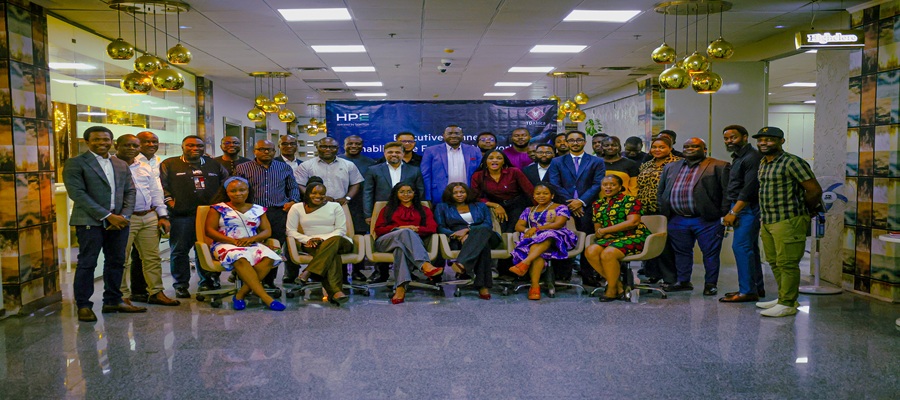
TD Africa, in collaboration with Hewlett Packard Enterprise (HPE) Operated by Selectium, hosted a high-level partner engagement event on May 14, 2026, focused on emerging trends shaping the future of enterprise networking and infrastructure transformation.

TD Africa
The engagement brought together key partners to explore how organisations can build smarter, faster, and more secure network infrastructures capable of supporting today’s rapidly evolving digital economy. Central to the discussions was the growing relevance of WiFi 7 and the shift from traditional networking models to intelligent, AI-driven infrastructure ecosystems.
As businesses continue to accelerate digital transformation, conversations at the event centred on a critical question: Is your infrastructure ready for the speed of transformation? From edge-to-cloud connectivity and IoT integration to AI-enabled networking and advanced security frameworks, the session highlighted the increasing demand for agile, scalable, and resilient enterprise solutions.
Speaking at the event, Dr. Ifee Kojo, Country Manager, HPE Operated by Selectium, highlighted HPE’s commitment to helping organisations modernise their infrastructure and navigate the future of connectivity. “HPE is driving transformation across the entire technology ecosystem, from the data centre to the edge, from IoT to AI-powered connectivity.
“Our focus is on helping businesses strengthen security, improve scalability, and build intelligent infrastructures that support innovation and growth.
“Through our strong partner TD Africa, we can extend these solutions more effectively into the market, ensuring organisations have access to the right technologies needed to compete and thrive in a rapidly evolving digital world,” she said.
Also speaking, Chioma Chimere, Coordinating Managing Director at TD Africa, emphasised the importance of future-ready networking in enabling business resilience and long-term digital growth. “Networking today is no longer just about connectivity; it has become the backbone of enterprise transformation.
“As organisations embrace AI, cloud environments, remote operations, and data-driven systems, the need for secure, intelligent, and scalable infrastructure becomes even more critical.
“TD Africa is committed to ensuring our partners are equipped with the right technologies, insights, and support needed to navigate this shift successfully.
“Our collaboration with HPE reflects our shared commitment to helping businesses modernise confidently and prepare for the future of digital innovation,” she stated.
Through strategic collaborations with global Original Equipment Manufacturers (OEMs) like HPE, TD Africa continues to strengthen its position as a key distributor of enterprise and networking solutions across Africa, enabling partners and organisations to access cutting-edge technologies backed by technical expertise, market reach, and ecosystem support.
E-Business
Jumia Nigeria Records Strong Q1 2026 Growth as Technology-Led Strategy Drives Market Expansion


Jumia has announced strong first-quarter 2026 performance results, with Nigeria emerging as one of the company’s standout growth markets across Africa, reinforcing the country’s position as a critical driver of the company’s long-term expansion strategy.

According to the company’s Q1 2026 financial results released May 7th, 2026, Nigeria recorded a 42% year-on-year increase in physical goods Gross Merchandise Value (GMV), making it one of Jumia’s strongest-performing markets during the period.
Commenting on the performance, Temidayo Ojo, CEO of Jumia Nigeria, said, “Nigeria continues to demonstrate the strength and resilience of its digital commerce ecosystem. The growth we recorded in Q1 reflects increasing consumer confidence, stronger engagement across our platform, and our continued investment in technology, logistics, and customer experience.”
“We are seeing more Nigerians embrace e-commerce not just for convenience, but as a trusted part of everyday life. Our focus remains on building a platform that is more accessible, more reliable, and more relevant to the evolving needs of Nigerian consumers and sellers,” Ojo further mentioned.
The company attributed its broader growth trajectory to disciplined execution, operational efficiency, and increased deployment of technology and AI-driven systems across its operations.
According to the report, Jumia leveraged artificial intelligence and automation across operations, finance, customer support, cybersecurity, seller management, logistics, and technology teams to improve service quality while reducing operational costs company-wide.
The company also noted that technology and content expenses declined year-on-year due to ongoing headcount optimisation and savings from renegotiated technology contracts, while operational leverage continued to improve. They further highlighted increased use of AI tools among its technology teams, alongside automation in call centres and operational systems, as part of efforts to scale sustainably while improving efficiency across African markets.
Across the platform, Jumia reported significant gains in customer retention and marketplace engagement. Quarterly Active Customers reached 2.5 million, while physical goods orders climbed to 5.9 million in Q1 2026.
The company also expanded usage beyond major urban centres, with 62% of total orders now coming from secondary cities and upcountry regions, emphasising the growing reach of digital commerce across Africa.
Despite global economic pressures, including rising memory chip and CPU prices and supply chain disruptions linked to ongoing Middle East conflicts, the company reaffirmed its path toward profitability. Jumia stated that it remains on track to achieve Adjusted EBITDA breakeven and positive cash flow in Q4 2026, with full-year profitability targeted for 2027.

Maida, EVC NCC to Lead Speakers @ 17th Africa’s BoICT Merit & Leadership Lecture

Court Orders Globus Bank to Pay Firm N256m for Breach of Contract

WASPAN Drags Bello, FCCPB Boss to Court over Alleged Disobedience of Order

Pantami, Ex Minister of Communication Withdraws from Gombe APC Governorship Primaries over Alleged Electoral Violations

Lagos Warns against Fake Emergency Calls, Says Rising Misuse Put Lives at Risk

MTN, VDT, Zoracom, Digital Realty Back 2026 Girls in ICT Campaign

Vitel Wireless Partners Fintechs to Expand Access to Services

Kaspersky Discovers Vulnerability in Qualcomm Snapdragon Chips that can Lead to Data Loss & Device Compromise

Bank Customers to Pay N1,500 for ATM Card Issuance, Replacement – CBN

FCCPC Licenses 5 Firms for Airtime, Data Lending as Telcos Step Aside




 General News2 days ago
Xenophobic Attacks: Anonymous Nigeria Threatens to Leak South African Stolen Data

 Telecom2 days ago
MTN Targets 8m Homes in Fibre Expansion Drive

 E-Financial2 days ago
Chapel Hill Denham Says Banks Lose N2.5 Trillion Annually to High CRR in New Report

 E-Financial2 days ago
Lagos Sanctions 15 Money Lending Firms for Operational Violations

 Telecom2 days ago
GBB Says Cross-border Partnerships Key to Africa’s Digital Transformation

 E-Financial2 days ago
AfDB Approves $200m for BoI to Support MSMEs

 News2 days ago
WHO Says Ebola Outbreak Worse than Reported

 E-Financial2 days ago
FirstBank, Visa Launch Multicurrency Signature, Naira Debit Cards