

Broadcasting
CBN’s $1 Trn Mirage: Why Nigeria’s Real Sector Holds the Missing Key

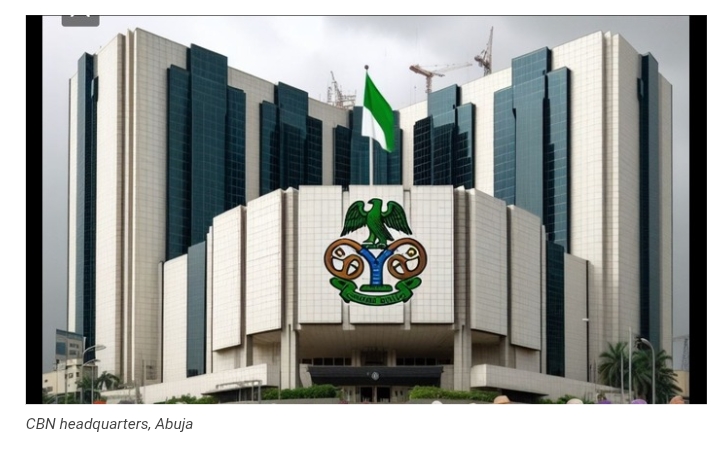
By Blaise Udunze
When the Central Bank of Nigeria (CBN) recently declared that the country was on course to becoming a $1 trillion economy through ongoing banking reforms, the statement was met with cautious optimism. To many, it sounded like a long-awaited promise of prosperity as a declaration that Nigeria’s economic renewal is finally underway. But behind the projection lies a critical question, if banking reforms alone drive the kind of broad-based, sustainable growth required to make Nigeria a trillion-dollar economy?

The truth, according to several experts and economic data, is that banking reforms though necessary are insufficient. The structure of the Nigerian economy is still too fragile, the real sector too weak, and the policy framework too inconsistent to sustain such lofty growth. Without targeted reforms that strengthen production, industry, and exports, the trillion-dollar dream risks remaining what one economist aptly described as a “mirage.”
Tilewa Adebajo, Chief Executive Officer of CFG Advisory, did not mince words when he addressed the subject on ARISE NEWS earlier this year. “We said Nigeria already has the potential of a $1 trillion economy. But $1 trillion economy is a mirage. We shouldn’t go there again,” he said. “If you do not have your policies in place, you cannot reach that $1 trillion economy.”
Adebajo’s caution strikes at the heart of the matter, saying potential is not performance. Nigeria has abundant human and natural resources, but poor policy implementation, weak governance, and persistent inflation continue to choke productivity and investment.
According to Adebajo, reforms alone cannot drive growth. “Reforms on themselves cannot be the solution or answer to growing the economy,” he explained. For him, the CBN’s focus on financial sector restructuring must be complemented by microeconomic solutions such as job creation, poverty alleviation, and social intervention policies that ease the hardship of ordinary Nigerians.
“There has to now be a human face,” he emphasized. Economic transformation, he argues, must not only be about GDP numbers but about improving the quality of life for millions trapped in poverty.
While the CBN’s recapitalisation directive aims to strengthen the banking system and attract foreign capital, many industry players insist that banking strength is meaningless without productive outlets for credit. The Group Managing Director of UBA Plc, Oliver Alawuba, made this clear at the Annual Conference of the Finance Correspondents Association of Nigeria (FICAN).
He stated that achieving the $1 trillion economy target “requires not just incremental growth, but structural shifts in how we approach banking, financial innovation, and sectoral development.”
For Alawuba, the real sector in agriculture, manufacturing, and services must become the true engine of growth.
“A vibrant real sector will drive employment, foster innovation, and strengthen the overall economy by reducing dependency on the oil sector,” he said.
Recapitalization alone, he noted, “is not enough; it must be followed by focused lending to strategic areas that promise the highest economic returns.”
This sentiment reflects a broader consensus among economists that credit must flow to where value is created. Yet, Nigerian banks often prefer the comfort of investing in risk-free government securities over financing industrial or agricultural expansion. The result is a financial system that thrives on paper profits but contributes little to real economic output.
Indeed, Nigeria’s real sector has remained under pressure for years. Manufacturing’s share of GDP still hovers around 10 to 12 percent, hampered by erratic power supply, high logistics costs, and dependence on imported inputs. Agriculture, employing over one-third of the population, remains largely subsistence-based and technologically backward. Small and Medium Enterprises (SMEs), which make up 90 percent of businesses and contribute 48 percent of GDP, continue to struggle with limited access to affordable, long-term credit.
Alawuba suggests that this is where the banking recapitalisation drive must meet fintech innovation. By creating products specifically tailored to SMEs such as flexible loan packages, digital lending tools, and market access platforms which banks can unlock exponential growth. He argues that the future of Nigeria’s economy depends on “the strategic alignment of policy, investment, technology, and, most importantly, our collective will to innovate and grow.”
However, achieving this alignment requires more than monetary engineering; it demands a complete rethink of fiscal and industrial policy. As Isa Omagu of the Bank of Industry (BoI) explained during the same forum, “The economy stands on both the monetary and fiscal sides; we need both sides to work together.” While the monetary side stabilizes prices, fiscal authorities must “come in on the issue of governance.” Nigeria’s biggest economic problem, he said, is simple: “We are not producing enough, and we cannot continue to consume imported goods and expect the economy to be robust.”
Omagu’s statement underscores the country’s most pressing contradiction as a consumption-driven economy that produces little of what it consumes. He called for deeper investment in agriculture, infrastructure, and services to minimize importation and reduce pressure on the foreign exchange market. “We cannot achieve a $1 trillion economy without focusing or boosting our production capacity,” he warned.
The Deputy Director of the Banking Examination Department at the Nigeria Deposit Insurance Corporation (NDIC), Emeka Udechukwu, echoed a similar concern. He warned that “without a vibrant real sector, the economy might not grow fast enough to hit the $1 trillion target.” He argued that while the CBN’s loan-to-deposit ratio policy was designed to compel banks to lend more to the productive sector, “fundamental infrastructural deficits” and policy inconsistencies have undermined its impact. “If there is challenge in the real sector of any economy, that economy is already challenged,” he said. “We have to go back to the real sector and do what we are supposed to do.”
This diagnosis aligns with what many analysts have long argued that Nigeria’s economic problem is not lack of money but lack of production. Trillions of naira circulate within the financial system, yet they rarely translate into new factories, expanded farms, or exportable goods. A $1 trillion GDP projection, therefore, may reflect currency devaluation or statistical rebasing more than genuine productivity gains.
The country’s overreliance on oil further complicates the path to sustainable growth. Data from the National Bureau of Statistics (NBS) shows that in the last quarter of 2023, crude oil accounted for over 81 percent of total exports, while non-oil exports amounted to just around N1 trillion. Even though non-oil exports grew by 38.5 percent in early 2024, their value remains meagre for an economy seeking diversification.
Nigeria’s non-oil export base including manufactured goods, agricultural products, and services remains underdeveloped. Experts argue that to escape this trap, Nigeria must learn from Asian success stories like Singapore and Vietnam, where industrialization, export-oriented manufacturing, and human capital investment transformed poor economies into global competitors.
Singapore, for instance, transitioned from high unemployment and poor infrastructure in the 1960s to one of the world’s richest nations through massive investment in education, manufacturing, and technology. Its top exports today include integrated circuits and machinery products that drive global industries. Similarly, Vietnam evolved from an agrarian, war-torn economy to a manufacturing hub exporting electronics, textiles, and footwear worth over $370 billion in 2022. Nigeria, by contrast, has watched its GDP fall from $400 billion in 2013 to around $250 billion by 2023.
Both countries demonstrate that industrialization, not financial speculation, drives long-term growth. As Uchenna Uzo, a marketing professor at Lagos Business School, put it, “Manufacturing and local production are the key things that can set Nigeria apart.” He added that Nigeria can also attract diaspora investment if it builds the right infrastructure and policy stability.
The lesson is clear; a trillion-dollar economy cannot be decreed from monetary policy statements or achieved through banking reforms alone. It must be earned through production, value addition, and innovation. Nigeria’s manufacturing base must expand, its agricultural productivity must rise, and its infrastructure such as power, transport, and logistics must be modernized.
Banking reforms should therefore serve as an enabler, not a substitute, for real sector development. The CBN’s recapitalization drive, while commendable, must be tied to sectoral targets. Banks that expand credit to manufacturing, agriculture, or export-oriented businesses should enjoy regulatory incentives, while speculative investments in non-productive assets should be discouraged.
Equally important is the need to tame inflation and stabilize the currency. As Adebajo noted, Nigeria can only sustain GDP growth of 8-10 percent if inflation is kept below 12 percent. Persistent inflation erodes purchasing power, deters investment, and undermines long-term planning. Without macroeconomic stability, even the best-intentioned reforms will falter.
Furthermore, there must be a coordinated industrial policy that aligns monetary, fiscal, and trade objectives. For instance, while the CBN seeks to strengthen the naira, the fiscal authorities must simultaneously support local manufacturers through tax incentives, infrastructure investment, and export facilitation. Import restrictions, when necessary, should be strategically designed to protect emerging industries without stifling competition.
Nigeria’s SME ecosystem also deserves targeted support. As the Bank of Industry’s Omagu and UBA’s Alawuba both emphasized, SMEs are the backbone of employment and innovation. Yet, they are often the most credit-starved. Government-backed credit guarantees, venture funds, and fintech-driven micro-lending could bridge this gap, helping small enterprises become the foundation of Nigeria’s industrial base.
Equally, agricultural transformation must move beyond subsistence farming to agro-industrialisation such as processing, packaging, and exporting value-added products rather than raw materials. This approach will not only increase farmers’ incomes but also create jobs and reduce pressure on foreign exchange demand. A focus on value chain development from farm to factory to market will ensure that the benefits of growth reach ordinary citizens.
At a time when 133 million Nigerians are multidimensionally poor, according to NBS data, the urgency for real sector reforms cannot be overstated. An economy that depends overwhelmingly on oil exports, consumes more than it produces, and imports most of its essential goods cannot claim to be on the path to a trillion dollars in any meaningful sense.
The government’s projection of achieving a $1 trillion economy by 2030 could still be attainable but only if the country embarks on deep structural reforms. These include ensuring reliable power supply, revamping transport infrastructure, tackling corruption that inflates project costs, and improving governance and policy consistency.
Nigeria must also invest aggressively in education and skills development, following the example of countries like Singapore, which turned human capital into its greatest economic asset. A young, skilled population can drive innovation, entrepreneurship, and technological adoption which is the real levers of modern economic power.
The road to a trillion-dollar economy will not be paved by balance sheets and banking reforms alone. It will be built by factories, farms, and entrepreneurs. It will depend on a nation’s ability to produce, innovate, and trade competitively. It will require a deliberate shift from policy announcements to policy execution, where government actions translate into measurable outcomes for citizens.
Nigeria’s trillion-dollar dream is achievable, but not on the current trajectory. Without revitalizing the real sector, ensuring macroeconomic stability, and investing in people and production, the CBN’s optimism risks sounding like rhetoric detached from reality. Banking reforms may stabilize the system, but only real sector reforms can sustain growth.
In the end, Nigeria’s economic destiny will not be determined in banking halls but in the fields, factories, and workshops where real value is created. The trillion-dollar economy will not come from financial statements, it will come from the sweat of productive Nigerians who, if properly empowered, can transform potential into prosperity.
Blaise, a journalist and PR professional writes from Lagos, can be reached via: [email protected]


MTN Group has begun rolling out MTN One TV, a new entertainment proposition designed to make digital video content more accessible, relevant, and flexible for customers across African markets.

Introduced in line with MTN’s Ambition 2030 strategy, MTN One TV brings together local storytelling, live channels, international programming, and market-specific viewing options tailored to how customers across the continent access and pay for digital entertainment.
The proposition is designed to give customers greater choice in how they watch content, with viewing models that may vary by market and can include free-to-view content, advertising-funded experiences, pay-as-you-watch access, and subscription offerings.
Depending on local availability, customers may also be able to pay through airtime, Mobile Money, and other locally supported payment methods, helping to reduce common barriers to streaming access.
Beyond enhancing customer experiences, MTN One TV creates new opportunities for African creators, broadcasters, advertisers, and ecosystem partners by helping connect content to wider audiences through MTN’s scale across connectivity, payments, and digital services.
By bringing together a broad mix of content experiences under a single proposition, MTN aims to support greater content discovery, broader audience reach, and sustainable growth across Africa’s digital entertainment ecosystem.
Anchored in MTN’s strategic platforms of Connectivity, Fintech, and Digital Infrastructure, MTN One TV forms part of the Group’s broader ambition to build digital experiences that create value for customers while enabling participation and growth across Africa’s digital economy.
“Entertainment is increasingly becoming an important gateway to digital participation,” said Selorm Adadevoh, MTN group chief commercial, strategy and transformation officer.
“Through MTN One TV, we are leveraging the scale of our connectivity, fintech, and digital capabilities to make relevant content more accessible while creating new opportunities for Africa’s creative and digital economies. This is aligned with our ambition to deliver digital solutions for Africa’s progress.”
MTN One TV is being introduced progressively across MTN markets through a phased rollout approach that reflects local market needs, existing services, and partnership opportunities.
Over time, MTN will bring together a combination of video capabilities, content partnerships, and customer experiences under the MTN One TV brand to create a more consistent and scalable entertainment proposition across its footprint.
Through MTN One TV, MTN continues to extend its role beyond connectivity by combining entertainment, payments, and digital services to deliver experiences tailored to the needs of African consumers.
The rollout supports MTN’s Ambition 2030 vision of leading digital solutions for Africa’s progress while expanding access to digital entertainment across the continent.

International Air Transport Association (IATA) has identified Nigeria as one of the most expensive countries in the world for airline operations, citing high taxes, charges and operational costs that continue to weigh heavily on local carriers.

IATA’s Regional Vice President for Africa and the Middle East, Kamil Al-Awadhi, disclosed this during the association’s Annual General Meeting held in Rio de Janeiro.
Al-Awadhi said that although Nigeria’s Minister of Aviation and Aerospace Development, Festus Keyamo, had been pursuing reforms aimed at improving the aviation sector, airlines operating in the country still faced enormous cost pressures.
According to him, the high-cost operating environment has continued to affect the profitability and competitiveness of Nigerian airlines, making it difficult for the industry to realise its full potential.
He noted that excessive taxes, regulatory charges and other operating expenses remained major obstacles to airline growth across the region, with Nigeria ranking among the most challenging markets from a cost perspective.
Al-Awadhi urged member states of the Economic Community of West African States to adopt a proposed 25 per cent reduction in aviation taxes and charges to ease the burden on airlines and passengers.
According to him, lowering taxes and charges would reduce airfares, stimulate passenger traffic and strengthen the competitiveness of carriers operating within West Africa.
He stressed that a more supportive policy environment was critical to unlocking the economic benefits of aviation, including increased trade, tourism and regional integration.
Industry stakeholders have consistently advocated lower taxes and regulatory fees, arguing that the current cost structure makes air travel less affordable and limits the growth of the sector.
IATA’s latest remarks add to calls for governments in West Africa to implement policies that will promote a more sustainable and competitive aviation industry across the region.
Broadcasting
NASENI Trains 50 Women in Kano on Renewable Energy Technologies Under She-Powers Initiative
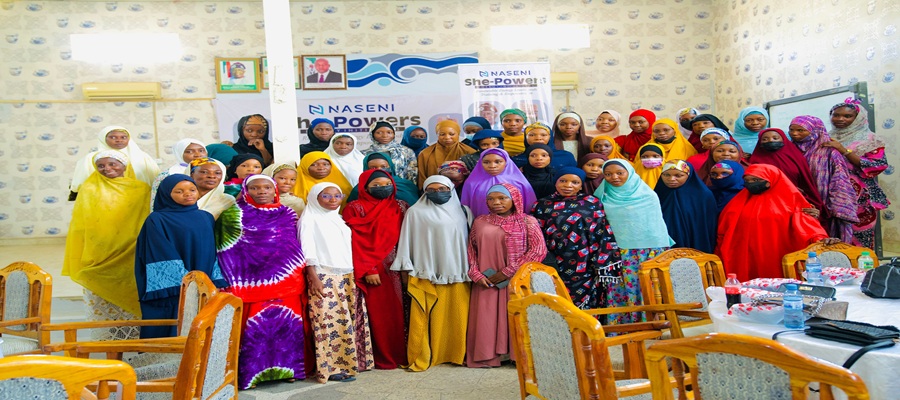
The National Agency for Science and Engineering Infrastructure (NASENI), under the leadership of its Executive Vice Chairman/CEO, Khalil Suleiman Halilu, has trained 50 women in Kano State on inverter and battery technologies through its She-Powers Energy Initiative.

The three-day programme, held at the Technology Incubation Centre, Farm Centre, Kano which ended yesterday, was designed to equip participants with practical renewable energy skills, promote women-led enterprises, and enhance sustainable livelihoods.
The initiative forms part of NASENI’s broader commitment to empowering women, creating economic opportunities, and expanding participation in Nigeria’s growing clean energy sector. It also aligns with the Renewed Hope Agenda of President Bola Ahmed Tinubu by supporting job creation, entrepreneurship, and inclusive economic development.
Through targeted interventions such as the She-Powers Energy Initiative, NASENI continues to demonstrate its commitment to leveraging technology and innovation to improve lives and drive sustainable development across the country.
Photos: Participants at the She-Powers Energy Initiative training organised by the National Agency for Science and Engineering Infrastructure (NASENI) held at the the Technology Incubation Centre, Farm Centre, Kano yesterday.

Galaxy Backbone @ 20, Pledges Nationwide Connectivity, Data Sovereignty

KidsCook Showdown 2.0 Set to Empower Public School Pupils with Culinary, Life Skills

CBN Orders Banks, Fintechs to Host Payment Data Locally

PalmPay Joins Industry Leaders @ Digital Pay Expo 2026

UK Bans TikTok, Instagram, Facebook for Under-16s in Landmark Crackdown

CBN Extends PoS Geo-Fencing Enforcement Deadline to August 2026

NCC Drafts New Rules for Virtual Mobile Operators

TD Africa, HPE Drive Conversations on the Future of Intelligent Networking

London Strengthens Global Investment Ties with Africa @ First Ever London-Africa Business Summit

Easybuy Partners WAWUAfrica to Upskill 10 Million Youths and Women, Boosting Nigeria’s Economic and Financial Inclusion




 General News1 day ago
₦5m up for Grabs as 10 Startups Clash at the Gathering on 100 Pitchathon Aba

 E-Business1 day ago
CSOs Raise Alarm over Nigeria’s Data Protection Crisis

 E-Financial1 day ago
CBN to Expand eNaira for Salaries, Pensions and Welfare Payments

 E-Business1 day ago
AI-Powered Cyber Threats Put Nigerian Banks on Alert

 General News1 day ago
CBN Moves to Stop Banks From Using Customers’ Money for Fintech Subsidiaries

 E-Financial1 day ago
CBN to Bar HoldCos from Influencing Banks’ Lending Decisions

 Telecom1 day ago
NITDA Reveals Why AI Could Be Nigeria’s Biggest Wealth Creator, Not Oil

 Telecom1 day ago
NASENI Unveils Ambitious Plan to Produce 600 Million Diagnostic Kits Annually