

Broadcasting
CBN’s $1 Trn Mirage: Why Nigeria’s Real Sector Holds the Missing Key

By Blaise Udunze
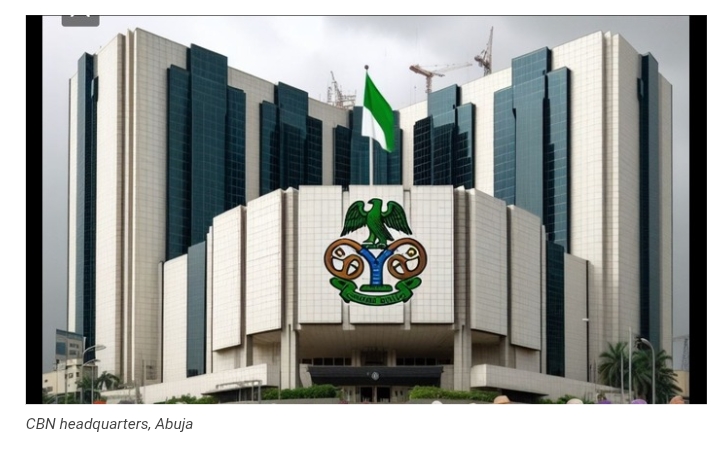
When the Central Bank of Nigeria (CBN) recently declared that the country was on course to becoming a $1 trillion economy through ongoing banking reforms, the statement was met with cautious optimism. To many, it sounded like a long-awaited promise of prosperity as a declaration that Nigeria’s economic renewal is finally underway. But behind the projection lies a critical question, if banking reforms alone drive the kind of broad-based, sustainable growth required to make Nigeria a trillion-dollar economy?

The truth, according to several experts and economic data, is that banking reforms though necessary are insufficient. The structure of the Nigerian economy is still too fragile, the real sector too weak, and the policy framework too inconsistent to sustain such lofty growth. Without targeted reforms that strengthen production, industry, and exports, the trillion-dollar dream risks remaining what one economist aptly described as a “mirage.”
Tilewa Adebajo, Chief Executive Officer of CFG Advisory, did not mince words when he addressed the subject on ARISE NEWS earlier this year. “We said Nigeria already has the potential of a $1 trillion economy. But $1 trillion economy is a mirage. We shouldn’t go there again,” he said. “If you do not have your policies in place, you cannot reach that $1 trillion economy.”
Adebajo’s caution strikes at the heart of the matter, saying potential is not performance. Nigeria has abundant human and natural resources, but poor policy implementation, weak governance, and persistent inflation continue to choke productivity and investment.

According to Adebajo, reforms alone cannot drive growth. “Reforms on themselves cannot be the solution or answer to growing the economy,” he explained. For him, the CBN’s focus on financial sector restructuring must be complemented by microeconomic solutions such as job creation, poverty alleviation, and social intervention policies that ease the hardship of ordinary Nigerians.
“There has to now be a human face,” he emphasized. Economic transformation, he argues, must not only be about GDP numbers but about improving the quality of life for millions trapped in poverty.
While the CBN’s recapitalisation directive aims to strengthen the banking system and attract foreign capital, many industry players insist that banking strength is meaningless without productive outlets for credit. The Group Managing Director of UBA Plc, Oliver Alawuba, made this clear at the Annual Conference of the Finance Correspondents Association of Nigeria (FICAN).
He stated that achieving the $1 trillion economy target “requires not just incremental growth, but structural shifts in how we approach banking, financial innovation, and sectoral development.”
For Alawuba, the real sector in agriculture, manufacturing, and services must become the true engine of growth.
“A vibrant real sector will drive employment, foster innovation, and strengthen the overall economy by reducing dependency on the oil sector,” he said.
Recapitalization alone, he noted, “is not enough; it must be followed by focused lending to strategic areas that promise the highest economic returns.”
This sentiment reflects a broader consensus among economists that credit must flow to where value is created. Yet, Nigerian banks often prefer the comfort of investing in risk-free government securities over financing industrial or agricultural expansion. The result is a financial system that thrives on paper profits but contributes little to real economic output.
Indeed, Nigeria’s real sector has remained under pressure for years. Manufacturing’s share of GDP still hovers around 10 to 12 percent, hampered by erratic power supply, high logistics costs, and dependence on imported inputs. Agriculture, employing over one-third of the population, remains largely subsistence-based and technologically backward. Small and Medium Enterprises (SMEs), which make up 90 percent of businesses and contribute 48 percent of GDP, continue to struggle with limited access to affordable, long-term credit.
Alawuba suggests that this is where the banking recapitalisation drive must meet fintech innovation. By creating products specifically tailored to SMEs such as flexible loan packages, digital lending tools, and market access platforms which banks can unlock exponential growth. He argues that the future of Nigeria’s economy depends on “the strategic alignment of policy, investment, technology, and, most importantly, our collective will to innovate and grow.”
However, achieving this alignment requires more than monetary engineering; it demands a complete rethink of fiscal and industrial policy. As Isa Omagu of the Bank of Industry (BoI) explained during the same forum, “The economy stands on both the monetary and fiscal sides; we need both sides to work together.” While the monetary side stabilizes prices, fiscal authorities must “come in on the issue of governance.” Nigeria’s biggest economic problem, he said, is simple: “We are not producing enough, and we cannot continue to consume imported goods and expect the economy to be robust.”
Omagu’s statement underscores the country’s most pressing contradiction as a consumption-driven economy that produces little of what it consumes. He called for deeper investment in agriculture, infrastructure, and services to minimize importation and reduce pressure on the foreign exchange market. “We cannot achieve a $1 trillion economy without focusing or boosting our production capacity,” he warned.
The Deputy Director of the Banking Examination Department at the Nigeria Deposit Insurance Corporation (NDIC), Emeka Udechukwu, echoed a similar concern. He warned that “without a vibrant real sector, the economy might not grow fast enough to hit the $1 trillion target.” He argued that while the CBN’s loan-to-deposit ratio policy was designed to compel banks to lend more to the productive sector, “fundamental infrastructural deficits” and policy inconsistencies have undermined its impact. “If there is challenge in the real sector of any economy, that economy is already challenged,” he said. “We have to go back to the real sector and do what we are supposed to do.”
This diagnosis aligns with what many analysts have long argued that Nigeria’s economic problem is not lack of money but lack of production. Trillions of naira circulate within the financial system, yet they rarely translate into new factories, expanded farms, or exportable goods. A $1 trillion GDP projection, therefore, may reflect currency devaluation or statistical rebasing more than genuine productivity gains.
The country’s overreliance on oil further complicates the path to sustainable growth. Data from the National Bureau of Statistics (NBS) shows that in the last quarter of 2023, crude oil accounted for over 81 percent of total exports, while non-oil exports amounted to just around N1 trillion. Even though non-oil exports grew by 38.5 percent in early 2024, their value remains meagre for an economy seeking diversification.
Nigeria’s non-oil export base including manufactured goods, agricultural products, and services remains underdeveloped. Experts argue that to escape this trap, Nigeria must learn from Asian success stories like Singapore and Vietnam, where industrialization, export-oriented manufacturing, and human capital investment transformed poor economies into global competitors.
Singapore, for instance, transitioned from high unemployment and poor infrastructure in the 1960s to one of the world’s richest nations through massive investment in education, manufacturing, and technology. Its top exports today include integrated circuits and machinery products that drive global industries. Similarly, Vietnam evolved from an agrarian, war-torn economy to a manufacturing hub exporting electronics, textiles, and footwear worth over $370 billion in 2022. Nigeria, by contrast, has watched its GDP fall from $400 billion in 2013 to around $250 billion by 2023.
Both countries demonstrate that industrialization, not financial speculation, drives long-term growth. As Uchenna Uzo, a marketing professor at Lagos Business School, put it, “Manufacturing and local production are the key things that can set Nigeria apart.” He added that Nigeria can also attract diaspora investment if it builds the right infrastructure and policy stability.
The lesson is clear; a trillion-dollar economy cannot be decreed from monetary policy statements or achieved through banking reforms alone. It must be earned through production, value addition, and innovation. Nigeria’s manufacturing base must expand, its agricultural productivity must rise, and its infrastructure such as power, transport, and logistics must be modernized.
Banking reforms should therefore serve as an enabler, not a substitute, for real sector development. The CBN’s recapitalization drive, while commendable, must be tied to sectoral targets. Banks that expand credit to manufacturing, agriculture, or export-oriented businesses should enjoy regulatory incentives, while speculative investments in non-productive assets should be discouraged.
Equally important is the need to tame inflation and stabilize the currency. As Adebajo noted, Nigeria can only sustain GDP growth of 8-10 percent if inflation is kept below 12 percent. Persistent inflation erodes purchasing power, deters investment, and undermines long-term planning. Without macroeconomic stability, even the best-intentioned reforms will falter.
Furthermore, there must be a coordinated industrial policy that aligns monetary, fiscal, and trade objectives. For instance, while the CBN seeks to strengthen the naira, the fiscal authorities must simultaneously support local manufacturers through tax incentives, infrastructure investment, and export facilitation. Import restrictions, when necessary, should be strategically designed to protect emerging industries without stifling competition.
Nigeria’s SME ecosystem also deserves targeted support. As the Bank of Industry’s Omagu and UBA’s Alawuba both emphasized, SMEs are the backbone of employment and innovation. Yet, they are often the most credit-starved. Government-backed credit guarantees, venture funds, and fintech-driven micro-lending could bridge this gap, helping small enterprises become the foundation of Nigeria’s industrial base.
Equally, agricultural transformation must move beyond subsistence farming to agro-industrialisation such as processing, packaging, and exporting value-added products rather than raw materials. This approach will not only increase farmers’ incomes but also create jobs and reduce pressure on foreign exchange demand. A focus on value chain development from farm to factory to market will ensure that the benefits of growth reach ordinary citizens.
At a time when 133 million Nigerians are multidimensionally poor, according to NBS data, the urgency for real sector reforms cannot be overstated. An economy that depends overwhelmingly on oil exports, consumes more than it produces, and imports most of its essential goods cannot claim to be on the path to a trillion dollars in any meaningful sense.
The government’s projection of achieving a $1 trillion economy by 2030 could still be attainable but only if the country embarks on deep structural reforms. These include ensuring reliable power supply, revamping transport infrastructure, tackling corruption that inflates project costs, and improving governance and policy consistency.
Nigeria must also invest aggressively in education and skills development, following the example of countries like Singapore, which turned human capital into its greatest economic asset. A young, skilled population can drive innovation, entrepreneurship, and technological adoption which is the real levers of modern economic power.
The road to a trillion-dollar economy will not be paved by balance sheets and banking reforms alone. It will be built by factories, farms, and entrepreneurs. It will depend on a nation’s ability to produce, innovate, and trade competitively. It will require a deliberate shift from policy announcements to policy execution, where government actions translate into measurable outcomes for citizens.
Nigeria’s trillion-dollar dream is achievable, but not on the current trajectory. Without revitalizing the real sector, ensuring macroeconomic stability, and investing in people and production, the CBN’s optimism risks sounding like rhetoric detached from reality. Banking reforms may stabilize the system, but only real sector reforms can sustain growth.
In the end, Nigeria’s economic destiny will not be determined in banking halls but in the fields, factories, and workshops where real value is created. The trillion-dollar economy will not come from financial statements, it will come from the sweat of productive Nigerians who, if properly empowered, can transform potential into prosperity.
Blaise, a journalist and PR professional writes from Lagos, can be reached via: [email protected]



Gugu Gumede and S’Dumo Mtshali, the power couple in Netflix’s telenovela, The Polygamist, will be guest on this week’s edition of African Voices, which is sponsored by Globacom on Cable News Network (CNN).

The 22-episode sitcom focuses on the misadventures of an adulterous spouse who unknowingly entangles his family in the difficulties of polygamy.
The film depicts a series of intrigues, betrayals, and other events that shattered the harmony of a once-perfect marriage.
The fictional couple in Johannesburg are interviewed by the programme’s anchor, Larry Madowo, for a 30-minute show in which they discuss their personal experiences and the difficulties they have in the film industry, such as coping with popularity and typecasting and advocating for more actor protections.
Gumede, a 34-year-old South African who attended the American Academy of Dramatic Arts in Los Angeles to study acting, portrayed Joyce Gomora in the telenovela.
In addition to her part in The Polygamist, Gumede has portrayed Mamlambo, a prophetess on “Uzalo”, the most watched television program in South Africa, and Mandisa in “Generations”, one of the country’s most popular series.
Mtshali, a 43-year-old South African actor who portrayed Jonasi Gomora, gained notoriety in 2010 after competing in and winning the SABC1 reality program, “Class Act”. In the same year, he landed his first major part in the drama series “Intersexions” on SABC1.
Among other films, he has starred in “Inside Story” (2011), “Avenged” (2013), “iNumber Number: Jozi Gold” (2023), “Back of the Moon”, and “The Four of Us” (2025).
This special double-cast episode will feature on DSTV channel 401 on Saturday at 8a.m. It will be repeated same day at 11a.m., Sunday at 3.30a.m.,6p.m., Monday at 3a.m. and 5.45p.m. as well as on Tuesday,5.45p.m.
The repeats continue next week Saturday at 7.30a.m., 11a.m.;Sunday 3.30a.m., 6p.m.,and on Monday at 3a.m.
By Blaise Udunze
From a general observation, comparisons are powerful political tools. They simplify complex realities, inspire supporters and shape public perception. Another side of this is that they can also become misleading when symbolism replaces substance.

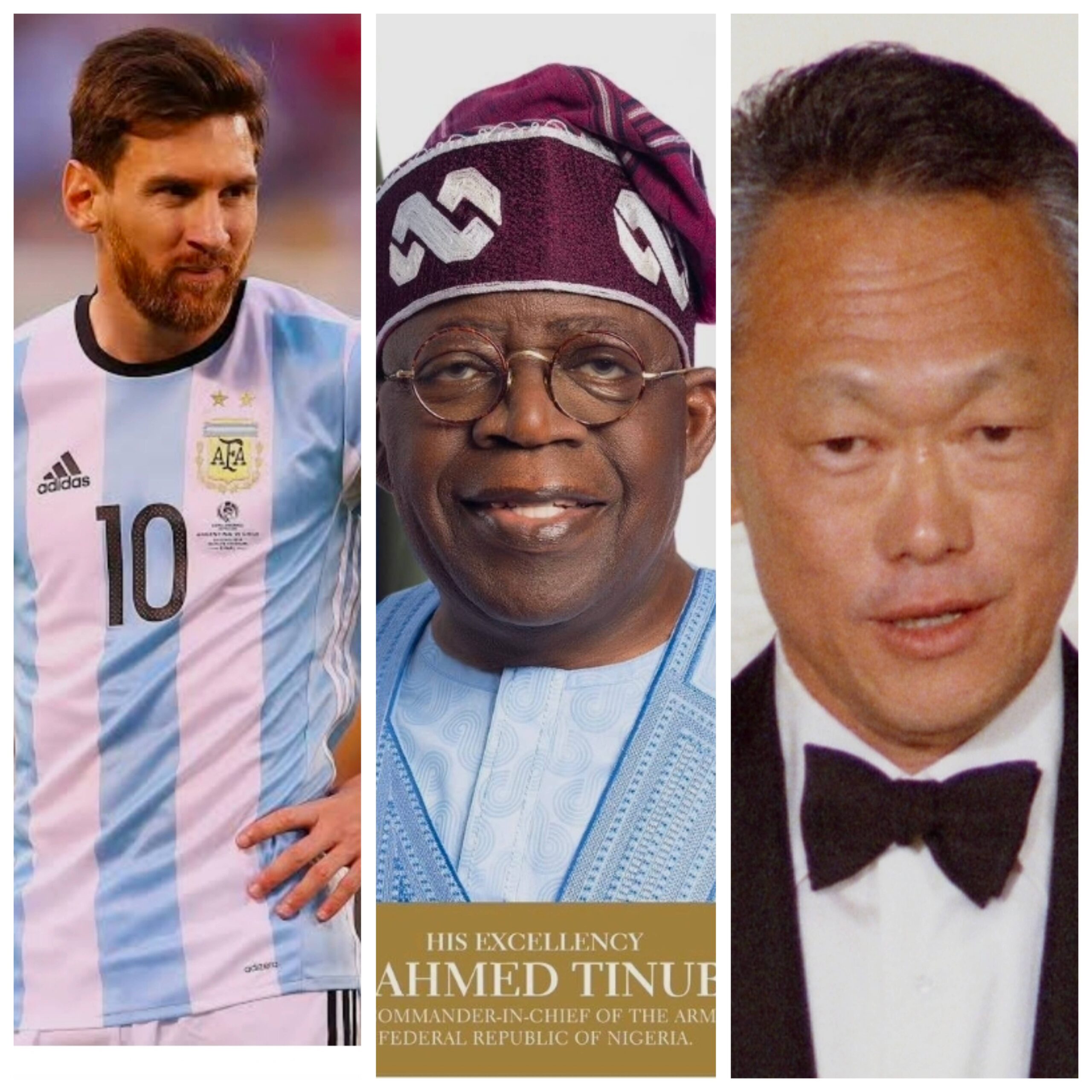
The latter appears to be the objective behind two recent interventions in defense of his excellency, President Bola Ahmed Tinubu. Respectfully, it was observed that veteran journalist Martin Oloja likened Tinubu’s political journey to that of football icon Lionel Messi. He portrayed him as a resilient strategist whose patience and tactical brilliance eventually produced victory. As this now appears to be a trend, Imo State Governor Hope Uzodimma further elevated the narrative, comparing Tinubu to Singapore’s founding Prime Minister, Lee Kuan Yew. He didn’t stop at that; rather further argued that today’s painful reforms would eventually transform Nigeria just as Lee transformed Singapore. They are compelling analogies.
Unfortunately, it was observed that both began to unravel once governance, not politics, was used as the standard of measurement.
It is a known fact to the world that Lionel Messi is celebrated not because he endured criticism or finally lifted the World Cup after years of disappointment. He is celebrated because his greatness is measurable. His goals are counted. His assists are recorded. His trophies are displayed and not just that, his records speak louder than the opinions of his admirers, which may have taken a different turn now after the outcome of the 2026 FIFA World Cup.
The same is also true of Lee Kuan Yew. History has shown that he is not revered because he introduced difficult reforms or enjoyed the support of loyal political allies. Governor Hope should be reminded that Lee is remembered because he fundamentally transformed Singapore. Amongst his achievements were transforming a poor trading port into one of the world’s richest, cleanest, safest and most efficiently governed nations.
Lee’s records speak for him because under his leadership, Singapore built world-class infrastructure, an incorruptible public service, globally competitive education, affordable housing, investor confidence and one of the highest standards of living anywhere in the world.
Neither Messi nor Lee Kuan Yew became legends through carefully crafted narratives. Yes, they became legends because the evidence became impossible to dispute. That is precisely where comparisons with President Tinubu become difficult.
It is an error to assume that winning elections is the same as winning governance and at the same time, political brilliance may secure power, but only effective leadership secures history’s approval.
For millions of Nigerians, governance is not measured by campaign strategy or political resilience. It is measured by the realities they confront every morning.
Can they afford food? Can they pay transport fares? Can they pay rent with the current landlords’ economy? Can they keep their businesses open? Can they sleep or travel freely without fear of kidnapping? Can they find jobs after graduation? Can they access reliable electricity and healthcare? These are the scoreboards by which governments are judged.
Supporters of the Tinubu administration frequently point to encouraging macroeconomic indicators. Foreign reserves have improved. Government revenues have risen. States now receive significantly larger allocations through the Federation Account Allocation Committee (FAAC). Well, these ‘achievements’ will be reviewed soon through the lens of news narratives. International financial institutions have welcomed several policy reforms. The removal of fuel subsidy and exchange-rate liberalisation are presented as courageous decisions that previous administrations avoided.
These developments deserve acknowledgement. Yet macroeconomic improvements are not the same as improvements in citizens’ welfare.
In reality, an economy cannot be declared successful merely because government revenues have increased while household purchasing power continues to deteriorate, as this would be a complete aberration.
Again, it is considered an anomaly that Nigeria reports stronger fiscal numbers, but millions of families continue to struggle with soaring food prices, rising transport costs, expensive housing, high electricity tariffs and shrinking disposable incomes.
Statistics may comfort policymakers. They rarely comfort hungry citizens. Messi never celebrated possession statistics after losing a match; rather, he cried and cried over losing the opportunity of winning the trophy at the concluded 2026 FIFA World Cup. To him, results mattered.
The reality is that governments should be judged by the same principle. This is open to dispute, but of a truth, Governor Uzodimma’s comparison to Lee Kuan Yew deserves even closer scrutiny because it raises an important question, though it may appear hard to answer.
If Tinubu is Nigeria’s Lee Kuan Yew, where is Nigeria’s Singapore? What exactly made Lee Kuan Yew exceptional? Was it simply his willingness to implement painful reforms? Certainly not.
Many leaders across the developing world have introduced painful reforms. Very few transformed their countries.
One thing stands out here: Lee’s legacy rests on outcomes, not intentions. Judging from all indications, it is obvious that his reforms dramatically reduced corruption, attracted investment, strengthened institutions, expanded industrialisation, improved education, guaranteed affordable public housing and steadily raised incomes across generations. Unlike Nigeria’s ongoing experience, Singapore’s rise was not a promise repeatedly postponed to the future. Citizens experienced tangible improvements in their daily lives. That is why history celebrates Lee Kuan Yew. Nigeria’s present reality tells a different story.
It is glaring and ironic that despite improved fiscal revenues, many Nigerians continue to grapple with rising inflation, worsening poverty, declining purchasing power, youth unemployment, struggling businesses and persistent insecurity. If they must know, these are not merely economic statistics; they are the lived realities by which citizens judge any government.
The Lee Kuan Yew comparison also overlooks perhaps the most important ingredient behind Singapore’s success, which is primarily the institutions.
It is obvious and practically doubtful if Governor Uzodinma’s kind of Singapore is the same as the one on which its transformation was built upon an efficient bureaucracy, disciplined public institutions, predictable regulation, meritocracy, uncompromising anti-corruption enforcement and consistent long-term planning as championed by Lee Kuan Yew. An honest question here is, can the same be said of Nigeria today?
The truth is not far-fetched; Nigeria is nothing close to it because the realities and lived experiences of Nigerians are that the country continues to grapple with weak institutions, policy inconsistency, bureaucratic inefficiency, corruption concerns and widespread insecurity.
His impeccable achievements are built on the institutions; hence, without institutional transformation, every effort to invoke Lee Kuan Yew risks confusing aspiration with achievement.
One common trend witnessed lately is that the supporters of the administration often argue that Nigerians must be patient because meaningful reforms require time. That argument deserves consideration.
Let it also be made known that patience should never become an endless substitute for accountability. Citizens are also entitled to ask whether the sacrifices demanded today are producing measurable improvements tomorrow.
History remembers leaders not because they prescribed hardship, but because that hardship ultimately produced prosperity for those alive and not for the dead.
Another weakness in both comparisons is the tendency to confuse political mastery with administrative excellence. These are totally two different things, because when it comes to winning elections, it requires coalition building, negotiation and political calculation. Whilst, running a nation demands competent institutions, sound economic management, transparency, public trust and measurable improvements in living standards.
Again, the two are not the same, and for this reason, many exceptional politicians have governed poorly. Many successful administrators never became political giants. Democracy ultimately rewards governance, not political mythology.
This is not to suggest that President Tinubu’s administration has achieved nothing. Tax reforms, infrastructure investments, fiscal restructuring and efforts to stabilise public finances represent important policy initiatives whose long-term impact remains to be seen. Well, acknowledging those initiatives is consistent with honest public discourse.
Equally important, however, is recognising that millions of Nigerians continue to judge the administration through the realities and their lived experiences rather than the promises they hear.
Football supporters judged Lionel Messi by the trophies in the cabinet. In like manner, history judges Lee Kuan Yew by the Singapore he built. The same measure should be applied in this nation, as Nigerians will judge President Tinubu by the Nigeria he leaves behind.
The key metric here is that if inflation falls sustainably, poverty declines significantly, insecurity is substantially reduced, electricity becomes more reliable, industries expand, jobs multiply and citizens regain confidence in the future, history will acknowledge those achievements without requiring comparisons to Messi or Lee Kuan Yew.
Neither Messi nor Lee Kuan Yew needed political allies to persuade the world of their greatness and that distinguishes both as the greatest of all time (GOAT).
Their records spoke for themselves. Political endorsements may dominate today’s headlines. History, however, listens only to evidence. Even Messi needed trophies. Lee Kuan Yew needed results. Nigerian leaders should be judged by no lesser standard.
Blaise, a journalist and PR professional, writes from Lagos and can be reached via: [email protected]


National Broadcasting Commission (NBC) and the Independent National Electoral Commission (INEC) are set to introduce a joint broadcast monitoring framework ahead of the 2027 general elections as part of efforts to curb unethical broadcasting and promote responsible election coverage.

Charles Ebuebu, director-general, NBC, who disclosed the plan recently, said the collaboration would strengthen election monitoring through the deployment of advanced technology and closer coordination between regulatory agencies.
According to him, the increasing influence of digital and online platforms has made it imperative for regulators to work together rather than operate independently.
“We have written to INEC, and we are going to have a joint monitoring outlook over the elections. Gone are the days when agencies work in silos. When we coordinate, we’re able to monitor more effectively,” Ebuebu said.
He explained that the partnership would enable both agencies to jointly identify and address violations of broadcasting regulations during the election period instead of handling such issues separately.
Beyond INEC, Ebuebu said the NBC is also partnering with other key regulators to strengthen oversight of election-related content across digital platforms.
According to him, the commission is finalising agreements with the Nigerian Communications Commission (NCC) and the National Information Technology Development Agency (NITDA) ahead of the polls to reinforce its monitoring capabilities.
“We are calling in other stakeholders to reinforce the election monitoring. We are signing agreements with the Nigerian Communications Commission and the National Information Technology Development Agency before the elections,” he said.
Ebuebu also revealed that the NBC is upgrading its monitoring infrastructure with artificial intelligence (AI)-powered tools to keep pace with the rapidly expanding media landscape.
He noted that the proliferation of online platforms has made traditional monitoring methods inadequate.
“With online platforms, there are thousands of them. You need more than staff; you need AI monitoring facilities,” he said.
The NBC chief added that the commission has significantly improved its monitoring capacity and can currently track nearly 50 broadcast channels from its monitoring centre in Abuja.
He said additional monitoring facilities would be established across the country in line with evolving broadcasting technologies.As part of preparations for the 2027 elections, Ebuebu announced plans for a sensitisation workshop in Ibadan that will bring together broadcasters, INEC officials, security agencies and other stakeholders.
He said the engagement had become necessary as political discussions surrounding elections continue to grow more heated, including on television, stressing the need for broadcasters to adhere to professional standards.
Ebuebu noted that the commission has had to issue several warnings to broadcast stations for violating the broadcasting code during election periods.
“We have had to write several of them because they simply forget what the code says,” he said

History as Lagos Becomes First Nigerian State to Launch Greenhouse Gas Registry

AMCON Puts ntel Up for Sale, Seeks Investors

Nigeria Atomic Energy Commission Seeks Collaboration on Power Plants

AI Investment Gap Threatens Africa’s Future Growth

UNN to Partner Firm on AI, Smart Mobility Innovation Centre

NRC, Ponzi Scheme Collapses Resulting Loss of Billions of Naira

EFCC Busts NIS Visa Overstay Racket, Uncovers N700m in an Account

Tokenization, Blockchain Technology will Transform Financial Institutions – IMF

From Scarcity to Scale: What Africa Can Learn from India’s Agricultural Transformation

Spotify partners Afro Nation Portugal to expand African music experience




 E-Business1 day ago
Report Says Cybercriminals Deploy Malware to Hijack Crypto Wallets, Monitor Browsers Telegram

 Telecom1 day ago
Subscribers, Telcos Warn FCCPC over Airtime Lending Enforcement

 Telecom1 day ago
NCC, REA Partner to Cut Telecom Costs with Renewable Energy

 News1 day ago
See Verified 20 Countries Nigerian Passport Holders Can Travel Visa-Free

 General News1 day ago
AfDB, Nigeria Urge African Control of Mineral Resources

 E-Business1 day ago
NPC Opens 131 Births, Deaths Registration Centres in Anambra

 General News1 day ago
Lagos Chamber Opposes 21 Percent Pension Contribution, Warns of Job Losses

 Telecom1 day ago
Nigeria Pushes for United African Front Ahead of Global Telecoms Elections