

General News
Africa Doesn’t Need More Aid. It Needs Better Law

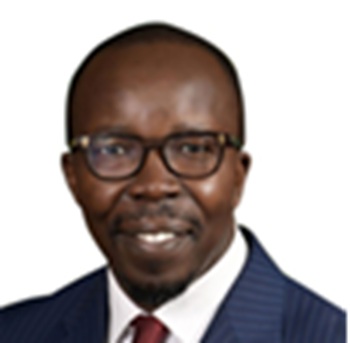
By Eric Gumbo, MBS
For decades, the dominant story of African development has been one of dependency: waiting for the World Bank loan, the IMF arrangement, the donor conference, the debt relief round. That story is not entirely wrong, the only concerns are; must it be our default setting? Do we have more sustainable options? Kenya, with little fanfare, is rewriting the script in answering these existential questions.

Eric Gumbo
Over the past few years, Kenya has enacted a sweep of legislation culminating into the most ambitious domestic capital mobilization framework on the African continent. Its centrepiece, a KSh 5 trillion National Infrastructure Fund, which is not another borrowing vehicle. It is something structurally different: a mechanism designed to make Kenya’s own savings, its pension funds, its retail investors, its private equity market, do the work that foreign debt was never built to do sustainably.
The problem it is solving is rarely discussed in development economics circles, though it should be. Africa’s infrastructure financing gap, estimated at $68 to $108 billion a year by the African Development Bank, is not primarily a shortage of money. There is no shortage of capital in the world. The shortage is of investable projects: opportunities where private capital can be mobilised without facing crippling sovereign risk, opaque regulatory environments, or legal frameworks that shift mid-contract. That uncertainty is not a footnote. It is the reason trillions of dollars in global private capital have largely bypassed the continent.
“The shortage is not of money. It is of investable projects, and the legal certainty that makes them possible.”
The National Infrastructure Fund established as an Act of Parliament addresses this directly. By absorbing sovereign and legal risk at the project level, it removes the uncertainty that forces private investors to demand prohibitive risk premiums or walk away entirely. It acts as a structural buffer between the Kenyan state and the market, giving development finance institutions, private equity funds, domestic pension managers, and local retail investors a common platform on which to participate without exposure to the regulatory volatility that has stalled projects across the continent for a generation.
The financing pathway is streamlined: due diligence burdens shrink, incentives align between public and private participants, and patient long-term capital, the kind infrastructure actually requires, finds a credible home. The KSh 5 trillion pipeline of dams, roads, and urban transit becomes financeable not because Kenya has borrowed more, but because the NIF makes the risk profile legible and acceptable to capital that previously had nowhere in Kenya to go.
This matters beyond Kenya’s borders. Rwanda built a competitive economy from near-zero after 1994. Botswana converted diamond revenues into one of Africa’s most stable development trajectories through the Pula Fund. Mauritius became a continental financial hub through regulatory design alone. These nations did not succeed by waiting for the global financial architecture to serve them. They engineered their own conditions for growth. Kenya is now doing the same, at greater scale, and with instruments far more sophisticated than anything its predecessors had available.
The human dimension of this architecture is equally significant. The recently executed 65 percent IPO of the Kenya Pipeline Company, targeting KSh 100 billion on the Nairobi Securities Exchange, was the largest state offering since Safaricom’s landmark 2008 listing. When an ordinary Kenyan in Kisumu or Eldoret can hold shares in the pipeline that carries fuel to their town, development stops being something administered from above and becomes something people own, a democratisation of sovereign wealth. A proposed Sovereign Wealth Fund, with an intergenerational component anchored in the Kenyan laws, extends the same logic forward in time: today’s resource revenues become tomorrow’s infrastructure, rather than today’s debt service.
None of this works without legal ingenuity. The legal profession across Africa must stop treating transformative legislation as a courtroom opportunity and start treating it as architecture to be designed soundly from the outset; an opportunity to co-create with an intention of catalysing and not curtailing growth. Innovation in finance and innovation in law must move together, or neither moves fast enough. In this journey, perfection ought to be modelled in a kaizenian fashion; incremental. Waiting for perfection may altogether kill the opportunities and ultimate achievements.
As Mohammed bin Rashid Al Maktoum, the architect of Dubai’s own transformation from desert outpost to global financial hub, once observed: “Time is too precious to waste on postponing our people’s dreams and expectations.” Africa’s legal community would script history to take that as its mandate.
The World Bank estimates that a 10 percent increase in infrastructure investment can raise long-term GDP growth by one to two percentage points in emerging economies. Those numbers translate into jobs, hospitals, schools, and the material improvement of lives. Kenya’s new framework will not automatically deliver them. Discipline, transparency, and governance that is genuinely insulated from political interference will determine whether the architecture performs or corrodes.
Africa does not need to borrow its way to prosperity. It needs to build its way there—using the assets it already owns, the savings it already holds, and the institutions it must now have the courage to build.
The opportunity is not merely economic. It is civilisational.


General News
PalmPay Strengthens Data Protection Culture with Employee Privacy Workshop and Privacy Champions Programme

PalmPay has reinforced its commitment to responsible data governance and customer information protection through a specialised two-day data protection workshop for employees and the launch of its internal Privacy Champions Programme, an initiative designed to strengthen awareness, accountability, and responsible data handling across the organisation.

The initiative comes at a time when data protection is increasingly critical following recent reports of recorded 281,500 compromised user accounts in the first quarter of 2026, ranking 34th among the world’s most breached countries, according to a new quarterly data breach analysis by cybersecurity firm, Surfshark.
Facilitated by the Nigeria Data Protection Commission (NDPC) and leading Data Protection Compliance Organisation (DPCO) TechHive Advisory, the two-day workshop equipped employees with practical knowledge on privacy governance and data protection obligations, incident awareness, and the role each employee plays in protecting personal data.
The initiative forms part of PalmPay’s ongoing efforts to advance compliance with the Nigeria Data Protection Act (NDPA) 2023. It also reflects the company’s continued investment in safeguarding customer information and fostering a culture where privacy remains everyone’s responsibility.
The Privacy Champions Programme establishes a network of employee representatives across business functions who will support awareness, promote best practices and help strengthen the organisation’s privacy culture. By integrating privacy considerations into day-to–day activities the initiative aims to further enhance accountability and reinforces customer trust.
Speaking on the initiative, Managing Director of PalmPay, Chika Nwosu, stated: “At PalmPay, protecting customer information is fundamental to maintaining the trust our customers place in us everyday, and remains central to our operations. Statistically, 10 out of 100 Nigerians have been affected by data breaches.
Hence, we have a greater responsibility to ensure that personal information is collected, processed, stored, and protected responsibly. This specialised training reflects our continued investment in strengthening internal awareness and ensuring our teams remain equipped to uphold the highest standards of data privacy and protection.”
As a digital financial services platform serving millions of users, PalmPay reaffirmed that privacy and data protection remain embedded in its operational culture, with continuous investments in data governance practices.
PalmPay also encourages customers to remain vigilant and adopt safe digital practices, including protecting account credentials, exercising caution when sharing personal information online, and reporting suspicious activities promptly. The company maintains that building a secure digital ecosystem requires a shared commitment from organisations, regulators, and users alike.

President Bola Tinubu has appointed Dr Obi Adigwe as the National Coordinator of the newly established National Health Technology and Data Analytics Office (NHTDAO).

President Bola Tinubu
The appointment was announced in a statement issued on Friday.
The office, which will be domiciled in the Office of the Coordinating Minister of Health and Social Welfare, is expected to serve as the national coordination platform for Nigeria’s digital health system.
According to the statement, the NHTDAO will complement the work of existing health institutions by promoting coordination and interoperability across public and private healthcare systems, rather than replacing existing agencies.
It said the office would also drive the implementation of the National Digital Health Architecture approved by the National Council on Health in November 2025.
The statement said the initiative formed part of the Federal Government’s efforts to strengthen a secure, technology-driven and data-enabled healthcare system capable of improving service delivery nationwide.
Adigwe, who currently serves as the Director-General of the National Institute for Pharmaceutical Research and Development (NIPRD), has led several initiatives in science, pharmaceutical research, technology transfer and artificial intelligence.
He also coordinated major research funding initiatives, including a ¥300 million nanotechnology grant and an €18 million European Union research grant, while supporting the establishment of Africa’s first Active Pharmaceutical Ingredient (API) training facility through support from Afreximbank.
The statement said the new office would be guided by a steering committee co-chaired by the Coordinating Minister of Health and Social Welfare, Prof. Muhammad Ali Pate, and the Chairman of the Nigerian Economic Summit Group, Mr Olaniyi Yusuf.
Other members of the committee include the Minister of State for Health, Dr Iziaq Adekunle Salako; senior officials of the Federal Ministry of Health and Social Welfare; representatives of the National Information Technology Development Agency (NITDA); and heads of key health agencies, including the National Primary Health Care Development Agency (NPHCDA) and the National Health Insurance Authority (NHIA).
The committee will also include representatives of state commissioners for health from the six geopolitical zones, as well as industry and community stakeholders.
The Federal Government expressed optimism that the office would strengthen coordination across the health sector, accelerate digital transformation and improve healthcare delivery in line with the Renewed Hope Agenda.

The Gathering on 100 made its latest stop in Enugu over the weekend, bringing together hundreds of young Nigerians for a day of networking, fun, entertainment, and business opportunities.

The event, previously held in Lagos and Aba, arrived in Enugu as the city gains recognition as one of Nigeria’s emerging innovation and startup hubs. Recent ecosystem reports rank Enugu among the country’s leading startup cities. The South-East region now accounts for more than half of identified startups across the South-East and South-South, highlighting the region’s growing role in Nigeria’s entrepreneurial landscape.
A major highlight of the Enugu edition was the Pitch-a-thon competition, where three entrepreneurs received a combined ₦5 million in grants to support their business growth. More than 100 entrepreneurs applied for the competition, with 10 finalists selected to pitch before a panel of judges. At the end of the contest, Velas Global Nutrition Limited emerged as the overall winner, securing ₦2.5 million. Werxio, founded by Donatus Prince, received ₦1.5 million, while Whipcare Company was awarded ₦1 million.
These grants address a persistent funding challenge. According to the Small and Medium Enterprises Development Agency of Nigeria (SMEDAN), the country is home to over 39 million MSMEs, contributing nearly half of Nigeria’s Gross Domestic Product and accounting for about 84 per cent of employment nationwide. Despite this, access to finance remains a significant obstacle to business growth.
For Chizoba Osuji, founder of Velas Global Nutrition Limited, the funding facilitates the expansion of a business built on years of research. Her company processes indigenous crops into shelf-stable blends, supporting nutrition and local women smallholder farmers. “This is motivation to keep making Nigerians healthier through better food,” she remarked, noting the grant will fund semi-automated equipment to increase production capacity to 20 tonnes monthly.
She added that the ₦2.5 million grant would be used to acquire semi-automated equipment capable of increasing production capacity to about 20 tonnes monthly. Beyond increasing output, the expansion is expected to create additional opportunities for women smallholder farmers across the South-East who supply many of the raw materials used by the company.
Speaking on the initiative, MTN’s Regional General Manager (Sales), Callima Inino, represented by Peter Kajovo, said The Gathering on 100 was designed to provide young Nigerians with platforms to connect, learn, showcase their talents and access opportunities that can help them grow.“We want to encourage youths to live their best lives and have fuller expressions of themselves,” he said.
As the Enugu edition concludes, the energy of the South-East’s startup scene remains evident. The Gathering on 100 continues its nationwide tour, connecting more young founders with the visibility and support they need. Stay tuned to discover where the tour will land next as it moves to its next exciting location.

FCMB Turns Normal Banking into Rewards with New Mobile App Upgrade

Despite Warnings, FG Draws Down $1.5Bn as First Tranche of FAB $5Bn Loan Deal

PalmPay Strengthens Data Protection Culture with Employee Privacy Workshop and Privacy Champions Programme

Paystack Unveils AI-powered Payments Tools

NRS, CITN Deepen Partnership to Strengthen Tax Awareness

CBN Extends PoS Geo-Fencing Enforcement Deadline to August 2026

London Strengthens Global Investment Ties with Africa @ First Ever London-Africa Business Summit

FG Targets Alleged N3tn Capital Flight, Opens Airtime Credit Market to Nigerian Fintechs

Mobile Internet Gender Gap Widest in Africa – GSMA

Japan, UNESCO Boost Digital Learning in 15 CoEs with Donation of ICT Equipment




 Telecom3 days ago
6 Easy Ways to Enjoy the 2026 World Cup with Google and Gemini

 News3 days ago
MTN ASAP Enugu Stakeholders’ Conference Rallies More Action Against Youth Drug Abuse, Unveils N33Bn ASAP Impact

 General News2 days ago
Tinubu appoints Adigwe to head National Health Technology, Data Analytics Office
 E-Financial3 days ago
EFCC, CAC Raise Concerns over Unregistered PoS Operators
 E-Financial2 days ago
NRS, CITN Deepen Partnership to Strengthen Tax Awareness
 E-Financial2 days ago
Paystack Unveils AI-powered Payments Tools

 E-Financial2 days ago
Fidelity Bank Wins DBN Award for Expanding First-Time Credit Access to MSMEs

 E-Financial3 days ago
Providus, Unity Bank Begin Integration Phase after Supreme Court Nod