

General News
DHL Shares Tips on Business Marketing In Africa

At no time in recent years has there been as much optimism about the various opportunities for businesses in Africa, DHL observed.
Yet, successfully marketing a brand across such a diverse continent – with over 50 countries, hundreds of languages and various cultures – is no easy task.
This is according to Sumesh Rahavendra, head of Marketing for DHL Express Sub Saharan Africa, who said that business owners expanding into Africa need to be aware that in addition to the various challenges relating to language and trade barriers, they need to carefully consider cultural differences, pricing strategies and the political environment, when adapting strategies for marketing goods and products on the continent.
He explained that as opposed to western markets, where the methods to reach consumers are relatively defined, Africa’s unique business landscape gives scope to introduce innovative marketing initiatives that may be relatively unexplored by businesses operating in other markets.
“It is an incredibly exciting time to be in Africa, simply because of the size of the untapped opportunities. With the fastest growing middle class in the world, there is great need for all types of goods – all you have to do is reach out and communicate with the market,” said Rahavendra.

He offered the following advice to business owners looking to expand and market their products and services in Africa:
He said, that Each Country Requires A Unique Approach
“It is important for brands to market their offerings in a way that connects with local consumers”.
Although large corporates may have global brand marketing guidelines,Rahavendra, said that the staff based in Africa should adapt these guidelines in a way that works best for the local market.
“The communication strategy for each country in Africa should be different. While radio commercials might work in South Africa and Nigeria, print advertising could be best for Cote d’Ivoire, billboards might have the biggest impact in Lesotho etc. Business owners need to research and explore local best practices, and consult experienced partners in the country to know what works in each country.
“A recent example was when we (DHL Express) officially launched our boat for connecting the mainland and Victoria Island in Lagos. The typical approach would be to use the traditional marketing channels to communicate this. However, our country manager in Nigeria, Randy Buday, being aware of the major growth in the use of social media in the country, suggested engaging social media influencers to help amplify our message. This non-conventional approach proved to be a huge success, and highlights the importance of trusting a local team to know what works best in their territory.”
Be Consistent
Advertising is expensive, but effective when used correctly. When advertising in any form of media, it’s important to do it regularly, in the right media for your business and to be consistent in your message. Focus on a small selection of media and aim to advertise there regularly to maintain a good awareness of your products or services.
“The marketing and media environment is very crowded and, for this reason, it’s important to be consistent in both promotional message and look and feel. If you’re an SME, it’s advisable to invest some money in designing a distinct logo, impactful packaging and a good basic range of marketing materials and signage.
Take advantage of modern technology
“It is unbelievable how quickly social media and smartphone penetration in Africa has given consumers access to information and various online channels
According to Internet World Stats, internet penetration in Africa is 21.3%_.
It is now all about ensuring that modern technology is utilised to reach the target audience, and making sure that relevant content is created to stimulate engagement with the online community. Businesses should continuously try new things and fine-tune their approach.
“As DHL, we are lucky to have a very successful and well-recognized brand, but we to, began as an SME and have spent the last 45 years building our brand to where it is today,” Rahavendra said.


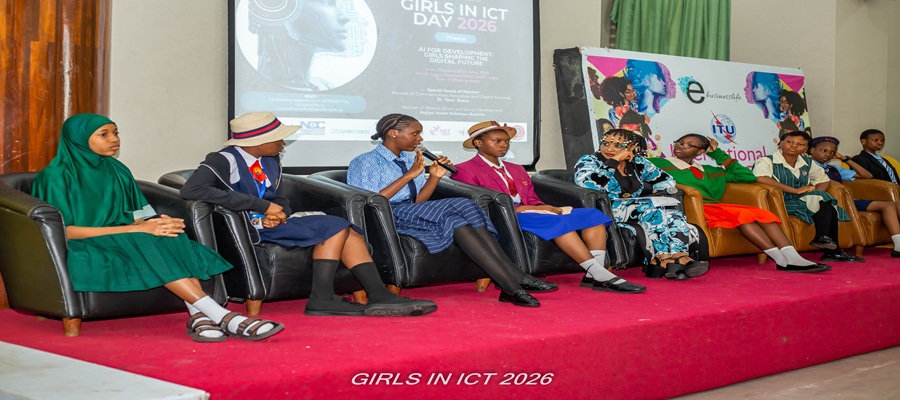
Young girls aspiring to delve into ICT careers have been advised to take advantage of the current versatility in the industry to create a niche for themselves. This was the view of participants at the just-concluded International Girls in ICT Day celebration organised by eBusinessLife Communication Limited, in Lagos.

The event, an initiative of the International Telecommunications Union (ITU), seeks to encourage young girls to take up tech careers that will see them balance the gender disparity in the industry.
In a panel session moderated by Tech Life Media CEO and organiser of Women Entrepreneurs & Executives in Technology Summit (WEETS), Ugochi Emmanuel, top female tech executives narrated their foray into technology careers and advised the young girls on requirements and need to start early in the quest to make global impact in ICT.
Narrating her experience into a tech career, Chief Administrative Officer, Digital Realty, Nigeria, Dr. Nkechi Newton Denila noted that the difficulties of the past have been lightened up and more women have opportunities to excel in the field.
“Today, the landscape is vastly different. Governments, international organizations and private institutions across the globe are intentionally creating opportunities for girls in Science, Technology, Engineering and Mathematics (STEM). The reason we are gathered here is part of that global commitment to ensuring that more women participate in ICT and related fields.
This presents a unique advantage for young girls. Many organizations now deliberately promote gender inclusion and equal opportunities in technology. Therefore, if you discover an area within ICT that excites you, pursue it wholeheartedly. This window of opportunity may not remain open forever. Do not wait for others to decide your future for you. Identify your passion, chart your course, and remain committed to achieving your goals.”
Associate Consultant and Information Security Analyst, Digital Encode, Itunuola Aderemi, advised the young girls to begin researching various technology disciplines, including Cybersecurity, Data Analytics and Data Science for areas that align fully with their interests and strengths. And to explore and discover any field that perfectly matched my aspirations.
While admitting the existence of such challenges as persistent stereotype against the female gender, Team Lead, Retails, New Horizons Nigeria, Glory Omole, noted that fortunately, organisations such as New Horizons are actively working to change that narrative. “Our leadership recognizes the urgent need to increase female participation in ICT. Considering that women still constitute a relatively small percentage of the global technology workforce, there is a deliberate effort to encourage more girls and women to enter the field.”
She however cautioned the young girls not to see this campaign as a competition between men and women, rather, it should be seen as a partnership where everyone is given equal opportunities to contribute and excel. “We want to see more women leading innovations, conducting research, developing applications and creating solutions that address societal challenges,” she enthused.
Speaking on the need for mentorship, Asst. Manager, Product & Services, Zoracom, Mistura Salaudeen, noted that stereotypes and confidence-related challenges still exist, but one effective way to overcome them is by drawing inspiration from women who have succeeded. She observed that across government, technology, finance, healthcare and other sectors, women are increasingly occupying leadership positions, serving as Chief Technology Officers, board members and executives.
“While challenges persist, I believe our focus should shift towards opportunities rather than obstacles. Artificial Intelligence, for example, has significantly lowered barriers to entry. AI enables individuals to develop business proposals, prepare presentations and execute ideas much faster than before. Therefore, instead of being discouraged by challenges, girls should leverage available technologies and communities to accelerate their growth and maximize emerging opportunities,” she advised.
Glory Omole also noted that technology is broad and offers diverse opportunities.
“There are numerous digital skills available today, but the choice of skill should depend largely on individual interests and career aspirations.
Fields such as Data Analytics, Data Science, Cybersecurity, Web Development and User Interface/User Experience (UI/UX) Design are among the high-demand skills available today. Each serves a distinct purpose.”
Corroborating this claim, Dr. Newton-Denila said: “It is important to understand that ICT now permeates virtually every profession. Whether in medicine, law, engineering, agriculture or business, technology has become an indispensable component of professional practice.
In medicine, for example, Artificial Intelligence is increasingly being used in diagnostics, telemedicine and robotic surgery. Similarly, in law, digital applications now support legal research, documentation and case management.”
The event has its theme as “AI for Development: Girls Shaping the Digital Future”.
General News
Franklyn Ginger-Eke CEO The Rainbow Strategy Honoured with PR Power List 2026 Rising Voices Award

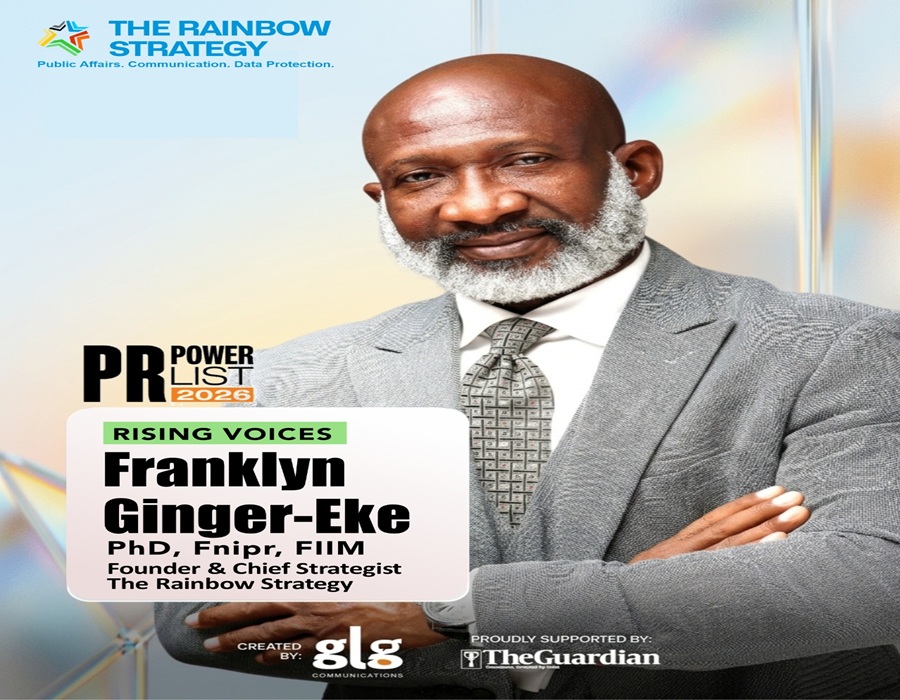
Dr Franklyn Ginger-Eke, Founder and Chief Strategist of The Rainbow Strategy, has been honoured with the PR Power List 2026 Award in recognition of his contributions to strategic communications and public relations in Nigeria.

Franklyn Ginger-Eke, CEO The Rainbow Strategy
Ginger-Eke received the award in the Rising Voices category during the fifth edition of the PR Power List organised by GLG Communications as part of activities marking the 2026 World Public Relations Day.
The award ceremony, held at the Mike Adenuga Centre in Ikoyi, Lagos, attracted leading professionals and stakeholders in Nigeria’s public relations industry.
Among those in attendance were the President and Chairman of Council of the Nigerian Institute of Public Relations (NIPR), Dr Ike Neliaku; the Chief Executive Officer of the Public Relations Consultants Association of Nigeria (PRCAN), Dr Nkechi Ali-Balogun; former President of the African Public Relations Association (APRA) and Chief Executive Officer of CMC Connect LLP, Chief Yomi Badejo-Okusanya; and Executive Director of THOP and Adviser, Edelman Africa, Mr Kwame Senou.
According to the organisers, the PR Power List recognises public relations and communications professionals whose work has made significant contributions to organisations, influenced public discourse and advanced the communications profession over the past year.
Reacting to the recognition, Ginger-Eke described the award as both humbling and motivating.
“I am deeply honoured to receive this recognition for the modest contribution we are making in shaping the public relations and communications ecosystem.
“I see it as a testament to the dedication, creativity and excellence of our team at The Rainbow Strategy.
“This is a call to do more in delivering strategic communication solutions that create impact, build trust and contribute to the continued growth of the public relations profession in Nigeria,” he said.
He dedicated the award to young and aspiring communication professionals, encouraging them to embrace innovation, professionalism and ethical practice in their careers.
Ginger-Eke also reaffirmed The Rainbow Strategy’s commitment to promoting excellence in strategic communications, reputation management, stakeholder engagement, data protection compliance and value-driven public relations campaigns across the public and private sectors.
A Fellow of the Nigerian Institute of Public Relations (NIPR), Ginger-Eke is recognised for his work in public affairs, strategic communication and data protection compliance through his Abuja-based consultancy, The Rainbow Strategy.

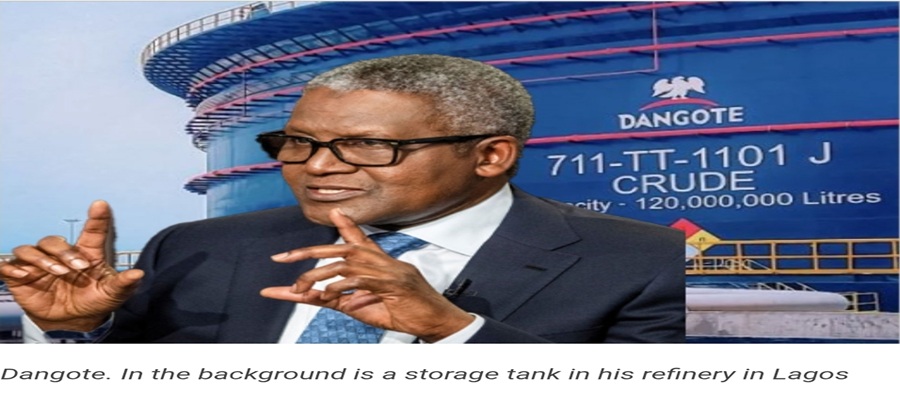
Dangote Petroleum Refinery is reportedly nearing completion of a $2.5 billion private placement that values the company at about $40 billion ahead of its planned public listing.

Private placement is the direct sale of company shares or bonds to pre-selected investors instead of the general public and it is used to raise money quickly while avoiding strict public reporting rules.
People familiar with the transaction said investors acquired as much as 6 per cent of the refinery, according to a BusinessDay report.
The reported terms would value the business at approximately $40 billion.
Neither Dangote Group nor the refinery has publicly announced the final amount raised, the identities of most subscribers or the precise percentage sold.
The figures should therefore be treated as transaction details supplied by unnamed sources rather than confirmed company disclosures.
The reported $2.5 billion total is nevertheless significant as it indicates strong demand for exposure to a privately controlled refinery that has rapidly become central to Nigeria’s fuel supply and an increasingly important exporter of petroleum products.
The placement was said to have attracted more demand than the available shares, allowing the company to secure substantially more than the amount initially associated with the fundraising exercise.
Femi Otedola, chairman, First HoldCo, is the only major participant publicly identified in the report.
He reportedly committed $100 million to the transaction and sold his investment in Geregu Power Plc to finance the acquisition.
Nigeria’s pension industry was also reportedly cleared to participate.
Access to more than $17 billion in retirement assets would broaden the refinery’s potential investor base beyond wealthy individuals and conventional institutional buyers.
Participation by Pension Fund Administrators would, however, require careful attention to valuation, liquidity and portfolio-concentration limits.
Retirement funds must balance the attraction of a large Nigerian industrial asset against their responsibility to protect contributors’ savings.
The implied $40 billion valuation represents investor expectations about the refinery’s future earnings rather than only the physical cost of constructing the facility.
Its ability to process 650,000 barrels of crude daily gives it a central role in supplying Nigeria and other markets, but its commercial performance remains connected to crude availability, product prices, exchange rates and regulation.
The refinery has struggled to obtain all the Nigerian crude it requires under the government’s naira-for-crude arrangement.
It has consequently purchased some feedstock internationally and recently moved local petroleum-product pricing into dollars to align sales revenue more closely with its foreign-currency expenses.
Those constraints will be important during any public offering.
Prospective shareholders will want greater clarity on crude-supply contracts, debt, operating margins, export revenue and the company’s relationship with Nigerian regulators.
It is also unclear whether the private placement involved newly issued shares, a sale by existing owners or a combination of both.
That distinction determines whether the reported $2.5 billion becomes fresh capital for the refinery or proceeds received by selling shareholders.
The transaction could provide a useful price reference for the planned initial public offering.

Adebutu, PDP Chieftain Accuses Nigerian Governors of Embezzling LG Allocations

ICPC Secures Final Forfeiture of N941m Linked to IPPIS Fraud

NDIC Urges Youths to Shun Ponzi Schemes, Embrace Savings

NRS Issues July 31 Deadline for e-Invoicing Compliance

SERAP to Sue NASS over Bill Empowering NDPC to Regulate Social Media

NRC, Ponzi Scheme Collapses Resulting Loss of Billions of Naira

NASENI Moves to Digitize CCB’s 5m Assets Declaration and Operations

Lebara Nigeria Launches Lebara Play, Africa’s First Telecom-Owned Micro-Drama Platform

CANAL+ Partners Samsung to Pre-Load DStv Stream on New Samsung TVs In Nigeria, Other African Countries

Tokenization, Blockchain Technology will Transform Financial Institutions – IMF




 News2 days ago
EFCC Busts NIS Visa Overstay Racket, Uncovers N700m in an Account

 News2 days ago
NCC, NDLEA Partner to Fight Piracy and Drug Trafficking

 General News2 days ago
Dangote Refinery’s Private Placement Reportedly Hits $2.5Bn

 Telecom2 days ago
NCC Leads Tecno, Hyperspace, Digital Realty To NITRA Forum On Scientific Innovation

 E-Financial2 days ago
CBN to Monitor Every Dollar with FXBT, Forex Tracker

 Telecom2 days ago
Tinubu Moves to Protect Nigerians From Crypto Scams With New Executive Order

 E-Financial2 days ago
FG Moves to Crack Down on Crypto Fraud with Virtual Assets Executive Order

 Telecom2 days ago
PayPal Rejects $53bn Stripe-Advent Takeover Bid, Says Offer Undervalues Company