

News
CBN Writes SERAP on Boko Haram Funding


The Central Bank of Nigeria (CBN) has denied allegations that there are people using the Bank to fund the activities of Boko Haram.
This was disclosed in a letter dated October 16, 2014 and addressed to Socio-Economic Rights and Accountability Project ((SERAP).
The letter with reference LSD/ACL/GEN/SRP/02/090 and by O.A. Ogundana on behalf of the Director, Legal Services Department of the Bank reads in part: “We write to acknowledge the receipt of your letter dated 15th September 2014 on the subject captioned: request to provide information about alleged money laundering to Boko Haram through the Bank.
“In your letter you had requested from the CBN information about persons or office involved in alleged money laundering activities of the Boko Haram through the CBN; and information on the exact nature and duration of any such transactions.
“We wish to inform you that after investigating the allegations across various Departments at the Bank that deal with payments, the Bank could not find any information pertaining to persons involved in money laundering through the CBN to fund the activities of Boko Haram.
“The CBN as Banker to the Federal Government only maintains accounts for and on behalf of the Government, its Ministries, Departments and Agencies; Deposit Money banks and other financial institutions in Nigeria and can only make payments on their behalf based on authorized mandates.
“Consequently, the CBN does not maintain or operate any accounts for individuals, officers or offices within the Bank. In conclusion, your organization may wish to note that the Bank maintains a robust Anti-Money Laundering/Combating the Financing of Terrorism framework to prevent the use of its platform for financial crimes. Please, accept the assurances of the Governor, Central Bank of Nigeria.”
It would be recalled that following its freedom of information request, SERAP had on October 14 sued the CBN at the Federal High Court, Ikoyi.
The originating summons with suit number FHC/L/CS/1547/2014 was filed on behalf of the organisation by Adetokunbo Mumuni.
Among others, SERAP is seeking the court to determine “Whether by virtue of the provision of section 4(a) of the Freedom of Information Act 2011, the CBN is under an obligation to provide the plaintiff with the information requested for.”
No date has been fixed for the hearing of the application.


News
MTN ASAP Enugu Stakeholders’ Conference Rallies More Action Against Youth Drug Abuse, Unveils N33Bn ASAP Impact

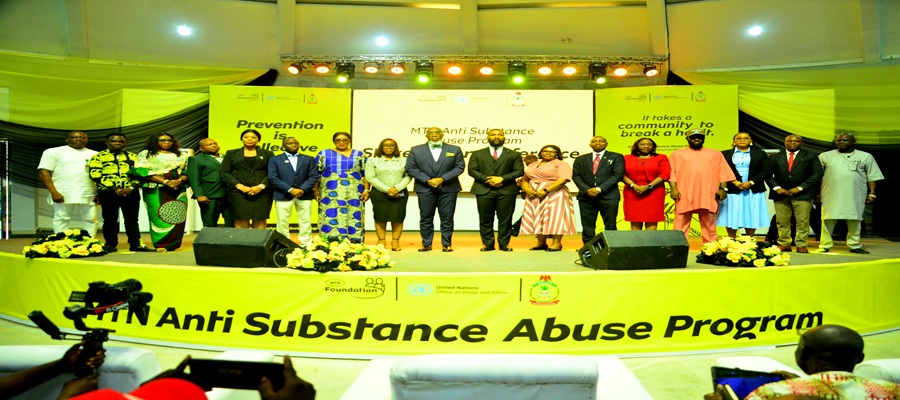
In a renewed push to confront the rising tide of drug abuse among Nigerian youth, stakeholders converged on Tuesday, June 9, 2026, at the ICC Dome, Enugu, for a State Stakeholders’ Engagement convened under the Anti-Substance Abuse Programme (ASAP).

The conference brought together government representatives, educators, development partners, and civil society actors to chart a unified path against substance abuse, with disclosures at the gathering revealing that an estimated ₦33 billion has so far been committed to developmental projects, programmes, and initiatives across the country, interventions that have impacted more than 33 million Nigerians directly and reached over 100 million through advocacy and awareness campaigns.
The Executive Governor of Enugu State, Barr. Peter Mbah, represented by the Secretary to the State Government, Prof. Chidiebere Onyia, commended the Foundation for its sustained investment in youth development and the fight against substance abuse.
He noted that the state’s transformation agenda is anchored in youth empowerment, education, healthcare, and human capital development – areas where the Foundation’s ₦33 billion commitment was already making a measurable difference.
“The MTN Foundation’s investment in youth development and the fight against substance abuse aligns directly with our administration’s transformational agenda. Initiatives like ASAP are exactly the kind of partnerships that move the needle on national development,” Prof. Onyia said.
He further urged other private sector players to emulate the Foundation’s example, stressing that the scale of Nigeria’s drug abuse demands sustained collaboration between government, the private sector, development partners, and civil society.
Addressing stakeholders, Odunayo Sanya, Executive Director of the MTN Foundation, said the Foundation, established in 2004 and fully funded by MTN Nigeria, was created to drive impact across health, capacity building, and economic empowerment, with deliberate focus on young people, who constitute the majority of Nigeria’s population.
She explained that the ASAP initiative, launched in 2019 in partnership with the National Drug Law Enforcement Agency (NDLEA) and the United Nations Office on Drugs and Crime (UNODC), was designed to reduce first-time drug use among young Nigerians through awareness campaigns and school-based interventions.
“We have reached over 50,000 students across the country and trained about 1,556 teachers as part of our efforts to create anti-drug ambassadors in schools and communities.”
“For us at the MTN Foundation, saving even one young person from substance abuse is a worthwhile achievement. The consequences go beyond the individual and affect families, communities, and the nation at large,” Odunayo said.
Looking ahead, she disclosed that the Foundation plans to reach more than 20,000 additional students in 2026 through expanded stakeholder engagements, school-based interventions, teacher training programmes, and community awareness campaigns.
She described substance abuse as a major threat to families, communities, and national development, stressing the urgent need for collective action to shield young people from addiction.
According to her, the Foundation’s mission is rooted not just in numbers, but in human outcomes – the lives, families, and futures it helps preserve.
The Executive Director, on her part, called on parents, educators, faith leaders, and community influencers to remain active partners in safeguarding the next generation from the dangers of substance abuse.
The intervention comes at a critical time. Fresh data presented at the conference indicate that over 360,000 youths in Enugu State – approximately 13.4% of the state’s young population – are actively involved in drug use.
Currently, the MTN Foundation (MTNF) and the United Nations Office on Drugs and Crime (UNODC) are conducting a comprehensive National Substance Use Survey to gather grassroots data on drug abuse, especially among secondary school students.

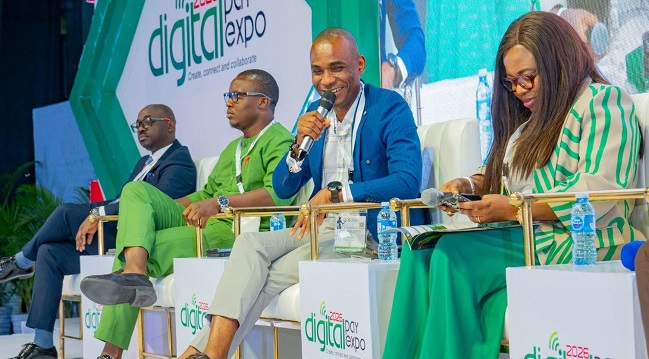
PalmPay has called for stronger infrastructure and better access to finance for small businesses as essential to the next phase of financial inclusion and economic growth in Nigeria.

This position was shared by Chika Nwosu, Managing Director of PalmPay Nigeria, during a panel session at Digital Pay Expo 2026, where regulators, fintech leaders, payment operators and other key ecosystem stakeholders gather to discuss the future of digital payments in Africa.
Speaking during a session focussed on advancing financial inclusion and SME growth, Nwosu said that while the micro, small, and medium enterprises remain central to economic activity, many still face real barriers around access to credit, reliable payment infrastructure, and the relevant digital tools needed to grow sustainably.
According to him, meaningful financial inclusion must go beyond onboarding more users into the formal financial rail. It must also address the structural issues that limit how small businesses participate, transact, and scale.
“SMEs contribute 40 per cent of the country’s GDP. For us in PalmPay, Financial inclusion is not just about enabling transactions. It is also about helping businesses access the tools and support they need to expand, build resilience, and create jobs.
He also highlighted the importance of digital literacy, noting that as digital tools and AI become more embedded in financial services, business owners must be equipped to use them effectively and responsibly.
For PalmPay, the future of inclusion will depend not only on innovation, but on how well the ecosystem reduces friction for small businesses and provides the infrastructure and financial support they need to grow.
Discussions at the event also pointed to the need for stronger collaboration across the ecosystem and more practical approaches to helping SMEs move from awareness to adoption of digital financial services.
PalmPay’s MD noted that unlocking the full potential of Nigeria’s SMEs will require a combination of accessible finance, financial education, trusted platforms, and coordinated ecosystem support.

The World Cup 2026 kicked off on June 11 and alongside it the number of scammers attempting to exploit fan excitement has also increased. According to Kaspersky, at least 336 unique domains mimicking official World Cup resources have been detected. In addition, cybercriminals are actively exploiting growing interest in match streaming and sports betting.

Fake broadcasting schemes
Since the start of the tournament, millions of viewers worldwide have been tuning in across TVs and other devices to watch matches live. At the same time, fraudsters have been creating websites offering “online streaming” of the championship.
The scam works as follows: attackers set up fake websites that claim to provide free access to World Cup broadcasts. After clicking “Watch now,” users are prompted to register to gain access. They are then asked to pay a cryptocurrency fee for “lifetime tournament access.” The danger of this scheme lies in the potential loss of both registration data and cryptocurrency funds.
Betting traps: When the wager is already lost
Another trap targeting football fans involves fraudulent betting and match prediction platforms. For instance, a Spanish-language website was found requesting extensive personal information, including first and last name, email address, phone number and more, under the guise of account creation.
Such schemes expose users to credential theft, particularly if they reuse the same password across multiple services, as well as to potential financial loss.
“Since the start of the tournament, scammers have increasingly focused on the ways fans engage with the event online, as watching matches today requires only an Internet connection and a device.
As a result, criminal activity continues to grow, as reflected in the fraudulent websites we observe offering streaming and betting services in multiple languages. We recommend that users stick to official broadcasts to help protect their data and finances,” says Olga Altukhova, Senior Web Content Analyst at Kaspersky.
You’ve got mail: (Un)real predictions
Another attack scenario involves emails in which attackers attempt to trick users into sending money or clicking phishing links. To increase engagement, these messages often use compelling subject lines and persuasive wording.
In one observed case, fans received emails advertising football analytics services and match winner predictions. A notable feature is the sense of urgency, asking recipients to act quickly, which is one of the common indicators of a possible scam email.
In this case, users are asked to pay a $200 fee to access football analytics. While the offer targets fans interested in betting, paying for such “services” can potentially result in irreversible financial loss.

FG Proposes Africa-Wide Payment Card without Conversion through US Dollar

Providus, Unity Bank Begin Integration Phase after Supreme Court Nod

EFCC, CAC Raise Concerns over Unregistered PoS Operators

NITDA, Meta Roll Out New Programme to Keep Nigerian Youths Safe Online

6 Easy Ways to Enjoy the 2026 World Cup with Google and Gemini
CBN Extends PoS Geo-Fencing Enforcement Deadline to August 2026

London Strengthens Global Investment Ties with Africa @ First Ever London-Africa Business Summit

FG Targets Alleged N3tn Capital Flight, Opens Airtime Credit Market to Nigerian Fintechs

Mobile Internet Gender Gap Widest in Africa – GSMA

Japan, UNESCO Boost Digital Learning in 15 CoEs with Donation of ICT Equipment




 News2 days ago
PalmPay MD Seeks Stronger Infrastructure, Access to Finance for SMEs @ Digital Pay Expo 2026

 Telecom2 days ago
Africa Projected to Lead Global 5G Growth

 Broadcasting2 days ago
Lebara Nigeria Launches Lebara Play, Africa’s First Telecom-Owned Micro-Drama Platform

 News2 days ago
Kaspersky Identifies over 336 Unique Domains Impersonating the Official World Cup Website

 General News2 days ago
Paystack Launches Programme to Support Nigerian Businesses

 Telecom1 day ago
NITDA Unveils Bold Vision to Make Nigeria an AI Powerhouse

 E-Financial2 days ago
SEC Bars Dangote Refinery IPO Adverts

 General News1 day ago
Nestlé Commits to Boosting West Africa Solar Rollout Through Partnership